الكونيات الخاصة بالكونين المتوازيين الكونيات الخاصة بالكونين المتوازيين (ص 4) .
...لننظر بشكل مبسط إلى الوضع. نعتبر توزيعًا متجانسًا للمادة المعاكسة. في هذا التوزيع، نجد في بعض الأماكن فراغات حيث تقيم المجرات.
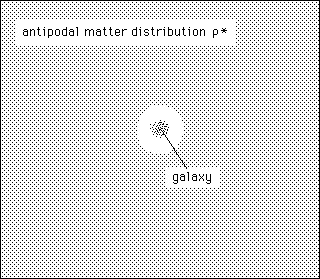
الشكل 11: مجرة تقيم في سحابة متجانسة من المادة المعاكسة.
يؤدي ثقب في توزيع كتلة سالبة إلى تأثير عدسة جاذبية إيجابية.
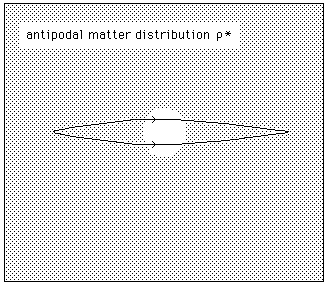
الشكل 12: تأثير عدسة جاذبية إيجابية ناتج عن ذلك.
بشكل عام، يعادل هذا التأثير التأثير الناتج عن كرة متجانسة كتلة إيجابية. انظر الشكل 13
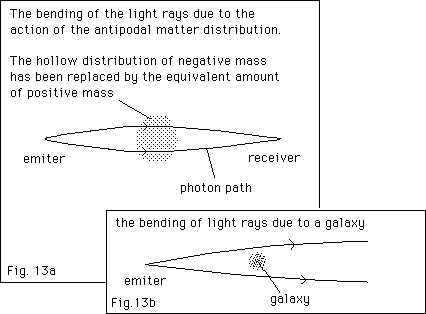
الشكل 13. - 13أ: تأثير عدسة جاذبية إيجابية ناتج عن توزيع المادة المعاكسة (العمل ككتلة سالبة). لقد استبدلنا الفراغ بكتلة إيجابية مكافئة. مقارنة مع العدسة الإيجابية الناتجة عن مجرة (الشكل 13ب).
...بشكل تقليدي، يستخدم تأثير العدسة الجاذبية لتقدير الكتلة المسمى "غير المرئية" الموجودة في المجرة. يُقال غالبًا: "الكتلة المظلمة موجودة في مجرينا: نقيسها من خلال تأثير الكتلة المفقودة". في هذا النموذج الكوني المتوازي، لا ينبغي أن يكون تأثير العدسة القوي دليلاً على وجود كتلة غير مرئية في المجرة، بل قد يكون ناتجًا عن تأثير المادة المعاكسة غير المرئية المحيطة، والتي يمكن تقييم تأثيرها من خلال التأثيرات المقاسة. انظر الشكل 14.
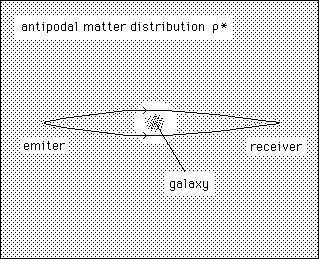
الشكل 14: تجميع تأثيرين إيجابيين لعدسة الجاذبية الناتجين عن المجرة والمادة المعاكسة المحيطة.
...في مجرينا، الكتلة الضرورية لمنع الانفجار الناتج عن القوة الطاردة المركزية تبلغ حوالي 10 مرات أكبر من الكتلة المرصودة. إذا كان تأثير التقييد ناتجًا عن تأثير المادة المعاكسة غير المرئية المحيطة، فهذا يعني أن تأثير هذه المادة غير المرئية مهم. قد يكون هذا أمرًا عامًا في المنطقة من الكون التي نعيش فيها. إذًا، قد تكون جميع المجرات المحيطة محيطة بحلقات كثيفة من المادة المعاكسة، وتأثيرات العدسة الجاذبية المرصودة قد تكون في الغالب ناتجة عن المادة المعاكسة بدلًا من المجرات نفسها.
...النموذج المستند إلى المعادلة (1) يقدم رؤية جديدة لمشكلة الكتلة المفقودة [1] وللبنية الكبيرة جدًا للكون. اعتمد هذا العمل على فرضية المجال الضعيف والسرعات الضعيفة، ويرجع إلى كون تقريبًا مستقر، على مستوى الكون، بالنسبة للفضاء والزمن. من أجل إكمال هذا النموذج الكوني، يجب الآن دراسة تطور الكون ككل.
النسخة الأصلية (الإنجليزية)
twin universe cosmology Twin Universes cosmology (p 4) .
...Let us schematize the situation. Consider an homogeneous distribution of antipodal matter. In this distribution we find, in some places, holes in which the galaxies nest.
Figure 11: A galaxy nesting in an homogeneous cloud of antipodal matter.
A hole in a distribution of negative mass produces a positive gravitational lensing effect.
Figure 12: Induced positive gravitational lensing effect.
Qualitatively this equivalent to the effect due to an homogeneous sphere of positive mass. See figure 13
Figure 13. - 13a : Positive gravitational lensing effect due to the distribution of antipodal matter (acting like a negative mass). We have replaced the hollow by an equivalent amount of positive mass. Compared positive lensing due to a galaxy (Fig. 13b).
...Classically one use the gravitational lensing to evaluate the so-called invisible mass contained in a galaxy. People uses to say : "the dark matter exists in our galaxy : we measure it, through the missing mass effect". In this twin cosmological model a strong lensing effect should not be a proof of the existence of invisible mass in a galaxy, but could be due to the action of the invisible surrounding antipodal matter, which could be evaluated from the measured effects. See the figure 14.
Figure 14 : Combination of the two positive gravitational lensing effect due to the galaxy and to the surrounding antipodal matter.
...In our galaxy the mass necessary to prevent the explosion by centrifugal force is about 10 times higher that the observed mass. If the confinement effect is due to the action of surrounding invisible antipodal matter, it means that the effect of this invisible matter is important. This could be general in the region of the universe we live in. Then all the neighbour galaxies could be surrounded by dense halos of antipodal matter, and the observed gravitational lensing should be mostly due to the antipodal material than to the galaxies themselves.
...The model based on the equation (1) gives a new insight on the missing mass problem [1] and on the very large structure of the Universe. This work was based on the low field and weak velocities hypothesis and referred to a quasi-steady Universe, at cosmologic scale, with respect to space and time. In order to complete this cosmological model we have now to study the evolution of the Universe as a whole.