Κατακλυσμός Κατρίνα. Μαρτυρία
Κατρίνα: μια μαρτυρία
21 Σεπτεμβρίου 2005
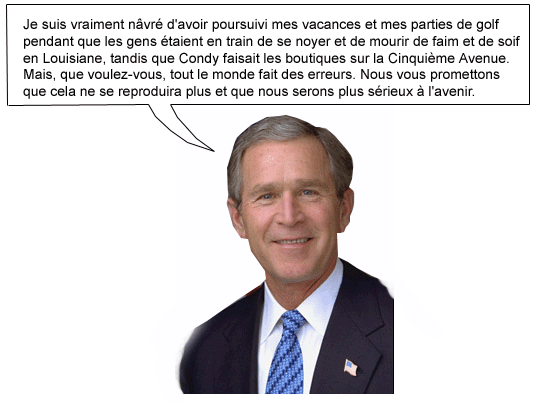
Μετά την καταστροφή που έπληξε τη Λουιζιάνα, έγγραφα πλημμύρισαν το διαδίκτυο. Ήταν δύσκολο να αναδημοσιευθούν όλα μαζικά, ελλείψει αδιαμφισβήτητων αποδείξεων. Υπάρχουν φήμες ότι στρατιωτικοί προχώρησαν σε δυναμιτίσματα των αναχωμάτων, για να ανακουφίσουν τις εύπορες συνοικίες πλημμυρίζοντας τις φτωχές. Πιθανόν. Άλλοι υποστηρίζουν ότι η καταστροφή των ξύλινων σπιτιών στη Λουιζιάνα θα επιτρέψει κερδοσκοπικές πρακτικές στον τομέα των ακινήτων στις φτωχές συνοικίες. Σε αυτές τις συνοικίες, τα τρία τέταρτα των κατοίκων δεν ήταν ασφαλισμένοι, λόγω έλλειψης μέσων. Όταν φτωχοί μαύροι κατοικούσαν σε ξύλινες καλύβες, μπορεί να αναρωτιέσαι αν, μετά από μια τέτοια καταστροφή, θα είναι encore σε θέση να παράγουν τίτλους ιδιοκτησίας. Είναι πιθανό ότι ακόμα και αυτοί οι τίτλοι να έχουν χαθεί στην πλημμύρα. Πιστεύω ότι όσον αφορά την κατάσχεση οικοδοήσιμων εκτάσεων, μπορεί να εμπιστευόμαστε τον «J.R. Ewing», εκεί. Όταν το συμφέρον, τα δολάρια είναι σε παιχνίδι, στην Αμερική μπορεί να συμβούν πολλά πράγματα. Όπως στη Γαλλία, αλλά σε άλλη κλίμακα, με ίσως μεγαλύτερο κυνισμό, σαν να ήταν, τελικά, οι Αμερικανοί πάντα μια εικόνα του μέλλοντός μας (ναρκωτικά, βία, εγκληματικότητα).
Η γενική εντύπωση είναι ότι «τα πράγματα δεν πήγαν καλά εκεί, μετά τη διάβαση του τυφώνα Κατρίνα. Η ηγετική ομάδα προσπαθεί να δικαιολογηθεί λέγοντας ότι οι υπηρεσίες της δεν ήταν προετοιμασμένες για μια καταστροφή τέτοιας έκτασης. Αλλά μπορεί κανείς να είναι σκεπτικός. Η Αμερική διαθέτει πολύ ισχυρές δυνάμεις. Έγινε ό,τι ήταν δυνατό για να έρθουν σε βοήθεια αυτών των ανθρώπων; Μπορεί να αμφισβητηθεί.
Ανάλογα με το αν θα είστε ισχυροί ή miserable...
Ακολουθεί μια μαρτυρία που φαίνεται αξιόπιστη.
Ευχαριστώ το πρόσωπο που μετέφρασε αυτή την αφήγηση.
CounterPunch
PO Box 228
Petrolia, CA 95558
1-800-840-3683
counterpunch@counterpunch.org mailto:counterpunch@counterpunch.org
Παγιδευμένοι στη Νέα Ορλεάνη, πρώτα από τα νερά, έπειτα από τον στρατιωτικό νόμο
στις 6 Σεπτεμβρίου
Από τους Larry Bradshaw και Lorrie Beth Slonsky
Οι LARRY BRADSHAW και LORRIE BETH SLONSKY εργάζονται στο EMS (emergency medical services) του San Francisco και contribute στο Socialist Worker http://www.socialistworker.org/ http://www.socialistworker.org/. Συμμετείχαν σε μια διάσκεψη του EMS στη Νέα Ορλεάνη όταν ο τυφώνας Κατρίνα έπληξε την πόλη. Πέρασαν σχεδόν μια εβδομάδα παγιδευμένοι από τις πλημμύρες---και το κordon που επιβλήθηκε από τον στρατιωτικό νόμο και περικύκλωσε την πόλη.
Δύο ημέρες μετά που ο τυφώνας Κατρίνα έπληξε τη Νέα Ορλεάνη, το κατάστημα Wallgreen στη διασταύρωση των οδών Royal και Iberville παρέμεινε κλειδωμένο. Το τμήμα των γαλακτοκομικών ήταν ορατό από τις βιτρίνες. Ήταν 48 ώρες χωρίς ηλεκτρικό ρεύμα και χωρίς τρεχούμενο νερό. Το γάλα, τα γιαούρτια και τα τυριά σήπιζαν υπό θερμότητα σαράντα βαθμών Κελσίου. Οι ιδιοκτήτες και οι διευθυντές είχαν φυλακίσει την τροφή, το νερό, τις πάνες και τις συνταγές και δραπέτευσαν την πόλη. Μπροστά στις βιτρίνες του Wallgreen, η πείνα και η δίψα των κατοίκων και των τουριστών μεγάλωνε.
Η βοήθεια που υποσχέθηκαν οι ομοσπονδιακές, πολιτειακές και τοπικές κυβερνήσεις δεν υλοποιήθηκε ποτέ και οι βιτρίνες του Walgreen σπάστηκαν από τους λεηλατές. Υπήρχε μια εναλλακτική. Οι αστυνομικοί θα μπορούσαν να σπάσουν μια μικρή βιτρίνα για να διανέμουν τα αραχίδες, τους χυμούς φρούτων και το εμφιαλωμένο νερό με organized και systematic τρόπο. Αλλά δεν το έκαναν. Αντίθετα, πέρασαν ώρες παίζοντας «cat and mouse», κυνηγώντας προσωρινά τους λεηλατές.
Υποψιαζόμαστε ότι τα μέσα ενημέρωσης είναι πλημμυρισμένα από ηρωικές εικόνες των εθνικών φρουρών, των στρατιωτών και των αστυνομικών που παλεύουν για να βοηθήσουν τα «θύματα» του τυφώνα. Αυτό που δεν θα δείτε, αυτό που είδαμε εμείς, είναι ότι οι ήρωες και οι ηρωίδες της πραγματικής προσπάθειας για την επίλυση των προβλημάτων του τυφώνα ήταν: η εργατική τάξη της Νέας Ορλεάνης. Οι οικοδόμοι που χρησιμοποίησαν ένα fanboat για να μεταφέρουν ασθενείς και άτομα με αναπηρία. Οι μηχανικοί που ξεκίνησαν και συντήρησαν γεννήτριες.. Οι ηλεκτρολόγοι που improvised extension cords across neighborhoods to share the little energy available to free cars stuck on parking lot roofs. Οι νοσηλεύτριες που ανέλαβαν μηχανικούς αερόσωμους και πέρασαν ώρες forcing manually air into the lungs of unconscious patients to keep them alive. Οι bellboys που έσωσαν άτομα παγιδευμένα στους ανελκυστήρες. Οι εργάτες των διυλιστηρίων που μπήκαν στα αποθετήρια των πλοίων, «κλέβοντας» αυτά για να σώσουν τους γείτονές τους agrippés aux toits dans les eaux de l'inondation. Οι μηχανικοί που helped to start all findable cars so they could transport people out of the city. Και οι εργάτες της εστίασης που gathered everything they could to improvise communal meals for hundreds of abandoned people. Η πλειονότητα αυτών των εργατών had lost their homes and had not heard from their families, but they stayed and they provided the only infrastructure for the 20% of the city that was not submerged by the waters.
Ημέρα 2, ήμασταν περίπου 500 που had remained in the hotels of the French Quarter. Ήμασταν ένα μείγμα ξένων τουριστών, συμμετεχόντων σε διασκέψεις (όπως εμείς οι δύο) και natives of the city seeking security to find refuge in the hotels. Κάποιοι από εμάς had contact by mobile phone with family and friends outside New Orleans. They told us again and again that all sorts of resources like the National Guard and several dozen buses were arriving in the city. The buses and other resources must have been invisible because none of us ever saw them.
We decided to save ourselves. So we pooled our money and reserved $25,000 to bring ten buses that would take us out of the city. Those who did not have the $45 needed for the ticket were subsidized by those who had more money. We waited 48 hours for the buses, spending the last twelve hours outside, sharing the little water, food and clothes available to us. We created a priority boarding zone for the sick, the elderly and newborns. We waited until late in the night for the imminent arrival of the buses. They never arrived. Later we learned that at the minute they arrived at the city limits, they were requisitioned by the army.
Day 4, our hotels had no oil or water. Hygiene was dangerously abyssal. As frustration and despair rose, crime and the water level also rose. The hotels expelled us and closed their doors, telling us that the "authorities" had asked us to join the Convention Center to wait for the buses there. When we entered the Center, we finally met the National Guard. The guards told us that we would not be allowed to enter the Superdome since the main shelter of the city had degraded to become a humanitarian and sanitary hell.
The guards also told us that the only other shelter in the city, the Convention Center, was also becoming chaos and that it was forbidden for police to let anyone in again. Naturally, we asked: "If we cannot go to the two only shelters in the city, what is our alternative?" The guards told us that it was our problem and that they had no water to give us. This was the first of our many encounters with inept and hostile "law enforcement forces".
We walked to the police station at Harrah on Canal Street and there we heard the same thing, that we should manage on our own and that they had no water to give us. Our group now counted several hundred people. We held a general assembly to decide what action to pursue. We agreed to camp in front of the police station. We would be exposed to the media and this would constitute a visible humiliation for the city authorities. The police told us that we could not stay. Nevertheless, we began to settle and make a camp. Soon, the commissioner crossed the street to address our group. He told us that he had a solution: we should walk to the Pontchartrain highway and cross the great bridge of New Orleans where the police had many buses waiting for us to take us out of the city. The crowd applauded and began to animate. We called everyone back and explained to the commissioner that there was much false information circulating. Was he sure that buses were waiting for us? The commissioner turned to the crowd and declared with passion: "I swear to you that the buses are there."
We organized ourselves and we were 200 walking to the bridge with much excitement and hope. While passing the Convention Center, several natives of the city saw our determined and optimistic group and asked where we were going. We repeated the fantastic news to them. Families immediately took their few possessions and joined us. The size of our group doubled, then doubled again. We had with us babies in strollers, people leaning on crutches, elderly and others in wheelchairs. We walked the 4-6 km to the highway and climbed the steep slope that led us to the bridge. It was raining now but the rain did not dampen our enthusiasm.
When we arrived near the bridge, armed police formed a line across the bridge pillars. Before we approached them enough to speak to them, they began to fire their weapons above our heads. This made the crowd flee in all directions. As the crowd scattered, some of us approached them to engage them in discussion. We repeated our conversation with the commissioner. The police informed us that no bus was waiting. The commissioner lied to us to make us move. We asked why we could not cross the bridge anyway, especially given that there was little traffic on the six-lane highway. They answered that the West Bank would not become New Orleans and that there would be no Superdomes in their city. It was a code to say that if you are poor and black, you will not cross the Mississippi River and you will not escape New Orleans.
Our small group retreated to highway 90 to protect itself from the rain under the highway. After debating alternatives, we decided to build a camp in the center of the Pontchartrain highway, on the median edges, between the O'Keefe and Tchoupitoulas exits. Our logic was that thus we would be visible to everyone, that we would have safety by being on an elevated highway and that we could wait and watch for the arrival of buses. All day, we saw other families, individuals and groups making the same journey on the slope in an effort to cross the bridge and being always repelled. Some were chased by gunfire, others simply heard "no", and there were others who were verbally assaulted and humiliated. Thousands of people from New Orleans were prevented and forbidden from evacuating themselves from the city on foot.
Meanwhile, the two only shelters in the city continued to degrade. The only way to cross the bridge was by vehicle. We saw workers stealing trucks, buses, moving trucks and any cars that could be started without keys. The vehicles were all filled with people trying to escape the misery that New Orleans had become.
Our small camp began to flourish. Someone stole a water delivery truck and brought it to us. Let all looters be applauded! About 2 km further on the highway, an army truck turning lost some boxes of supplies. We brought the food to our camp in supermarket carts. Now having secured the two necessities, food and water, cooperation, community and creativity flourished. We organized a cleaning and hung garbage bags from highway poles. We made beds with wooden pallets and cardboard. We designated a ditch to make toilets and the children built an enclosure with plastic, broken umbrellas and other debris to make them intimate. We even organized a food recycling system where people could exchange pieces of their supply (apple sauce for babies and candies for children!) This was a process that was seen repeating endlessly after Katrina. When individuals had to struggle to find water and food, it meant that everyone lived for themselves. It was necessary to do whatever was needed to find water for your children and food for your parents. When these fundamental needs were satisfied, people began to care for others, to work together and to build a community. If relief organizations had supplied the city with water and food in the first two or three days, despair, frustration and degradation would not have taken hold of the city. Our fundamental needs met, we offered water and food to families and individuals who crossed us. Many decided to stay and join us. Our camp grew to 80 or 90 people.
A woman with a battery radio told us that the media were talking about us. Exposed thus on the highway, every relief and information organization had seen us entering the city. They asked the authorities what they would do with all these families living up on the highway. The authorities answered that they would take care of us. Some of us began to fear. "Taking care of us" had an ominous tone. Unfortunately, this fear was justified. At dusk, a police officer from Gretna arrived, pointed his gun at our heads and shouted: "Get off the fucking highway." A helicopter descended and used the wind it created to blow away our meager shelters. While we retreated, the police officer filled his truck with our food and our water. Once again, under the threat of the pistol, we were forced to leave the highway. All law enforcement agencies seemed threatened when we assembled in groups of 20 or more. In each assembly of "victims", they saw "rioters". We felt secure being numerous. Our desire to "stay all together" was impossible because the powers forced us to atomize into small groups.
We had scattered again in the pandemonium of our invaded and destroyed camp. Reduced to a small group of eight, in the dark, we sought shelter in an abandoned school bus, under the highway on Cilo Street. We hid from criminal elements but also and definitively we hid from the police with their martial law, their curfew, and their "shoot-to-kill" procedure. The following days, our group reduced to 8 people, who walked practically all day, contacted the New Orleans firefighters and was saved by a helicopter from an urban rescue team. They left us near the airport and we managed to be brought there by the National Guard. The 2 guards were sorry for the limited response of the Louisiana guards. They explained that the majority of their unit was in Iraq and that this reduced their numbers too much to accomplish all assigned work. We arrived at the airport the day a large air evacuation operation started. The airport had become a new Superdome. We were 8 pressed from all sides by a crowd of men while flights were suspended for several hours so that George Bush could reach the airport and be photographed. After being evacuated by a coast guard plane, we arrived in San Antonio, Texas.
There continued the humiliation and dehumanization of the official relief effort. They put us in buses and drove us to a large field where they made us sit for hours and hours. Some buses had no air conditioning. In the dark, hundreds of us were forced to share two overflowing portable toilets. Those who managed to leave the city with luggage (often a few things in torn plastic bags) were subjected to two different searches with dogs. Most of us had not eaten all day because our supplies were confiscated at the airport because they triggered metal detectors. Yet, no food was provided for men, women, children, elderly and disabled people while they remained seated for hours waiting to be seen by a doctor who would confirm that we were not carrying communicable diseases.
This official reception made a huge contrast with the warm and sincere reception that ordinary Texans had offered us. We saw an employee of an airline give her shoes to someone who was walking barefoot. Strangers on the street offered us money and toiletries with words of welcome. Throughout the disaster, the official relief effort was insensitive, incompetent and racist. There was more suffering than necessary. Lives lost unnecessarily...
Larry Bradshaw, Lorrie Beth Slonsky
This message was checked by MailScanner http://www.mailscanner.info/
for viruses or pollutants and nothing
suspect was found
Thank you to the person who translated this narrative.
CounterPunch
PO Box 228
Petrolia, CA 95558
1-800-840-3683
counterpunch@counterpunch.org mailto:counterpunch@counterpunch.org
Παγιδευμένοι στη Νέα Ορλεάνη, πρώτα από τα νερά, έπειτα από τον στρατιωτικό νόμο
στις 6 Σεπτεμβρίου
Από τους Larry Bradshaw και Lorrie Beth Slonsky
Οι LARRY BRADSHAW και LORRIE BETH SLONSKY εργάζονται στο EMS (emergency medical services) του San Francisco και contribute στο Socialist Worker http://www.socialistworker.org/ http://www.socialistworker.org/. Συμμετείχαν σε μια διάσκεψη του EMS στη Νέα Ορλεάνη όταν ο τυφώνας Κατρίνα έπληξε την πόλη. Πέρασαν σχεδόν μια εβδομάδα παγιδευμένοι από τις πλημμύρες---και το κordon που επιβλήθηκε από τον στρατιωτικό νόμο και περικύκλωσε την πόλη.
Δύο ημέρες μετά που ο τυφώνας Κατρίνα έπληξε τη Νέα Ορλεάνη, το κατάστημα Wallgreen στη διασταύρωση των οδών Royal και Iberville παρέμεινε κλειδωμένο. Το τμήμα των γαλακτοκομικών ήταν ορατό από τις βιτρίνες. Ήταν 48 ώρες χωρίς ηλεκτρικό ρεύμα και χωρίς τρεχούμενο νερό. Το γάλα, τα γιαούρτια και τα τυριά σήπιζαν υπό θερμότητα σαράντα βαθμών Κελσίου. Οι ιδιοκτήτες και οι διευθυντές είχαν φυλακίσει την τροφή, το νερό, τις πάνες και τις συνταγές και δραπέτευσαν την πόλη. Μπροστά στις βιτρίνες του Wallgreen, η πείνα και η δίψα των κατοίκων και των τουριστών μεγάλωνε.
Η βοήθεια που υποσχέθηκαν οι ομοσπονδιακές, πολιτειακές και τοπικές κυβερνήσεις δεν υλοποιήθηκε ποτέ και οι βιτρίνες του Walgreen σπάστηκαν από τους λεηλατές. Υπήρχε μια εναλλακτική. Οι αστυνομικοί θα μπορούσαν να σπάσουν μια μικρή βιτρίνα για να διανέμουν τα αραχίδες, τους χυμούς φρούτων και το εμφιαλωμένο νερό με organized και systematic τρόπο. Αλλά δεν το έκαναν. Αντίθετα, πέρασαν ώρες παίζοντας «cat and mouse», κυνηγώντας προσωρινά τους λεηλατές.
Υποψιαζόμαστε ότι τα μέσα ενημέρωσης είναι πλημμυρισμένα από ηρωικές εικόνες των εθνικών φρουρών, των στρατιωτών και των αστυνομικών που παλεύουν για να βοηθήσουν τα «θύματα» του τυφώνα. Αυτό που δεν θα δείτε, αυτό που είδαμε εμείς, είναι ότι οι ήρωες και οι ηρωίδες της πραγματικής προσπάθειας για την επίλυση των προβλημάτων του τυφώνα ήταν: η εργατική τάξη της Νέας Ορλεάνης. Οι οικοδόμοι που χρησιμοποίησαν ένα fanboat για να μεταφέρουν ασθενείς και άτομα με αναπηρία. Οι μηχανικοί που ξεκίνησαν και συντήρησαν γεννήτριες.. Οι ηλεκτρολόγοι που improvised extension cords across neighborhoods to share the little energy available to free cars stuck on parking lot roofs. Οι νοσηλεύτριες που ανέλαβαν μηχανικούς αερόσωμους και πέρασαν ώρες forcing manually air into the lungs of unconscious patients to keep them alive. Οι bellboys που έσωσαν άτομα παγιδευμένα στους ανελκυστήρες. Οι εργάτες των διυλιστηρίων που μπήκαν στα αποθετήρια των πλοίων, «κλέβοντας» αυτά για να σώσουν τους γείτονές τους agrippés aux toits dans les eaux de l'inondation. Οι μηχανικοί που helped to start all findable cars so they could transport people out of the city. Και οι εργάτες της εστίασης που gathered everything they could to improvise communal meals for hundreds of abandoned people. Η πλειονότητα αυτών των εργατών had lost their homes and had not heard from their families, but they stayed and they provided the only infrastructure for the 20% of the city that was not submerged by the waters.
Ημέρα 2, ήμασταν περίπου 500 που had remained in the hotels of the French Quarter. Ήμασταν ένα μείγμα ξένων τουριστών, συμμετεχόντων σε διασκέψεις (όπως εμείς οι δύο) και natives of the city seeking security to find refuge in the hotels. Κάποιοι από εμάς had contact by mobile phone with family and friends outside New Orleans. They told us again and again that all sorts of resources like the National Guard and several dozen buses were arriving in the city. The buses and other resources must have been invisible because none of us ever saw them.
We decided to save ourselves. So we pooled our money and reserved $25,000 to bring ten buses that would take us out of the city. Those who did not have the $45 needed for the ticket were subsidized by those who had more money. We waited 48 hours for the buses, spending the last twelve hours outside, sharing the little water, food and clothes available to us. We created a priority boarding zone for the sick, the elderly and newborns. We waited until late in the night for the imminent arrival of the buses. They never arrived. Later we learned that at the minute they arrived at the city limits, they were requisitioned by the army.
Day 4, our hotels had no oil or water. Hygiene was dangerously abyssal. As frustration and despair rose, crime and the water level also rose. The hotels expelled us and closed their doors, telling us that the "authorities" had asked us to join the Convention Center to wait for the buses there. When we entered the Center, we finally met the National Guard. The guards told us that we would not be allowed to enter the Superdome since the main shelter of the city had degraded to become a humanitarian and sanitary hell.
The guards also told us that the only other shelter in the city, the Convention Center, was also becoming chaos and that it was forbidden for police to let anyone in again. Naturally, we asked: "If we cannot go to the two only shelters in the city, what is our alternative?" The guards told us that it was our problem and that they had no water to give us. This was the first of our many encounters with inept and hostile "law enforcement forces".
We walked to the police station at Harrah on Canal Street and there we heard the same thing, that we should manage on our own and that they had no water to give us. Our group now counted several hundred people. We held a general assembly to decide what action to pursue. We agreed to camp in front of the police station. We would be exposed to the media and this would constitute a visible humiliation for the city authorities. The police told us that we could not stay. Nevertheless, we began to settle and make a camp. Soon, the commissioner crossed the street to address our group. He told us that he had a solution: we should walk to the Pontchartrain highway and cross the great bridge of New Orleans where the police had many buses waiting for us to take us out of the city. The crowd applauded and began to animate. We called everyone back and explained to the commissioner that there was much false information circulating. Was he sure that buses were waiting for us? The commissioner turned to the crowd and declared with passion: "I swear to you that the buses are there."
We organized ourselves and we were 200 walking to the bridge with much excitement and hope. While passing the Convention Center, several natives of the city saw our determined and optimistic group and asked where we were going. We repeated the fantastic news to them. Families immediately took their few possessions and joined us. The size of our group doubled, then doubled again. We had with us babies in strollers, people leaning on crutches, elderly and others in wheelchairs. We walked the 4-6 km to the highway and climbed the steep slope that led us to the bridge. It was raining now but the rain did not dampen our enthusiasm.
When we arrived near the bridge, armed police formed a line across the bridge pillars. Before we approached them enough to speak to them, they began to fire their weapons above our heads. This made the crowd flee in all directions. As the crowd scattered, some of us approached them to engage them in discussion. We repeated our conversation with the commissioner. The police informed us that no bus was waiting. The commissioner lied to us to make us move. We asked why we could not cross the bridge anyway, especially given that there was little traffic on the six-lane highway. They answered that the West Bank would not become New Orleans and that there would be no Superdomes in their city. It was a code to say that if you are poor and black, you will not cross the Mississippi River and you will not escape New Orleans.
Our small group retreated to highway 90 to protect itself from the rain under the highway. After debating alternatives, we decided to build a camp in the center of the Pontchartrain highway, on the median edges, between the O'Keefe and Tchoupitoulas exits. Our logic was that thus we would be visible to everyone, that we would have safety by being on an elevated highway and that we could wait and watch for the arrival of buses. All day, we saw other families, individuals and groups making the same journey on the slope in an effort to cross the bridge and being always repelled. Some were chased by gunfire, others simply heard "no", and there were others who were verbally assaulted and humiliated. Thousands of people from New Orleans were prevented and forbidden from evacuating themselves from the city on foot.
Meanwhile, the two only shelters in the city continued to degrade. The only way to cross the bridge was by vehicle. We saw workers stealing trucks, buses, moving trucks and any cars that could be started without keys. The vehicles were all filled with people trying to escape the misery that New Orleans had become.
Our small camp began to flourish. Someone stole a water delivery truck and brought it to us. Let all looters be applauded! About 2 km further on the highway, an army truck turning lost some boxes of supplies. We brought the food to our camp in supermarket carts. Now having secured the two necessities, food and water, cooperation, community and creativity flourished. We organized a cleaning and hung garbage bags from highway poles. We made beds with wooden pallets and cardboard. We designated a ditch to make toilets and the children built an enclosure with plastic, broken umbrellas and other debris to make them intimate. We even organized a food recycling system where people could exchange pieces of their supply (apple sauce for babies and candies for children!) This was a process that was seen repeating endlessly after Katrina. When individuals had to struggle to find water and food, it meant that everyone lived for themselves. It was necessary to do whatever was needed to find water for your children and food for your parents. When these fundamental needs were satisfied, people began to care for others, to work together and to build a community. If relief organizations had supplied the city with water and food in the first two or three days, despair, frustration and degradation would not have taken hold of the city. Our fundamental needs met, we offered water and food to families and individuals who crossed us. Many decided to stay and join us. Our camp grew to 80 or 90 people.
A woman with a battery radio told us that the media were talking about us. Exposed thus on the highway, every relief and information organization had seen us entering the city. They asked the authorities what they would do with all these families living up on the highway. The authorities answered that they would take care of us. Some of us began to fear. "Taking care of us" had an ominous tone. Unfortunately, this fear was justified. At dusk, a police officer from Gretna arrived, pointed his gun at our heads and shouted: "Get off the fucking highway." A helicopter descended and used the wind it created to blow away our meager shelters. While we retreated, the police officer filled his truck with our food and our water. Once again, under the threat of the pistol, we were forced to leave the highway. All law enforcement agencies seemed threatened when we assembled in groups of 20 or more. In each assembly of "victims", they saw "rioters". We felt secure being numerous. Our desire to "stay all together" was impossible because the powers forced us to atomize into small groups.
We had scattered again in the pandemonium of our invaded and destroyed camp. Reduced to a small group of eight, in the dark, we sought shelter in an abandoned school bus, under the highway on Cilo Street. We hid from criminal elements but also and definitively we hid from the police with their martial law, their curfew, and their "shoot-to-kill" procedure. The following days, our group reduced to 8 people, who walked practically all day, contacted the New Orleans firefighters and was saved by a helicopter from an urban rescue team. They left us near the airport and we managed to be brought there by the National Guard. The 2 guards were sorry for the limited response of the Louisiana guards. They explained that the majority of their unit was in Iraq and that this reduced their numbers too much to accomplish all assigned work. We arrived at the airport the day a large air evacuation operation started. The airport had become a new Superdome. We were 8 pressed from all sides by a crowd of men while flights were suspended for several hours so that George Bush could reach the airport and be photographed. After being evacuated by a coast guard plane, we arrived in San Antonio, Texas.
There continued the humiliation and dehumanization of the official relief effort. They put us in buses and drove us to a large field where they made us sit for hours and hours. Some buses had no air conditioning. In the dark, hundreds of us were forced to share two overflowing portable toilets. Those who managed to leave the city with luggage (often a few things in torn plastic bags) were subjected to two different searches with dogs. Most of us had not eaten all day because our supplies were confiscated at the airport because they triggered metal detectors. Yet, no food was provided for men, women, children, elderly and disabled people while they remained seated for hours waiting to be seen by a doctor who would confirm that we were not carrying communicable diseases.
This official reception made a huge contrast with the warm and sincere reception that ordinary Texans had offered us. We saw an employee of an airline give her shoes to someone who was walking barefoot. Strangers on the street offered us money and toiletries with words of welcome. Throughout the disaster, the official relief effort was insensitive, incompetent and racist. There was more suffering than necessary. Lives lost unnecessarily...
Larry Bradshaw, Lorrie Beth Slonsky
--
This message was checked by MailScanner http://www.mailscanner.info/
for viruses or pollutants and nothing
suspect was found
Readers sent me photos that are supposed to have been taken during the passage of Hurricane Katrina. Impossible to identify the source. Nowadays one must agree that such images can be recreated in synthetic imaging. Let's say that, true or false, these images must represent what people could have seen coming towards them that day.
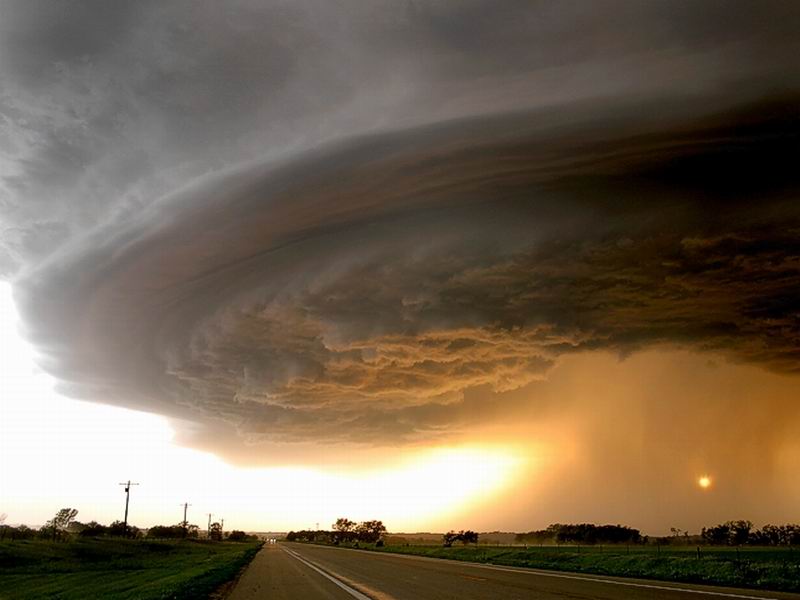
**Photo of Hurricane Katrina ( ? ) **
Return to Guide Return to Home Page
**Number of views of this page since September 21, 2005 ** :