Αεροπορική ασφάλεια
Αεροπορική ασφάλεια
25 Αυγούστου 2005 - ενημερώθηκε στις 29 Μαρτίου 2007
Χθες το βράδυ δειπνούσα με φίλους, στο Aix. Ο ένας από αυτούς είχε φέρει μια μπουκάλι κόκκινο κρασί. Μια γαλλική ποικιλία σταφυλιών, αλλά καλλιεργημένη στην Κίνα, από Κινέζους, την οποία εισάγουμε. Οι κάτοικοι της αυτοκρατορίας του Μέσου απλώς είχαν αρκεί, κατά την επίσκεψή τους στη Γαλλία, να αγοράσουν μερικές ρίζες. Και μετά ξεκίνησαν.
Ακόμα κάτι που θα ευχαριστήσει τους Γάλλους αμπελοκαλλιεργητές.
*- Είναι είκοσι φορές περισσότεροι από εμάς. - Και εδώ, υπάρχουν ακόμα άνθρωποι που πιστεύουν ότι εμείς, οι Γάλλοι, θα καταφέρουμε να βγούμε κερδισμένοι. - Η Γαλλία θα καταλήξει να γίνει κάμπος. - Το πρόβλημα είναι ότι δεν θα υπάρχουν θέσεις εργασίας για εξήντα εκατομμύρια φύλακες κάμπων. - Τους πουλάμε πάντως Airbus, σωστά; .... - Σε δέκα χρόνια, αυτοί θα μας τα πουλήσουν. - Τότε, τι πρέπει να κάνουμε; - Λένε ότι κυβερνώντας, σημαίνει προβλέποντας. Πιστεύω ότι έχουμε την πιο ηλίθια πολιτική τάξη που μπορεί κανείς να φανταστεί. Δεν είναι μυαλό αυτό που έχουν στο κεφάλι αυτοί οι άνθρωποι, είναι ένα γκρέιπφρουτ. - Αντίθετα, να χαλάμε πράγματα, ξέρουμε να το κάνουμε. Megajoule, ITER.... - Mega-βλακία. - Σε αυτή τη χώρα, δεν μπορείς να κάνεις τίποτα σωστά. Όταν θέλεις να καινοτομείς, βρίσκεσαι μπροστά σε τσιμεντένια τοίχους, κάθε είδους. - Να μελετάς συστήματα για την εξοικονόμηση ενέργειας; Μάταιο να ελπίζεις εδώ να λάβεις οποιαδήποτε ανταπόκριση! Στη Γαλλία, για κάθε λίτρο βενζίνης ή ντήζελ, το κράτος εισπράττει 80% φόρων. - Είναι βραχυπρόθεσμη σκέψη. Αλλά όλα, εδώ, είναι βραχυπρόθεσμα. - Είδες πόσα αεροπλάνα έχουν συντριβεί τους τελευταίους καιρού; Πέντε. Οι άνθρωποι φοβούνται να πάρουν το αεροπλάνο. - Ο υπουργός είπε «ότι θα λάμβανε energiques μέτρα ώστε οι επιβάτες να μπορούν να γνωρίζουν εκ των προτέρων τα ονόματα των εταιρειών που θα τους μεταφέρουν, πριν ξεκινήσουν το ταξίδι τους». Πίεσε κάθε λέξη. - Οι δημοσιογράφοι μιλούν για «νόμους των σειρών». - Αυτό λέγεται για να κρύψουν τις συνέπειες μιας συσσώρευσης αμελειών και αδιαφορίας. *
Θυμόμουν ότι στη δεκαετία του '60 είχα πάρει ένα από τα πρώτα «charter». Ήταν η μόνη εταιρεία που εξασφάλιζε πτήσεις σε μειωμένες τιμές στον Ατλαντικό. Το όνομά της: Loftleidir. Ήταν μια Ισλανδική εταιρεία που φόρτωνε τους επιβάτες στο Luxembourg, επειδή τα αεροδρομικά τέλη ήταν χαμηλότερα από αλλού. Τα αεροπλάνα ήταν τετρακινητήρια DC8, με κινητήρες με piston, σε αστέρα. Δεν ήταν ικανά να διασχίσουν τον Ατλαντικό με μία πτήση, οπότε γινόταν σε τρία μέρη.
- Luxembourg - Glasgow (στη Σκωτία)
- Glasgow - Reykjavik (Ισλανδία) - Reykjavik - New York
Όταν ξεκινήσαμε, μου φάνηκε περίεργο που η βρύση του μπάνιου μου έμεινε στο χέρι. Αλλά είπα, καλά... Στο πέρασμα αυτό μου θυμίζει ότι όταν πήρα ένα αεροπλάνο για την Αίγυπτο, το 2003, σε μια πτήση εξασφαλισμένη από μια Αιγυπτιακή εταιρεία, ένα βραχιόλι του καθίσματος μου έμεινε στα χέρια. Όταν βλέπεις τι συμβαίνει τώρα, δεν προκαλεί πια χαμόγελο.
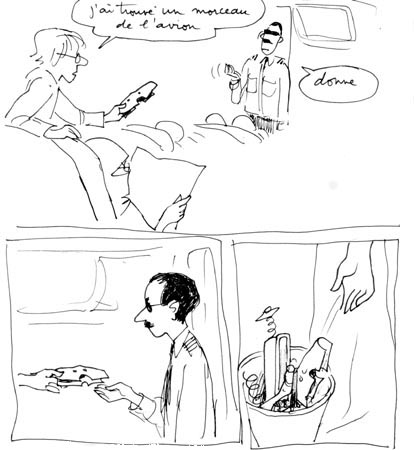
Inch Allah Airlines
Ας επιστρέψουμε στην πτήση σε αυτό το τετρακινητήριο. Ξεκίνησε με μια τεχνική στάση δέκα ωρών στη Glasgow. Το επαναλάβαμε στο Reykjavik. Χαλάστηκε πάνω από τον Καναδά. Δύο κινητήρες έβγαλαν «σταυρό». Στο αεροπλάνο υπήρχαν πολλοί Εβραίοι, με curly μαλλιά και kippas, που είχαν βγάλει την «Torah» και ψαλmodούσαν στα Εβραϊκά, κουνώντας το σώμα τους μπροστά-πίσω. Τότε εγώ έπρεπε να ήμουν είκοσι ετών. Το αεροπλάνο προσγειώθηκε σε έκτακτη ανάγκη στο Goose Bay, σε μια βάση του Strategic Air Command. Θυμάμαι ότι είχαμε πετάξει πάνω από μια σειρά «V-bombers» Avro, αγγλικών, βαμμένων σε khaki και φέρωντας το αμερικανικό αστέρι, λευκό. Μόλις προσγειωθήκαμε, G.I. μας οδήγησαν σε ένα hangar χωρίς παράθυρα όπου μείναμε για ώρες. Μετά ο αρχηγός ήρθε να μας μιλήσει.
*- Λοιπόν... έχουμε κάποια προβλήματα με τους κινητήρες, όπως είδατε. Ο αμερικανικός στρατός έθεσε στη διάθεσή μας λεωφορεία για να完成 το τελευταίο τμήμα προς τη New-York, μέσω του Labrador. Εμείς, θα bring the plane back to New-York. Αν κάποιοι επιβάτες θέλουν να μείνουν στο αεροπλάνο, μπορούν να επιλέξουν αυτή τη λύση. *
Προτίμησα το αεροπλάνο, γιατί τότε το Labrador ήταν γεμάτο κουνούπια. Δώδεκα περίπου επιβάτες επέλεξαν επίσης να μείνουν. Οι άλλοι μπήκαν στα khaki λεωφορεία. Η απογείωση ήταν δύσκολη. Έπρεπε να pack the engines, με όλα τα φρένα σφιγμένα. Αλλά το αεροπλάνο τελικά πήρε αέρα, ξυπώντας τα δέντρα.
Αντίθετα, έχω μια άλλη ιστορία να αφηγηθεί, πολύ πιο πρόσφατη. Ήταν σε μια πτήση Air France San Francisco - Paris, απευθείας, σε ένα 747. Μας έκαναν να περιμένουμε έξι ή επτά ώρες. Δεν επρόκειτο πλέον για την πυκνότητα της αεροπορικής κυκλοφορίας, αλλά για «μια τεχνική δυσκολία». Μάλιστα δεν κρίθηκε σκόπιμο να μας δοθούν εξηγήσεις, ζητώντας απλώς «να δείξουμε υπομονή». Όταν ήμασταν στον αέρα έμαθα περισσότερα από τους stewards. Το 747 είχε προβλήματα κινητήρα. Αλλά η υπηρεσία συντήρησης της Air-France ήταν στο Los Angeles. Στο San Francisco, αν η Air France ήθελε να εξασφαλίσει τις υπηρεσίες της αμερικανικής συντήρησης, δεν θα υπήρχε πρόβλημα. Αλλά θα έπρεπε να πληρώσει. Οπότε η εταιρεία προτίμησε, για να κάνει οικονομίες, να μας bring back to France με μια πρόχειρη επισκευή εξασφαλισμένη από τους τοπικούς Γάλλους μηχανικούς, η οποία, κατά το προσωπικό του αεροπλάνου, ήταν περισσότερο DIY παρά κάτι άλλο.
Ένιωσα ότι το προσωπικό στην καμπίνα φοβόταν. Αλλά φτάσαμε καλά.
Μόλις ήμουν στη Γαλλία, έστειλα ένα γράμμα στις τεχνικές υπηρεσίες της Air France, αναφέροντας την ώρα, την ημέρα και τον αριθμό της πτήσης, και ρωτώντας τι είδους τεχνικό πρόβλημα arose για να μείνουμε κολλημένοι στο Frisco για επτά ώρες. Η απάντηση ήταν laconic, στο πιο καθαρό style «wooden language»:
- Κύριε, * Η μεταφορά των επιβατών εξασφαλίζεται από την εταιρεία Air-France στις καλύτερες συνθήκες ασφάλειας. * * Παρακαλώ δεχθείτε .....*
Έτσι γίνεται. Η Air France έπαιξε με τη ζωή 400 επιβατών για να κάνει οικονομίες. Σε κάθε περίπτωση, αν τολμούσατε να κάνετε ερωτήσεις προσπαθώντας να λάβετε τεχνικές λεπτομέρειες για ένα incident πτήσης, θα συναντούσατε την ίδια opacity.
Το αεροπλάνο ... Inch Allah.
Ένας αναγνώστης με ρώτησε γιατί οι επιβάτες των commercial planes δεν είναι εξοπλισμένοι με parachutes. Ο λόγος είναι απλός (εκτός από το extra weight και bulk που θα προκαλούσε). Τα commercial planes πετούν πολύ γρήγορα. Πάνω από 150-180 χιλιόμετρα την ώρα, η διάβαση της πόρτας ενός αεροπλάνου σε πτήση είναι problematic. Υπάρχει κίνδυνος να χτυπηθείς. Αυτά τα parachutes, κανείς δεν θα could use them. Σε περίπτωση failure του engine, η landing είναι problematic. Στη θάλασσα, στα 250 km/h, το νερό είναι σαν reinforced concrete. Είδα μόνο μία perfectly successful forced landing. Ήταν στο Marignane, στο τέλος της δεκαετίας του '60. Εργαζόμουν σε ένα annex του Institute of Fluid Mechanics of Marseille που had its premises very close to the airport. Τρώγαμε στο restaurant με τους people of the technical services και had view on the runways. Suddenly a Caravelle taking off had an engine failure. The pilot pushed on the stick. All passengers must have appreciated these ten seconds of "weightlessness". Then the guy managed to land the plane on its belly, on the grass bordering the runway, without even having to turn.
The Caravelle has engines located high up and very low wings. The plane landed "in ground effect" without the slightest problem. We ran and we were there when the passengers, more dead than alive, emerged from the cabin. The stewardess, not knowing what to do, was distributing perfumed paper napkins to them. I would be delighted, incidentally, to know who was the pilot who achieved this performance at that time, under my eyes.
29 Μαρτίου 2007: Χάρη στον νεαρό Emmanuel Faure (που λέει ότι είναι το ένα τέταρτο της ηλικίας μου) μπορέσαμε να retrieve photos from the era, taken by his grandfather, who was in charge of airport security at the time. We have first shots taken just after the belly landing of the aircraft. At the bottom right, we see its trajectory. The pilot opportunistely turned towards the grass runway, using the braking parachute, which we see spread out on the grass. Hats off for the reflexes. We would like to know his name. We don't have the exact date, nor press clippings from the time. If someone has that..
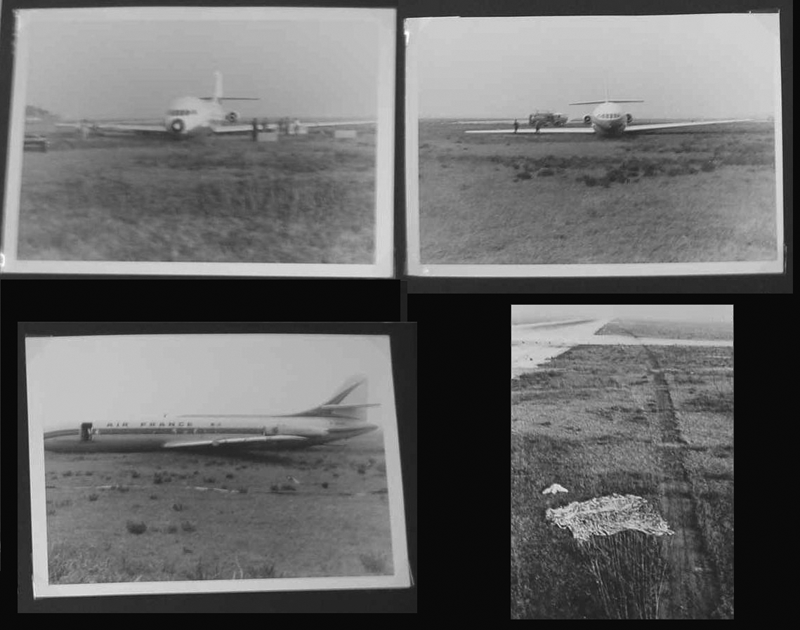
Η Caravelle της Air France, αμέσως μετά την προσγείωση με το belly, στο grass runway του Marignane
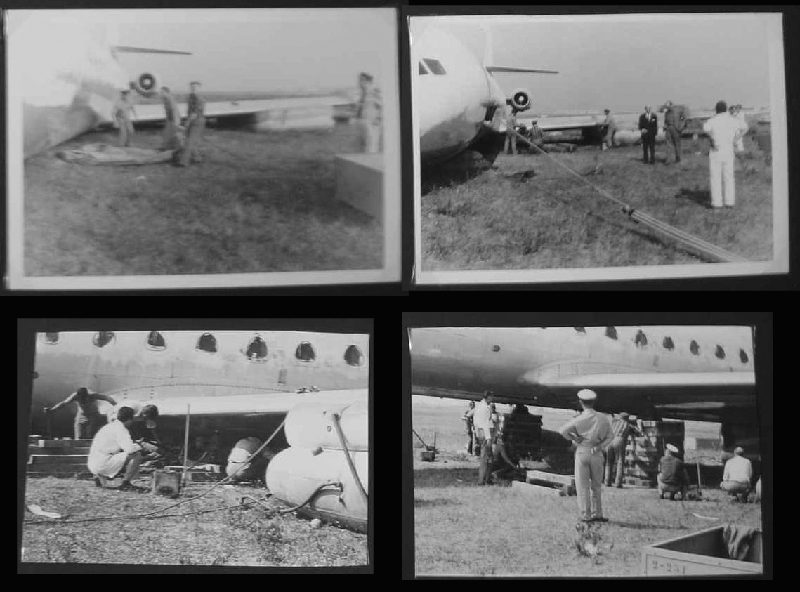
Δεύτερο Act: we undertake a recovery. For this, we slide inflatable sausages under the wings and lift the aircraft. Note, at the bottom left, that all the windows have been broken, probably by the cabin crew. The evacuation, according to my memories, must have been done through an emergency door, lateral. Indeed, on these aircraft, normal access was through the rear, under the empennage, an exit that was unusable. During the minutes following the crash, there must have been a real disaster-movie atmosphere on board, since the plane had its full load of kerosene.
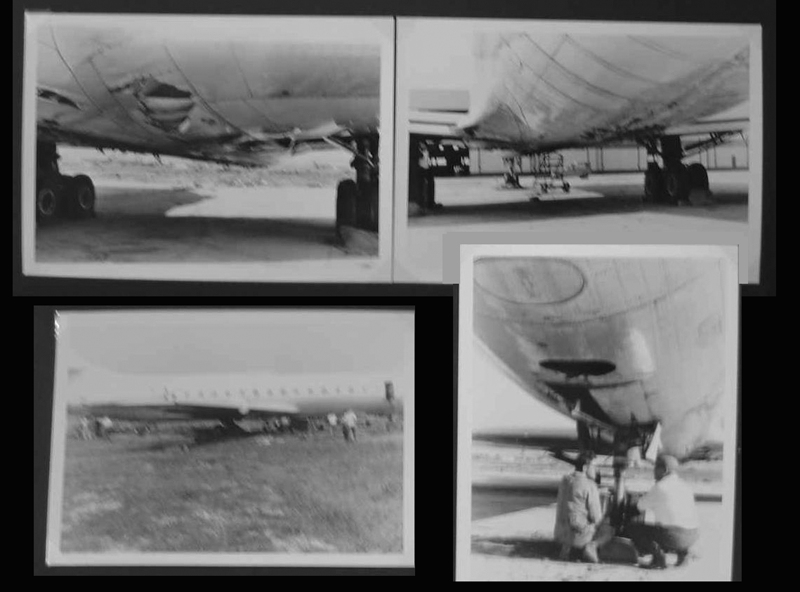
Τρίτο Act: The sausages worked. The landing gear could be extended. The plane could then be towed to hangars
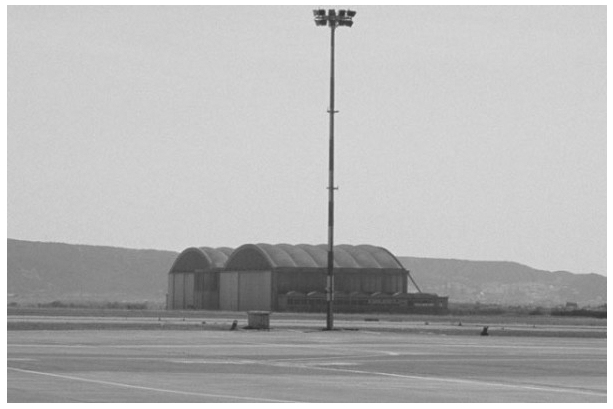
The Boussiron hangars located on the side of the Berre lagoon, where the plane would have been repaired and restored to flight and operational condition
The Caravelle was a remarkably solid plane. I had a friend, Josso, with whom I had done Supaéro. He died in diving, diving with the Roubaix family, in Corsica, trying to extract a grouper, at moderate depth. He pushed and crack, syncope. We found him dead, lying on his fish. Shortly after, the own son of the Roubaix, great pioneers of free diving, killed himself, in the Azores, I believe. François, was a brilliant composer of music with whom I had been a schoolmate, at Lycée Carnot, in Paris. We were all very close. He got lost in an underwater maze. He composed many successful film scores like La Scoumoune, Les Aventuriers, etc...
Let's return to Josso. He loved flying, especially these small canvas-covered biplanes called Stampes. One day he was participating in a ferry mission of two Stampes, with an instructor. Understand that they were making the trip with two aircraft and were supposed to return together, in one of these two-seaters. Suddenly they inadvertently entered an air corridor where a Caravelle was approaching. The instructor was flying ahead. The pilot of the Caravelle saw his tiny aircraft at the last moment and pushed on the stick to try to pass underneath. But the collision still happened. The Stampe hit the cockpit, opening a breach in it that was, if my memories are correct, four to six meters long and one meter wide. The plane fell apart. The pilot was killed. The engine penetrated the cockpit and killed one of the passengers. But the aircraft could still land, with this huge hole in its fuselage. If someone has photos or press articles, I am interested.
When planes have their engines hanging under the wings, in "pods", this kind of acrobatics, the belly landing, is no longer possible. When it comes to an emergency landing, whether on land or sea, the engines are ripped off immediately, dragging the wings with them.
When a plane has a problem in flight, nothing is easy. If the engines are sputtering, the pilot will tend to try to restart them until the last moment. But, doing so, he will keep the tanks full, without activating his "quick-empty". Speed is maneuverability. Extending the flaps is a slow operation, as you have seen. It is rare that there is no damage, and this incident on the Caravelle, with a happy outcome, represents the exception that confirms the rule.
In the story of the Caravelle, everything must have happened so fast that the pilot surely did not have time to empty the tanks (of the wings!). Landing on the belly with a full load, hello adrenaline! On a hard runway, friction would have immediately triggered a fire.
5 Σεπτεμβρίου 2005: The black streak continues
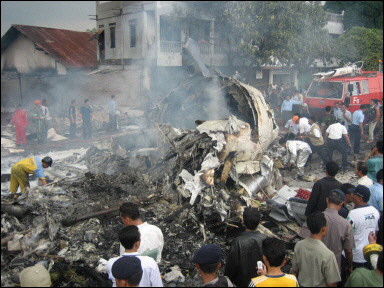
Crash of a Boeing on the island of Sumatra, at least 100 dead
DJAKARTA (Reuters) - The crash of an Indonesian Boeing 737-200 near the city of Medan, on the island of Sumatra, should have caused about a hundred deaths, according to official sources on Monday.
"The plane crashed onto houses and landed on the road. It is now in pieces. I expect a toll of about a hundred deaths. No survivors have been reported," explained a spokesperson for the provincial government of northern Sumatra.
The plane was carrying more than a hundred passengers. The spokesperson did not specify if there were victims on the ground.
The plane crashed shortly after takeoff and landed in an urban area:
If the plane is the safest means of transport in the world, what are the others?
My comment
A reader sent me a document, unfortunately in pdf and not in text file. From all this, it emerges that many companies, in the world, maintain their planes by taking the problem lightly. Employees must keep silent or are fired. One of them sent me photos of an Airbus used by a Chinese company that was a ... garbage. Not being sure of the source, I did not publish them, but they are likely authentic.
Silence, or you are fired. We had an example recently. It is .... the law of profit with its corollary: the most complete disregard for human life. It is as simple as that. But the passengers of planes are not all third-world people. There are also middle-class tourists, the clients of charters, who represent a big market. Companies little concerned with the life of their clients may lose feathers in the movement that is emerging. But even the so-called "serious" companies also take liberties with safety to make savings. Look at my own testimony in this html gap, referring to this return from San Francisco on an Air France 747 with ... a makeshift repair.
For money, one can take many risks .... For others.
Come on, it will hold well until Roissy!
There, it had held. But was it normal? Obviously, no.
Crash of a Boeing on the island of Sumatra, at least 100 dead
DJAKARTA (Reuters) - The crash of an Indonesian Boeing 737-200 near the city of Medan, on the island of Sumatra, should have caused about a hundred deaths, according to official sources on Monday.
"The plane crashed onto houses and landed on the road. It is now in pieces. I expect a toll of about a hundred deaths. No survivors have been reported," explained a spokesperson for the provincial government of northern Sumatra.
The plane was carrying more than a hundred passengers. The spokesperson did not specify if there were victims on the ground.
The plane crashed shortly after takeoff and landed in an urban area:
If the plane is the safest means of transport in the world, what are the others?
My comment
:
U
n reader sent me a document, unfortunately in pdf and not in text file. From all this, it emerges that many companies, in the world, maintain their planes by taking the problem lightly. Employees must keep silent or are fired. One of them sent me photos of an Airbus used by a Chinese company that was a ... garbage. Not being sure of the source, I did not publish them, but they are likely authentic.
S
ilence, or you are fired. We had an example recently. It is .... the law of profit with its corollary: the most complete disregard for human life. It is as simple as that. But the passengers of planes are not all third-world people. There are also middle-class tourists, the clients of charters, who represent a big market. Companies little concerned with the life of their clients may lose feathers in the movement that is emerging. But even the so-called "serious" companies also take liberties with safety to make savings. Look at my own testimony in this html gap, referring to this return from San Francisco on an Air France 747 with ... a makeshift repair.
P
our money, one can take many risks .... For others.
Come on, it will hold well until Roissy!
T
here, it had held. But was it normal? Obviously, no.
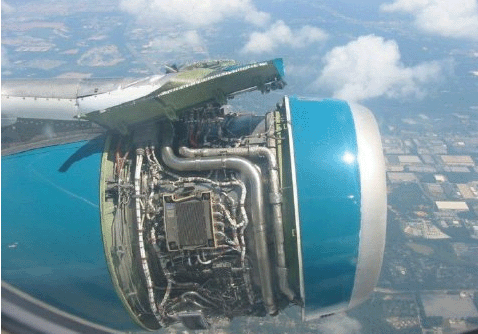
Flight incident ---
Return to the beginning of this file
Return to Guide Return to Home Page
Number of visits to this page since August 25, 2005: ---