The Mysteries of the B2 Stealth Bomber
The Mysteries of the B2
August 20, 2002
Page 5
The B2's Oddities
The photographs presented in the brochure leave specialists with differing impressions depending on which part of the aircraft is shown. Everything related to the landing gear:
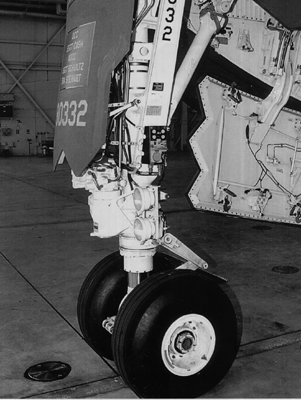
Nose Gear
or the bomb release system:
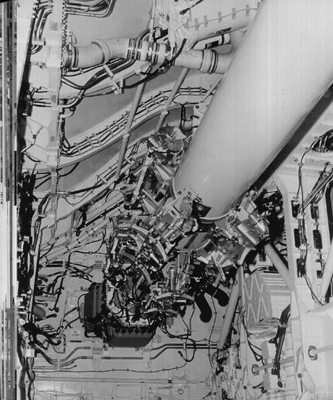
Rotary Bomb and Cruise Missile Release System
appears very "clean," very "professional," very "finished," "integrated into the structure," or "original." We should note in passing that using a barrel-type system for releasing bombs or cruise missiles is not an innovation. This system was already present in rather old Soviet strategic bombers. Let's now take a look at the pilots' flight suits for this third-millennium bomber:
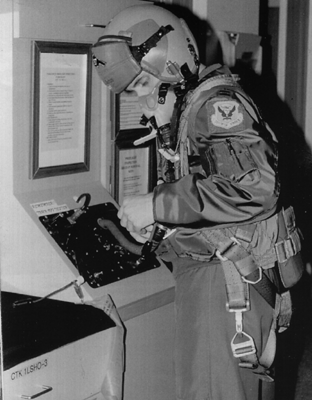
This might barely be acceptable given the cruising altitude: 15,000 meters. These suits are not pressurized. It is indeed assumed that pilots could survive an accidental decompression or one caused by a surface-to-air missile impact up to an altitude of fifteen thousand meters.
On the following image, the co-pilot of the aircraft, seated in his ejection seat:
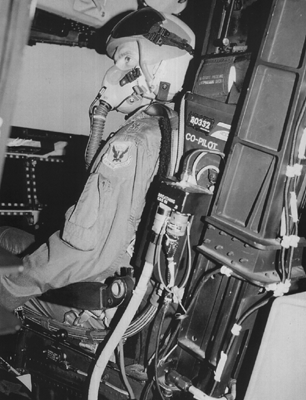
Is it conceivable that on this third-millennium bomber, so expensive, we would allow such a number of hoses and wires to simply dangle in the access corridor, without even providing them with protective covers? According to André Jacques Holbecq, former Concorde pilot, it is unthinkable to keep a person seated for more than ten hours and then expect them to be able to concentrate fully on a bombing mission, which demands complete attention. According to James Goodall's dossier, during the Whiteman-Kabul raid, the pilots had already logged at least thirty hours of flight time in a seated position when they reached the combat zone. In a B-52, there are six crew members. In such complex aircraft requiring constant monitoring—whether of the aircraft itself or of communications—it is hard to imagine a single pilot at the controls while the second "takes a quick nap to recover." There are simply too many critical tasks to manage simultaneously.
The brochure provides a few interior cockpit images. The impression is one of makeshift assembly, of components borrowed from existing aircraft. In a completely original design, the ergonomics are immediately apparent. In such cockpits, every square centimeter is functional. Just think of the cockpits of a civilian Airbus or Boeing. When closely examining the following photos, one gets the impression that many components taken from other aircraft have been bolted onto available spaces, often leaving noticeable gaps.
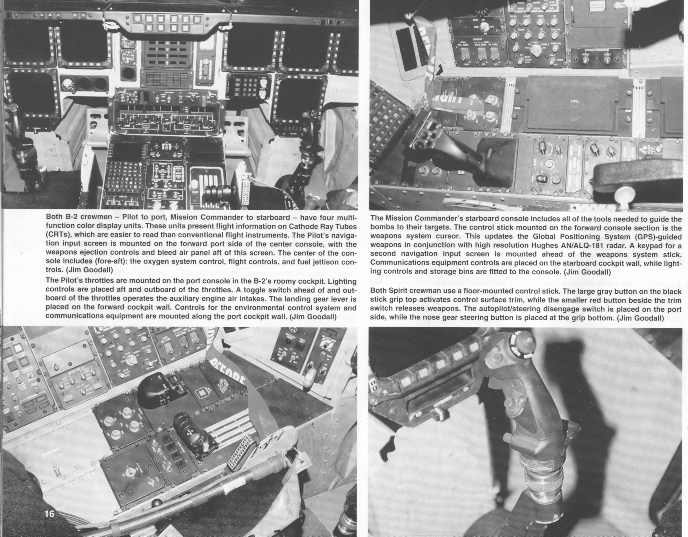
We are supposedly facing a pinnacle of modern technology, said to be composed mostly of non-metallic elements and composites (80%, as stated on page 7). Then, how can we explain the abundance of riveted metal sheets present in the cockpit (more clearly visible in the original documents)?
Why has the production of these B2s been limited to twenty-one units, with production halted in 1997 (page 13)? What could be so secret, so "sensitive" about these aircraft that makes it impossible to produce more of them and deploy them at all the U.S. bases around the world?
Previous page Table of contents Next page
Initial counter set on October 7, 2002. Number of page views: