Tom Bearden or the Energy of the Vacuum
Tom Bearden or the Energy of the Vacuum
May 26, 2004: Although I have decided to keep the following letter, which corresponds to an approach made by a young physicist colleague (signing under a pseudonym) and mentioning the "abandonment" of Bearden by another physicist, Evans, whom he claims to be, the question cannot be considered as clarified. There remains a "Bearden problem," just as there remains a "water memory" problem or a "cold fusion" problem. My readers obviously strongly wish that we try to clarify all these matters. Many have directed me toward various leads, resulting in one or another position. It would not be ethical to hastily respond to opinions with another opinion. But all of this requires a considerable amount of investigation and analysis. Busy with many other tasks, I can only defer these questions for later. The fact that Bearden, who it appears has previously collaborated with his colleague Evans, is now rejected by him proves nothing. Only scientific facts should be considered. Jean-Louis Naudin claims to have repeated certain experiments. All of this must be examined. The excess energy that was observed corresponds to the demagnetization of magnets? Another question to be clarified. In science, no thesis can be considered a priori as nonsense. If superconductivity had not been easily demonstrated by Kamerlingh Onnes at the beginning of the 1900s, if these experiments were delicate, difficult to reproduce, and only appeared today, there would be no doubt that this phenomenon, still very poorly understood, would immediately be hailed as a fraud, people exclaiming, "How can you make electric current circulate in a conductor for decades without any Joule effect loss!" In the same way, I would like to point out that the great Poincaré, when confronted with the fission thesis, responded at the time, "I personally doubt that one day one could destroy a city with a pound of matter."
Conversely, artifacts can mislead many people, including the experimenters themselves. For this purpose, read a story I wrote, but which corresponds to a real story, rather sad, indeed.
May 5, 2004
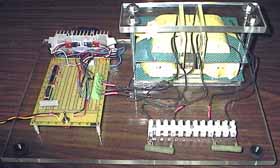
What is the energy of the vacuum? When referring to Tom Bearden's site, one sees a mass of concepts of "advanced physics." A machine is presented, "which would have allowed to extract energy from the vacuum."
Bearden is the "vanguard" of actions by people like Greer, who tends to attract the attention of the masses on fantastic energy sources. All of this deserves investigation. I had my own opinion on Dr. Greer. In 2002, he launched an operation "Disclosure" ("Revelation"). In this manifesto, Greer encouraged people who had participated in "black programs" in the USA to speak out and reveal that the United States, based on the study of UFO wreckage, would have discovered new areas of science and technology, giving them an extraordinary advantage in many fields. I do indeed think that the Americans have a technological and scientific advantage over other nations that is far from being imagined. I have mentioned some concrete points (MHD) in the book I published in January 2003. I admit that at first I was tempted to believe that Greer's approach was authentic and sincere, and even in this case very courageous. I then sent him a fairly comprehensive dossier, in English, concerning the American advancement in hypersonic flight. I was surprised that Greer did not put these information on his site, since according to him, this is exactly what he would have wanted. In fact, as the months passed, I finally understood that Greer's actions were part of a large-scale disinformation plan made in the USA. The idea was to attract people's attention to supposedly revolutionary concepts that would later prove to be fallacious, thus discouraging them from questioning these potential "exotic" energy sources.
Let's make a parallel. A country invents the atomic bomb. To dissuade people, including scientists, from closely examining this type of new weaponry, a man is entrusted with the task of raising alarms, saying, for example, that it is a fantastic "oxygen and liquid hydrogen bomb" (it should be noted that when the Japanese military arrived in Hiroshima and observed the extent of the damage caused by the bomb, they thought it might be a bomb whose components could be in a liquefied state). After the entire world's attention had been focused on this fantastic "liquefied components bomb," physicists showed that all of this was baseless and that a bomb of this type could not "destroy a city," as claimed by our "Capitol goose." A general discredit then spreads over all these claims and discourages people from going further. If by chance some information leaks about a potential nuclear explosive, the reaction will then be "Oh, it must be something like that nonsense of the liquefied components bomb." This is how a disinformation operation works.
The operation mounted by Greer's team (which is obviously only the tip of the iceberg of such a device and which can be adeptly manipulated) includes elements that are supposed to be at the top level of science. This is the position occupied by Thomas Bearden, the champion of the energy of the vacuum. To clarify things, someone had to plunge (courageously) into Bearden's writings and try to shed light on this whole affair. Below is the letter that summarizes the investigation conducted by my correspondent, a physicist. In short, Bearden's texts are a patchwork of "propositions" which are either trivialities at the level of a first-year physics student, or advanced concepts, handled by some theoretical physicists. The only thing missing is the logical link between all these elements. Also absent: the diagram of the famous machine built by Bearden. He merely claims that there is enough information scattered in his writings for an electronics engineer to reconstruct it. But apparently, it resembles puzzle pieces thrown on a table, without their instructions. Bearden cites a physicist named Evans, frequently referring to him. My friend then contacted Evans, an authentic high-level theoretical physicist, and questioned him. The response was unequivocal: he considers Bearden nothing more than a fraud and a charlatan and allows my friend to reproduce his opinion on an Internet site.
Unless there is contrary information, this closes the Bearden file, one of the vanguards of contemporary pataphysicists. Bearden's actions, whether conscious or a delusional manipulator, serve the Americans in deploying a smoke screen (including the Biefeld-Brown effect) to hide much clearer advances, such as MHD applied to hypersonic flight. As I wrote in my book, I would be ready at any time to sit down in front of physicists, fluid mechanics engineers, and aeronautics experts to answer all their questions regarding this new concept of hypersonic flight with a controlled air intake by MHD and a system allowing the re-injection of converted energy into electricity upstream, in addition to speed at the outlet of the nozzles. These are things I have indeed presented to students and teachers at the École Nationale Supérieure de l'Aéronautique de Paris in the spring of 2003, and no one even raised an eyebrow. I am not a Bearden of fluid mechanics and ionized gas physics. No one has ever said out loud, and especially not written, that I am a charlatan in the various disciplines I have addressed.
What is clearly conceived is clearly expressed.
**
Dear Jean-Pierre,
You asked me to take a look at Tom Bearden's website:
and give an opinion for the readers of your site, whom I salute in passing. I suppose you already have your own idea on the matter, but you're right: two points of view are better than one.
What to do with such a site? Here is a man who tells us that we can extract energy from the vacuum, that it's easy, that he has already done it and that he intends to do it on a larger scale. How to form an opinion? A first solution is to rely on the document titled: The Motionless Electromagnetic Generator: How it works, that is, How it works. Super! one says, he will explain everything without getting into unnecessary details!
Unfortunately, this document is of no help to us: it uses so many notions of such a high level that very few physicists know them all. For example the
Berry phase,
a rather recent mathematical concept used by some theoretical physicists to deal with certain problems of quantum mechanics: many physicists (but not all) have heard of it, very few have really studied it and know how to use it. If the author hides behind such concepts, he can tell us anything because very few people can verify. It is enough for Bearden to multiply references to the most difficult and advanced concepts of physics to create a smoke screen behind which he can hide. He also mentions something called "symmetrical and asymmetrical regauging" (no idea what it is, but I am ready to believe it exists), provided he also refers to the semi-advanced and semi-retarded potentials of electrodynamics or to the second topological invariant of Donaldson, it is certain that no one will be able to follow him.
Here one could object to me: it is easy to multiply references to the most abstract concepts of physics, but it is difficult to articulate them in a coherent way. But just that, Bearden does not articulate them: his "explanation" is just a long list of small statements (many of which are certainly true, by the way) without any sign of logical sequence. No "therefore," "or," "which implies," "it follows that," etc... Are we supposed to add them? Is it a puzzle? Bearden alternates between classical or even trivial statements and his rather bold personal conclusions.
It is worth noting, by the way, that not all of Bearden's references are impenetrable: he also gives us some information that are trivialities for physicists, things that all first or second-year university students should know, such as the fact that electric (E) and magnetic (B) fields are not separable, but are two aspects of a single entity. The most surprising (and the most suspicious) is that these basic notions are the only ones he details! He does not explain what the Berry phase is. No, too simple! (It's a pity, it would have interested me.) On the other hand, he thoroughly explains the elementary things about E and B fields, referring to citations from top figures such as the Nobel laureate Richard P. Feynman (which he can do because even Nobel Prize winners sometimes explain simple things in textbooks, and this does not fool a physicist).
This made the document unexploitable and unconvincing. Fortunately, there is another approach to the problem: the machine, the experimental object, does it work? Mr. Bearden tells us that he has built his machine, that it works, and that we can do the same at home. Fine. Where are the plans? I must say that I have spent a lot of time on his site without finding them. Of course, his site is a multi-drawer, tentacled site, so you never see the end of it, and I cannot say that I have explored everything. But in any case, I have spent a lot of time and have not found a diagram of the object. The author tells us, however, that "enough information has been disseminated to allow a normal laboratory to duplicate his device." Yes, but where? Is it available at a specific location? In the document "How it works," Bearden tells us that his machine resembles a transformer with a core in a special "nanocrystalline" material. Well, I'm willing to believe that, but what material? Does it have a name? Is it available in specialized commerce? With such indications, the best electronics engineer is not close to duplicating his machine.
On the other hand, since his machine works, why doesn't he show it to us? Well, I live a bit far from California, but a small demonstration at an IEEE (Institute of Electrical and Electronics Engineers, a powerful American scientific association that claims to be a catalyst for innovation in electrical engineering) conference would not hurt.
So, there is no reason to worry: if Mr. Bearden's invention stands up, he will probably soon be at the head of a fortune such that the amount of the Nobel Prize that will certainly be awarded to him will not even be worth the effort of going to Stockholm.
Enough joking: Mr. Bearden does not cite only scientists from the past century like R. P. Feynman, he also cites living people. By digging on his site, one can also find excerpts of correspondence from a Professor Evans. Upon closer inspection, one realizes that it is not correspondence between Mr. Evans and Mr. Bearden, but messages taken from the website of the institute that Mr. Evans directs, the AIAS (Alpha Institute for Advanced Studies
/ ), in other words, the internal correspondence of the institute. Before finding this page, I did not know Professor Evans. I went to his institute's website to read his CV. Impressive. It emerges that Mr. Evans is an authentic physicist, he has done university studies in physics, he has received grants, he has been invited to various universities around the world and he says he is the author of more than 600 publications - there, it's almost too much. He has also received a large number of awards, which becomes even a bit suspicious. He has published 11 books, including one with Jean-Pierre Vigier who worked with Louis de Broglie (good grief!), and he would have two books in the process of publication. There, I admit I was disturbed: a real physicist working with Bearden? I wanted to know more and I wrote directly to Evans without hiding that it was to find out more about Bearden. Here is a summary of our exchange:
Professor Evans
: In my opinion Bearden's work is pseudo science and should be ignored. Recently he admitted to having a Ph. D. from a fraudulent University called "Trinity University" which was traced to a mail box in Sioux Falls Minnesota. Presumably Bearden's Ph. D. is a post card which was sent to the mailbox. He refers to my work a lot, and to the work of other genuine scientists, but does not understand any physics and misrepresents the work of genuine physicists in a very damaging way. I tried for years to make sense of his words, but in the end terminated all relations with him and blocked his e mail.
: Can I quote you on the web?
Evans
: Yes by all means, Bearden should be denied by every real physicist. (…) Bearden's verbiage has been condemned over and over again as total nonsense and I am very glad that you see this. So I think that everything he has written and will no doubt go on writing should be denied and condemned at every opportunity."
Translation
Professor Evans
: In my opinion, what Bearden does is pseudoscience and should be treated with contempt. He recently admitted to having a Ph.D. from a fraudulent University called "Trinity University" which was traced to a mailbox in Sioux Falls, Minnesota. Presumably Bearden's Ph.D. is a postcard sent to that mailbox. He makes a lot of references to my work as well as to the work of other genuine scientists, but he doesn't understand physics and misrepresents the work of genuine physicists in a very damaging way. I tried for years to make sense of his words, but in the end I terminated all relations with him and blocked his e-mail.
: Can I quote you on the web?
Professor Evans
: By all means! Bearden should be denounced by every real physicist. (…) Bearden's verbiage has been condemned many times as nonsense, and I am glad that you see this. I think therefore that everything he has written and will no doubt continue to write should be denounced and condemned at every opportunity."
It could not be clearer. Yes, nothing prevents Bearden from citing whoever he wants on his site as long as the citation is accurate, even someone who has no esteem for his work. He should have limited himself to citing people like Feynman, however: the scientists of the past cannot defend themselves anymore.
This letter would not be complete if I did not say that recently, Mr. Evans, we are told, has designed a unified field theory. Mr. Evans also thinks that one can in principle extract energy from the vacuum, or rather from space-time, and hope to highlight antigravity phenomena. This is why Bearden cites him. But Evans does not say that it is already done or that it is for next week. His theory being young, it still has to go through all the required tests: confrontation with other physicists, with experiments already made and with those it can suggest to us. In short, it has to make its way, if it can.
That's it, Jean-Pierre. As you asked me, I tried to be brief to spare your readers. You will confirm to them that I have gathered many arguments in my pocket and relevant, even deadly arguments. But I think that is enough on the Bearden affair.
Sincerely
J. Livard, physicist.
**Number of consultations since May 5, 2004 ** :