About biofuels. Article by Marc Alias
About biofuels
September 2, 2005
An article by professional journalist Marc Alias. Press card number: 94236 aliasmarc yahoo.com

Yellow gold versus black gold?
In the same vein as the articles on LPG, here is the quintessential alternative fuel, this time for diesel engines: Pure Vegetable Oils or PVO. Indeed, these engines, with their undeniable virtues, represent the bulk of sales in France today, particularly for 4x4s and their hybrid SUV cousins. Europe has given the green light to PVO for years, but as in a famous Gaulish comic strip, "All of Europe is conquered. All? No, because a small country still and always resists the invader"... And why is that?
The Titanic syndrome...
This is the revealing title of Nicolas Hulot's book on the suicidal and highly irresponsible behavior of the economic and political leaders of wealthy societies. Wealthy? In material terms, yes, but in common sense, no.
Currently, industry still produces more greenhouse gases than transport, but transport emissions are increasing alarmingly and should soon become the most polluting sector... The problem with these activities is that they use fossil fuels, including oil. The main common flaw of these primary energies, along with gas and coal, is their release of more than 50 greenhouse gases, including the media-famous CO2, in a very short time, when one considers the 300 million years of storage by nature! Are you still skeptical? Analyses of gases trapped in deep ice cores at the North Pole show an obvious correlation between the rise in CO2 levels and the rise in average temperature. Know that this has already increased by 0.6°C in just one century. Consequences? They are countless and extremely serious for all life on earth, including the most fragile: ours! Let us cite, for example, the melting of freshwater ice caps, the disruption of major ocean currents that regulate the global climate, cyclones, the rise in sea level due to thermal expansion, increased rainfall, torrential or not, in temperate regions, and conversely, accentuated desertification in southern regions. The balance is now broken, and since 1950, the increase in greenhouse gas emissions has been exponential: from 6 billion tonnes of CO2 emissions from fossil sources at that time, we have gone to 24 billion in 2000! Not to mention the logical depletion of these resources, the earth can no longer recycle more than half of the current CO2, which, know this, is not the worst of the greenhouse gases, by far. However, it must be understood that with current methods, those who consume the most pollute the most. In this regard, North America, Europe, Russia, and Australia, which account for only ¼ of the world's population, waste 2/3 of the energy produced! An unsustainable pace globally with our 6.5 billion humans, since it would take 5 times the earth's resources for everyone to live like... Americans! And what about 2050, when we will be nearly 10 billion? These flagrant and growing imbalances are conducive to tensions, even extreme ones, such as war or rather its modern version, terrorism.
"It is not the street that governs!"
This little murderous phrase from Mr. Raffarin says a lot about the immutable mindset of our "great" leaders, often poorly advised, and explains, on its own, 99% of our problems. If politics made rational decisions, there would be no more crises, but all too often, advisors are nothing more than the well-paid spokespersons for selfish and greedy lobbies. And one may wonder if the misfortune of some does not make the happiness of others...
On the political side, therefore, nothing to hope for. Except on the side of Diester and other ethanol sectors controlled by large agricultural operators of rapeseed, wheat, and beet. Energetically poor from well to wheel, or overall if you prefer, this sector's only "advantage" is to bring and concentrate the production of this substitute fuel in current refineries. As Christian Brodhag, the Interministerial Delegate for Sustainable Development, recently pointed out, "The small size of installations (PVO, ed.) also poses transaction problems between all the actors necessary for their implementation. Decisions in a centralized energy system are easier than in a decentralized system. We are seeing these difficulties today in the context of wind power deployment in France. (Ridiculously small capacity and currently almost stopped by the EDF lobby, ed.)" Yet, these micro-productions would avoid costly transport and create jobs everywhere, wouldn't they? And he added, "The context of sustainable development indeed implies minimizing the economic and social costs of changes in production and consumption modes necessary to reduce our emissions. Two main avenues allow for reducing these costs:
• Technology that allows for a more efficient result at a lower cost
• The search for opportunities in terms of economics and employment, new services, and new products. The significant development of renewable energies thus poses unprecedented problems due to their very nature."
Reading between the lines and with a bit of common sense, it is easy to see that the political situation is stuck at these announcement effects. Take, for example, the last line extracted from the speech above, "the search for opportunities...": We will list them on paper and above all... do nothing concrete. Yet another pure and hard selfish reasoning induced by dominant lobbies while the rapidly growing global imbalance between rich and poor countries threatens us with the worst in the short term. Indeed, in less than two centuries, we are releasing the carbon, primarily via oil, that nature stored for good reasons of vital balance, be sure of it. To close this political chapter, on which our survival depends, let us add that Europe authorized, through Directive 2003/30/EC of the European Parliament and of the Council of May 8, 2003, aiming to promote the use of biofuels or other renewable fuels for transport:
"(8) Thanks to technological progress, most vehicles currently in circulation in the European Union can already use, without major problems, a low blend of biofuel. The latest technological breakthroughs allow for higher percentages of biofuel in the blend. In some countries, blends containing 10% biofuel and more are already being used."
As one might suspect, renewable energies can play a major role, but remain currently limited to 10% of energy consumption in Europe, aiming to reach 21% by 2010 according to currently applicable regulations. Biofuels - ethanol, methanol, and biodiesel - should, for their part, go from 2% in 2005 to 5.75% in 2010, which is, ecologically, quite insufficient. In France, they are currently incorporated at only 1% in gasoline and diesel, despite 180 million euros in tax incentives per year. Professionals in these sectors are waiting with some impatience for other fiscal and regulatory measures, but the government remains silent on this issue.
And even if France has just increased the quota of biofuel taxed less under the TIPP (internal tax on petroleum products) or TIC now (Internal Tax on Consumption!), it has curiously "forgotten" the most promising of these new fuels by far: Sunflower vegetable oil. While the agricultural orientation law is to be voted on this October, the IFHVP proposed two judicious amendments to Article 12, which would only authorize agricultural self-consumption of PVO on an experimental basis. This would finally bring us into compliance with Directive 2003/30/EC, which should have applied by law in France since January 1st, which is not the case, as you have understood!
BVO, VVO, or PVO?
Raw, Virgin, or Pure Vegetable Oil? The European term chosen is PVO, for Pure Vegetable Oil. This is indeed the only question remaining regarding this virgin sunflower oil extracted by simple mechanical pressing or crushing. Then, a simple 72-hour decantation and 5-micron filtering allow several hundred thousand diesel vehicles in Germany, Austria, and Ireland, among others, to reduce their particulate matter and have a "well-to-wheel" CO2 balance close to zero! Better yet, why not finally recover and recycle the 500,000 free tonnes of industrial, institutional, or restaurant frying oils that most often end up in nature? Note here that there are also biodegradable vegetable engine oils as effective as petroleum-based ones for 4-stroke and 2-stroke engines, as well as hydraulic oils very widely used in Austria and Germany for... forestry uses essentially!
Returning to PVO as fuel, it is good to know that Rudolf Diesel's engine initially ran on peanut vegetable oil, as during his public demonstration at the Paris World's Fair in 1900. A particularly interesting characteristic and applied for military purposes... The oil companies, well advised, quickly proposed their "petroleum oil" as a substitute, and Mr. Diesel was even supposed to "disappear" from the ship taking him to England in 1913 to dieselize the British submarines...
Putting pure vegetable oil in a diesel engine is doubly beneficial because the production yields of this oil can reach 7.5, meaning that with the equivalent of one liter of oil used to produce, crush, and transport the oilseed, one can obtain 7.5 liters of oil equivalent in the form of 4 liters of oil, leaving 3 to sell, and 3.5 of food energy equivalent in the form of fatty seed cakes for feed. Another thing, 1 liter of oil is energetically equivalent to 1 liter of diesel but does not produce CO2 destocking and reduces by 75% the unburned hydrocarbons suspected of generating 3 to 6 thousand deaths per year, in France alone. Indeed, while engineers "know how" and have built car prototypes consuming 3 L/100 km of gasoline on average over urban cycles, at 90 and 120 km/h, in 1984 (Citroën Eco 2000, Peugeot VERA, and Renault VESTA 1 then 2), nothing has been marketed for 20 years! Only our German neighbors, always more clear-sighted and often better technicians than us, have "dared" to sell Audi A2s, Volkswagen Lupo 3Ls with three-cylinder TDI engines that display the best yields of current production, exceeding 40% at maximum. Before them, in 1977, their compatriot Ludwig Elsbett had developed a multi-fuel engine, including sunflower oil of course, with, already, an overall yield of 40%! With this solution, no more displaced pollution from non-renewable electricity production, nor from long and dangerous transport by giant tankers, dangerous and polluting refining, transport by tanker truck, and I forget others. Furthermore, this oil is biodegradable, difficult to ignite in case of an accident for example, and can fulfill the role of fuel oil in all its current applications, with even... a delightful kitchen scent! This is possible thanks to many short and localized supply chains where the consumers are. Less or no fuel transport and no more fear of shortage typical of centralized energies to better... control them? Add to this a sunflower that is easy to grow, requiring little water, no fertilizer, and its second valorization as livestock feed instead of importing 70% of our needs from the USA in the form of GMO soybean cakes! With sunflower, waste can also be valorized as solid fuel and natural fertilizer. Who can say better? No one! And especially not this current political alibi called Diester, so expensive and polluting to produce in petroleum refineries that it makes up only 30% of "Bio"diesel!
It is clear that the oil lobbies, associated or not with manufacturers, are as powerful as... Greedy for short-term objectives. Consider that today, in 2005, with already more than 650 million "classic" and therefore very polluting cars in the world, it is more than time to react. What will these same energy multinationals become when their customers are all sick or dead? We are being taken for fools and we are all exasperated by these macro-economic blockages of the WTO (World Trade Organization) and the IMF (International Monetary Fund)! So, to avoid the ongoing disaster, the oil companies and manufacturers concerned primarily with their profits must logically convert to this global sector to ensure the future and their own survival. Yellow gold must therefore replace black gold starting today, while waiting for even better with the end of internal combustion engines.
In our second part, we will look at ongoing citizen actions and their applications of PVO on current cars, which demonstrate feasibility and are the seeds of this... yellow revolution!
To learn more:
http://www.elsbett.com/engl/index.htm
http://www.planete-nature.org/
-
Agriculture and Biofuels
-
BVO Biofuels
-
The 2005 Biofuel Plan
-
Living without oil
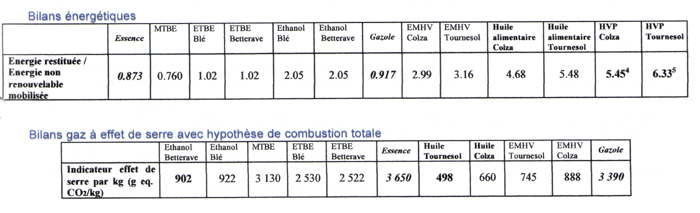
Fig 1: These two tables from the IFHVP, based on official ADEME and DIREM studies, present indisputable results: At the overall energy level, sunflower PVO is in pole position. At this level, it is 7 times better than current gasoline and diesel! Same in the bottom table regarding CO2 emissions!
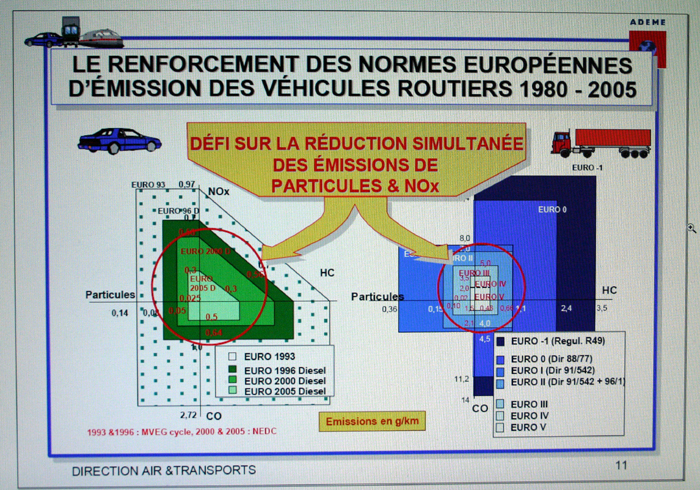
Fig 2: Of course, current engines are much less dirty than their ancestors, but the latter still abound, crisis or not. It is estimated that 7% of vehicles in the fleet, old or poorly tuned, emit 50% of their total pollution.
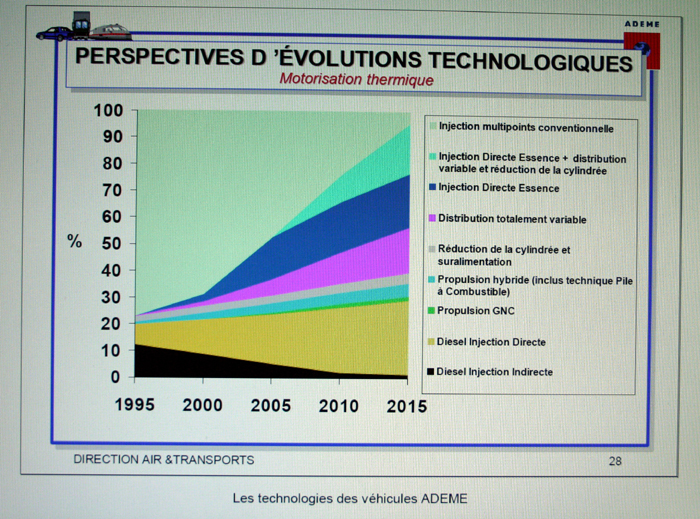
Fig 3: Here are the future technical developments compiled by an interesting ADEME study: All that is missing is the multi-fuel capability, including PVO!
Fig 4: Sunflower: Only advantages compared to Diester! Its local production chain reduces transport to 50 km instead of 1000 km. Furthermore, it is much cheaper to produce, neither toxic nor corrosive and stripping to injectors like diester, which is thus limited to a maximum contribution of 5%. So, what is "One" waiting for???
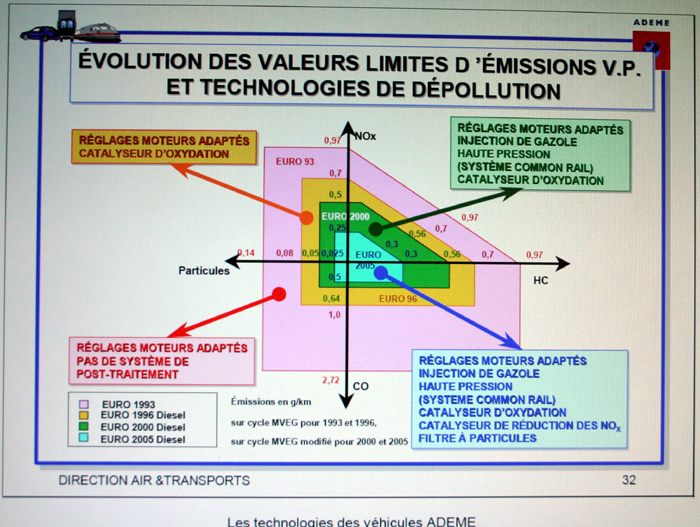
Fig 5: Here are represented the standards with the means used until now. Biofuels are strangely absent, and if we started by consuming less for the same service provided, by reintroducing freewheeling in current cars, for example?
Number of views since September 2, 2005: