Jacques Benveniste's Memory of Water
Jacques Benveniste
**
[Audio file of Montagnier's interview, May 2010](../../AUDIOS/LE SEPT NEUF DU DIMANCHE 02.05.2010_benveniste.mp3)
May 10, 2010.
A reader sent me an excerpt from a broadcast where Nobel laureate Luc Montagnier praises my late friend Jacques Benveniste.
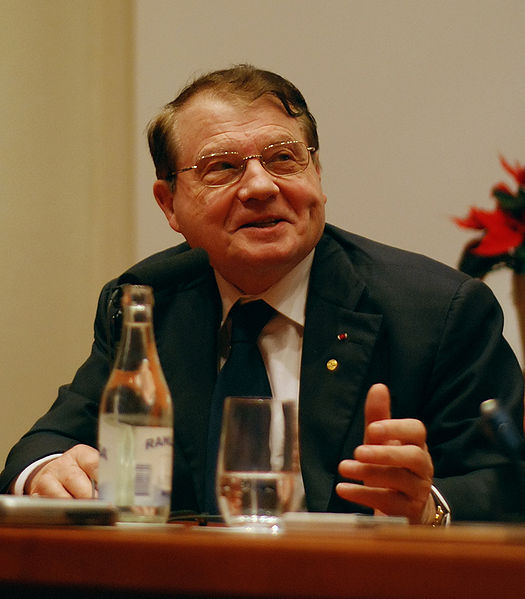
Professor Luc Montagnier, Nobel Prize in Medicine, 2007, Lugano. He doesn't mince words and isn't hesitant to declare that Jacques was a brilliant pioneer, ahead of his time, and that he firmly believed one day people would recognize the validity of his views.
I remember the time when the Director General of INSERM, Lazare, removed Jacques from his 200 square meters of laboratory space at INSERM 200 in Clamart, forcing him to relocate to Algeco prefabricated buildings in the courtyard! An absolute disgrace.
Many times I told Jacques, "Give up, you'll end up killing yourself!" But he clung on, clung on, until his last breath, until he lost his life, heartbroken.
My own career has had similar aspects, and I’ve only survived because it’s been one uninterrupted series of abandonments: MHD in 1972 (abandoning the setup I brought from Marseille's Institute of Fluid Mechanics in 1967, which had put my lab at the forefront internationally), computing in 1983 (I was Deputy Director of Computing Services at the University of Provence), teaching in literature and mathematics faculties (sphere eversion, Pour la Science, 1979), a comeback in MHD (1975–1986), abandoning comic book publishing with a publisher in 1990, rapid abandonment in the early 2000s in Egyptology. Currently, near-abandonment or serious suspension of astrophysics, cosmology, and mathematical physics due to lack of positive feedback (1985–2008).
Currently, a rebound with Savoir sans Frontières and re-publication of books and comics. Activities bordering on abandonment in MHD and UFO topics. Below is the photo of the MHD bench currently being assembled in Rochefort (status as of May 2010):
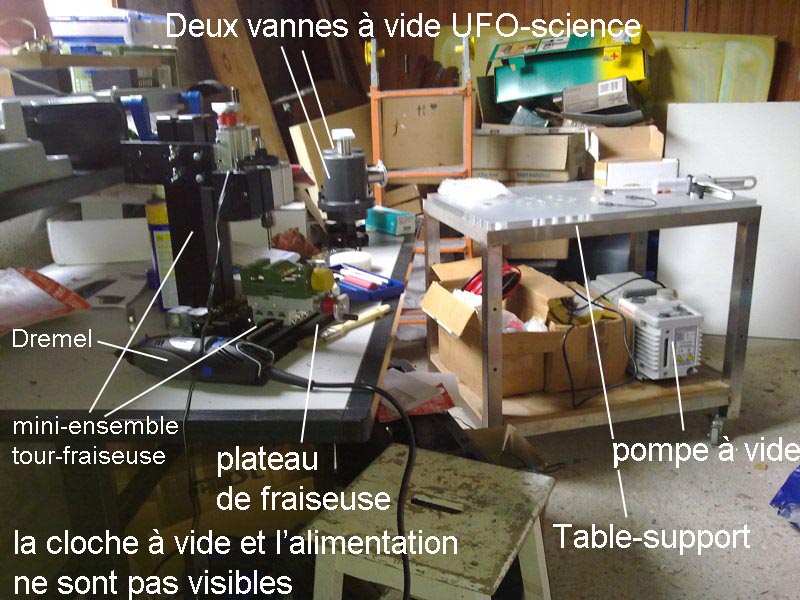
It's in the style of Jacques’s Algeco buildings, in the courtyard of INSERM, except that I'm not the one handling it—rather, a courageous technician in his forties. Unlike Bernard Palissy, I won’t burn my furniture.
The cutting-edge French MHD, the "out-of-equilibrium" MHD, the "bitemperature plasmas" that allow us to rank among the top internationally (Vilnius 2008, Bremen 2009)—here it is!
It would be comical if it weren’t utterly tragic.
There is no deafness like that of one who refuses to understand
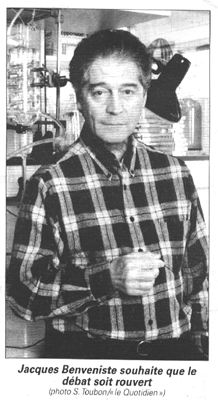
Jacques Benveniste.
I confess I’ve long wanted to speak in these columns about my friend Jacques. But, not being a biologist myself, I could hardly comment on his approach and work, which I’ve known for years. Everything goes back about ten years. At that time, Benveniste became intrigued by experiments involving "high dilutions." He possessed solid expertise as an immunologist of international renown. The research in question concerned the human blood's immune reaction to bee venom. Though not an expert myself, I recall that the presence of this venom triggers a "degranulation" phenomenon in lymphocytes, specifically in cells called "basophils," which play a role in immune response mechanisms. This phenomenon can be observed using a dye. The intensity of this degranulation could thus be measured by counting under a microscope. So, the procedure was: expose human blood samples to given doses of bee venom. Degranulation occurs, and the intensity of this immune reaction is then assessed through counts performed by lab technicians, eyes fixed on their microscope eyepieces.
Initially, the immune response decreased as venom doses were reduced.
...But beyond a certain dilution, the phenomenon did not disappear, as one would expect. "Worse still," this degranulation phenomenon remained detectable, perfectly measurable, even at dilutions where no molecule of venom should remain in the test tube. From the standpoint of classical chemistry, there is thus a complete contradiction. "Normally," the effect should vanish along with the "effector." If the latter is no longer present, what causes this residual degranulation? The press then coined the phrase "memory of water." Let us clarify: this expression originated in the press, not from Jacques Benveniste’s own mouth. An article was sent to the world-renowned British journal Nature. It was reviewed by an anonymous expert, and, apparently, since the experimental protocol had been conducted "to the letter" according to standard biological norms, the paper’s acceptance was communicated to the authors. Then Maddox, the editor-in-chief, discovered the affair and became highly agitated. Since it seemed "impossible" that such a result wasn’t due to an "experimental error," he immediately demanded that Benveniste withdraw his article himself, or else expect the worst—a full-scale press backlash. Benveniste refused, and the paper was published, causing a scandal. Various journals then attacked this work (Benveniste had merely reported observed facts, without proposing an interpretation). The French magazine Science et Vie led the fight against this new "pseudo-science." In its pages, journalists wrote, "How can such a simple molecule as water possibly have memory?" etc. Benveniste was also reproached for having entrusted the counting of basophil degranulation to his female collaborators, which could introduce a purely human measurement error. However, and this is why I present this dossier, these experiments have recently been repeated by biologist Marthe Ennis from Queen’s University in Belfast. Far from being a fan of the famous "Ben," she had actually wanted to redo these experiments with the utmost skepticism. But now, for the first time, she could use a counting system entirely free of human intervention—something Jacques never had access to. And, surprise: her results confirmed those obtained twelve years earlier by the French researcher. The Guardian dedicated an article to this matter in its March 15, 2001 issue, and this work is set to be formally published in May (meaning the communication was reviewed by a "referee" and accepted) in the journal Inflammation Research Journal. ...In France, the Quotidien du Médecin published a one-page article under Vincent Bargouin’s pen in issue 6900 of April 18, 2001. Let us quote just one sentence from the beginning of the article:
- In the 1990s, not everyone was satisfied with Jacques Benveniste’s excommunication and, with him, all notions related to "memory of water." A few intransigents repeated the experiments. Some did so in secret, but others spoke openly.
...You read that word correctly, in red. It’s a ... first.
...This article follows a paper of one page published in England on March 15, 2001.
...We won’t recount the tribulations of Benveniste over the past twelve years, which I followed as a friend, practically day by day. A true crucifixion. Abandoning that immunological reaction experiment with blood under bee venom action, Jacques then conducted experiments where he induced acceleration in a hamster’s heart via injections of another type of effector, again at dilutions so high that the phenomenon should logically be absent. The acceleration of the rat’s heartbeat was visibly observable by anyone who walked in, and Benveniste demonstrated it in his lab before Nobel laureate Charpak, who was deeply impressed. Benveniste struggled along the way to control this experiment. Indeed, nothing is simple here. Since we don’t know what’s at work, how can we be sure we’re controlling all experimental parameters? One must have access to everything, even making one’s own distilled water. Logically, the lab should possess a completely isolated animal facility. The immune systems of animals could, in principle, be sensitive to multiple factors such as pollen, for example. In the first year, Benveniste discovered, for instance, that the phenomenon seemed to vanish during cold seasons. The whole challenge was understanding what the proper experimental conditions should be. Apparently, the rats’ reactions seemed weaker when their bodies, during unfavorable seasons, appeared to enter a kind of "latency" state. Etc.
...While sophisticated resources should have been available to this researcher, he ended up, as I recall in 1995, being kicked out of his own INSERM lab, which I had visited through a "longtime friend," the polytechnician Philippe Lazar, Director General of INSERM (a phrase used in the obituary notice published by Michel Alberganti and Jean-Yves Nau in Le Monde on October 6, commenting on the researcher’s death, which occurred a few days earlier). Being someone stubborn, Benveniste decided to set up shop, cramped, in Algeco prefabricated buildings in the lab courtyard. A lamentable situation. But the French scientific community deemed (and still deems) that he had failed to provide irrefutable proof of the quality of his results.
...Incidentally, a simple observation, actually imagined by Souriau. Could one conceive an experiment involving successive dilutions where the observed phenomenon becomes insensitive to the dilution level, the "effector" having physically disappeared? Yes, answered Souriau: take square-meter tanks, for example, containing pure water in "supersaturated" state. This water will freeze if even the slightest impurity serves as a seed for ice growth. That seed, that impurity, could be anything—say, a nose hair. The first block freezes. Using a spoon, randomly extract one square centimeter of ice from this tank. Probability of extracting the impurity: one in 100,000. Throw this ice into the next tank. This young ice will immediately act as a seed to trigger freezing of the new tank. New random sampling, again one square centimeter of ice from this one-square-meter tank. The probability of recovering the impurity then becomes 10⁻⁸. By the seventh tank, it’s 10⁻²⁸. We surpass Avogadro’s number. The chances of the impurity being in the spoon are now nil. And yet, each successive tank still freezes.
...What could be the link to an immunology or biological experiment? Two Italian theoretical physicists, Preparata (deceased) and Del Giudicce, proposed a hypothesis about ten years ago. They said we practically know nothing about water’s liquid state. The classical theory assumes that "hydrogen bonds" are sufficient to create strong enough links between water molecules below a certain temperature, allowing phase transition and the substance to remain liquid at a much higher temperature than comparable molecules like ammonia NH₃ or carbon dioxide CO₂, or sulfur dioxide SO₂.
...But during a heated debate at a winter sports resort (Puy Saint Vincent), within the framework of an event organized by France-Inter journalist Jean-Yves Casgha: "Science-Frontière," in the presence of representatives from the Pasteur Institute, Preparata and Del Giudicce showed results from numerical simulations revealing water molecule behavior over a thousandth of a second at a temperature slightly above condensation: 100 degrees. The molecules whirled wildly, and they expressed skepticism about the effectiveness of such "hydrogen bonds" in such an agitated medium. Without ruling out such strong bonds, it must be admitted that water’s liquid state is poorly understood. At best, some physical chemists agree that liquid water consists of molecular assemblies linked by these bonds, but they are unable to specify their exact structure or the number of H₂O molecules involved. Not knowing anything about chemistry or biochemistry, I’ll simply relay these statements. But I clearly remember, during that verbal confrontation at Puy Saint Vincent, hearing a phrase spoken by a CNRS chemist that still echoes in my memory:
- Well, I don’t know why water is liquid at ordinary temperature, and it doesn’t stop me from sleeping!
...That’s one perspective. Yet water isn’t a rare or exotic substance. As Souriau pointed out to me upon my return: "On the contrary, it’s an extremely reactive chemical substance involved in countless phenomena... of hydration. Concrete setting is a hydration process. In modern buildings, we live in structures containing large amounts of water. If someone landed on a planet devoid of water and dropped a single drop onto its surface, a violent hydration reaction would immediately occur."
...At Puy Saint Vincent, Preparata and Del Giudicce (Preparata held the chair of quantum mechanics at the University of Milan) speculated that collective phenomena might intervene during water’s liquefaction: the appearance of "quasi-molecules" involving large numbers of H₂O molecules. What would structure these "quasi-molecules"? A phenomenon, they said, comparable to the "maser effect" observed in vast interstellar molecular clouds.
...Where would the energy come from? Asked a chemist. From water’s thermal energy, replied Preparata. But added the chemist, what if we removed this energy source?
- Then water would turn into ice, my friend...
...Preparata and Del Giudicce suggested there isn’t just "water," but "waters" possessing different "quasi-molecular" structures, determined by the impurities they contain. These structures would also be "self-replicating," which, according to them, could explain how certain information might be memorized despite extreme dilutions. Well, that’s what I took away at the time. It was also said that in these high-dilution experiments, when pure water samples (which were indeed pure then) were heated to 70°C, the effects disappeared. Note that this "quasi-molecule" structure is not incompatible with invoking "hydrogen bonds" as a factor of bonding.
...The lack of interest from chemists and biologists in... water amazed me at the time. It wasn’t just the issue of high-temperature liquefaction. Paradoxically, water is perhaps one of the greatest mysteries in chemistry and biochemistry. As Benveniste noted, biomolecules tend to hydrate, meaning concretely, to be surrounded by a true cocoon made of tens of thousands of water molecules. Benveniste found it hard to believe that the prevailing model at the Pasteur Institute, and generally across the biochemical world—the sacred "lock-and-key" model—could function. He imagined biomolecules could communicate at a distance, not through contact, but using their envelope of water molecules as electromagnetic wave emitters-receivers. Well, why not? But all this stood in opposition to dominant theories.
...Things "worsened" when Jacques, a few years ago, imagined that one could record the signals emitted by such "encapsulated" biomolecules. Thus, the biological information—which he considered the real effector—could be memorized, coded, duplicated. One can imagine the risk faced by the powerful international pharmaceutical trust. Experiments followed one another, conducted in the cramped Algeco shelters, which do little honor to our ministry or CNRS. Currently, Jacques has automated his analyses using small robots—machines that move an arm manipulator to grasp test tubes, add reagents, etc. Research thus gains precision and rigor, with all human intervention disappearing (Jacques has often been openly accused of fraud!).
...For a time, his detractors accused him of "working for" the company Boiron, which produces homeopathic products. But time passed, and it became clear that this wasn’t true. Benveniste was simply a "research fanatic" who sacrificed a career that could have been brilliant. Charismatic, witty, humorous: he might even have had everything needed to become a politician. His only flaw was that he believed in research—and in practice, he sacrificed everything for it, gaining nothing but... troubles. Knowing about his health problems, I often wondered how he managed to endure so long (three years, actually, from the day I wrote these lines, since he died in October 2004).
...I spoke to him on the phone today, April 25, 2001. I wanted to congratulate him for an article published a few days earlier, where people finally spoke in his favor.
- Yes, but what difference does it make? Many politicians have the Quotidien du Médecin on their desk every morning. And nothing happens.
...Who will move? Who will pull this courageous man out of the shelters where he and his team (one might say his faithful followers) are camped? I’m not sure this help will come. My old Jacques, I think you’re deluding yourself. A minister is something hollow. He’s neither made to act nor to decide anything, especially regarding research. He "manages the daily routine." I once had lunch with a minister. That was a long time ago. He invited researchers passionate about microcomputing, when it was still in its infancy. At dessert, he gave us a fine speech. I wanted to tell him:
- Stop. We’re not voters. You’re not on television. Please, for once, tell us something smarter...
...I showed him my CAD software—the first one running on a microcomputer. I wanted to implement it in the National Education system. I thought it would spark young people’s interest in technical matters. But I think he took it for a video game.
...Where do these counter-current efforts lead? We sometimes wonder. It’s so much easier to howl with the wolves, follow the herd, censor within oneself any truly novel idea. Because career comfort comes at that price—let’s not hide it. Whoever wants to succeed must pass by their struggling brother and ignore him, if that brother has the majority of colleagues against him. Our system is built like a mafia. It has its omertà, its law of silence. One of my students, who actually won a scientific prize with ideas that weren’t his own, knows very well—he’s had a very comfortable career. He even became Regional Director of CNRS. He continues, somewhere, his ascent. Who knows, we might see him become a minister one day? He’d be no worse than any other. But should we envy these people? Personally, they bore me deeply. They have the eyes of dead fish. I prefer the Benvenistes.
...What’s troubling is being unable to advance research, lacking resources, while witnessing absurd waste. I couldn’t say one gets used to it. One simply resigns.
Jacques Benveniste’s website: http://www.digibio.com
June 1, 2001
...I’ve just reproduced and attached to this dossier on my site the original copy of the article published on March 15, 2001, in the English newspaper The Guardian, along with its French translation. In passing, "Ben" sent me a copy of a letter he’d sent out widely.
| May 17, 2001 |
|---|
...Dear friends and enemies (*)
...I’ve received some reactions to the Guardian article reporting the double replication of my results. I haven’t received any from you (you). Yet I was told: "Replicate your results and people will believe you."
...Yet nothing happens. I remind you that Georges Charpak, whom I believe completely, said, "If it’s true, it’s the greatest discovery since Newton!"
...It seems very much like it is true.
...So?
...Thank you for shedding light on my somewhat deaf ears.
Jacques Benveniste | May 17, 2001 |
|
|---|
| May 17, 2001 |
|---|
| May 17, 2001 |
|---|
...Dear friends and enemies (*)
...I’ve received some reactions to the Guardian article reporting the double replication of my results. I haven’t received any from you (you). Yet I was told: "Replicate your results and people will believe you."
...Yet nothing happens. I remind you that Georges Charpak, whom I believe completely, said, "If it’s true, it’s the greatest discovery since Newton!"
...It seems very much like it is true.
...So?
...Thank you for shedding light on my somewhat deaf ears.
Jacques Benveniste | May 17, 2001 |
|---|
...The subsequent phone conversation:
-
What do you expect to happen? Nothing will. Which official could openly take your side, decide to help you materially? It’s impossible. Your work, your approach go against a profit-driven strategy; your pharmacology would be branded as free. You immediately have the entire pharmaceutical industry against you—and God knows how powerful it is.
-
I know...
-
How much time do you have left until retirement?
-
I’m 66. I’ve pushed to the limit. It’s in a year.
-
And when you retire, CNRS will invoke the clause tied to laboratory existence: that it must contain at least three "A" category personnel, i.e., research directors. And if you retire...
-
You think so? We’re past that point. Since I moved into these Algeco shelters—covering 100 square meters—my lab of "Digital Biology" has no legal or administrative existence. When I retire, they’ll say, "Sir, would you kindly clear the premises?" Then they’ll remove these shelters, perhaps installing a toilet or a bicycle shed in the courtyard. And nobody will blink. Who would care?
-
It’s appalling. One wonders what CNRS is for. One wonders whether these people were put in place to help us do our research or, on the contrary, to hinder it as much as possible.
-
And how about you? How’s it going?
-
Simple: after abandoning MHD in 1987, fourteen years ago, I switched to pen and paper. For twenty years I’ve had no funding whatsoever. The last conference I attended, I paid for myself. The next one, by luck, is in France.
-
But your lab provides you with funds, at least a little?
-
No franc. I’ve finally gotten used to it. When my computer equipment breaks down, I pay for repairs. I have no PhD students. Otherwise, their research careers would be doomed from the start. There’s not a month without young people asking to work with me. I’m forced to say no. I don’t want to repeat the Lebrun affair—the guy who wrote an excellent thesis with high-level publications and two international conference presentations (Japan, 1987; China, two international MHD conferences), and was told (these things aren’t written down): "Since you worked with Petit, there’s no point hoping to find a position in any lab."
-
What happened to him?
-
He started his own company, twenty employees, doing well. He does numerical simulations of combustion in engines. But if "Lebrun the engineer" has done very well, "Lebrun as a machine for producing cutting-edge scientific results," whom I shaped, is scrapped. Total waste. And you know very well that to derail someone takes at least five years. I didn’t want to repeat it. But, well... we do things with pencil and paper, even though I was originally an experimenter. And what will you do in a year?
-
We’ll always be able to rent a fifty-square-meter space somewhere and keep going.
-
That’s madness! It reminds me of the MHD lab I set up in the early 1980s in a servant’s room in Aix-en-Provence, on just sixteen square meters.
-
The only power that could oppose this is the press.
-
The press? I don’t know if we can count much on it. ---
December 9, 2003
A few months ago my friend Jacques was deeply pessimistic. His main sponsor had just pulled away, and unable to pay his team members, he told me the prospect of having to close his shop (a few Algeco units) was rapidly approaching. He said he wouldn’t even be able to afford the sums needed to maintain his international patents. I confess I wouldn’t want to be in his shoes. If there’s truly a man to whom Lafontaine’s fable verse applies:
No frank laughter, all at the sword’s point
it’s certainly him. Moreover, he’d staked everything on these "high dilutions" and the concept of "digital biology." Yet experience shows how uncomfortable it is to be a pioneer, especially when isolated. Nowadays, "organized gangs" scour science, control journals (they must be in the hands of groups). These gangs distribute labels, generally to their members. Having lived myself like a Robin Hood of Knowledge, I know this life and have only escaped each time by abandoning one field to move to another.
What will become of this tiny, low-cost digital biology lab? No one knows. But I’ve experienced that new ideas take decades to gain acceptance—and when they do, they’re often in other hands than those of the original thinkers.
http://www.digibio.com, http://jacques.benveniste.org
Jacques Benveniste, who underwent his third heart operation on Thursday, September 30, 2004, died two days later.
And there it is. The curtain falls once more. The farce is played out again. For years we feared for Jacques, seeing him continue to fight in his condition, running everywhere trying to find money to keep alive the remnants of what had been his research lab in immunology, which had become what he called the Laboratory of Digital Biology. He’d first endured a coronary bypass twelve years earlier. Then, after another accident two years ago, a cardiac pacemaker was implanted. This time it was a titanium valve. The operation went poorly, and Jacques succumbed to a pulmonary infection a few days later.
Walk or die.
That’s how France treats its most courageous and daring researchers. In 2003 Michel Bounias, abandoned by all, deprived of research means, died of cancer in complete indifference. Few spoke of this man, author of an exceptional discovery. Who will follow Benveniste’s coffin this time? Charpak, the academician, who managed to have him convicted for improper procedure after having himself defamed him? Gérald Messadié, Deputy Editor-in-Chief of Science et Vie, author of that phrase echoing in my mind: "How can such a simple molecule as water possibly have memory?"
How many homeopaths will be among the 15,000 practicing in France? Who will dare attend this ceremony? A few years ago, thanks to an industrial friend, Jacques sent out a postal mailing soliciting material aid from them. He suggested they send him... the price of a consultation. The mailing was sent to each one of them. I remember the phone conversation with Jacques.
- Do you know how many replied? - No... - Three.
November 29, 2004:
All was not clear before. Now it is.
Yes, we applaud when the tightrope walker passes by. When informed of his difficulties, we shed crocodile tears or mock him, look up to the sky, and adopt an air of importance. But when it comes to putting our hand in our pocket to support a courageous endeavor, that’s a different matter altogether. And when the tightrope walker crashes to the ground, we scatter sawdust over the stage, and move on to the next act of the Grand Scientific Circus.
Philippe Lazar, a polytechnician and director of Inserm from 1982 to 1996, who closed his laboratory on Rue des Carnets in Clamart in 1995—forcing him to live in Algeco prefabricated sheds in the courtyard during the last years of his life—will he too bow before the mortal remains of a man he helped bring down, one of the first to do so?
A few days ago, I spoke with a distinguished professor at a pharmacy faculty. A very intelligent, warm, and affable man—I’d even say very open-minded. The subject of water came up. Always that question about “hydrogen bonds.” He told me:
“In ice, these bonds create a structure. The only remaining energy then appears primarily, I would say almost exclusively, in vibrational form. These molecules, held together by these bonds, can vibrate. But as temperature rises, this structure breaks down. Water molecules, freed from their bonds, begin to spin around themselves—but not all of them. In liquid water, clusters of molecules remain linked by these bonds, fewer and fewer until the transition to vapor completely dissolves them. This has led some to say that water is a 'quasi-solid.'”
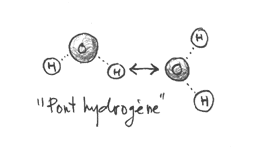
“In other words, liquid water consists of these miniature ice crystals. 'Quasi-molecules'? One could put it that way. Mini-crystals—how many water molecules are bound together in them? We don’t know. But do we have any idea? Are they a hundred, a thousand, a million molecules forming these solid aggregates? We don’t know. Is there anything measurable? No. If I understand correctly, the liquid state of water remains a completely speculative model. In fact, we know nothing. But it is still the hydrogen bonds that hold these subgroups together. Yes, but you don’t know how many molecules come together to form these 'water polymers,' nor what their structure is. That’s a fact... In conclusion, we practically know nothing about the structure of the most important fluid in the universe, since it is the very cement of life. But it is still the hydrogen bonds. How strange, how bizarre, and what a coincidence…”
Jacques is dead. In France, it’s too late. It’s always too late. If his ideas develop, it will be someday elsewhere, in another country, as usual. Here, no one will take up his work. His administration (French medical research) will indifferently dismantle the old Algeco sheds—remnants of that “last stronghold of research”—still cluttering the courtyard of Inserm Unit 200, where Jacques clung for ten years in a way... utterly irrational.
There were no more than two hundred people at the funeral, at Père Lachaise cemetery, partly because Le Monde did not mention the location, date, or time of burial. Some faithful friends, family members, former colleagues, read texts, their voices often breaking with emotion.
Testard, whose lab was integrated into Inserm 200 in Clamart, just ten meters from where Benveniste had set up his Algeco sheds, was not present at the funeral. He had a text read, in which he admitted having neglected his friend and neighbor in distress. It was only belatedly that he acknowledged he might have helped his neighbor and friend simply by witnessing the experiments Jacques repeatedly invited him to observe.
I came to pay my respects to a comrade-in-arms, my throat tight. I knew things would end this way, even if the surgery had been successful. When one is so thoroughly blocked by colleagues and materially abandoned by what Jacques called “the scientific Leviathan,” there are only two options: give up or exhaust oneself until death. I myself have given up several times after fighting battles marked by the same “irrationality”—sorts of last stands fought in solitude—and that’s probably why, despite everything, I’m still alive. Jacques refused to admit defeat and still believed in the honesty and rationality of the scientific world. A risky choice.
Before burial, we were able to read various press statements. With a few exceptions, their content is identical. They begin by recalling an exceptionally brilliant early career—“scientifically correct”—passing through the discovery, by this physician-turned-researcher at Inserm, of a molecule, PAF-acether (Platelet-Activating Factor), playing a key role in immune mechanisms. The rest is described as a deviation. They mention the 1988 visit by illusionist James Randi, at the request of Nature magazine, to “expose the hoax.” Shortly before that, John Maddox, editor-in-chief of the scientific journal who had agreed to publish Benveniste’s article, had asked Benveniste to withdraw it—something Benveniste refused. Le Monde comments on this scandalous operation, but does not denounce it:
“Even if the trap fails, the goal is achieved: the researcher, his results, and his entire approach are discredited. Refusing, with courage and flair, to abandon his research, Benveniste displayed arrogance and disdain toward the scientific institution, which then neither sought to understand him nor forgive him.”
The journalist forgets to mention that this “scientific institution” left this researcher in total material abandonment for ten years until his death from exhaustion—while water remains a real problem, both in biology and simply in chemistry—and while the substance most abundant in the phenomena occurring on Earth’s surface is also the least understood.
Citing Philippe Lazar, Benveniste’s superior who oversaw the closure of his Inserm laboratory in 1995, Le Monde writes, quoting him:
“Philippe Lazar, a polytechnician and general director of Inserm from 1982 to 1996, who says he was a ‘longtime friend’ of the researcher, sees Jacques Benveniste above all as a top-tier scientist who remained honest but became the victim of a ‘shadowy affair.’ He believes the man ‘demonstrated a manifest lack of critical thinking in interpreting his results.’ The phenomenon he observed, Lazar judges, could have had another cause besides the dilution of the substances studied—for example, repeated contamination from tube to tube.”
Larousse: Darkness, profound obscurity, ignorance, uncertainty, dominion of the devil. Ténébreux (tenebrous): plunged into darkness, secret and treacherous, expressing oneself in obscure terms.
There it is—without evidence, based solely on opinion—this label sweeps away ten years of senseless, damaging effort, an agonizing path to death:
Abandon or coffin.
What killed Benveniste wasn’t illness—it was irrationality and indifference, the refusal to recognize and support, with very modest means, genuinely scientific and obvious problems touching both biology and physics (but posing an evident threat, in the long term, to the large pharmaceutical industry).
Hide this research—I can’t bear to see it.
Where, meanwhile, was that “longtime friend” who closed Benveniste’s lab in 1995? Why didn’t this former superior, if he was indeed, like Chevênement, occupied that day by duties tied to his functions, entrust one of his subordinates or a colleague present with the task of reading a few words before the mortal remains of his “friend”? Why didn’t he come himself to speak those very words he shared with Le Monde journalists—on the day of the funeral, in front of his coffin?
I’d like those who read this to perform a simple, purely symbolic act. Instead of shedding an electronic tear through a mouse click, make a simple gesture. Get an envelope, a stamp, a sheet of paper, and write a final letter addressed to:
Laboratory of Digital Biology, 32 Rue des Carnets, 94140 Clamart
Inside, record your reactions to Professor Benveniste’s death. Then simply write:
Farewell, Jacques
and sign your name.
As of October 11, 2004—eight days after this page was published—8,400 people had viewed it. The Laboratory of Digital Biology received just over eighty letters, corresponding to the standard response rate of 1% for visitors to my site across all topics. I conjecture that this percentage will remain steady over the months. That’s how it is...
I repeat: what killed Jacques Benveniste wasn’t illness—it was indifference.
Homage by Professor Montagnier, three years after his death, at a virology colloquium in Lugano, 2007
(6 Nov 2008) Link
Homage to Jacques Benveniste, May 2008
Back to Guide Back to Homepage


