Thibaud Damour
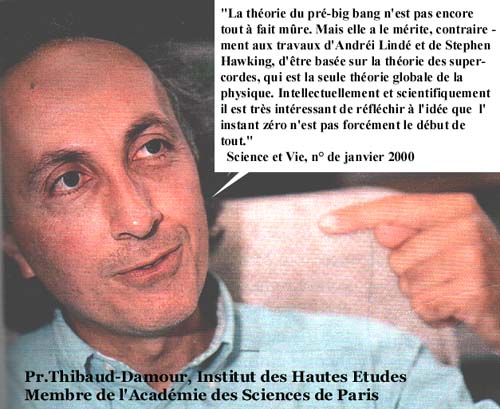
****| Thibaud-Damour | , | in
| post at the Institut des Hautes Études de Bures-sur-Yvette (IHES) has recently been elected to the Académie des Sciences of Paris. |
|---|
..When I wrote this bibliographic note, I was impressed by the idea that Damour had distinguished himself by calculating the slowdown of the rotation of a double pulsar due to energy loss through gravitational wave emission—a phenomenon that earned Russell Hulse and John Taylor the Nobel Prize in 1993. But on one hand, this topic had been known for a long time, and on the other hand, the calculation of this slowdown stemmed from earlier work whose results were already known in the early 1960s, when Damour was still in elementary school. Here are some elements of such a calculation, based on notes from a course given by Damir Buskulic, a researcher at the Annecy-le-Vieux Laboratory of Particle Physics.
http://lappweb.in2p3.fr/~buskulic/cours/Notes_cours_Buskulic_Jijel.pdf
The two neutron stars in the binary system studied by Hulse and Taylor have masses close to each other, with their average mass equivalent to 1.35 solar masses. Their orbits occupy a volume comparable to that of the Sun. Thus, the distance between the two stars is large compared to their Schwarzschild radius, which is less than 10 km. They orbit each other every 7.75 hours, corresponding to an orbital velocity less than one-thousandth the speed of light. This allows a study using Newtonian tools. The calculation below is extracted from Buskulic's course:
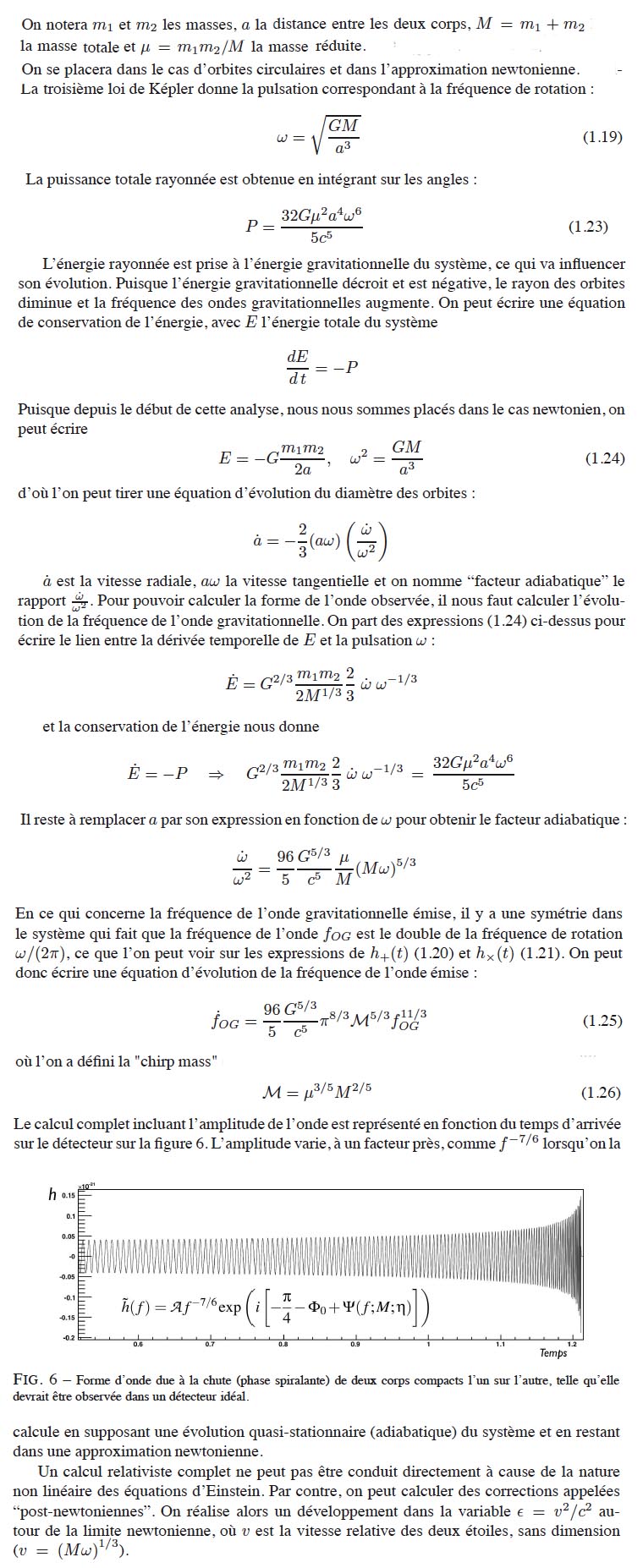
Above, we see the typical plunging trajectory of two neutron stars just before collapse. This kind of curve was used to detect signals in the noise background of gravitational wave detectors, where a relativistic, nonlinear approach—known as "numerical relativity"—has also been employed. However, for measuring the slowdown of the binary pulsar observed by Hulse and Taylor, such a relativistic calculation was entirely unnecessary, as the associated corrections were negligible.
Having been admitted to the Académie des Sciences and appointed full professor at the Institut des Hautes Études Scientifiques in Bures-sur-Yvette, Thibaud Damour has just received the CNRS Gold Medal for his theoretical work on gravitational waves:
A flashy article. In videos, Damour claims that the detection of gravitational waves—which earned three Americans the Nobel Prize on October 3, 2017—rests "on work carried out in France" (i.e., his own). But he is the only one to say so. Abroad, this essential contribution is completely ignored.
Apart from this, thirty years spent working on string theory.
. End of 2002:
Together with screenwriter and essayist Jean-Claude Carrière, he published at Odile Jacob a book titled " Essay on the Multitude of the World ". My commentary on this book.
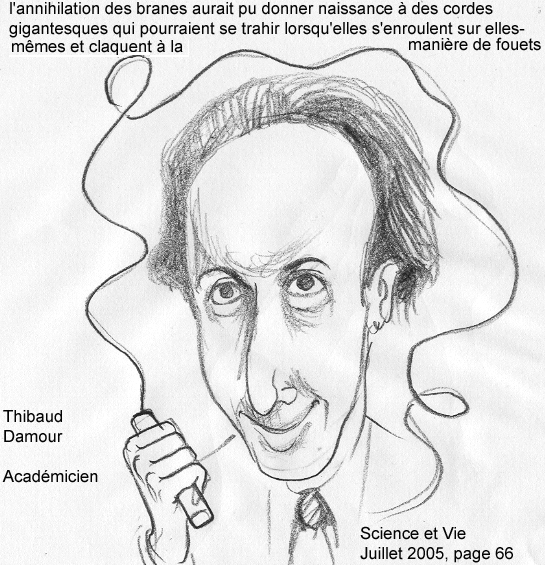
**July 2005. Thibaud Damour and branes (this is not a joke). **
**
**| Far in time, like whips, | Leaving their mark at last, | Gigantic cables crack | And only then does space come into being... |
|---|---|---|---|
NOSTRADAMOUR ---