Evacuation of the Gaza Strip
About the evacuation of Gaza
August 18, 2005
- page 2 -
Upon arriving in sight of the Promised Land, Abraham shows his amazement
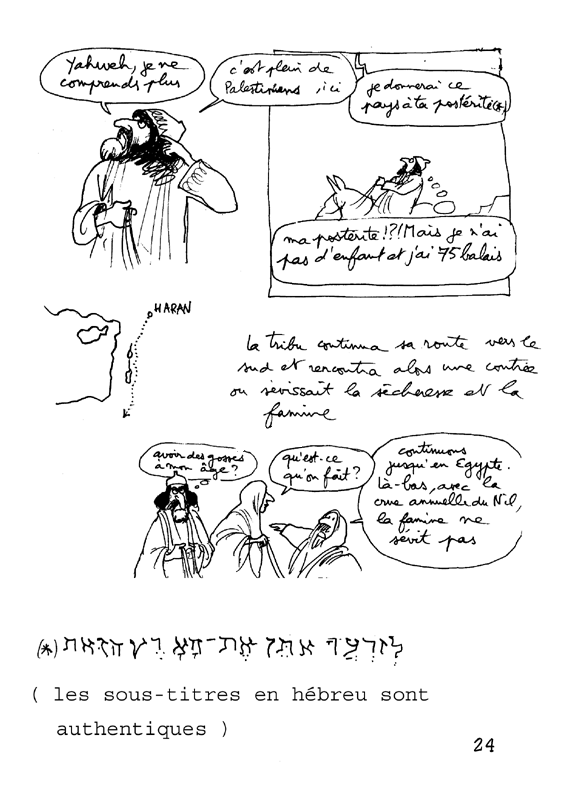
Abraham and Sarah, his wife, therefore leave Palestine and take refuge in Egypt. According to the will of the Eternal, Abraham, who is 85 years old, and Sarah, who is 76, will have descendants: two sons. Before Abraham gives birth to Isaac, he will have a first son, from a slave named Hagar, who will be called Ishmael. According to the Bible, Abraham expels Hagar and her son. The descendants of Ishmael will, according to tradition, become the Arabs.
Some centuries later, the Hebrews are still in Egypt. A pharaoh, warned by a prophecy, tries to eliminate the sons of Jewish women. One of them entrusts her child to the Nile by placing him in a basket. The young Moses will be taken in by the sister of a pharaoh and raised by her, according to the purest Egyptian tradition. But one day, Moses discovers his roots within himself. By killing an Egyptian overseer who is violent towards Hebrew slaves, he goes against the law. He then flees to the land of Midian (located to the east of Egypt, in the Sinai). Yahweh then speaks to him (the episode of the "burning bush") and entrusts him with the mission of leading his people out of Egypt and guiding them to the Promised Land. As is known, it does not go very well with the pharaoh, who tries to oppose the departure of the Jews (it should be noted that none of these events left a trace in the Egyptian chronicles, but this in no way proves that these events did not actually occur).
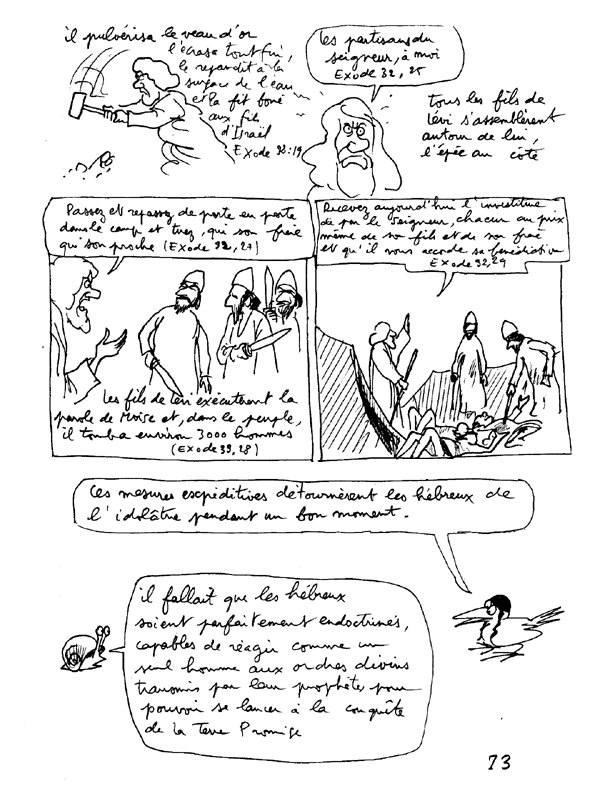
Therefore, the Jews end up all wandering in the Sinai, to the south of this Promised Land. Later, Yahweh will give each of the twelve sons of Jacob, a descendant of Isaac, a parcel of land. These sons of Jacob will become the patriarchs of the twelve tribes of Israel. However, upon closer examination, only eleven tribes will be granted a land. The "sons of Levi" will have a different role. They will become the priests of Israel. It is interesting to know why, and this episode is little known. Let us recall that during this ordeal in the Sinai, Moses is called by God to the top of a mountain to receive "the Tables of the Law". During his absence, the Hebrews return to their bad habits and start creating idols to reassure themselves. They melt all their jewelry and build the famous Golden Calf, which Moses will destroy upon returning from the summit, furious. He will destroy the idol and break the tables (Yahweh will later make him a new pair). But his anger needs to be expressed more strongly. Addressing the sons of Levi, he says:
But the Hebrews, led by a certain Joshua, are not initially up to the mission entrusted to them.
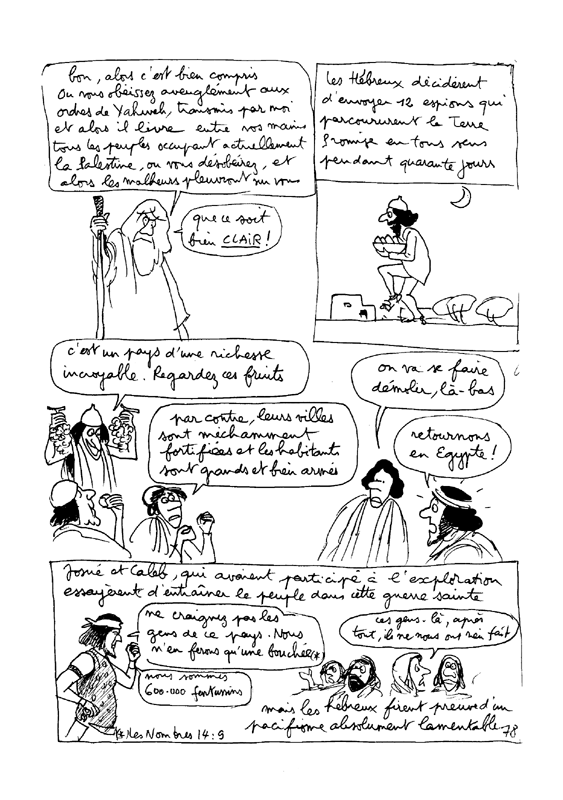
Yahweh strikes dead the ten spies who had foolishly demoralized everyone, then condemns his people to wander 40 years in the desert, before being able to take possession of this "Promised Land", where only Joshua and Caleb will be able to enter, the others being "condemned to see their bones whiten in the desert" (the Bible, Numbers: 14). However, after the forty years of penance (during which the Hebrews were miraculously fed by the "Manna"), Moses led his people to attack the Palestinian land from the east of the Dead Sea.
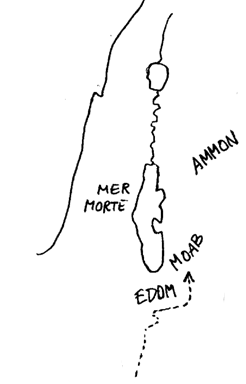
The Hebrews approach the Promised Land
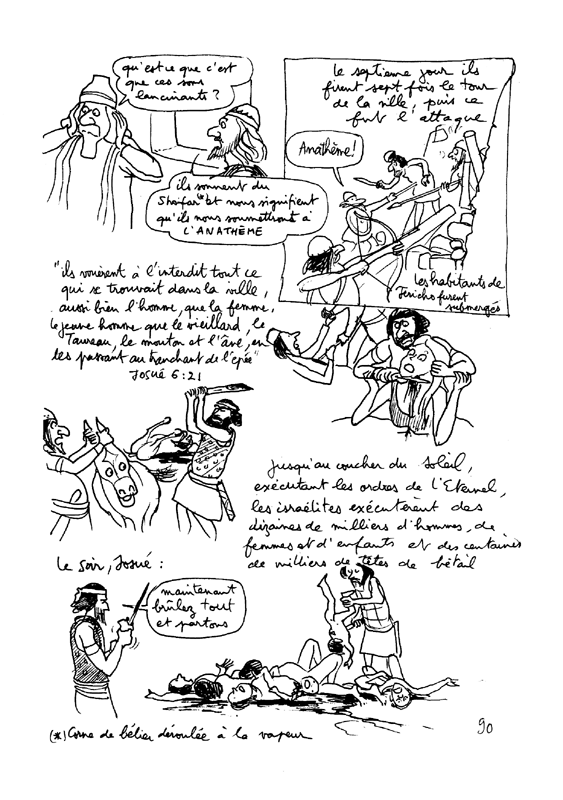
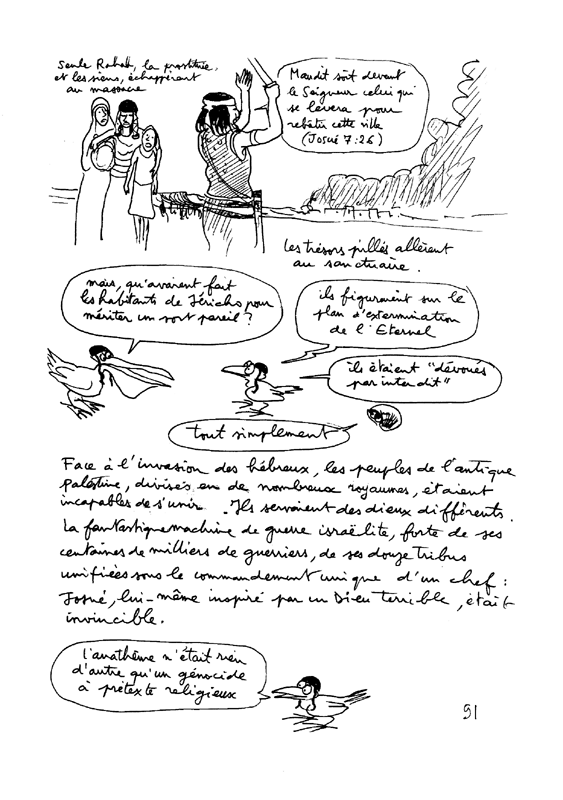
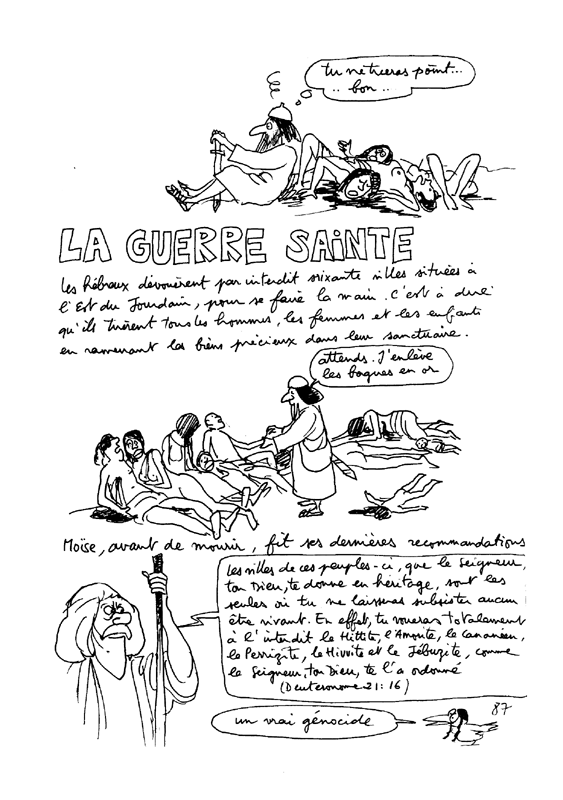
The cities fall one after another. They are, according to the expression of the Bible, "devoted to destruction", cursed. The Jews thus have the mission, not only to take possession of it, but to kill every living being that resides there, men, women, elders, children and ... animals. The initial residents of this land are considered cursed and "impure". There is no need to beat around the bush, it is therefore indeed a series of holocausts.
Who were these ancient residents of Palestine? We know very little about them. Based on the remains found, we can think that they sacrificed the firstborn of each family to their gods (in antiquity, human sacrifices were a common custom. Carthage, in Algeria, worshiping its god Moloch, became known for centering its worship on countless child sacrifices). Some think that the sacrifice of Abraham, where his god Yahweh asks him to slaughter his own son on an altar, but where at the last moment he points to a ram as a substitute, could represent in an allegorical way the displacement of an ancestral custom. The curse launched by Yahweh on the idol worshippers could be related to the fact that the peoples of that time frequently practiced magic, using figurines as support for their actions (this is also what the Egyptians did). Regardless, the conquest of the Promised Land, the future land of Israel, took place in a context of violence, as evidenced by the biblical texts. I am not making this up. The last sentence at the bottom of this page is taken from Deuteronomy.
The capture of the city of Jericho (located to the east of Jerusalem) is described in great detail.
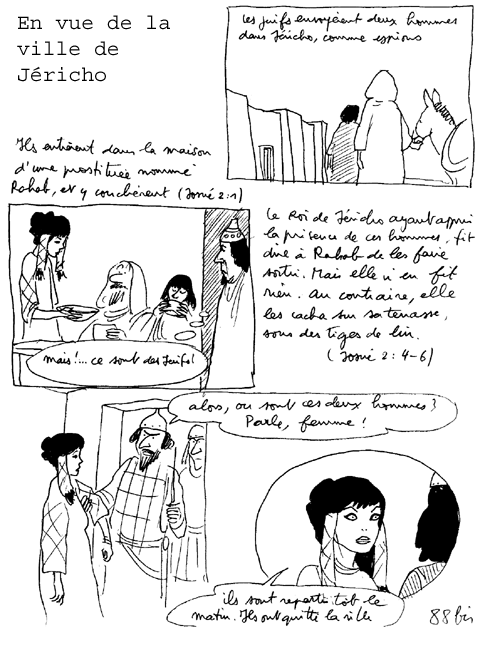
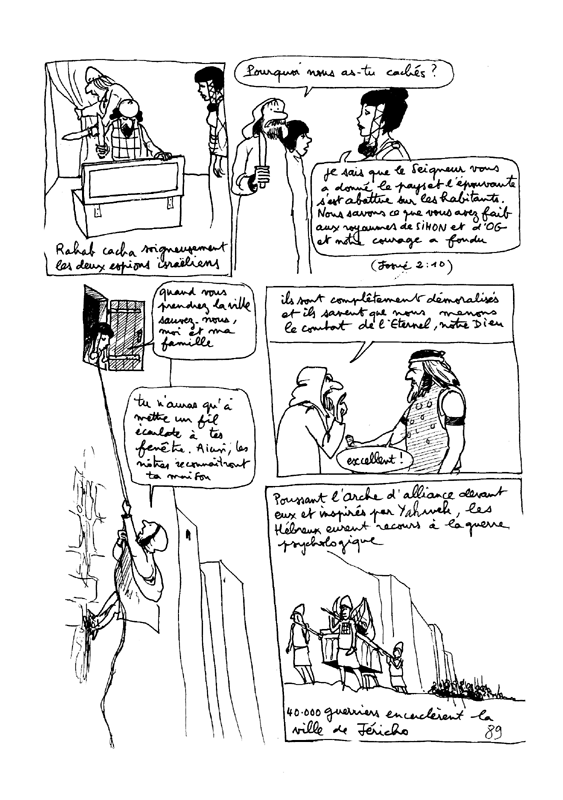
Then the Hebrews launched an attack.