King Solomon of Israel
Regarding the evacuation of Gaza
August 18, 2005
- page 4 -
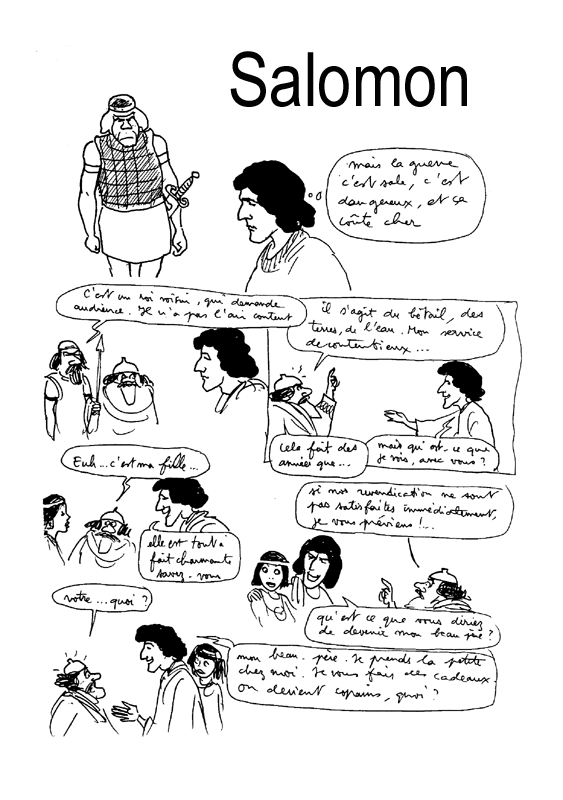
You may recall that I had suggested, as a way to resolve the Israeli-Palestinian conflict, the sponsorship of mixed couples. I believe King Solomon would have been exactly of this opinion. The main quality of this great king was tolerance (which did not exclude firmness, but a firmness that was deterrent—something he never had to exercise).
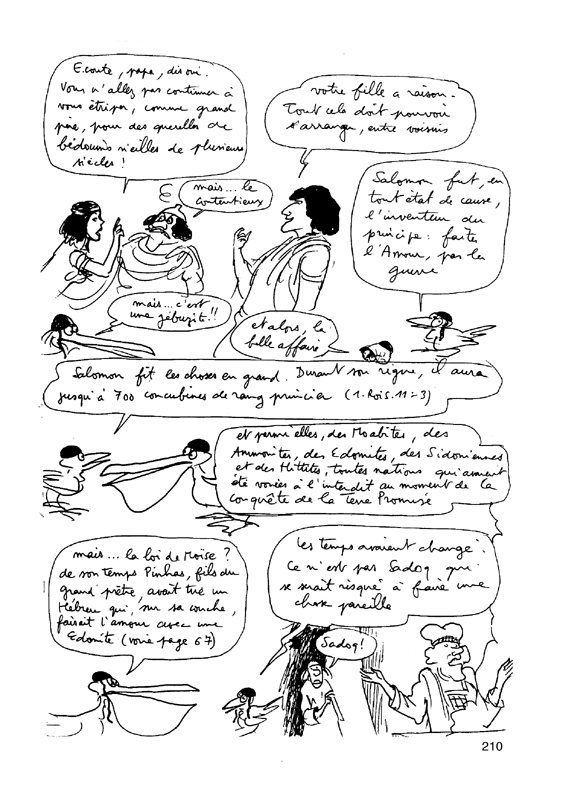
High Priest Sadoq, remembering that Solomon had firmly brought his predecessor under control—someone who had conspired against him—kept himself carefully in check, well aware that his king was "a firm hand in a velvet glove."
Solomon traded with all his neighbors. He imported metalworking techniques from Phoenicia, married a princess from Sidon, a people who worshipped the goddess Astarte. He welcomed the Queen of Sheba (who likely lived in what is now Yemen) with great ceremony, established strong relations with Hiram, king of Tyre, whom he made his closest friend. Hiram supplied him with timber and cast metalwork.
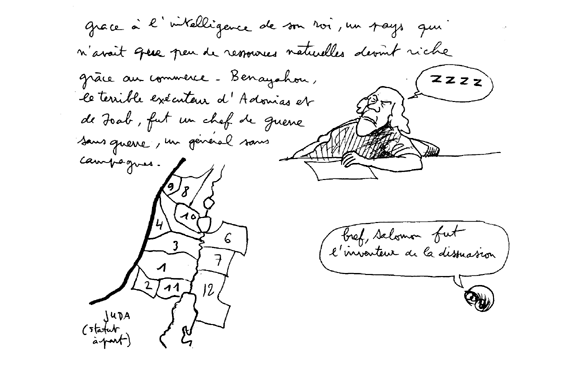
In addition, Solomon reorganized the country politically, disregarding traditional territorial divisions, in order to keep tribal leaders pacified. He conformed to religious custom by building a magnificent temple that left an indelible mark on all memory and where grand, spectacular ceremonies could be held.
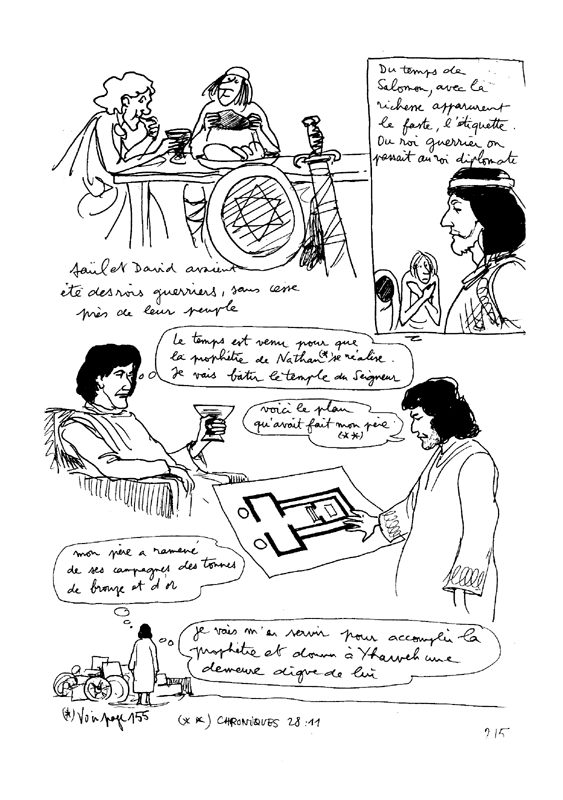
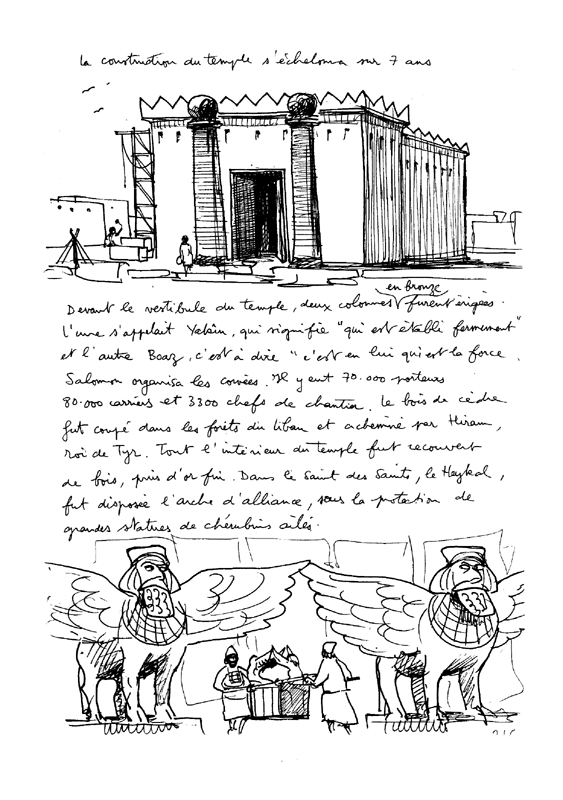
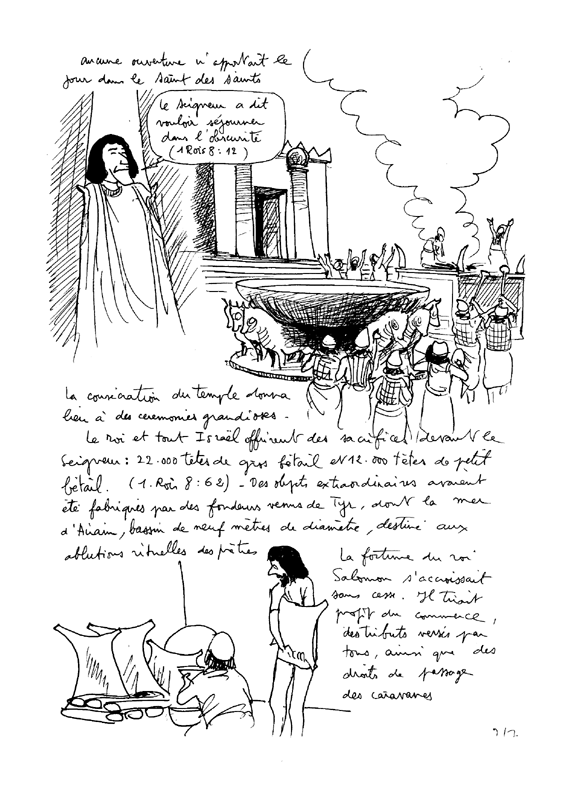
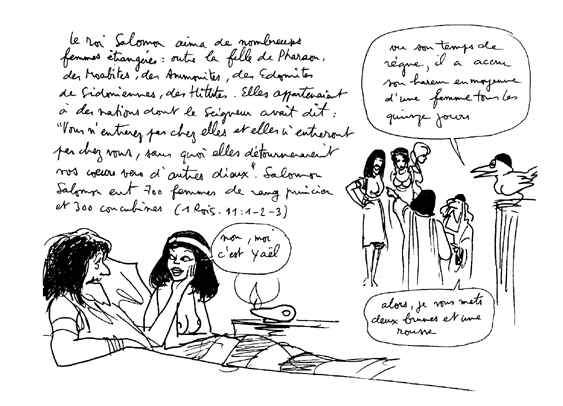
Of course, none of this was entirely in line with the law of Moses, but it must be acknowledged that Solomon’s reign—lasting thirty-seven years (from 970 to 933 BCE)—was one of the most peaceful in world history. This peace, however, came at the cost of religious orthodoxy. Solomon permitted numerous foreign cults to be practiced even in Jerusalem itself. If Solomon were king of Israel today, he would surely consider and propose a plan just as absurd as having mosques and a rebuilt Jewish temple coexist on the "Temple Mount," formerly the Jewish Temple of Herod the Great. For him, such a solution would be self-evident, a necessary step toward restoring peace in the land.
Upon his death, everything collapsed into complete chaos. The kingdom of Israel even split into "Israel-North" and "Israel-South." You will read in the following passages of the Bible the endless convulsions of this kingdom of Israel, which experienced many deviations. Some of its successive kings even engaged in human sacrifices, such as Manasseh, son of Hezekiah, who reigned for 55 years (Bible, 2 Kings: 21,6).
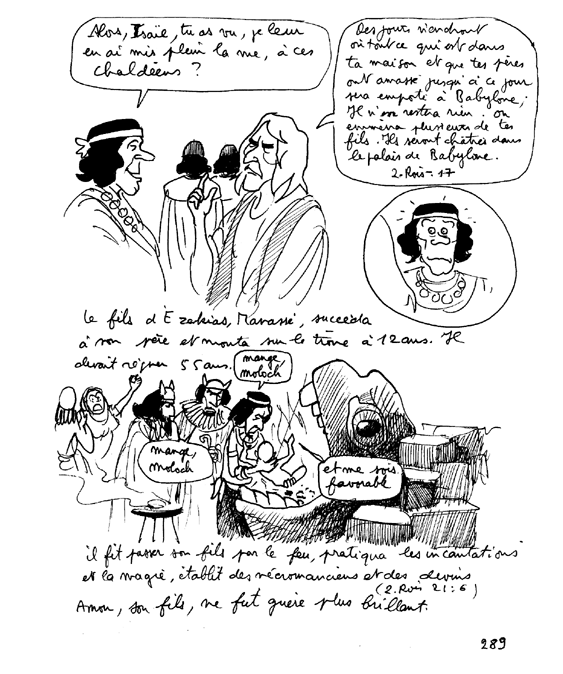
Historical and religious deviations, palace intrigues of the most mundane kind, two deportations to Babylon. Return, reassertion of control. Eventually, Rome conquered the world. Israel fell under Roman rule, attempted one last rebellion in 72 and again in 132 CE. This marked the definitive diaspora. The Romans even changed Jerusalem’s name to Aelia Capitolina after destroying the immense temple built by Herod the Great in 50 BCE (whose ruins, do you know, today form the "Temple Mount," the mosque of Omar having been built precisely on the site of the former Jewish sanctuary).
From then on, the history of Palestine merged with that of the Muslim Empire. After the war of 1939–1945, Jews from all over the world urgently demanded a land that could serve as a refuge, a sanctuary, protecting them from pogroms and holocausts like the Nazis’ horrific "Final Solution." I have traced the modern history of Palestine in another document Modern History of Palestine, a country artificially created by the UN in 1947. Among the initial measures adopted, Jerusalem was to become an international territory, which made sense since three religions found their roots there: Jewish, Christian, and Muslim. It would have been an enclave administered by the United Nations.
But the plan failed immediately. Arab countries, lacking realism and underestimating the determination of the Israelis, repeatedly tried to push them into the sea. Not only were these operations failures, but they plunged the Israelis into complete paranoia (entirely understandable), leading them to annex and control ever-larger territories.
We know the rest. It is now time to build a solution to recover from this true historical disaster. It begins with the evacuation of the Gaza Strip. The rest will be a matter of negotiations between the two sides, free from any religious fanaticism. I have included this dossier to remind us that, according to Jewish tradition itself, the territory of Gaza—formerly the land of the Philistines—was only incorporated into the Jewish world during the time of the "Great Israel," that is, during Solomon’s reign. Some Orthodox Jews advocate restoring Israel to those borders, and for this purpose have pushed for intensive colonization under the so-called religious pretext. What they conveniently forget to mention is that Solomon, while maintaining complete peace for thirty-seven years, practiced the most unrestrained ecumenism, allowing even the most exotic cults to have their own temples and rituals in Jerusalem itself.
Is religion thus a factor of unity or division, of disorder? We are entitled to ask the question.
One fact remains: in our current era, many religious currents are systematically radicalizing. This is true of Islam, but also of Judaism, and of Roman Catholicism (consider the personality of the new Pope, Benedict XVI, whose breadth of mind is not immediately apparent), as well as the evolution of fundamentalist Protestantism in the United States (Methodist, Baptist, Pentecostal branches, among others). Within societies (though politics is another matter), this may be seen as a kind of desperate response to the absence of moral and political values. Nations dishonor themselves; political classes increasingly reveal their cynicism and corruption. Elsewhere, the most primitive tribalism erupts. Ruling elites can no longer conceal their inherent selfishness. Bloodstains reappear on national flags; histories, beneath acts of war, expose their hidden vices. Behind the words "Liberty" and "Democracy," powerful nations attempt to impose neo-colonial regimes without shame. Moral values drift away. Famine prevails. Childhood is violated. The concept of family disintegrates. The planet’s conquest by unbridled capitalism evokes the resurgence of the worship of the Golden Calf.
People of faith retreat, clinging to whatever they can. Unfortunately, history has always shown that extremism, intolerance, and fanaticism have led to the bloodiest conflicts. Palestine is the site of a political problem of major importance for the planet’s future. To confuse it with a problem of an...