It's been like this for a long time
Indifference
May 9–15, 2009
Instead of simply posting a link to a YouTube video, I preferred to ask Julien Geffray to retrieve it for me so I could permanently host it on my website. That way, this sequence remains accessible and you can watch it without time limitations. Watch these images. It's you, it's us, and as you'll see, it's not something new. The theme: a simple surveillance camera in a U.S. city, Hartford, filmed an ordinary scene.
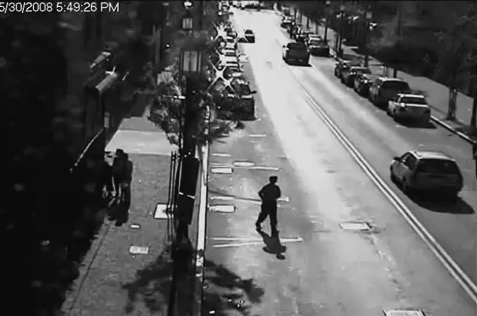
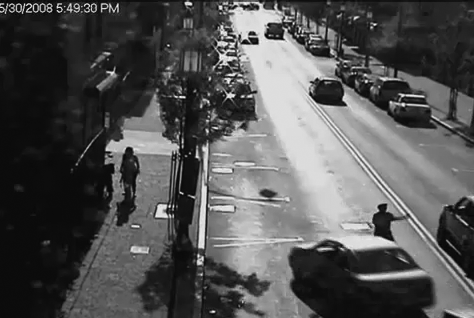
**An elderly man crosses a street in Hartford, United States ** The first vehicle swerves left to avoid him
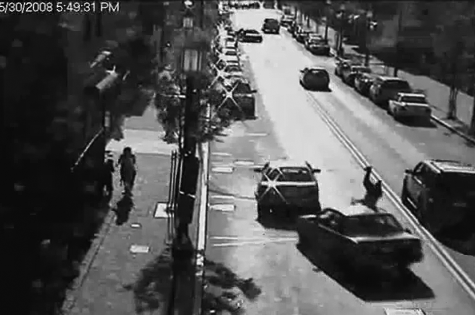
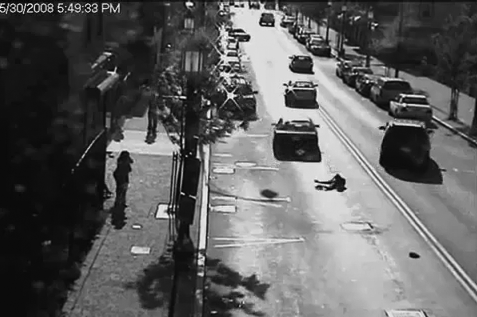
**The following vehicle is surprised. Instead of stopping, it swerves sharply to the left, hits the man full-on, then drives away **
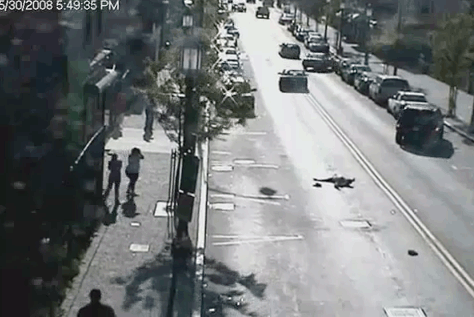
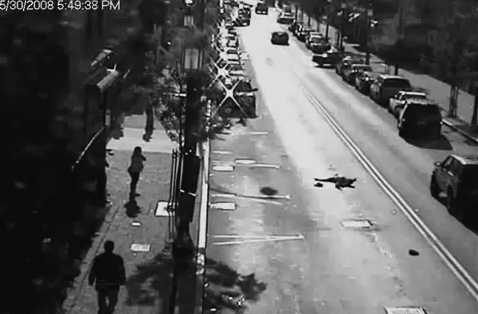
The man lies motionless, arms outstretched. No one moves. The previous hit-and-run vehicle turns right at the first intersection, and the other does the same
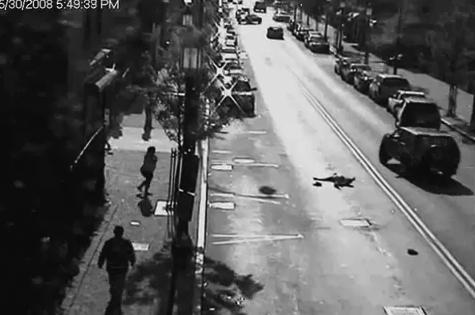
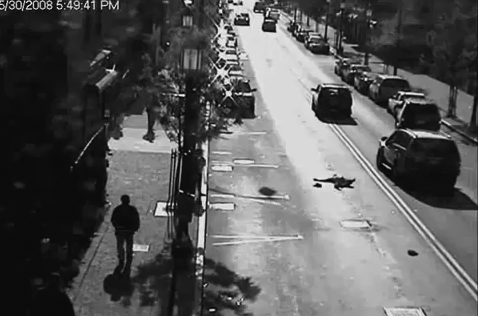
**A first vehicle passes by, then a second. Neither stops. A pedestrian approaches calmly. The man lying on the ground is unconscious, on his back. He must be... taking a nap **
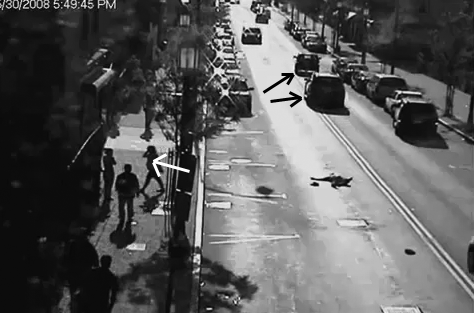
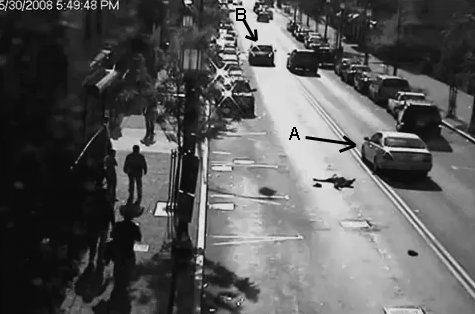
**The two vehicles drive away. Another passes by (A) and doesn't stop. Another (B) arrives. The woman has disappeared, onlookers are gathering. **
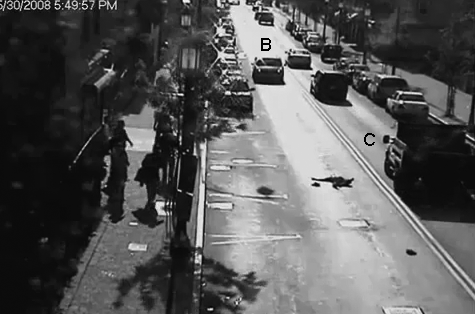
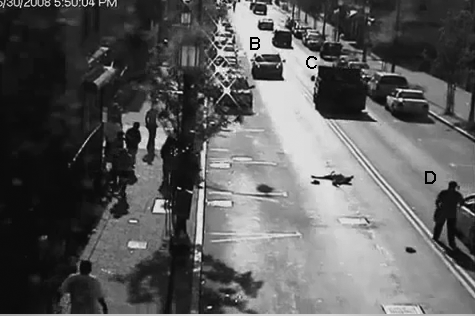
Vehicle B slows down. Vehicle C slows down, observes. A driver stops and a passerby looks at the man lying on the pavement, leaning on the vehicle
**The man remains motionless. So do the passersby ..... **
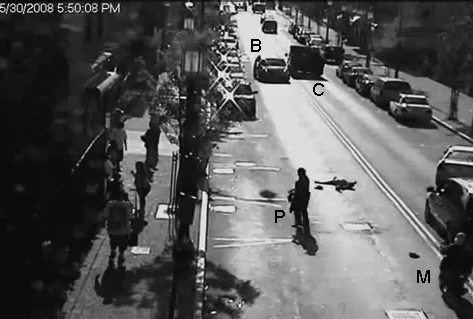
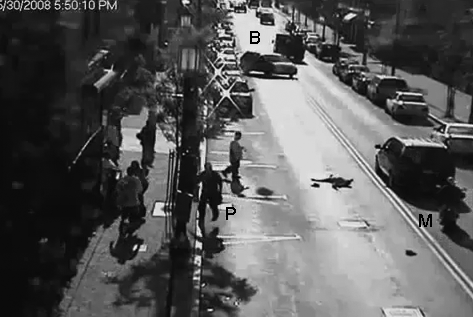
Then the passerby P decides to continue on his way. The car he was leaning on pulls over to the right. Vehicle B begins a U-turn, the motorcyclist M veers right
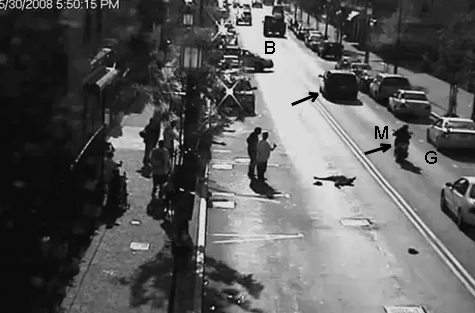
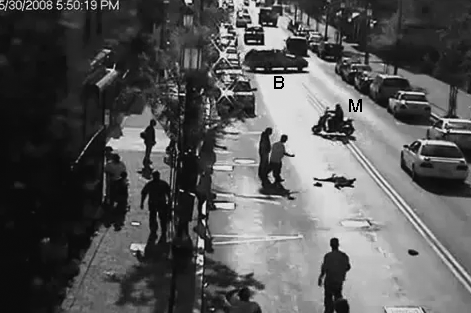
Vehicle B completes its U-turn. The motorcyclist turns to look. Onlookers stare at the man lying on the ground. A new vehicle passes without stopping
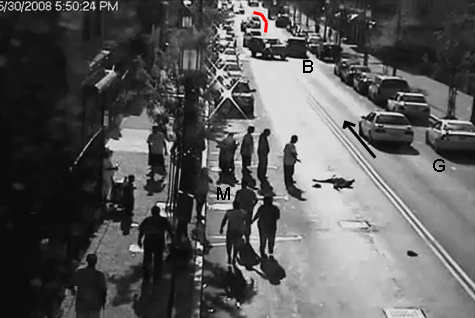
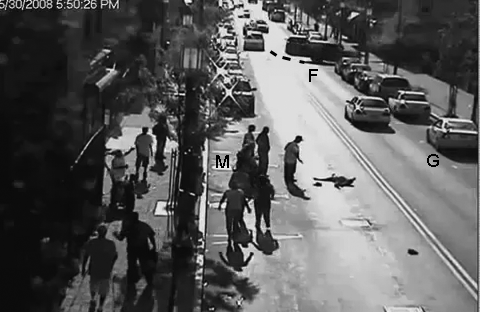
**Vehicle F prefers to swerve and take the first left. The motorcyclist M stops, looks. G waits calmly in his car. **
**Indicated in red, a police vehicle approaches, pulling out to overtake **
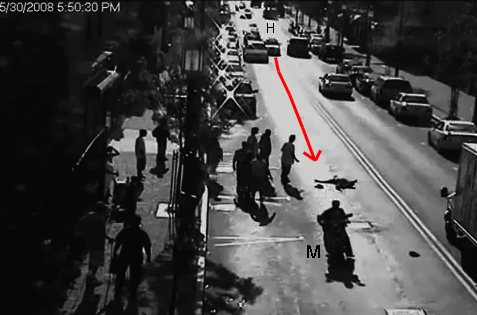
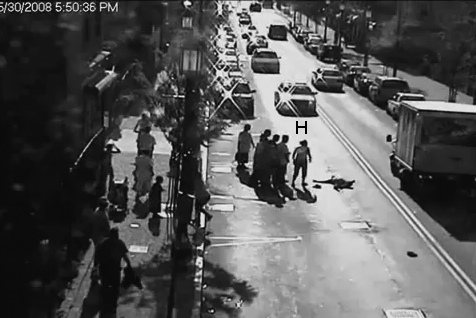
The motorcyclist M returns home to tell his girlfriend the story. A truck passes. H, a police vehicle, overtakes and approaches
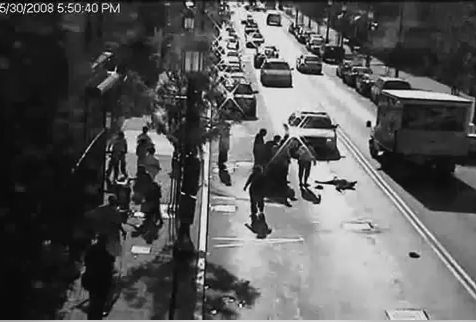

The police car stops in front of the unconscious man. The truck driver on the right, seeing the police, decides not to leave either
**What comment can one make about these images? **
What's extraordinary is that none of the witnesses to this scene approaches the injured man, examines him, or even checks if he's alive. Let alone the responsible driver, who calmly flees. An injured man could be suffering from internal bleeding. There are simple actions that could save a life—pressure points can stop hemorrhaging. But no one even bothers to get close. That said, if his spine is injured, he must not be moved and should be transported only by professionals using a stretcher. Did any bystanders call an ambulance? Is the approaching car a police vehicle? It's possible. But even then, it can't transport the injured man, and the officers driving it aren't trained to assess or treat him.
**
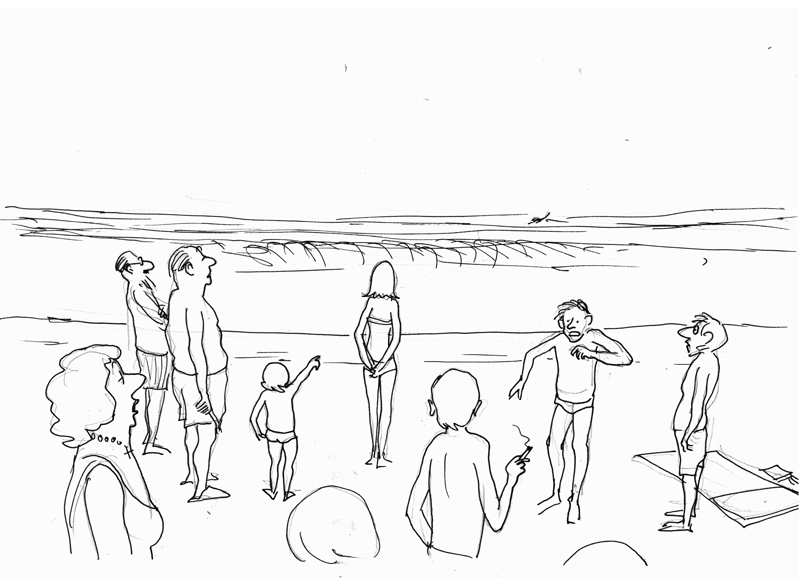
May 12, 2009: Several readers informed me that this group passivity has a name in psychology—“the bystander effect.” According to this theory, the more witnesses there are to a dramatic event, the less likely people are to react. It's like the "Panurge sheep" phenomenon, but reversed. Since no one moves, each person assumes it's normal. People may simply not want to stand out. I remember very clearly what happened to me in the early 1970s on the beach at Porto, Corsica. I came upon a crowd gathered on the beach, staring beyond three-meter waves at a man being swept away, waving frantically and clearly drowning.
No one moved. They just stood there, watching. When I realized what was happening before my eyes, I reacted immediately. I knew I could swim under the surface to cross the break, close to the seabed. But given the power of the waves, I never could have brought the man back. So I had an idea: I would tie him to a buoy. I remember shouting at the crowd:
- Hurry, bring me a child's buoy and a rope! Also bring a knife—quickly! Go get it from your tents (there was a campsite along the beach).
But no one moved, as if they didn't want to miss a single moment of the spectacle. I had to shout louder. Then one person brought me a circular buoy with a duck's head. I deflated it so I could tie it around my waist. A woman brought a long length of gray nylon rope she must have used to hang her fishing line. I took the knife and cut off about three meters.
- Oh, you're going to cut it! .....
No, this isn't a movie—it's real life.
I ran to cross the break three hundred meters to the left. The waves seemed weaker there. By hugging the seabed for about fifty meters, I managed to surface on the other side of the break. Then I swam toward where the man was supposed to be struggling. On the beach, my son's mother waved her arms insistently. I thought she was signaling that the wave had carried him away. So I had to hurry back the way I came, which I did. But when I arrived, she said she'd just been waving "like that." At the moment I reached the scene, the man might have just gone under. Anyway, there was no more than three meters of water. If I’d searched underwater, I might have found him. But it was too late to speculate about what might have happened if...
There was nothing left to do.
Since there was nothing left to see, people returned to their tents. I was told the man was a young Danish couple who had arrived that morning on a charter flight. I asked about the young woman.
- Oh, leave it—someone must have taken care of her.
I wanted to check. No, everyone had left, abandoning the young woman to face the churning sea alone. I remember a German couple arriving and saying, "We have a car—if it helps..." In minutes, the beach was empty.
We four took care of the young woman. The German man was a doctor and gave her a strong sedative. We had dinner with her. Later, we arranged her repatriation. She didn't speak a word of French. During dinner, the hotel manager signaled to me. The sea had calmed. I understood she had rejected the body. Indeed, when I arrived at the beach—two hundred meters from the hotel—I saw it emerge from the water downstream of the waves, under the moonlight. Campers had returned. There was something to watch, and they were gathered again. I entered the water and retrieved the man. He must have been 1.90 meters tall, but rigor mortis had made him as stiff as a piece of wood. Still, I found two men willing to help carry him. I held his head, and they took his ankles.
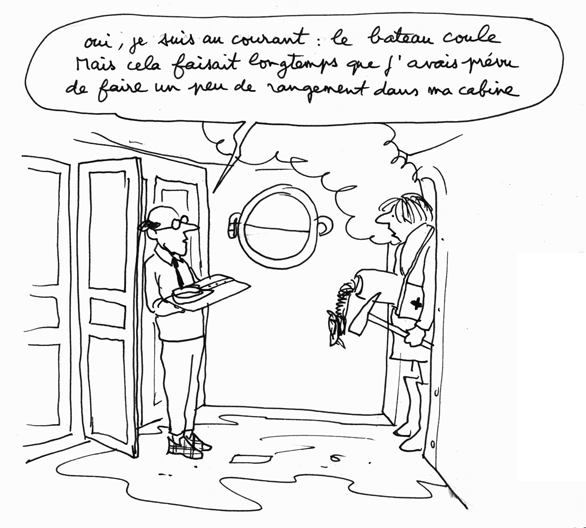
Death is that simple, that swift. Crowds react with passivity. When the Titanic hit an iceberg, the sea was calm. People put on their life jackets calmly and orderly. It was obvious there weren’t enough lifeboats for everyone. As the ship sank, hundreds of passengers jumped into the water, floating thanks to their life vests. But they all died quickly from hypothermia. As the ship slowly sank, the orchestra played "Nearer, My God, to Thee." They played until they were submerged. No one thought to grab axes, ropes, and hastily build rafts by dismantling the first-class lounge woodwork. That would have been enough to keep survivors afloat until help arrived. There was plenty of wood on that ship—plenty of axes too, I imagine.
The current situation on Earth reminds me of what happened on the Titanic’s deck. There are those dying in Darfur, Gaza, and others watching TV. They don’t seem to realize they’re all on the same boat, and it’s urgent to act. The emirs of Dubai believe only luxury will survive. So they invest in luxury—building ski slopes in the desert, multiplying mansions and apartments as large as train stations, constructed by Indian, Pakistani, or Chinese slaves whom they imprison by confiscating their passports upon arrival. One worker dies by suicide every day.
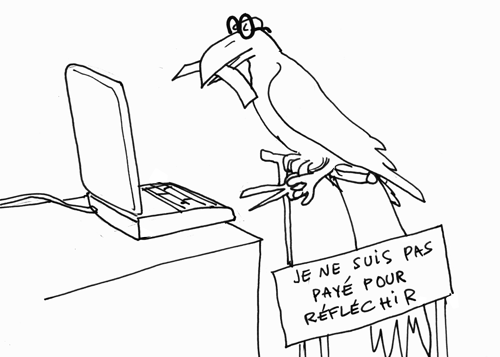
Scientists listen to themselves speak. In a special issue of Science and Avenir on astronomy (2009 was declared the UN "Year of Astronomy"), astronomer André Brahic became emotional over his discovery of Neptune’s or Uranus’ rings—I can’t remember which. He called it "a moment of great emotion."
Hubert Reeves made a profound discovery, confiding it to us in hushed tones after decades of reflection:
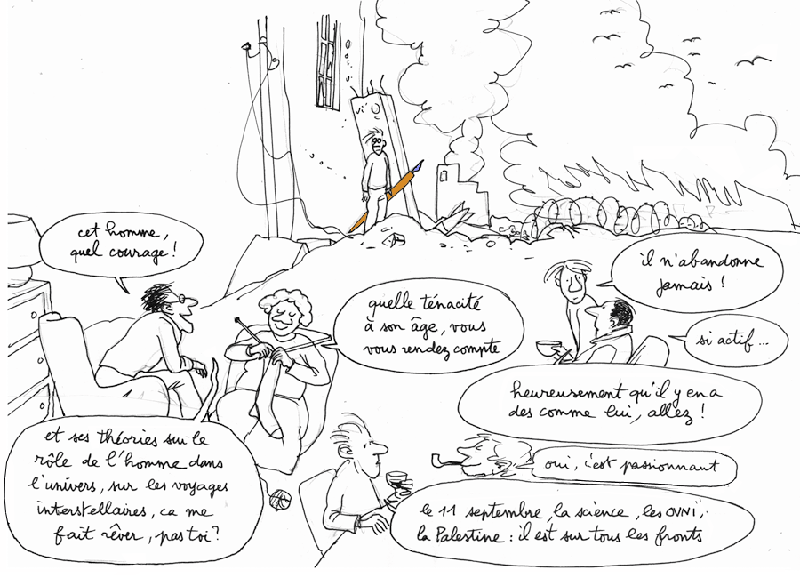
Man and the cosmos are one. It remains the Great Press, true:
I experienced a similar scene to what’s shown in the video above—back in the late 1950s in France. I was then a student at the National School of Aeronautics. I knew a young woman who would later become the wife of journalist-politician Jean-Jacques Servan Schreiber, now deceased. Sabine (we’re the same age) had offered me the use of a mountain chalet she could access in Bellecombe. To get there, we needed a car.
At Supaéro, there was a group of Polytechnicians—military engineers for the air force—who were completing their final two years as "application school" students. They were our "milis." Among them was a young man who wanted to become a fighter pilot. He’d been sent to Meknès, Morocco, where he joined a squadron of subsonic jet fighters—the Dassault Ouragan.
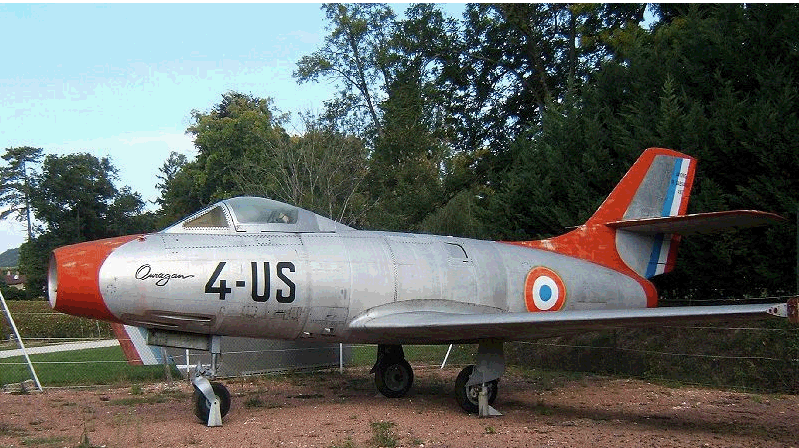
Dassault's subsonic ground-attack jet, 1950s
I truly don’t know how an instructor could have imagined placing such an inept pilot at the controls of a jet. Xs can sometimes be excellent pilots, even test pilots. I remember Pierre Baud, from the same class, who later became Airbus’s chief pilot, telling me he once landed a twin-engine Fouga with engines dead in a field without ejecting. I also recall an eccentric, nearsighted as thirty-six moles, flying a Stampe with other Xs.
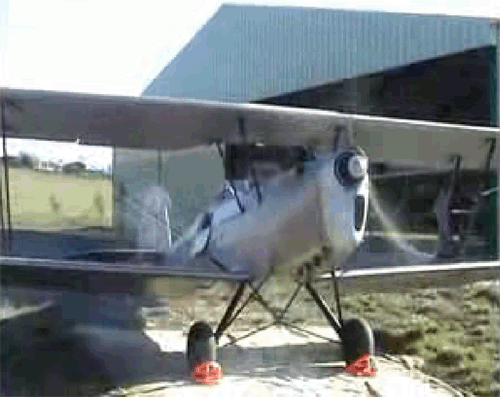
Stampe. Click to see it in flight
One day he landed, and the others asked him:
*- So, was the group flight great, right? *
- What group flight? (....)
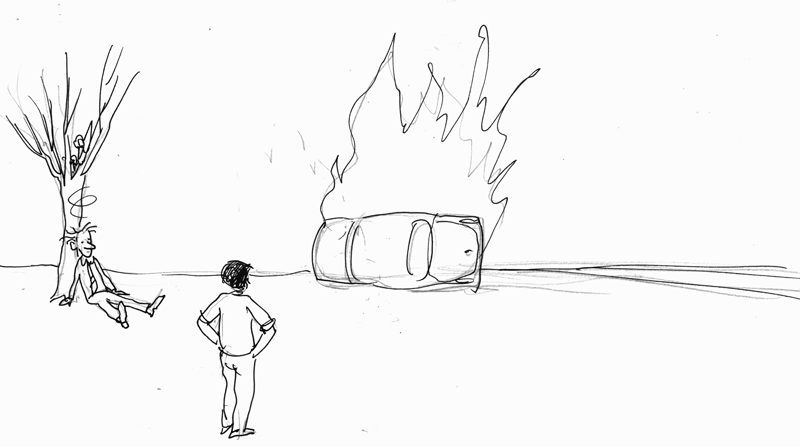
Memories rise like bubbles. Let’s take a small detour. At that time, I was doing skydiving in the Avignon region at Montavet center. There was a guy jumping from a Stampe. The pilot was in front, the parachutist in back. One day, the man started to exit the cockpit, and suddenly his backpack opened on its own. The pilot screamed, "Shit, get out!" Impossible. The Stampe went into a dive. The man opened the ventral hatch, and both men descended as shown in the drawing.
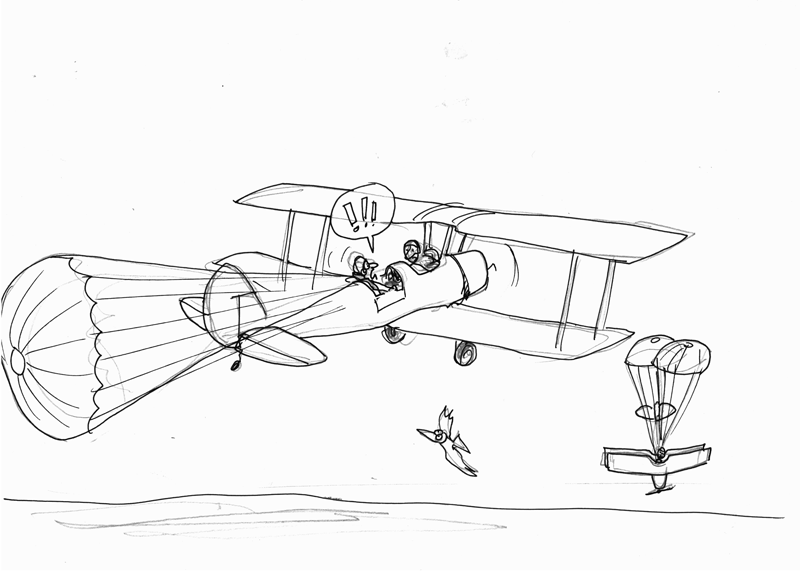
Of course, they damaged the aircraft, but walked away with only minor injuries.
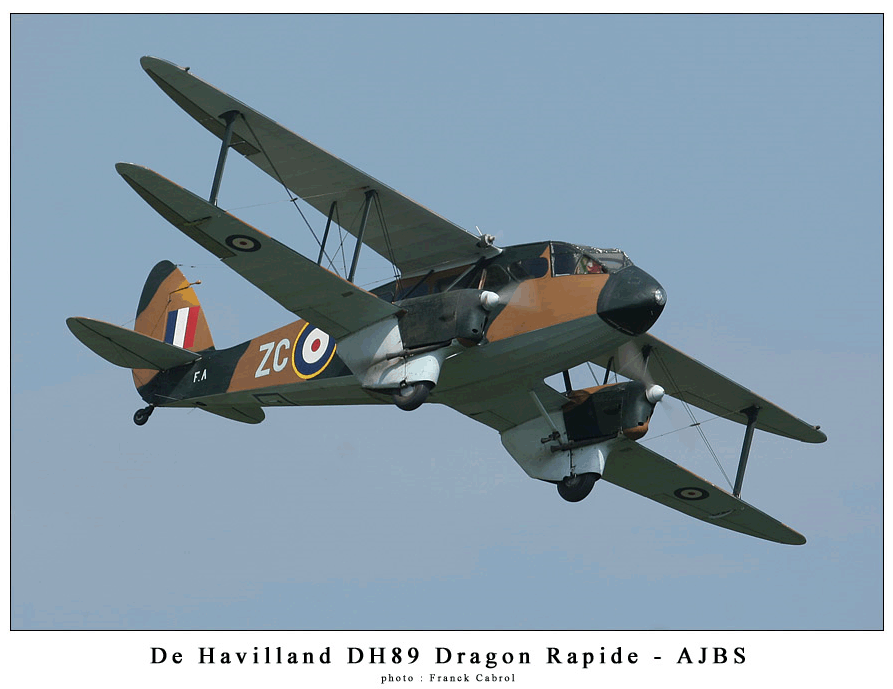
I made my first jumps from a fabric-covered biplane, a slow twin-engine de Havilland Dragon.
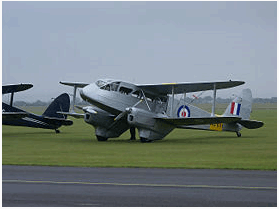

**de Havilland Dragon **
A better photo, retrieved from Salis's website: http://www.ajbs.fr/musee
**JPP, age 20 **
To jump, one had to first climb onto the wing, then jump "tail-first," of course, with hemispheres and a ventral reserve parachute. One day, a beginner panicked and instead of jumping, clung to a wire bracing, eyes wild. The plane must have been releasing us at 75–80 km/h, I think. The instructor shouted at the man: "Listen, either you jump or you go back—you choose!"
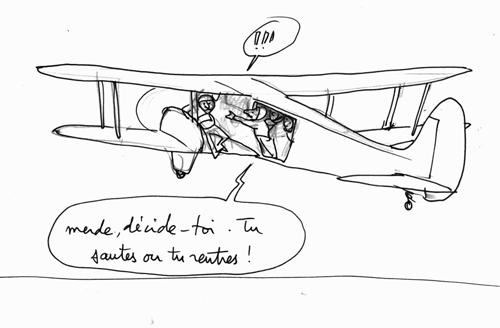
This made the guy even more panicked, and he inched toward the wingtip, clinging to cables (clearly visible in the close-up photo). In the cockpit, the pilot screamed, "What the hell are you doing, for God's sake!"
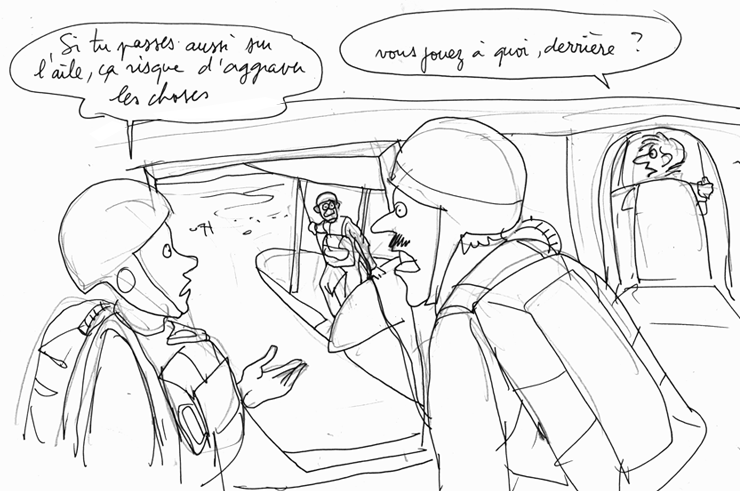
The man’s weight put the plane into a turn, and finally, the student lost his grip and fell anyway. I met that pilot again forty years later, over a beer, in a small air club.
You can see this plane in a film by de Funès, as well as the glider on which I made my first flights—the two-seater C 25S, visible in the final scene of The Great Escape. When I think about the Rolls we fly today at Vinon, see Mécavol.
Back to our Ouragan pilot. As part of training in Meknès, students were asked to strafe a towed target using a cine-camera. Then, during debriefing, they evaluated the "accuracy" of their shots. Soon, the flight leader told my military engineer:
*- Listen, when you make a pass, you veer away from the target once you're on it. Last time, your wingtip passed just one meter away. I think you’d live longer if we sent you to Paris, to an office. *
So here’s my guy, student at Supaéro, Boulevard Victor. He buys a Dauphine. Rear-engine, very unstable above 100 km/h.
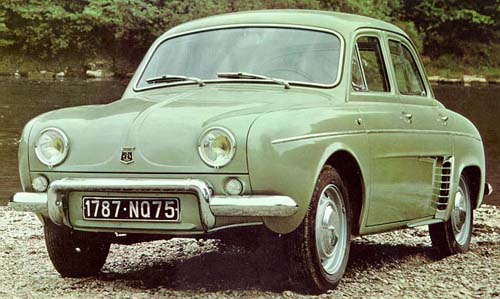

Renault Dauphine
We head toward Bellecombe, but haven’t even passed Melun. The guy drove his Dauphine like his Ouragan. When overtaking a vehicle, he’d charge straight at it, then swerve sharply at the last moment, pass, and finish with a fish-tail maneuver. I don’t know where he learned this. At one point, on a straight, empty road, we see a plain truck—a "target truck," so to speak—cruising peacefully. He charges at it and swerves left. The Dauphine lifts onto its two right wheels, tilted 45 degrees. He then makes a violent right turn. Obediently, the car balances on its two left wheels, still at 45 degrees. He finishes with a fine left turn. And suddenly, we leave the road and roll over. Only a military engineer-polytechnician could make a car roll over on a straight, clear road just by trying to pass a truck. It’s miraculous.
At the time, seatbelts didn’t exist. The impact threw me into weightlessness inside the cabin. I saw him fly out the left door. I clearly remember seeing his buttocks framed in the door, backlit by sunlight. I also remember the sun being obscured with each rotation by the roof or floor of the car.
How many rolls did we make? I admit I didn’t count them. But eventually: a great silence. The car lay on its side, about twenty meters from the road. The military engineer had glided (normal for a pilot) and landed in a tree, face down, without a scratch. I opened the door and got out. Just before the accident, he’d been talking to me about Proust, his favorite author. I remember asking him what Proust would have advised in such a situation. Curious—people react differently in extreme situations. He climbed down from the tree and sat on his butt, dazed:
- In the front trunk, there’s my jacket with my papers....
I turned around, but something stopped me. Either my guardian angel or, more prosaically, the smell of gasoline (obviously, he hadn’t turned off the engine when leaving the road). The gas tank, full to the brim in Paris, exploded. It was exactly like in a Belmondo film. A huge yellow flame erupted. It radiated so intensely we had to retreat thirty meters. It lasted no more than twenty seconds. I heard the five tires explode one after another.

I know this story made an impression in the press of the time. Near Melun, between 1958 and 1961. It mentioned a Polytechnician who left the road and landed in a tree. Someone might still find the article.
It was hot. I’d taken off my shoes and sweater. I realized my white shirt was red with blood. I touched myself. My nose? Still there. Just one ear slightly detached. That’s where the blood on my white shirt came from. Detached by what? I’ll never know. But that’s where my story hits a wall at the beginning of this page. The car finishes burning. I step to the roadside and wave down passing motorists. But they speed up when they see me and drive off.
I counted seventy
Eventually, I stood in the middle of the road, arms outstretched. A man arrived in a gray Dauphine, swerved, narrowly avoided me. But to do so, he slowed down and must have thought, "Damn, he might have noted my license plate..."
He finally stopped 150 meters away on the roadside. I ran toward him before he could change his mind. He said:
*- Need help? *
I wanted to reply:
- You think so? I’ve got half my ear torn off, the car’s on fire. The driver just landed in a tree after a twenty-meter glide. But apart from that, everything’s fine...
He drove us to Melun hospital. During the ride, my military engineer kept repeating:
- I must have ruptured my spleen. Some people don’t know they’ve ruptured their spleen. Then suddenly, they collapse and die...
An intern came toward us.
- I’m bringing you a man with a ruptured spleen. As for me.....
*- I see. Come on, let’s take a look. *
I barely saved my earlobe. It took some convincing.
*- But it’s held together by almost nothing! *
*- Listen, always reattach it. What’s the risk? If it doesn’t take, we’ll remove it. *
- If you insist....
We returned to Paris by bus. I borrowed the fare from a nurse, since we had no money. If she’s still alive, I’d love to repay her. It’s been half a century, and it still bothers me. On the bus, my X looked dazed and kept repeating:
*- What French cars are stable? *
- Listen, what you need isn’t a car—it’s a tank.
In the story