About the Gaza evacuation
August 18, 2005
- page 3 -
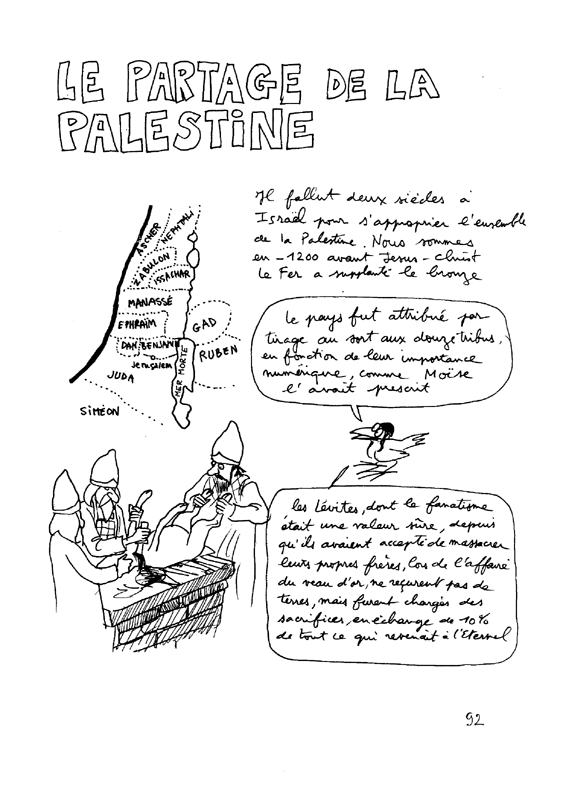
At this stage lies the historic division of Palestine, according to a tradition essentially religious in nature. When you watch the news, you see that Israeli soldiers are confronting religious figures, not secular ones. The settlers in the Gaza Strip wear their "Kippa" on their heads. Some have small black boxes on top of their heads, secured with a strap, containing passages from the Torah, the Jewish Law (the Pentateuch, the first five books of the Bible. "Penta" means five in Greek). They gather around their rabbis.
Can we speak of legitimacy when events go back... thousands of years? Who owned France three thousand years ago? The Gauls? There are many territorial claims today that remain questionable, even when based on much more recent facts. The Native Americans, the Sioux (who actually call themselves "Lakota"), are demanding land that was taken from them barely over a century ago—the "Black Hills," the size of a French department, located in Dakota. After the Indian Wars, a treaty was signed granting the defeated Native Americans this last sanctuary, which also held deep religious significance. The Black Hills were sacred land for the Sioux. The treaty was signed in 1868 between the Native Americans and representatives of the American government at Fort Laramie. But when gold was discovered there in 1874, the same government confiscated the territory in 1877, without any trial.
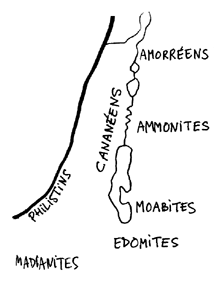
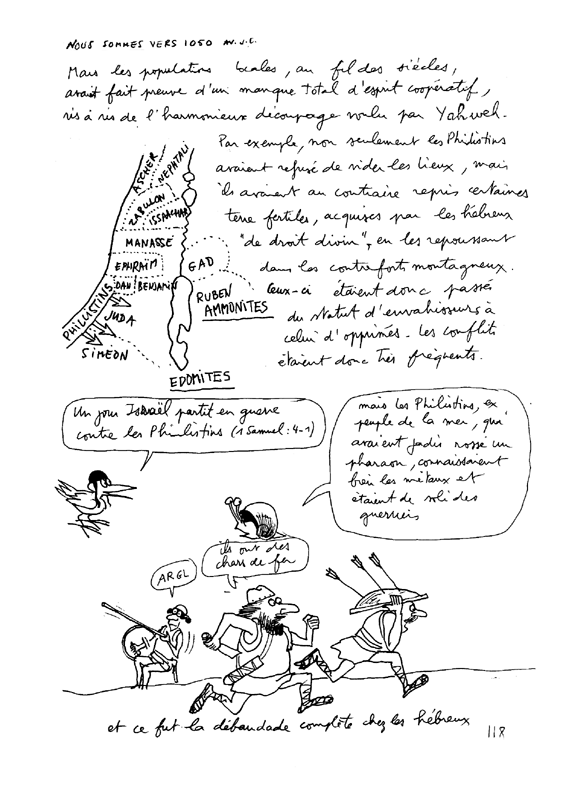
Where does the "sacred land of Israel" begin, and where does it end? Before even considering the legitimacy of the concept of "sacred land," it's worthwhile to examine traditional texts. What exactly does this Gaza Strip correspond to? Take a look at the map below.
It is nothing other than the land of the Philistines, and I believe the word "Palestinian" is nothing more than a distortion of the word "Philistine." To be verified.
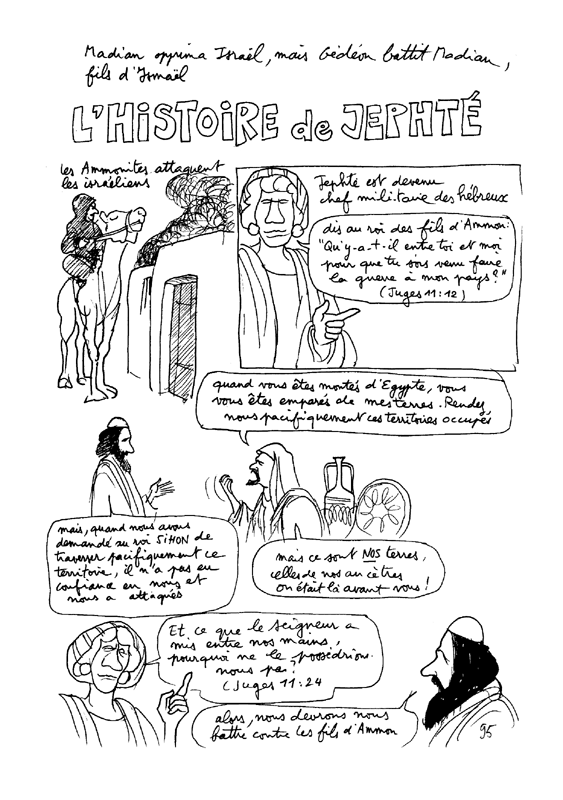
Today, contemporary history and events from thousands of years ago collide dramatically. It's useful to examine texts, historical facts, or legends, in an attempt to understand what some people have in mind, displaying an anachronism that defies all logic. Let us refer, for example, to a passage in the Old Testament featuring a military commander named Jephthah. This passage explicitly depicts a conflict between Jews and Arabs, since the Midianites are presented as "sons of Ishmael."
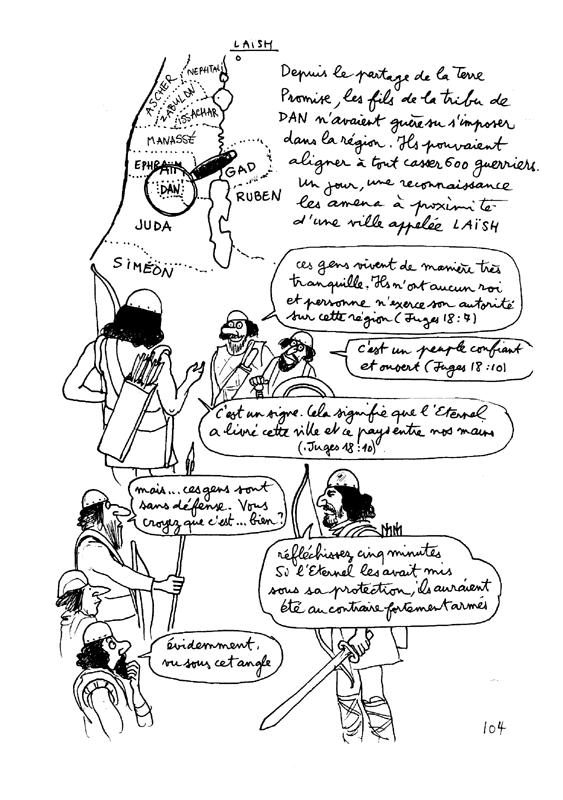
The phrase "What the Lord has put into our hands" is typical of the Old Testament. Let us go further and consider a story from "The Judges." You have already seen the initial division of the Promised Land. The Danites were assigned a small territory to the north of Judah and west of the land granted to the Benjaminites. Suddenly:
You think I'm exaggerating, that I'm misinterpreting? OK. Buy a pocket-sized Bible and go to "Judges, chapter 18." The result is that these people kill each other over matters dating back thousands of years. And this continues, throughout the centuries and millennia. Below, you will see that the history of this Gaza Strip is full of twists and turns.
Sometimes the Jews defeat the Philistines. Sometimes it's the other way around. Here, if you look at this episode, it's the Philistines who succeed in capturing the Ark of the Covenant from the Jews.
Read the comic strip, less daunting and more expressive than the text it follows literally. You'll discover the adventures of Saul, David, Absalom. And here I massacre you, and there I massacre you. And despite all this, we still don't know who owns the Gaza Strip (but I suppose if you ask a random settler, he'll answer with a passionate tone, "It's Jewish land!").
Then comes Solomon, the Great King Solomon. Solomon, the brilliant inventor of the principle "Make love, not war."
Let me explain. He was a smart man, who had grown up with memories of the constant wars waged by his father David and by Saul, the first king of Israel. He invents diplomacy, in his own way, by marrying daughters of all his neighbors. To resolve problems with Egypt, he begins by becoming... the son-in-law of the pharaoh, despite the scandalized protests of his priests, since, by doing so, he deliberately violates the Law (1 Kings, 3:1). Until then, religious figures had exercised some influence over kings (Samuel over Saul). Do the priests have visions? So be it. Solomon decides he has visions too—and in color. During his reign, the religious leaders will stay quiet.
page 1
page 2
page 4 ---