Untitled Document
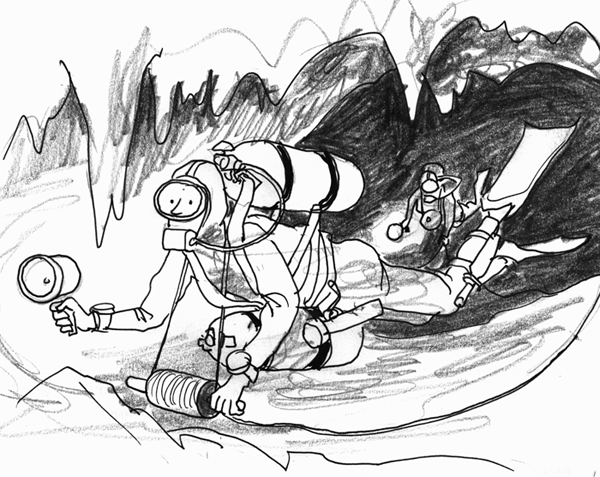
http://www.dailymotion.com/video/xanurx_le-fleuve-de-la-nuit_tech
http://www.qobuz.com/info/MAGAZINE-ACTUALITES/VIDEO-DU-JOUR/Saint-Francois20326
http://www.qobuz.com/info/MAGAZINE-ACTUALITES/VIDEO-DU-JOUR/Saint-Francois20326
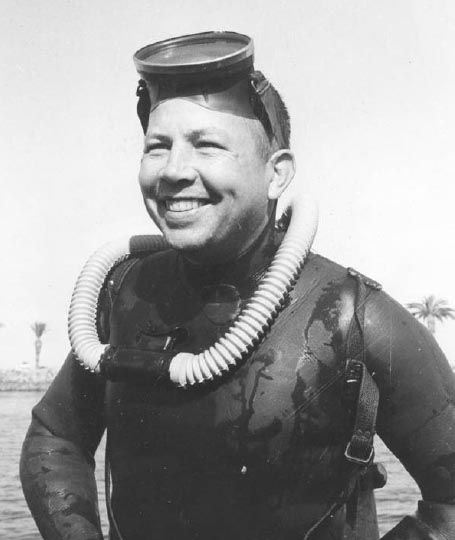
| On March 13, 1960, Limbaugh was driven to Marseille [France] by Frédéric Dumas, along with Philippe Tailliez and François Clouzot. Later he made dives outside the harbor there and along the coast. | Limbaugh’s death occurred on March 20, 1960, when he lost his way in the labyrinth that was the underground river at Port Miou, near Cassis, 20 miles from Marseille, France. Friends who had heard his talk on “cleaner fish” and shrimps had told him of the river underground where salt-water fish rid themselves of parasites by briefly swimming up across the interface into fresh water, quivering there a moment, then dropping back to their Mediterranean water. | He would not have missed that sight. Yves Girault loaned him dive gear, François Clouzot drove the boat and remained outside the cave. Michel Poudevigne was [Limbaugh’s] dive partner and guide. | Entering the water from the boat outside the cave, the two first swam the 150 feet to where a chimney, open to the land surface, had sent eroding rocks to form a cone on the river’s floor below. | Limbaugh had a 16mm movie camera with him and wanted a shot up the chimney. To help him, Poudevigne put his flashlight on the cone of rocks below and returned to give him a boost. Photography achieved, | Poudevigne signaled or said he would pick up his flashlight on the cone of rocks below and be right back. But Limbaugh was gone when he returned. | Details of that day, and the search for him that lasted one week, can be read in letters from Dr. Wheeler North of Scripps, and Poudevigne, himself, to Mrs. Limbaugh. | One week later, the body of Conrad Limbaugh was found by professional cave divers some 350 | feet from the entrance of the cave. Limbaugh was buried in a small cemetery overlooking the Mediterranean at Cassis, France. He was 35 years old. The scientific and recreational diving | communities reacted with shock. | Thorough investigations into the cause of Limbaugh’s death were undertaken, and the cause was deemed accidental. In retrospect, contributing factors may have included Limbaugh’s recent lengthy illness, his lack of familiarity with both the borrowed equipment he was using and the cave in which he was diving, and the language barrier involved as Limbaugh | Le 13 mars 1960 Frédéric Dumas, Philippe Taillez et François Clouzot emmenèrent Conrad Limbaugh à Marseille, après qu'il eut participé à un festival consacré à la plongée, en Espagne. Il effectua des plongées au large du port et le long de la côte. | Il trouva la mort le 20 mars 1960, lorsqu'il se perdit dans le labyrinthe sous-marin de la résurgence de Port-Miou, située près de Cassis, à une dizaine de miles de Marseille. Des amis, qui avaient écouté sa conférence sur les "poissons nettoyeurs" et les crevettes lui avaient dit qu'il existait des grottes où pénétraient des poissons d'eau salée, qui se débarrassaient de leurs parasites en naviguant dans l'eau douce. Limbaugh, spécialiste en biologie marine, ne voulait pas manquer ce spectacle. | Yves Girault lui prêta un ensemble de plongée. François Clouzot le conduisait, avec un autre plongeur, Michel Poudevigne, devant l'entrée de la grotte, avec son bateau. Pénétrant à l'intérieur de la grotte, les deux plongeurs trouvèrent une cheminée, à une trentaine de mètres de l'entrée (l'aven). Cette cheminée permettait d'avoir accès à une pièce d'eau libre. En s'effondrant (lors de la formation de l'aven) les roches avaient formé une sorte de cône d'éboulis, à son aplomb. | Limbaugh avait amené avec lui une caméra de 16 mm et souhaitait tourner des images de ce lieu magique, en filmant en "contre-plongée". Pour cela il avait besoin de l'aide de son compagnon. Poudevigne posa donc sa lampe torche sur les rochers, en contre-bas et entreprit de lui donner un coup de main (pour l'aider à tenir sa caméra hors de l'eau). | Quand Limbaugh eut terminé de filmer, Poudevigne lui fit signe qu'il allait récupérer sa lampe et revenir. Mais quand il revint, Limbaugh avait disparu. Les détails concernant cette journée peuvent être lus dans la correspondance entre le Dr. Wheeler et Poudevigne lui-même, adressée à Mme Limbaugh. | Une semaine plus tard, des plongeurs professionnels (de la société Sogetram, opérant avec des appareils nommés narghilés) trouvèrent le corps de Limlbaugh, à 350 mètres de l'entrée. Celui-ci fut enterré dans un cimetière, ouvrant sur la Méditerranée, près de Cassis. Il avait 35 ans. Le milieu de la plongée scientifique et sportive fut sous le choc. | L'enquête conclut à une mort accidentelle. On fit état d'un récente maladie de Limbaugh, de son manque de familiarité avec le matériel qu'il avait utilisé et au fait qu'il ne parlait pas le français, ni Poudevigne l'anglais. |
|---|
**Michel Poudevigne next to the 400 kg shark pulled out of the water by J.P. Petit, on the right, who passed a rope around its tail and hauled it into the Croisette harbor using a boat winch, visible in the background **
It is true that fish frequent the cave, especially wolves, and make incursions into the fresh water layer that flows over the seawater, to encourage the parasites attached to them to leave.
There were many fascinating things in these places. First, at the entrance, the fresh water mixed with the seawater, giving "vaseline". Therefore, one had to cross a few meters in the blur, like a nearsighted person who had lost his glasses. Once past this area, looking towards the exit, one could distinguish a greenish surface, marking the boundary between the fresh water flowing on the surface and the salt water, slightly mixed with fresh water, just below. When one saw a diver, who had stayed behind, whose body was immersed in these two media, one had the illusion that his legs were underwater and his torso above the water.
The fundamental mistake was to venture into a cave without a thread of Ariadne, which was also the case for François de Roubaix. I don't know if Limbaugh had his own light or not. If the answer to this question is negative, then the tragedy was inevitable. What is treacherous about the fresh water underwater caves is that the water is as clear as that from the tap, to the point that when one enters a part with a high ceiling filled with fresh water, one gets... vertigo.
Moreover, moving in water with variable salinity is not easy. With a given weight, if one enters a layer of seawater, one goes towards the ceiling, in the stalagmites. Conversely, if it is a pocket of fresh water, one sinks, if one is not careful. The last thing to do then is to kick. Because as you may have seen in the film, the floor of the cave is covered with a fine silt, which is stirred up by the slightest kick. If one is caught off guard and enters contact with the bottom, one has to (at that time we did not have vests allowing to adjust buoyancy) fill one's lungs and wait for Archimedes to do the work. And, in general, to avoid...