Transformation of a Crosscap into a Boy Surface via the Steiner Roman Surface
How to transform a crosscap into a Boy surface (left or right, as desired) by passing through the Steiner Roman surface.
September 27 - October 25, 2003
Page 3
Plate 8: We begin by moving two cuspidal points (C2 and C4) closer to the triple point T. We have then marked dotted lines on parts of the surface that we will "punch inward" using a "pyramidal punch" (for goodness' sake, build these models, or you'll end up in a psychiatric hospital). As these pyramids develop, their tips are none other than the cuspidal points C2 and C4, which "migrate" and will eventually meet.
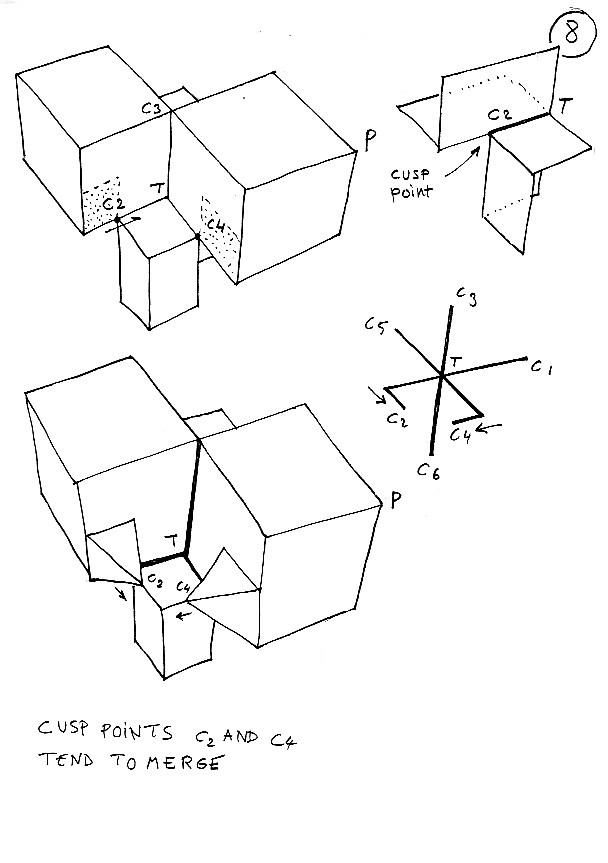
Plate 9: The cuspidal points meet at S and "annihilate." The self-intersection curve loses two cuspidal points and gains a loop (in polyhedral terms: a closed polygonal contour).
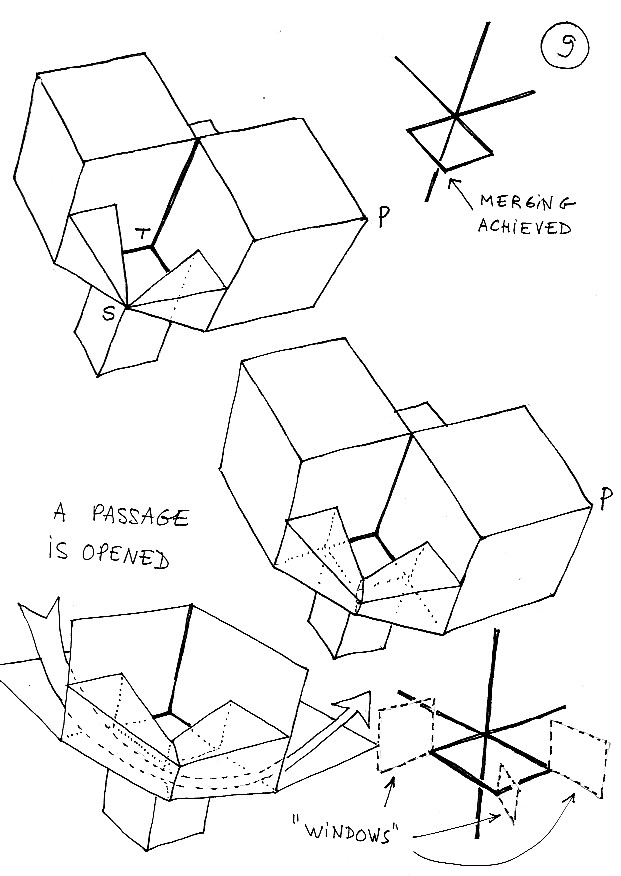
Plate 10: This "square-sectioned tube" is formed.
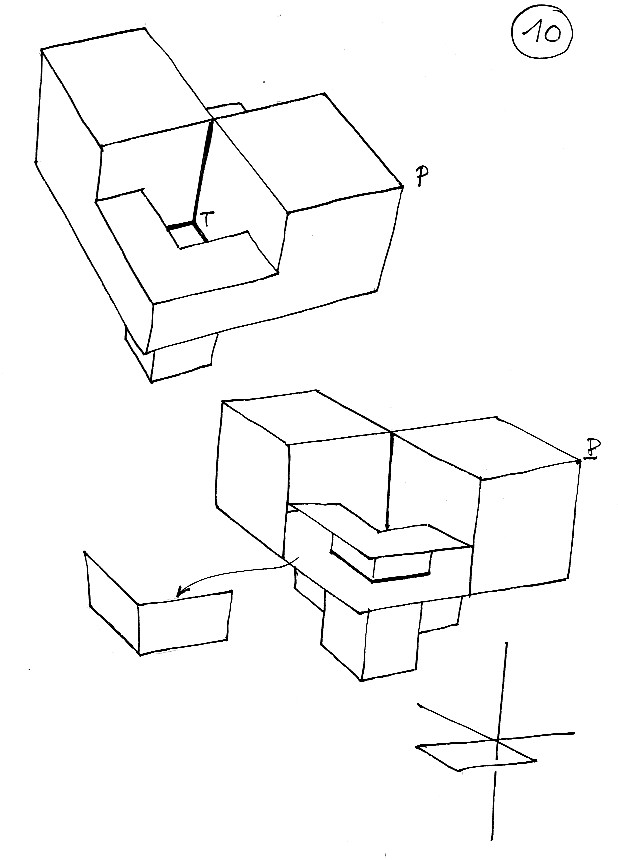
Plate 11: We rotate this object to view it from another angle and move two new cuspidal points, then punch inward the dotted parts (which is silly since a Steiner Roman surface, a fourth-degree surface, is one-sided). We continue the migration and convergence of this second pair of cuspidal points.
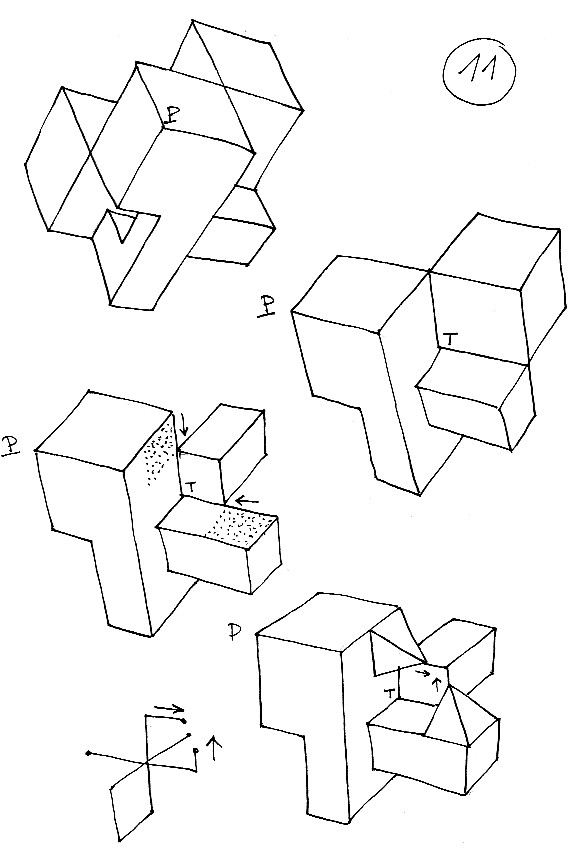
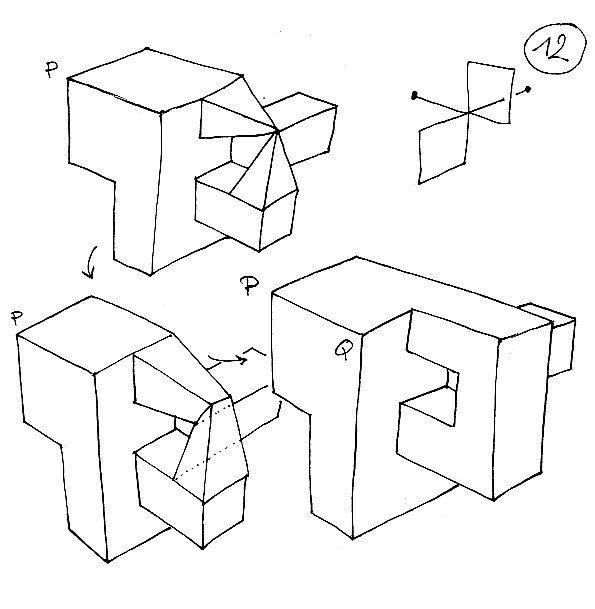
In the last image, the points are nearly meeting. Plate 12: The passage is open. Only two cuspidal points remain.
Back to the Table of Contents "Transformation of a Cross Cap into a Boy Surface"
Back to the Guide Back to Home Page
Number of consultations since October 25, 2003: