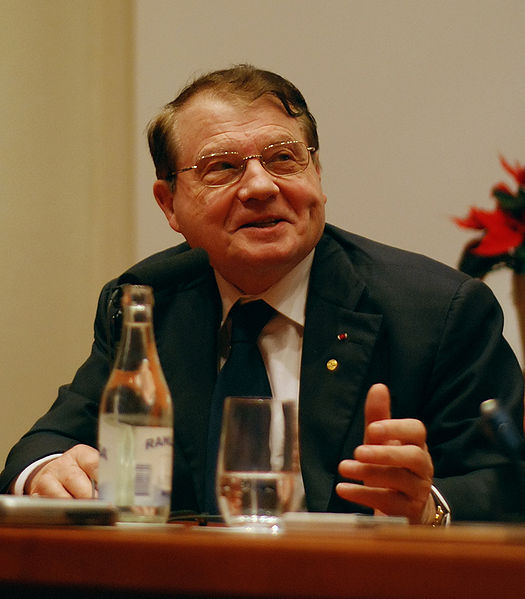
Professor Luc Montagnier pays tribute to Jacques Benveniste
Preamble:
**
[The audio file of Montagnier's interview, May 2010](../../AUDIOS/LE SEPT NEUF DU DIMANCHE 02.05.2010_benveniste.mp3)
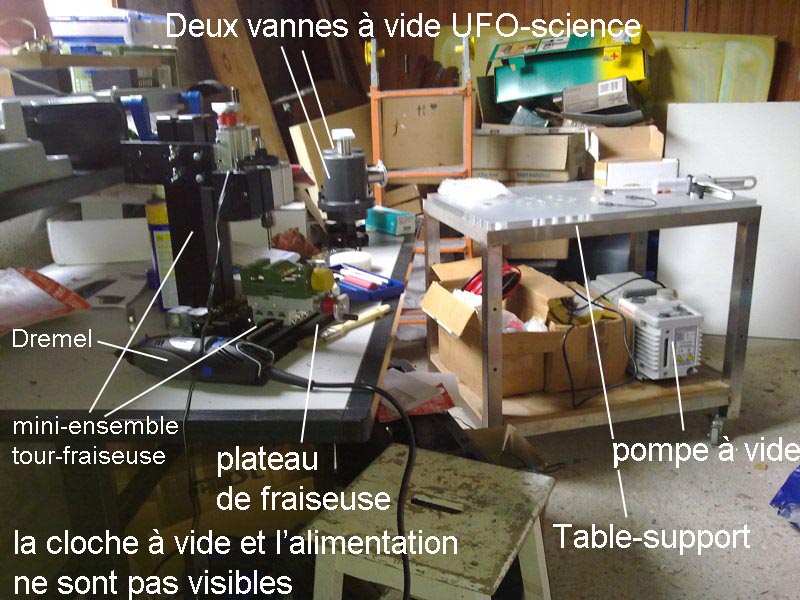
| 10 May 2010. | A reader sent me an excerpt from a program where you can hear the Nobel Prize winner Luc Montagnier praising my late friend Jacques Benveniste. | Professor Luc Montagnier, Nobel Prize in Medicine, in 2007, in Lugano | C | he doesn't hold back and doesn't hesitate to declare that Jacques was a brilliant pioneer, ahead of his time, and his belief that one day his views would be recognized as correct. | J | I remember the time when the general director of the INSERM, Lazare, removed from Jacques his 200 square meters of space at the INSERM 200 in Clamart, which led him to move to the Algeco barracks in the courtyard! An absolute disgrace. | M | any times I had told Jacques, "give up, you'll lose your life!" But he clung on, clung on, until his last breath, until he lost his life, with a broken heart. | M | y career has had similar aspects and I owe my life to the fact that it has been nothing but an uninterrupted series of abandonments: MHD in 1972 (by abandoning at the Institute of Fluid Mechanics in Marseille the installation with which I had brought the lab to the forefront internationally in 1967), Computing in 1983 (I was deputy director of the computing service at the University of Provence), teaching at the faculty of letters and mathematics (sphere inversion, Pour la Science 1979), a comeback in MHD (1975-1986), abandoning BD publishing with a publisher in 1990, a quick abandonment in the year 2000 in Egyptology. Currently, almost abandonment, or serious inactivity in astrophysics, cosmology and mathematical physics, due to lack of positive feedback (1985-2008). | A | t the moment, a rebound with Savoir sans Frontières and the re-publication of books and BDs. Activities bordering on abandonment in MHD and UFO topics. Below is the photo of the MHD bench being assembled in Rochefort (status in May 2010): | C | his is in the style of Jacques' Algeco, in the courtyard of the INSERM, the difference being that it's not me who is taking care of it, but a courageous 40-year-old technician. Unlike Bernard Palissy, I won't burn my furniture. | L | a leading French MHD, the "out of equilibrium" MHD, the "bitemperature plasmas" which allow us to be among the top in international conferences (Vilnius 2008, Bremen 2009), here it is! | It would be funny if it weren't so utterly sad |
|---|
Lugano Conference, October 27, 2007 on nano-elements related to microorganisms
**April 22, 2009: see at the end of this page a comment by Jean-Marie Danze **
 http://www.colombre.it/montagnier
http://www.colombre.it/montagnier
http://www.colombre.it/montagnier
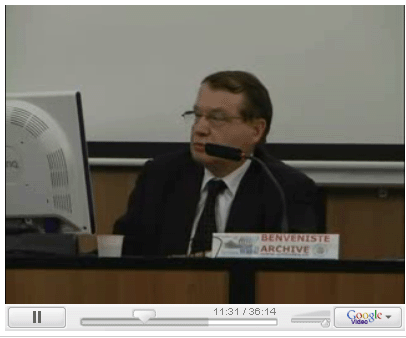
Luc Montagnier, co-discoverer of the AIDS virus, pays tribute to Jacques Benveniste during a conference on nano-structures related to bacterial agents held in Lugano in 2007. He quotes him at the beginning of his lecture. This lecture is remarkable. All the ideas of this great pioneer, Jacques Benveniste, who died in &&&, are found here. I encourage you to follow his speech (second video), which popular science magazines such as Science et Vie, who so fiercely attacked Jacques, have not and will not certainly report on.
Everything is there, everything that Benveniste tried to develop in his group Digibio, rejected into Algeco barracks in the courtyard of his former laboratory, the INSERM 200, in Clamart.
Montagnier has carried out numerous experiments in virology. He has shown that a diluent, water, could emit electromagnetic signals even though the dilutions performed (10-17) were such that the viral agent had been eliminated. He reiterates the idea of Benveniste according to which nanostructures present in water could behave like resonators, capable of causing the emission of bioactive electromagnetic waves. He observes and supports the idea that the energy is not provided by the water but by the ambient electromagnetic environment, the "ambient electromagnetic background noise." Jacques had observed this by depriving his diluted samples of this energy source by using a Faraday cage.
Montagnier opposes this idea put forward by physicists according to which water could not produce "stable aggregates" over durations exceeding a few nanoseconds. The existence of such aggregates, for Montagnier, is the only explanation for the effects observed. He considers that these aggregates, these aqueous nanostructures, could "self-sustain," an idea already advanced by Benveniste. He recommends the creation of an institute, a purely interdisciplinary research group that focuses on the study of water, as a poorly understood biological agent and on an unknown mode of communication between biomolecules, through the emission and reception of electromagnetic waves.
| April 22, 2009 | A comment by Jean-Marie Danze, dated December 26, 2008, which I reproduce below | Professor Luc Montagnier, co-discoverer of the AIDS virus, during a conference in Lugano (Switzerland) on October 27, 2007 entitled: "Nano-elements from pathogenic microrganisms" (Nano-elements of pathogenic microorganisms) paid a heartfelt tribute to Jacques Benveniste. | He states: "This conference is a tribute to Jacques Benveniste who was one of my colleagues. At first, I did not follow his completely new breakthroughs, but it turns out that my work on the AIDS virus led me to approach his ideas." He then presents the results of his work on the AIDS virus. Professor Montagnier explains that when infected blood was filtered in such a way that no bacteria or virus could remain in the solution, some living structures reappeared spontaneously after about twenty days. These bacteria and viruses emit electromagnetic signals in the culture medium, even though they had been eliminated. This leads Professor Montagnier to say that "genetic information can be transmitted from DNA to something that is in the water." ... and "this is another step into science fiction. I believe that Jacques Benveniste had many very bold ideas. I am a little on his trail..." | Here is a summary of the scientific content of the conference in question: | There are many ways in which infectious agents can remain in their host, despite an adequate immune defense and the use of powerful inhibitors of their multiplication. Retroviruses have evolved to find the best solution to remain silently in the host cell, by integrating their DNA into the DNA of the cell. But bacteria have also learned to remain almost indefinitely in tissues or organs in a resting state, insensitive to antibiotics...