Nameless Document
Is Brittany going to secede?
December 10, 2011
It's rare to find such a chance to laugh heartily. These times are gloomy and discouraging. The press is nauseating. ITER is a nameless fraud. We're constantly bombarded with the Strauss-Kahn affair. Theoretical physicists are knitting super-socks with their superstrings. Everywhere, we're fed reports about "new billionaires" and "new forms of luxury."
How boring!
Recently, my wife and I were on a bus in London—our first real vacation in eight months. A long-time friend had kindly offered to join us on a city tour. An English guide offered her commentary:
"Here, the sidewalk where Princess Diana let her dog pee. I've seen the queen twice, and her once. Of course, I didn't speak to them... Over there, an apartment bought by a princess from Qatar. I'll tell you the price per square meter. You won't believe your ears..."
Everything was the same tone. We got off at the first red light.
In the "tube," London's subway, passengers read the "tabloids," which make France Dimanche look like a magazine for intellectuals.
But I do like London—the English humor, the Indian and Italian food...
In France, Yahoo News informs us of yet another reason for marital discord, or how to avoid snoring.
In London, there's a neighborhood called Pimlico. It reminded me of the excellent film " Passport to Pimlico": After the war, a buried German bomb explodes—no human casualties, but revealing an extraordinary treasure. Naturally, the British authorities immediately arrive to seize it. But the residents of the neighborhood discover, among the relics, an old document proving that this area had been formally ceded to a Frenchman. This land is therefore not British!
With the unique blend of humor, nonsense, and stubbornness only the English can muster, the residents refuse to comply and allow "authorities" to seize the treasure arbitrarily, without explanation. Since the document had never been contested, the people of Pimlico decide to secede and declare their land no longer British.
Legally, they're in the right—the property deed, dating back to William the Conqueror, was never revoked. Even worse, the rightful French heir appears, amused, and joins the rebels.
Frustrated, the Foreign Office imposes a blockade. The residents are deprived of water and electricity. They resort to force—surrounding the neighborhood with barbed wire. "Tommies" are posted as guards. And then comes the unforgettable gag: a major subway line runs beneath this land. The residents of Pimlico, having formed a militia, stop the trains and demand to see passengers' passports...
The affair ends in universal laughter. It's the people of London who begin supplying the rebels with food, tossing it over the barbed wire. A perfect middle finger to authoritarian power. Eventually, the treasure is handed over to the British authorities—but only after a polite request, not the initial brutality that had offended them.
Here, we have a Breton inciting his "fellow citizens," worthy successors of Asterix, to rebel against the French administration—clearly revealing today's taxpayers’ lack of confidence in how their money is used.
This reminds me of a modern Native American uprising from the 1970s, when the Sioux (called "Lakota" in their own language—the word "Sioux" was invented by Americans) occupied a tiny plot of land for weeks, not by declaring it "Indian land," but by invoking an idea that clashed with American ideology:
—People belong to the land, not the other way around.
We've seen the "Indignados" movement emerge. Here are new insurgents.
The internet is rife with excesses, but remains the battlefield for dissidents of all stripes—the place to expose stupidity, incompetence, and all absurdities. How often have I dreamed that the "Pinocchio virus" would become real, causing media liars' noses to grow longer?
When will extraterrestrials finally tag the Moon, inscribing in six or seven languages understood by most people: "What if you stopped behaving like fools? Make love, not war!" Or hang a giant pot, visible from Earth, on the International Space Station?
Which magician will, through nuclear enchantment, transform France's 300 tons of plutonium into soft caramel?
Who will create a virus that makes Sarkozy and Berlusconi grow one centimeter per day, while shrinking Obama by the same amount?
I laughed hard when, five years ago, I retired and refused to sign a "certificate of non-death" sent by the CNRS—required to continue receiving a disability pension that had dropped to just a few dozen euros per quarter. After 26 years of futile attempts to avoid it, the absurdity of such a small amount, given the damage suffered, struck me as ridiculous.
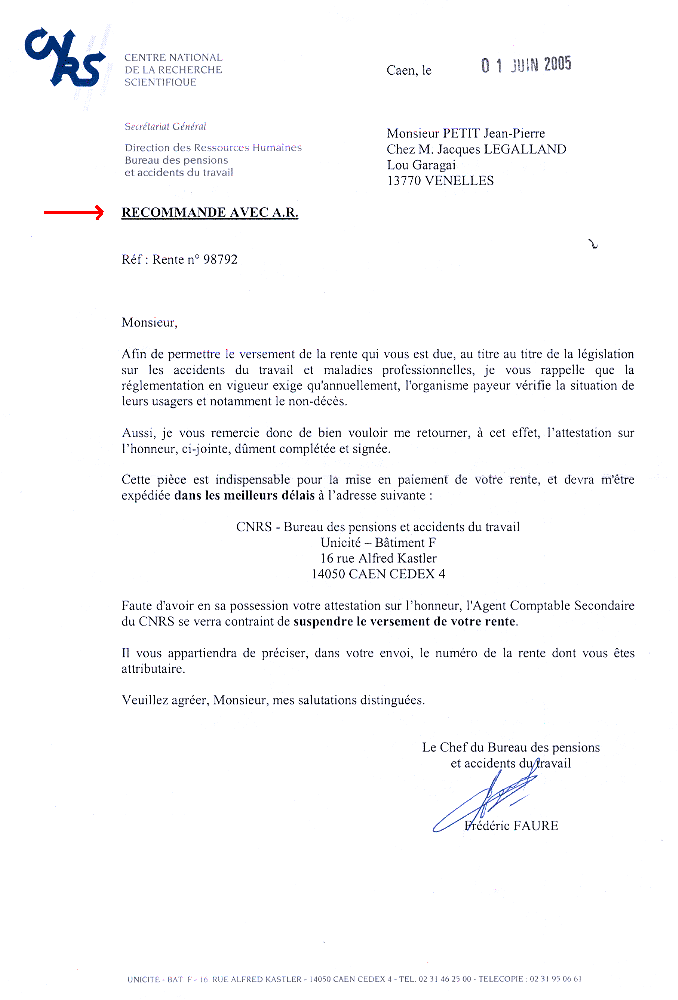
Marcel Aymé, not dead.
Isn't laughter the ultimate weapon? There's no law punishing ridicule as a weapon of mass destruction. There's no defense against a well-delivered pun. What law could punish citizens who, during the passage of an official procession—be it our head of state's—adopt the gesture of flipping them the bird?
Humor: a weapon I'm about to wield against the gang building this cathedral of absurdity called ITER, this giant stillborn calf, the crown jewel of plutocratic physics, after the International Space Station and the LHC. A weapon that will leave my "targets" defenseless, with no way to respond.
Yes, humor can't be taught in schools.
Alright, I'll hand the floor to this Breton. Enjoy yourselves, and let's wait to see how this fascinating affair unfolds.
Here is the argumentation of a Breton refusing to pay French taxes.
He invites other Bretons to do the same."Sir or Madam, French Public Accountant in Nantes (Brittany),
I'm contacting you today because I haven't had time to do so earlier, due to my recent move and the startup project I've launched lately, to inform you of my intentions regarding the payment of the so-called 'housing tax' you're demanding I settle within thirty days of receiving this notice (today), amounting to €227 (two hundred twenty-seven euros), plus a 10% surcharge (€23, twenty-three euros), totaling €250 (two hundred fifty euros): I do not intend to comply with your request. Let me explain:In 2008, I resided in an apartment located at 12 Baron Street, Nantes. Nantes is a city in Brittany and the capital of the Pays Nantais, a Breton region! The Pays Nantais is part of the territory defined as Brittany by the Edict of 1532, which attached Brittany to the French crown. This edict guarantees that in Brittany, it cannot...