Napoleon the Little
Napoleon the Little
January 15, 2009
*** ***
| What can he do? Everything. What has he done? Nothing. | With this full power, | in eight months a genius would have changed the face of France, | perhaps of Europe. | But here's the problem, he has taken France and doesn't know what to do with it. | God knows the President is working hard: | he rages, he touches everything, he chases projects; | unable to create, he decrees; he tries to hide his emptiness; | it's a perpetual motion; but alas! this wheel turns uselessly. | The man who, after seizing power, married a foreign princess, | is a shrewd opportunist. | He loves glory, glitter, grand words, things that sound, that | shine, all the trinkets of power. He has money, | the premium, the bank, the stock exchange, the safe. | He has whims, and they must be satisfied. | When one measures the man and finds him so small | and then measures the success and finds it so huge, | it is impossible for the mind not to feel some surprise. | We will add cynicism, for he tramples France, | laughs at her, defies her, denies her, insults and humiliates her! | A sad spectacle is that of a mediocre man galloping, | through absurdity, escaping ". | Victor Hugo, | Napoleon, the Little | Reprinted by Actes Sud |
|---|
| What can he do? Everything. What has he done? Nothing. | With this full power, | in eight months a genius would have changed the face of France, | perhaps of Europe. | But here's the problem, he has taken France and doesn't know what to do with it. | God knows the President is working hard: | he rages, he touches everything, he chases projects; | unable to create, he decrees; he tries to hide his emptiness; | it's a perpetual motion; but alas! this wheel turns uselessly. | The man who, after seizing power, married a foreign princess, | is a shrewd opportunist. | He loves glory, glitter, grand words, things that sound, that | shine, all the trinkets of power. He has money, | the premium, the bank, the stock exchange, the safe. | He has whims, and they must be satisfied. | When one measures the man and finds him so small | and then measures the success and finds it so huge, | it is impossible for the mind not to feel some surprise. | We will add cynicism, for he tramples France, | laughs at her, defies her, denies her, insults and humiliates her! | A sad spectacle is that of a mediocre man galloping, | through absurdity, escaping ". | Victor Hugo, | Napoleon, the Little | Reprinted by Actes Sud |
|---|
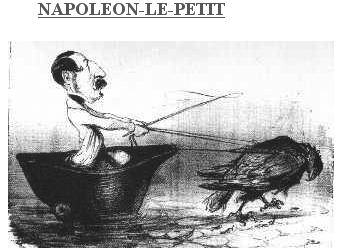
| Victor Hugo published in 1852 in Brussels a pamphlet against Napoleon III, which he titled "Napoleon the Little." | In his text a fictional interview | : | (noted by Gérard Chenu. Reprinted by Actes Sud ) | Drawing by Daumier | INTERVIEW WITH VICTOR HUGO | You seem to be very well informed about the French political scene. What is your view on our new president? | Victor Hugo | : For months, he has been showing off; he has harangued, triumphed, presided over banquets, given balls, danced, reigned, paraded and strutted... He has succeeded. It results that he lacks no apotheosis. He has more panegyrists than Trajan. Yet one thing strikes me, it is that in all the qualities he is credited with, in all the praises he receives, there is not a word that goes beyond this: skill, composure, audacity, dexterity, an admirable plan and execution, a well-chosen moment, a well-kept secret, well-taken measures. Well-made false keys. Everything is there... He never remains calm for a moment; he feels around him with fear the solitude and darkness; those who fear the night sing, he moves. He rages, he touches everything, he chases projects; unable to create, he decrees. | Behind this wild personal ambition, do you see a political vision of France, such as one would expect from an elected head of state? | Victor Hugo | : No, this man does not reason; he has needs, he has whims, they must be satisfied. These are dictatorial desires. The all-powerfulness would be tasteless if not seasoned in this way. When one measures the man and finds him so small, and then measures the success and finds it so huge, it is impossible for the mind not to feel some surprise. One wonders: how did he do it? One dissects the adventure and the adventurer... One finds in the end only two things in the man and his method: cunning and money... Make deals, cheat, take in money; it is no longer a question of being a great people, a powerful people, a free nation, a beacon of light; France no longer sees clearly. This is a success. | What do you think of this fascination for businessmen, his close ones? This will to lead the country as one leads a big enterprise? | Victor Hugo | : He now has money, the premium, the bank, the stock exchange, the counter, the safe and all the men who easily switch sides when there is nothing to cross but shame... What a misery this joy of interests and greed... Well, let's live, make deals, fiddle with zinc or railway shares, make money; it's ignoble, but it's excellent; one less scruple, one more louis; sell our whole soul at this rate! One rushes, one crowds, one waits in line, one drinks shamelessly... A crowd of fearless devotion besieges the Elysée and gathers around the man... He is a bit a brigand and a lot a scoundrel. One always feels in him the poor industrial prince. | And the freedom of the press in all this? | Victor Hugo | (laughing): And the freedom of the press! What can one say about it? Isn't it ridiculous just to utter this word? This free press, the honor of the French mind, the clarity on all issues at once, the perpetual awakening of the nation, where is it? | _______________________________________ | *All the answers from Victor Hugo come from his work "Napoleon the Little," the republican pamphlet against Napoleon III. | Any resemblance to imaginary characters is purely coincidental |