Paranormal and scientific artifacts mystery
Paranormal versus artifacts
October 14, 2002
Fourth part.
The most baffling maneuvers are... those where there is no trick at all. When I was a kid, I earned coins by demonstrating how fast I was. The game worked like this: my opponent placed a coin in the hollow of his palm. I then placed my hand just below it, without touching. Then, with incredible speed, I grabbed his coin before he had time to close his hand. When we switched roles, he lost every time. So, was I "faster than the average person"?
The following illustrations are once again taken from "One Thousand and One Scientific Nights," available for purchase at:
16 euros to Jean-Pierre Petit, villa Jean-Christophe, chemin de la Montagnère, 84120 Pertuis
with the note: "Order for Lanturlu 2"
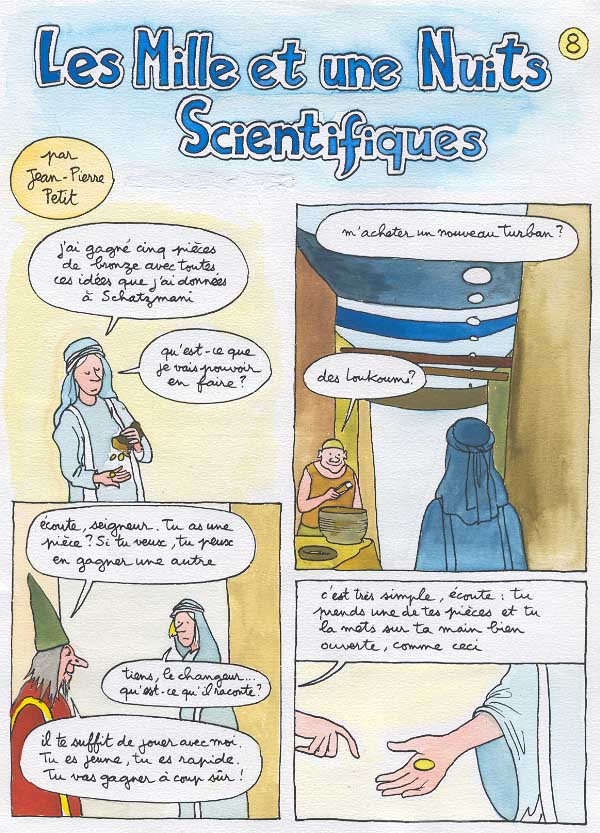
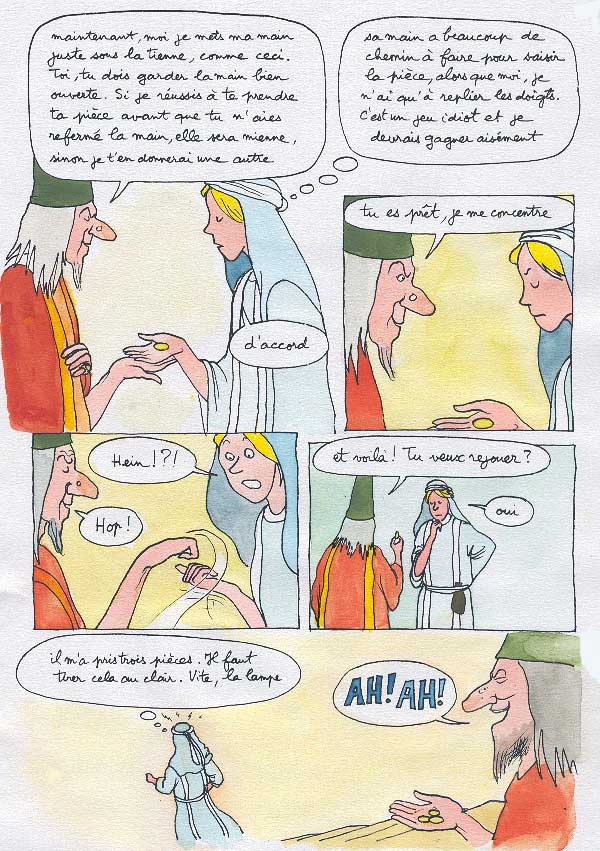
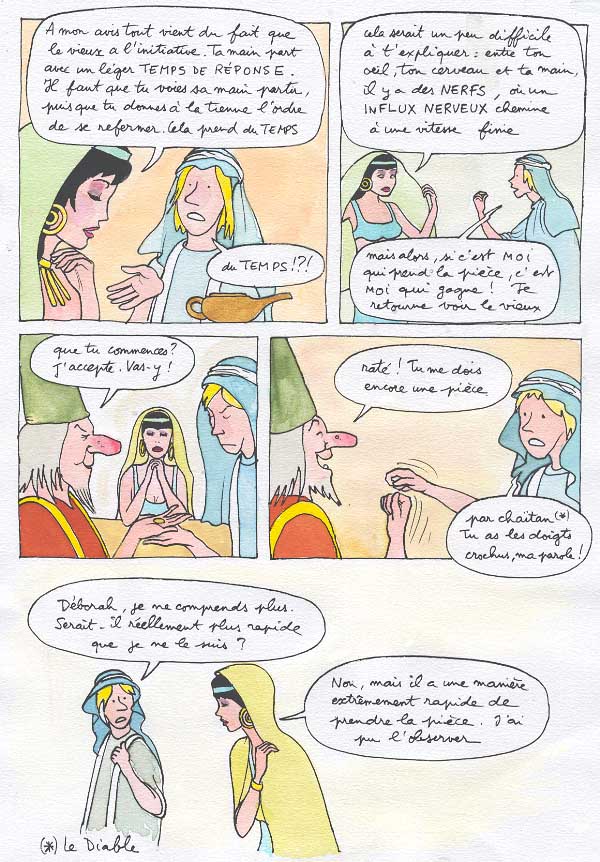
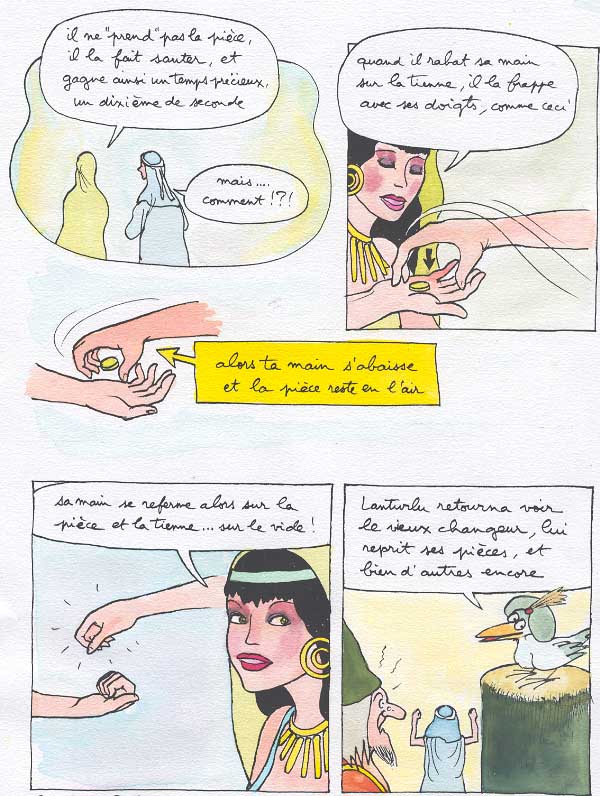
There are two things at play here. The first is the time it takes for a nerve impulse to propagate. If you are the one deciding to move your hand, you will be in position to grab the coin before your opponent's eye detects the movement, before his brain analyzes it, and before the signal for muscle contraction reaches the muscles controlling his fingers. But then, if that's the case, why do I manage to grab the coin and not him? Because my method of grabbing the coin is different and too fast to be perceived. Instead of closing my hand over the coin (which is what he tries to do), I strike his palm with mine and my fingers. This causes the coin to jump into the air, and then I simply close my hand. As soon as the coin is in the air, it's... mine. Success rate: 100%. Attempting to grab the coin "the classic way": success rate: zero. It happens in a tenth of a second.
Back to News Back to Guide Number of views since October 14, 2002: