The Young Man Who Sold His Soul
April 27, 2012
How many times have I heard people say to me:
"But why do you persist with such stubbornness in pursuing your MHD research within a civilian framework, when the Army is waiting open-armed, ready to fund you?"
I know.
In fact, from multiple independent sources, I’ve learned that Michèle Alliot-Marie reportedly said on several occasions, in front of third parties:
"Oh, if Jean-Pierre Petit had wanted to work with us!"
In short, the applications of MHD are not primarily military—they are exclusively military. In 2008, at the High-Power Pulsed Conference, most presentations focused on "railguns," devices capable of accelerating projectiles to speeds far exceeding those of conventional shells propelled by chemical explosions. These new cannons will soon equip modern warships. You can easily find videos online showcasing these "fantastic scientific and technical advances." Researchers are also developing magnetostrictive bullets. When striking a human target, they electrocute instead of perforating. And the presenter added:
"That way, there are no stains on the carpets."
In his 15-square-meter garage in Rochefort, Jean-Christophe Doré continues to "carry out our experimental research." These experiments, like all those I’ve conducted, succeed on the first attempt. In 2011, it was the radial confinement via reversal of the magnetic field gradient—a work presented orally at the International Conference in Jeju, Korea, in September 2010. This year, it was a successful experiment demonstrating the annihilation of Velikhov instability. Doré is already working on the next experiment.
What might these research efforts lead to? To... nothing. Demonstrating that a vehicle can travel at hypersonic speeds without generating shock waves, or at high altitude negotiating the "heat barrier" in hypersonic flight using MHD-controlled air intake, could open the door to new aerial transport systems capable of operating between Mach 10 and Mach 12. But such progress would primarily serve military applications. This is already the case in the United States, albeit masked by a veil of disinformation.
Progress in aerial transport necessarily involves increasing speed. Of course, this shortens travel time. But such speed is essential for sustained flight in thin, high-altitude atmospheres. In the 1930s, people traveled from city to city in aircraft flying just a few thousand meters above ground. During transatlantic crossings—initially conducted across the southern Atlantic—the slightest significant weather disturbance ("the infamous black pot") presented a dangerous obstacle the aircraft could not avoid by climbing higher.
Today, safety has improved thanks to satellite surveillance and onboard radar systems that detect, even at night, the formation of large clouds—such as cumulonimbus—capable of disrupting the atmosphere up to 10,000 meters. The cause of the Air France crash that claimed the crew and hundreds of lives was not the icing of pitot probes (speed sensors), a secondary phenomenon, but rather the crew’s poor route choice. The onboard radar and satellite coverage had already signaled the presence of a massive cloud formation extending to great altitude. Instead of circumventing it—despite the extra fuel cost and flight delay, or even considering a full rerouting—the poorly trained crew chose to "fly through it," inevitably risking ice accumulation upon crossing the cloud mass. Moreover, at high altitude, the aircraft's "speed envelope" is extremely narrow. Stalling occurs quickly.
Add to this the conflict between autopilot, the mindless intervention of the flight-control computer, and the pilots’ lack of experience in rapidly regaining manual control during emergencies, and you have the key to the mystery. At 10,000 meters, you cannot recover from a stall as easily as near the ground in dense air—by simply "letting go." The situation can quickly spiral into catastrophe, with rapid speed buildup rendering the aircraft uncontrollable in seconds.
By focusing exclusively on "defective pitot probes," the real issues were obscured: inadequate pilot training and the intense pressure on crews to minimize fuel consumption to keep flights as economical as possible. To maintain competitiveness, airlines first reduced cabin crew. Then came increased work hours, reduced rest periods between flights, thus increased fatigue—and possibly even reduced maintenance times—faced with the growing pressure from low-cost carriers.
I remember taking a regular Air France flight from San Francisco to Paris, a direct polar route. The aircraft had experienced successive delays at takeoff. Eventually, it began its night flight with a limited number of passengers. From the cabin crew, I learned that anxiety was palpable aboard. Indeed, due to a malfunction detected in the hot air intake for cabin heating, repairs were necessary. At the time, these 747s operated Paris–San Francisco–Los Angeles and back. Air France’s maintenance team was based in Los Angeles. A viable solution would have been to hire a paid American maintenance service in San Francisco instead of sending the 747 back to Los Angeles. But Air France opted to assign the task to local, untrained personnel. Thus, the 747 undertook its polar flight with a makeshift repair carried out by the crew! During the return flight, the cabin crew openly expressed their concern.
Later, I wrote to Air France requesting an explanation. Their response was typical corporate jargon:
"Air France ensures the transportation of its passengers under the best possible safety conditions."
End of this parenthesis, showing that today, when you book a "regular flight," passengers are not 100% guaranteed to be free from atmospheric turbulence. That said, if you had flown in the 1930s, flying just a few thousand meters above ground, you would have experienced the infamous "air pockets." Today, when flying at 10,000 meters in a jet, passengers can generally glance distantly at the cloud masses churning the atmosphere a few thousand meters below.
All this to explain the evolution of aerial transport:
faster and higher
There remains the speed-of-sound limitation, which is higher at lower altitudes. You don’t fly supersonically on a regular commercial flight. Only the Concorde enjoyed that luxury, at a fuel cost no airline today would accept. The Concorde was a luxury mode of transport for the jet set, which actually worked well—until an accident caused by a tire explosion during takeoff destroyed the aircraft and killed everyone aboard.
Today’s jets fly at 900 km/h—just below the threshold of compressibility, not chosen at random, but representing an optimal balance between speed and fuel consumption.
In contrast, artificial satellites cannot descend too low, or their drag would increase dramatically, drastically shortening their lifespan. Satellites in ultra-low orbits (250–300 km, I believe) can only be military observation satellites with short lifespans. For others, high altitude is essential—unless one allows for the use of a propulsion system providing satellites or orbital stations like the ISS with an extra impulse to maintain altitude.
Thus, we see the core of the problem:
- Orbiting at lower altitude: better ground observation and lower launch cost
- But shorter lifespan, unless periodic auxiliary propulsion is used to accelerate the object in orbit, thereby raising its altitude. For the ISS, this requires regular refueling.
Through all this, a crucial idea emerges.
- Space above 30 km is too rarefied for airplanes to operate
- Below 250–300 km above ground, the atmosphere is too dense for satellites to operate
This "intermediate space," 30–300 km in altitude, is therefore a major strategic issue.
This aspect remained completely unknown to French military leaders until the turn of the 2000s, following my visit to the Brighton conference and the publication of my book "UFOs and American Secret Weapons." This triggered significant investments, leading to the creation at Orléans of the CNRS ICARE research center, equipped with numerous wind tunnels operating at high Mach numbers. 125 researchers, engineers, and technicians, forty doctoral students.
To download the press dossier for the ICARE complex
See particularly the MARHy installation, a continuous hypersonic wind tunnel (!...).
In this team, there are many resources but few ideas—indeed, no ideas at all. At high Mach numbers and in this "intermediate space," the air is extremely rarefied, hence easily ionizable. We are in the domain of "cold plasmas" (in contrast to hot plasmas from nuclear fusion).
Plasmas that are automatically bitemperature and out of thermodynamic equilibrium—this is the domain where I have always been, and still am, one of the world’s leading experts.
What are these people seeking? To catch up on their 30-year lag behind the Americans (and Russians, who have fewer resources). In this think tank, there is much trust but little brain. In fact, the imagination of these researchers, like in many research groups, is sterilized by the systematic use of simulations. It’s a way of saying, "Let’s simulate, simulate, tweak parameters—something will come out."
This is false, not least because simulating the behavior of these non-equilibrium environments (which must be analyzed in a seven-dimensional space: x, y, z, u, v, w, t) is far from simple. When the French cold plasma group was created at the beginning of the 2000s, its head solemnly declared:
"Our first task will be to build a code capable of jointly solving the Navier-Stokes and Maxwell equations."
They are still working on it...
The fact is, the ideas I began developing as early as the late 1970s precisely align with this research theme. Controlling the incident airflow via MHD is an unavoidable step in this approach—along with controlling or eliminating shock waves and turbulence.
I have no desire to see these people develop these ideas. Not out of intellectual property concerns or claims of priority, but simply because I believe we already do enough foolish things. Like Andrei Sakharov, who "took his leave in 1967," I prefer cosmology. Thus, my readers are often surprised by my lack of enthusiasm when they mention the "development of my MHD ideas."
You know the saying:
"Science without conscience is but the ruin of the soul."
Today, researchers’ conscience is fragile. I’d even say it has become a rare commodity. The reason is simple: today, if you want to "do great physics" (as Enrico Fermi put it, referring to the creation of an atomic fission bomb), and have virtually unlimited resources and creative freedom, it’s the military—or nothing.
Imagine a young person, from a prestigious school, exceptionally gifted, who wants to "do research." They have only two possible paths:
- Join the Military Engineers Corps — Do mathematical physics
There is no middle ground.
In 2008, a young engineer, Nicolas N., a tall, thin man, ventured to the conference organized by the late Michel Padrines in Strasbourg (which remains unique in its kind), where we had both participated. Having already completed an internship at the military lab in Gramat, Lot, Nicolas was interested in plasmas. But he feared his name might be linked to our activities. In fact, he reserved his future, whose broad outlines were already mapped out.
In June 2011, he attended the MHD conference in Biarritz. When a friend asked him about his research, he replied:
"I’m sorry, now I can’t talk to you anymore."
Yes, he had signed. As my friend Denis, who knew him well, put it: "He chose the dark side of the Force." In scientific jargon, the Army is nicknamed "the Devil." Hence the title of my book on the bomb’s history: "The Children of the Devil." Hence also Oppenheimer’s remark after the Alamogordo, Hiroshima, and Nagasaki tests:
"We have done the Devil’s work."
Try to watch or rewatch the excellent film "The Beauty of the Devil" with Michel Simon and Gérard Philippe. Everything is there. You see a man who, to gain power, knowledge, and strength, makes a pact with the representative of Beelzebub. He breaks a bottle, cuts his palm, dips his pen in his blood, and signs.
This is what these young researchers do when they marry the Army. It’s sad. As one of my friends said, "This young man is too intelligent to have imagination."
Yes, to create another future not based on this mixture of compromise and ease, not based on selling one’s soul. Because the word is not too strong.
I don’t count how many such people have approached us, trying to recover a few ideas that would allow them to enter the very closed circle of hypersonic flight masters. There have been many, and there will be more. Each time, they will be ejected without mercy—or more simply, dropped off at the next train station, with the words: "Here, our paths diverge. You get off here."
Now I’ll show you a simple example of how creativity can be diverted. A remote-controlled toy you can buy at a store for a very low price can, at just a slightly larger scale, become a terrifying killing machine. Here’s the link to the video where Kyle Myers, an American from Georgia, pretends to be Russian:
https://www.youtube.com/watch?v=SNPJMk2fgJU
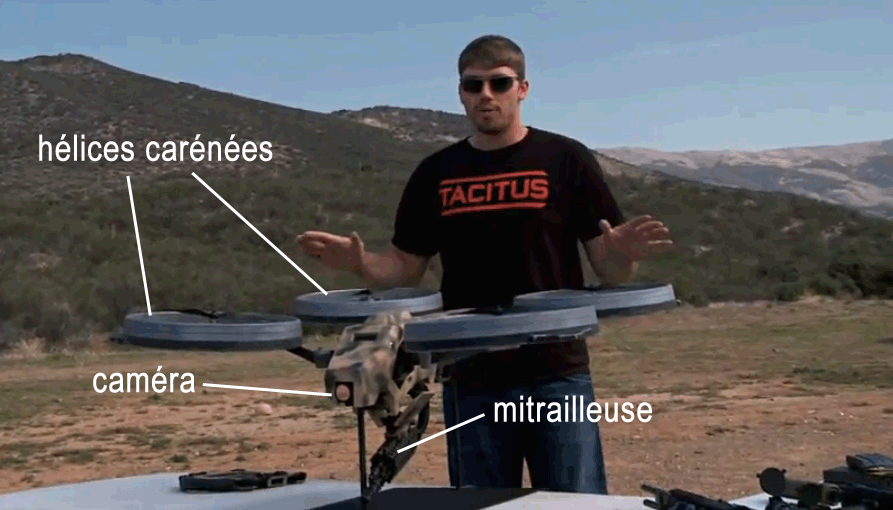
Ah, my friends, what you’re about to see will amaze you.
In this video, as in countless others, you can witness human pathology in action. Although this video is a "fake," a montage designed to advertise a toy kit—derived from a quadcopter controlled via an iPhone, which you saw demonstrated just a few months ago—it’s a perfectly plausible object, and it’s highly likely its military version already exists, allowing a pilot to target and shoot human beings at close range:
April 29, 2012
Here are links to this video, reported by readers:
http://www.cdaction.pl/news-26206/call-of-duty-black-ops-2---wyciekly-obrazki-z-quadratorem.html
http://www.charlieintel.com/2012/04/25/first-black-ops-2-test-gameplay-screenshot-making-of-quadrotor/?show=gallery&pageid=5946
http://www.youtube.com/watch?v=irj-nCjyvHg
http://www.gametrailers.com/side-mission/2012/04/24/call-of-duty-viral-video-points-to-2027-setting-for-next-game/
This represents what we show to young people and build online—a system that is perfectly plausible, whose military version, operational, very likely already exists.
It recalls the saying:
"There are fools who give children to cannons, and others who give cannons to children."
I fully agree.
All this should make us reflect on how young people are raised—and always have been. Girls "play with dolls," boys "play war." A century ago, children received lead soldiers, rifles, cardboard forts. Then came tanks, warplanes.
"innocent" games.
Just for fun...
- Bang! You're dead!
There’s a short film by Alfred Hitchcock that sums it all up (&&& is it accessible?). It’s about a soldier visiting his brother, married with a six-year-old son. He promised the boy a gift. The three adults go shopping in town, leaving the boy—wearing his cowboy outfit—under the supervision of the black housekeeper. The boy goes into the room where his uncle stayed, discovers his suitcase, and opens it. Inside: his uncle’s service weapon, a revolver, and a box of bullets.
The boy thinks, "Ah, there’s my gift!" He loads one bullet into the revolver and goes out into the neighborhood. Every time he meets a shopkeeper, he spins the cylinder (which holds only one bullet) and fires. His "targets," the shopkeepers, all react the same way—laughing, placing a hand on their heart and saying:
"Oh my, your revolver is fantastic. I’m so scared... I’m dead!"
The scene repeats two or three times. Then the parents and the boy’s uncle return home and discover in horror the open suitcase, the missing revolver, and the missing bullet. A real manhunt begins across the city, involving the entire police force, determined to find the child before he accidentally kills someone in this game of Russian roulette.
Eventually, the boy returns home and aims at one last target: the housekeeper, who is cleaning a chandelier. This time, the shot fires—but misses. The housekeeper falls from her stepladder. The boy, terrified, screams. His mother comforts him:
"It’s okay, it’s over, it’s over..."
Confusion between the toy—a plastic replica of his uncle’s service revolver—and the real weapon. The substitution is made, and everything... can return to normal.
But it doesn’t matter. Learned "psychologists" will tell you that playing with weapons is part of male children’s maturation, that these "toys" serve as phallic substitutes helping them "build themselves," and that depriving them of such toys would amount to castration...
Today, paintball guns have replaced the old wooden or plastic pistols of our childhood. Now you can "play war" more realistically, "injuring" your opponent. Video games add an even greater layer of realism to this arsenal.
I once compiled a dossier on a gadget sold in stores: the mask from the movie Scream, which enabled a young man in the U.S. to commit a crime using it (as for the film, very popular, it’s already at least in its third or fourth version). In a more elaborate version I found at a newsstand in Meyrargues, the same mask included a "blood injector" with a bulb. I asked the shopkeeper if he thought it normal to sell such a thing. His reply:
"Sir, I sell what’s on the market and what people buy."
A police officer in a light blue shirt was present in the store. I asked him to testify, telling him I was speaking to a father, not a cop. His response:
"Sir, I don’t make the laws. I don’t have to judge this."
All this should remind us of that American children’s festival: Halloween—and the obsession with "horrible" masks. Again, the psychologist will explain that playing "to scare oneself" allows the child to externalize repressed fears.
But then how to explain that occasionally, one of these same young people "loses it," arms himself completely, and for no reason—or even no reason at all—kills dozens of people without warning?
And wonder: "But how could such an idea ever have germinated in his mind?"
With the technological advances in gaming, we might ask these same psychologists: How will today’s young children reach adolescence or adulthood without becoming complete neurotics?
A few images extracted from this video.
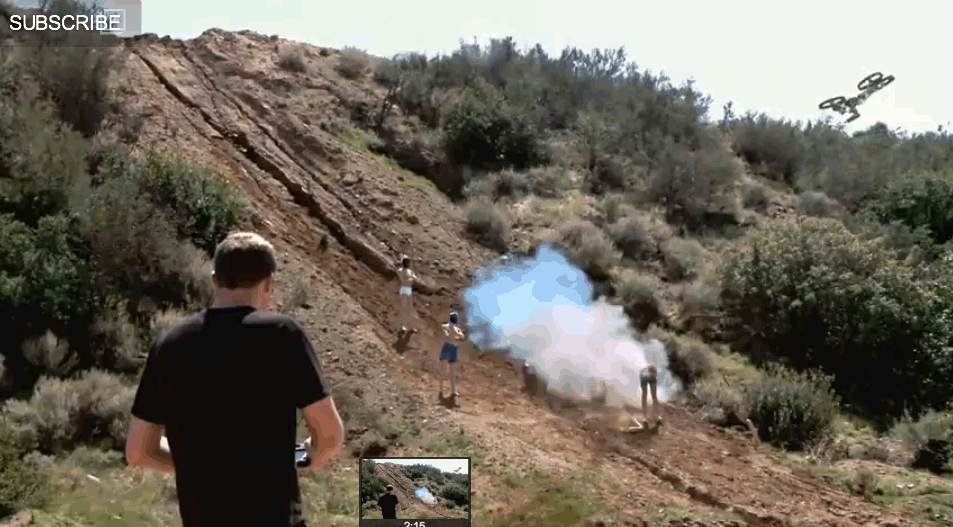
You see how the drone, top right, would shoot human targets from less than ten meters away.
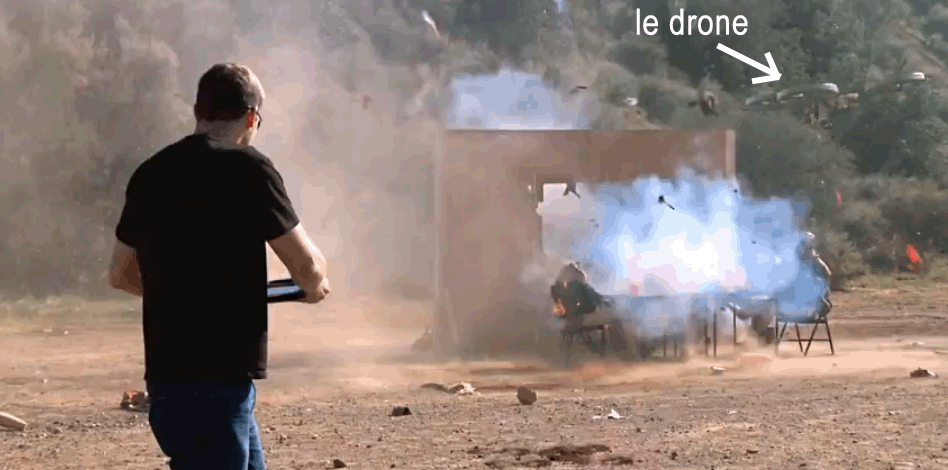
In the next sequence, the drone could enter through a window and shoot seated guests at point-blank range.
One might imagine the targeting could be assisted by an infrared sensor...
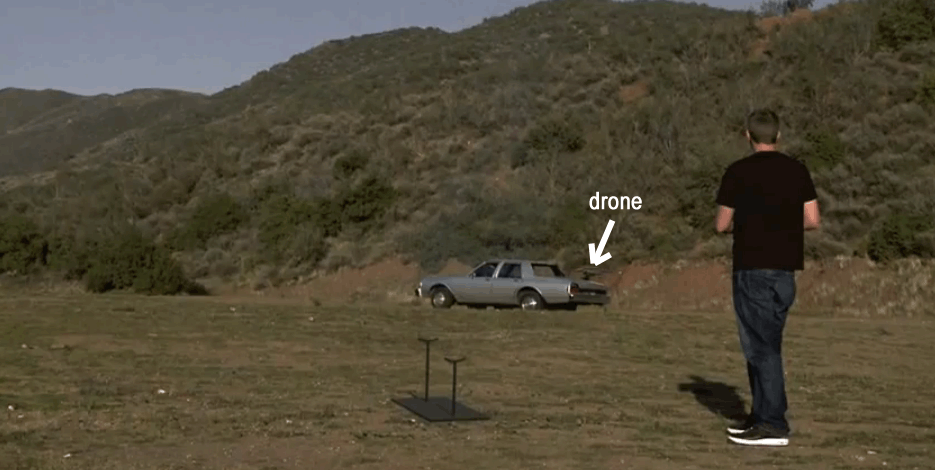
Next sequence: the drone approaches a car and begins by shattering its rear window.
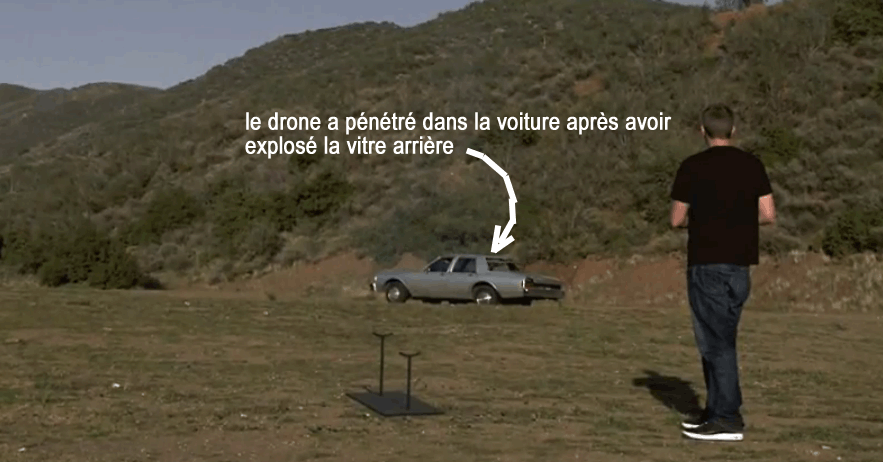
Then it enters the vehicle.
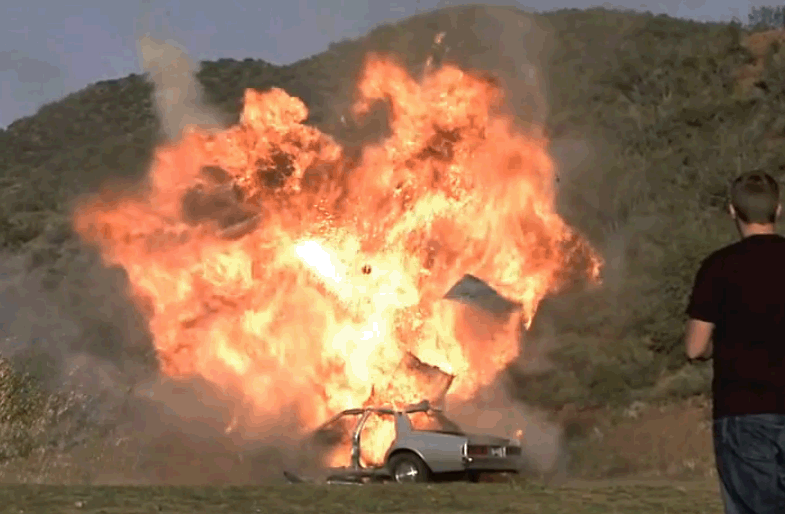
Finally, it explodes, killing its occupants.
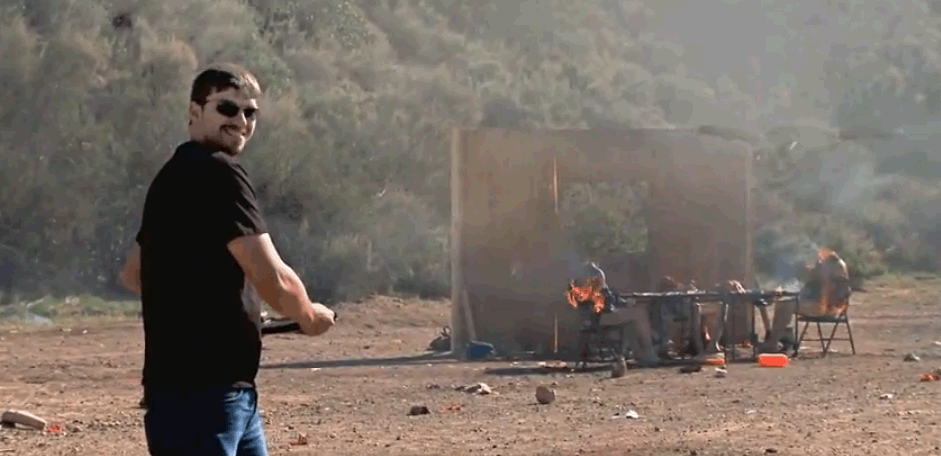
Amusing, isn’t it, my friends?
Such a drone could prove stealthy due to its small size. Programmed, it could approach just above ground level. Seeing these images, I recall a reader’s remark:
"Three and a half billion years of evolution to arrive at this!"
I have the same thought. The internet simply shows us what we are. You can search for "beheading," and some images will be disturbingly realistic. And so many other things—videos showing adults teaching five-year-olds how to fire heavy machine guns.
Are we salvageable?
We really must ask this question when seeing these images.
I’ll return to building scale models. I’ll choose to reconstruct a navigable model of an ancient Egyptian ship from the Old Empire. A little dream, please, in this world that makes me nauseous.
I remember the MHD conference in Biarritz in June 2011, where I reunited with my old friend Malcolm Haines, who confirmed the billions of degrees achieved at Sandia in 2005 on the Z-machine.
I think of the Russian Valentin Smirnov, "Mr. Fusion" in Russia, director of the fusion department at the Kurchatov Institute of High Temperatures, whom I managed to get talking there by provoking him—and who confirmed that Russia was building a Z-machine capable of generating 50 million amperes in 150 nanoseconds. Target: a spherical liner made of Zakharov’s wire. Energy source: an explosive (allegedly "because it was more economical").
At the end of our conversation, he said:
"We had a hard time securing funding. Fortunately, the Army helped us."
A system that could eventually lead to energy generators via
aneutronic fusion
.
The link leads to a study on Boron-Hydrogen fusion, stating that energy loss due to Bremsstrahlung (braking radiation) would always exceed energy produced by fusion. See also:
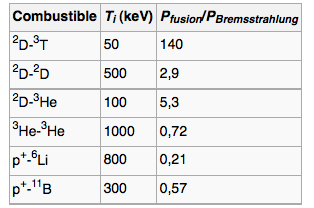
The power lost via braking radiation increases with the square of the ion charge (5 for boron) and with the square root of the electron temperature.
http://en.wikipedia.org/wiki/Bremsstrahlung
If the plasma is in an inverse non-equilibrium state—as is the case in Z-machines, where electron temperature is two orders of magnitude lower than ion temperature—the situation might still be viable.
That same evening, I called my wife:
"Find me the first flight—I’m coming home. I can’t bear them anymore."
There’s this, and so much more. The lies about Fukushima, the ASN report after the nuclear plant stress tests in France. Who do we find in the parliamentary commission? Deputies Bataille and Vidot: Laurel and Hardy of the atom, ardent promoters of future fourth-generation fast-neutron reactors.
The nightmare continues.
News
Guide (Index)
Homepage