Death of a Tightrope Walker
Requiem for a Tightrope Walker
February 2, 2006 February 14, 2006: A Testimony
It has happened; he has fallen. The voyeuristic public can now turn to other heroes, other feats. Here is the last statement posted on his site-blog by his wife, Katia:
Jean-Christophe Lafaille: ALPINIST
"When you love the mountain, you accept that it is the mistress of the rules"
Statement by Katia Lafaille
Wednesday, February 1, 2006, 9:00 AM
On this February 1st, I am leaving for Nepal. On February 4th, I will conduct a helicopter reconnaissance of Makalu (the same one that took place yesterday, January 31st). I will once again search for traces of my husband in the immensity of the Himalayas and say "Goodbye" to him on behalf of his "little guy," Tom... and Jérémi.
I will then retrieve his equipment at base camp before returning to Kathmandu.
Thank you for the tribute you are paying to Jean-Christophe, a father, a husband, an exceptional and irreplaceable alpinist.
Katia Lafaille
One can imagine the dialogues in newsrooms:
- What do we do? Do we cover Lafaille's wife's trip to Makalu? - There was already a feature yesterday... - She photographs well, though. Beautiful girl, stunning, even. And there was that shot showing the body of the Japanese climber that Lafaille had discovered on a glacier, frozen to death. That was a shock, wasn't it? One of the six hundred dead on the Himalayan peaks. - Yes, but we don't have Lafaille's body. That's the one I'd be interested in. With shots of him being airlifted out by helicopter, for example. - But we could still show photos taken in his tent, at the last base camp. I can clearly see the photo of his five-year-old son, amidst the clutter. - Hmm. But then photos will suffice. That's a story for Paris-Match. They'll find a headline. What else is there? ....
Katia Lafaille will take time to realize. For now, she must be in shock. Her kid too. How, at five years old, does one realize that Dad has been transformed into a block of ice in a Himalayan crevasse?
With time, Mrs. Lafaille will realize that the party is over. The spectators of the great circus have left the big top. All that remains is the sawdust on the ring, with a trace of blood where the tightrope walker fell under the spotlights. The director of the "multimedia" circus clears his throat.
- Madam, excuse me, I have to close up....
She leaves the big top, and behind her, the director turns off the spotlights. They are waiting for the next tightrope walker scheduled on the program. They are crowding at the entrance to the circus. Many of them kill themselves, moreover, without benefiting from media funerals, like that anonymous Japanese climber whose frozen body Lafaille had found on a snowfield.
All peaks have been summited, all faces. The only thing left is to increase the risks to capture people's attention: doing winter ascents "when the cold makes the operation even more dangerous."
What is the driving force in all this? The love of the mountain? This passion alone? Hmmmm....
I knew Jacques Mayol well. I dived and participated in an expedition with him at Cay Sal Bank (look it up on an Atlas; it is located between Cuba and Florida). What drove Mayol was the spotlight. Without it, he ceased to exist. Very early on, he found a trick to enhance his free-diving performance: he stayed at altitude, at Lake Titicaca, at 3,000 meters, for a month before each feat. He was careful not to shout this from the rooftops. Then, in front of the cameras, there was all the showmanship. The Yoga, the initiatory side, and all the rigmarole.
Around the age of sixty, he was the star of one last "feature." It was probably for FR3-Méditerranée, I believe. But this time, although the targeted depth was moderate (70 meters), everything went wrong. Mayol had a bit of an ear infection, and halfway down, he had to leave his bicycle seat (a novelty: he descended in a seated position) to return to the surface. The attitude of the TV people became clear:
- Mayol? No interest. He has aged. Now, feats are of a different order.
Alone as a rat, the man who lent his iconic image to "The Big Blue" (for a pittance, by the way) hanged himself one Christmas evening in his house on the island of Elba.
April 15, 2006
Clarifications provided by a reader.
Safety does not make for good ratings
Before working in the field of aeronautical training, I was a professional diver (BEES1 and CII). The TV show you mention took place live, on Sunday, June 3, 1990, off the coast of Cassis, at the diving site south of Pointe Cacau. Producer of the show: Canal+. Title of the show: "Jacques the Dolphin." Objective: Jacques's descent to 60 meters live. Technical means: 75 people from all walks of life, including 20 professional divers to ensure Jacques's safety. I was one of the 20 pro divers. My mission was Jacques's safety at 50 meters.
For this, we used the INPP's 400-ton deep-water training barge and the surface vessel the "Recteur Dubuisson," a 22-meter oceanographic catamaran from the University of Liège. Working conditions were far from easy, as it was the first time a complete television studio had been installed in the open sea, under live broadcast conditions.
On the day, after several days of on-site training, Jacques had a problem with one of his eardrums at 50 meters. He had to ascend accompanied by rescue divers and thus renounce his performance in front of the cameras.
Millions of francs were spent on the safety of a single man in just a few days... And indeed, nothing was said about the real dangers of this practice.
S.T.
April 15, 2006
:
Clarifications provided by a reader.
Safety does not make for good ratings
Before working in the field of aeronautical training, I was a professional diver (BEES1 and CII). The TV show you mention took place live, on Sunday, June 3, 1990, off the coast of Cassis, at the diving site south of Pointe Cacau. Producer of the show: Canal+. Title of the show: "Jacques the Dolphin." Objective: Jacques's descent to 60 meters live. Technical means: 75 people from all walks of life, including 20 professional divers to ensure Jacques's safety. I was one of the 20 pro divers. My mission was Jacques's safety at 50 meters.
For this, we used the INPP's 400-ton deep-water training barge and the surface vessel the "Recteur Dubuisson," a 22-meter oceanographic catamaran from the University of Liège. Working conditions were far from easy, as it was the first time a complete television studio had been installed in the open sea, under live broadcast conditions.
On the day, after several days of on-site training, Jacques had a problem with one of his eardrums at 50 meters. He had to ascend accompanied by rescue divers and thus renounce his performance in front of the cameras.
Millions of francs were spent on the safety of a single man in just a few days... And indeed, nothing was said about the real dangers of this practice.
S.T.
Zero risk may not exist, but there are nuances. I was a climbing instructor, back when we still used pitons, when routes were not yet equipped. Personally, I climbed 5.10, occasionally 5.11, which would make today's amateurs smile. None of us was at the mercy of a fall, but we climbed doing everything possible to avoid reaching that extreme, whereas today it is common. The goal of the game was not to rely on chance but to know how to stay well below one's maximum capabilities. There was no stardom, no feats. The pleasure was the beauty of the landscapes, the contact with the rock, the elegance of movement. Jean Lecomte, our mentor, showed us that a sequence of well-coordinated movements allowed one to pass through a passage that seemed very difficult with ease. That was the must, which he practiced as an art. I owe this man a great deal, particularly for having made me experience climbing in a healthy and human way, in simplicity and humor.
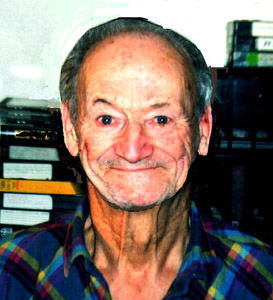
Jean Lecomte
Jean, who still lives in Brussels and whom I will visit one day soon, as every year, was one of the best climbers of his era and had done quite a bit of high mountain climbing. He sold (good) equipment. But there was no stardom. We didn't even take photos. It wouldn't have even occurred to us. Video cameras did not exist. The primary goal was to form a rope team. The one who climbs leading essentially places his life in the hands of the one belaying him. With a rope team, you can take people to do routes they couldn't lead. Climbing was, above all, friendship, something shared. The bivouac, having a snack on a sheer wall, joking around.
Today there is solo climbing, completely dehumanized, an exercise in desperate narcissism. Jean-Christophe Lafaille did his feats alone. For people of my generation, this is the negation of the way of living the rock or the mountain. One day I read the words of a champion of solo climbing who declared "that to do this sport you had to be comfortable in your body and in your head."
"In your head"? I think it would rather be the opposite. To love flirting with death in such an exhibitionist manner, one must harbor a secret despair, an inability to live, and a desperate quest for recognition and identity through the eyes of others.
The Russian roulette aspect also exceeds our understanding. It is inherent to solo climbing. A rock hold can always break, a hold can prove slippery. In the early sixties, I knew one of the pioneers of this solo climbing, a Belgian named Barbier who had distinguished himself by achieving spectacular firsts, alone, in the Dolomites massif, in Italy. He was a dark, uncommunicative guy. We crossed paths one day on a fairly easy route called "the magic rope," in the Belgian Ardennes massif named Freyr, after a Nordic goddess: Freya.

The "Magic Rope"
It was a passage that had been equipped to allow moving from one route to another, in order to link longer, more "aerial" pitches. As can be seen in the figure, a piton had been sealed into a crack, from which hung a nylon rope connected to a cylindrical weight. This system presented no difficulty as long as one member of the rope team was belaying the other, who was himself secured by personal protection clipped to a piton, before and after the passage. This safety became, of course, non-existent if one crossed this passage solo.
On the right, my friend Jean-Claude Mitteau and I, continuing the climb after crossing this space, like Tarzan hanging from his vine. Just after us, two Swiss climbers. Behind those two, alone, Barbier.
The rope must have allowed the passage of thousands and thousands of climbers. The anchor failed as one of the two Swiss crossed it, before Barbier's eyes. His second belayer held him, hanging like a ham in the middle of the cliff, with a drop below, plenty to shatter him. This did not discourage Barbier, who simply killed himself somewhere a few years later, quite discreetly. At that time, climbing sports did not interest the media, or very little.
Solo climbing is always Russian roulette. High mountain climbing too, for multiple reasons. Good climbers, Jean-Claude and I spent a season in Chamonix. The previous year, he had climbed the North Face of the Drus with Lecomte. After a night at the Plan refuge, we had set out to climb the Grépon, a classic of the massif. To reach the foot of the route, we had to skirt the serac barrier of the Nantillons glacier. The Vallot Guide said, "a serac falls every day." So we trotted along, roped up and holding rope loops in our hands, along a sort of ice path running under the barrier. Suddenly I heard a crack. I turned and saw, behind my back, a block of ice detach itself, the size of a bus. I said to Jean-Claude:
- We can slow down. It fell....
Upon reaching the top of the route, we found a helicopter airlifting, in body bags, two climbers who had died of exposure the previous night, having failed to negotiate a fall on a cliff face. I believe there are a hundred deaths a year in Chamonix. Not all of them receive media honors. And even the most experienced guides kill themselves. I remember a classmate, Pierrot Baud, a chief pilot at Airbus, who wanted to do a ski descent on a glacier with friends, hiring the services of a guide, a mountain pro.
- He was leading. He fell into a crevasse. We couldn't get him out, even with a rope. The problem is that body heat melts the ice. The water mixes with the clothing and refreezes, and the guy finds himself welded to the ice crack where he is stuck. We watched him die before our eyes without being able to do anything.
The media speak little of accidents, of dangers. As long as the tightrope walker is on his rope, they film him. Afterwards, they don't care, they move on to the next one. And besides, think about it, filming a body, a dead or injured person, that would be... morbid, unhealthy, wouldn't it?
There are many countries where surviving and providing for one's family, feeding one's kids, is a daily problem. In our rich countries, we afford the luxury of playing with our lives. We even turn this game into an absurd business. Here is what was found on Lafaille's site:
For all partnerships and events with J.C. Lafaille,
contact Lafaille Communication
Katia Lafaille
The weather router
The team
The company Lafaille Communication was founded in April 2001. It is managed and directed by Katia Lafaille, contact:
whose role is as follows:
Promotion of the sporting performances and feats achieved by Jean-Christophe Lafaille to television, print, radio, and internet press worldwide.
Searching for new partnerships through flexible, adjustable, and "à la carte" collaboration based on a company's expectations, needs, and objectives.
Organization and management of JC. Lafaille's schedule. This allows him to be available and focused on his training, the preparation of his very demanding projects, and the development of his technical equipment, which he develops in collaboration with his partners.
Organization of conferences with requesters (conduct of the presentation, advice on the medium to use based on expectations, provision of photos for pre-event communication, etc...)
Management of image usage to ensure it is used in coherence with the values Jean-Christophe conveys.
Liaison with partners and the press, who may, unintentionally, exert pressure on Jean-Christophe's physical and psychological preparation.
Promotion of the partners with whom we collaborate (visibility on Jean-Christophe's equipment, mentions in the press, presence on this website, etc...)
Creation of communication products aimed at highlighting Jean-Christophe and his partners in his feats: films – book – posters – postcards.
Logistical organization of Jean-Christophe Lafaille's expeditions.
Production of photographic and video reports to complement the images Jean-Christophe brings back from his expeditions.
Real-time tracking of Jean-Christophe Lafaille's expeditions on this site.
The notion of encouragement and coaching throughout the year. This work requires perfect knowledge of the athlete, his strengths, and his weaknesses, in order to optimize his performance while preserving his physical and psychological capacities.
Katia Lafaille - The weather router
Suddenly this text becomes... trivial, doesn't it? How long will it remain on his site?
Also take a look at this:
"The hope of finding Jean-Christophe Lafaille alive is now nil (...). French alpinism loses today one of its most brilliant representatives, world-renowned both for his performances and his human qualities," stated Jean-Claude Marmier, president of the Himalayan Committee of the French Federation of Mountain and Climbing (FFME).
After five days without news from the most prestigious of French alpinists, the mountain advisor at the Ministry of Youth and Sports, Serge Koenig, who supervises rescue operations, explained that "medically speaking, the survival time for a man at 8,000 meters is five days maximum, and that under the best possible conditions."
Notables speak.
Do we have the right to make mortal risk a profession when one has a five-year-old child? I say flatly no. Just as it is not a good deed to serve as a role model for an entire youth, as was the case with Mayol, whose feats led hundreds of kids to kill themselves, including my own. At one point, after my son's death, I said to the one now nicknamed "The Big Blue":
- Jacques, you must warn all these young people about the dangers they run, without even knowing it. Help me.
He turned a deaf ear, not wanting to lose all interest from the media. He ended up hanged from his chandelier: his last dive.
But the French State has recognized the existence of a Free-Diving Federation. There is not yet a French Federation of Russian Roulette, but I suppose one day it will come.
It doesn't always work. There are federations that react in time and opt for responsible behavior. Freefall is not a suicidal sport despite its extremely "hair-raising" aspect. They have even equipped all parachutes with automatic opening altimeters.
In the sixties, skydivers engaged in competitions practicing "low openings." Jump bans decreed by the federation quickly calmed these new champions; otherwise, we might have a French Federation of Low Openings, with photo finishes signing new records. We would have had headlines like "The fifty-meter-ground barrier soon broken."
I feel sorry for Mrs. Lafaille and her son. I don't know how this kid will one day manage his father's death. By following in his footsteps?
Who is responsible for all this? You, me, the media. It is staggering that one can sponsor endeavors that are nothing but exhibitionism, the media coverage of unhealthy flirts with death.
If crowds did not fill the stadiums, there would be no more gladiators. ---
A testimony from a friend and alpinist: **
Dear JPP,
I read with great attention this small piece on alpinism, and I was touched by it for several reasons.
Forgive me if I am a bit long, but you know my profession, and these subjects are close to my heart.
The crossing under the Nantillons glacier brings back many memories, including one similar to the one you relate on the Grépon face.
With my friend Pierre Chapoutot (Chaps), who died ten days ago in an avalanche in Savoie, to whom I pay homage through this short text, we had undertaken to climb the west face of the Grands Charmoz via a route of difficulty D when, in a dihedral, a block wedged on which Chaps was belaying came loose and came straight at me at the belay below, with my buddy flying through the air at the end of his rope.
By a miracle I still cannot explain, the block (about 1 cubic meter) exploded on the one I was belaying from, and I "woke up" a few moments later clutching the rope around my waist and Pierre screaming in pain, hanging 10 meters above me, fortunately held by a piton placed just before. In total, much more fear than harm, and we were able to reach, with great difficulty (I had legs and arms like cotton, a displaced vertebra, and Pierre, with a swollen leg, could no longer lead) the upper part of the Nantillons Glacier and reach our bivouac from the previous day on the moraine, where two young people from Marseille were preparing to occupy our bivouac. Seeing the sad state of our clothes, torn and covered in blood, they had become worried. The irony with which Chaps described our misadventure dissuaded them from pressing their questions further.
Today, thirty years later, I remain convinced that a miracle took place that day, that I was not simply crushed under the mass of the block with the energy accumulated in its fall of some twenty meters.
It took me three months after the accident to suddenly succeed in remembering the scene immediately preceding the detachment of the block, as if consciousness had not had access to the memory inscribed during those three months; I simply did not know why precisely we had had this accident. And then suddenly everything came back, clear and precise. The last conscious thought before the impact of the block had been: "This granite block weighs at least a ton, and there will be nothing left intact!" Then I had the reflex and the will to "deflect" the block by putting my hands forward, then the black out...
There you go...
As for Bonatti, allow me to provide some clarifications and corrections regarding this story of the aborted ascent on the Italian side of Mont Blanc.
He had left in July 1961 with two Italian friends, Oggioni and Gallieni, to attempt the first ascent of the Central Pillar of the Frêney, and they found themselves in the presence of two French rope teams who had exactly the same project: Vieille, Kohlmann, Guillaume, and Pierre Mazeaud. They shared the extremely difficult climbing pitches on this steep side of Mont Blanc when they were stopped by bad weather that lasted a long time that year.
During the dramatic retreat, the French died of exhaustion one after the other, with the exception of Mazeaud, who survived with frostbite on his toes (Pierre Mazeaud is the current President of the Constitutional Council and, incidentally, a friend of Jacques Chirac). Oggioni also died of exhaustion. Walter Bonatti, who was endowed with an extraordinary constitution, had the strength and courage to overcome all difficulties to bring to safety those who had survived the exceptionally harsh conditions of that summer of 1961.
The bivouac he had to improvise on K2 was located at 8,100 meters without any equipment, and he was accompanied by the head of the Hunza porters, Madhi, who would suffer severe amputations following the frostbite of that night. Bonatti had no lasting effects from this formidable bivouac.
This affair of the abandonment of two climbers in the middle of the night at over 8,000 meters by the two winners of K2, Lacedelli and Compagnoni, moreover, tarnished this Italian victory in Himalayan alpinism.
All this is recounted in another book by Bonatti, "Mountains of a Life," Editions Guérin, Chamonix.
Sincerely,
Gilbert Guirkinger
Return to Guide Return to Home Page
Number of views of this page since February 2, 2006: ---