The Nazis and the helicopter
The incredible advance of Nazi aeronautics
May 29, 2006
In 1918, Germany was defeated. It was forbidden to possess a military aviation, and the future fighter pilots of the Axis were trained on gliders ( the Grunau, the Meise ).
I have certainly done a lot in my life ( and I intend to do more ). It so happens that during my military service as a second lieutenant, in 1961, I was the head of the glider section in Fribourg, where France had a base. I therefore flew on Grunau and Meise gliders. I no longer remember which one had an inverted arrow, to reduce the "reverse effects"; well known to glider pilots. We took off with a "back winch" with climb slopes so steep that we felt as if we were in a space shuttle at takeoff. We had to perform "cable break behavior tests". In this case, when the instructor, in the two-seater, released the hook, we had to immediately push the stick against the instrument panel and we would go into a long period of weightlessness.
At Supaéro, I had learned to fly on a yellow Piper Cub, single-engine, tailwheel. No radio. No propeller starters. We had to manually maneuver the blades. Flop! Flop! ... after "brassing".
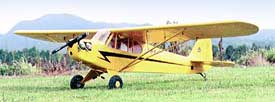
The famous " Piper Cub " on which I learned to fly at Supaéro
At the moment of release, we were left to our own devices. My instructor was a "White Russian" named Lucas Dobrovolsky, an old man whom everyone called Louka, it was simpler. In this tandem two-seater, he immediately trained us to fly without visibility since, occupying the front seat, he would quickly unfold a Russian newspaper and immerse himself in reading, which made us see nothing in front.
- "But! ... - Don't worry, I know the way. Work with your feet....."
One day he said to me, "Okay, you can go." So I made my first landing. We rigged the Piper so that we could no longer see anything in front. We had to estimate the height, more or less successfully, by looking to the side. When landing, we had the feeling of pulling the reins of a small horse.
After a few circuits, Louka said to me:
- "I will also release your colleague Durand ( like me a student at Supaéro ). Stay as far away from each other as possible. "
So we did the circuits, takeoffs, landings, on the field of Guyancourt, near Paris. I did not lose sight of Durand's small yellow Piper, arranging myself to keep a distance of kilometers from him. Suddenly, after half an hour, I saw his Piper coming straight at me, full throttle. I thought:
- "Durand has suddenly gone mad!"
As a completely inexperienced pilot, I was then involved in a terrifying dogfight. Tight turns, style of the 14-18 war, eye fixed on the rearview mirror.
- "What is this idiot doing in my tail !?!"
I don't know how long this game lasted. As soon as I could, I dived towards the runway and landed. The Piper of my "adversary" then came to park next to mine. Louka came out, waving his arms.
- "What's going on! I was just checking how you flew! - I thought it was Durand.... - Ah... then it's not bad...."
In a glider I had been released, in France, on a single-seat Javelot, with a fabric-covered fuselage. Before, I had flown on C-800 two-seaters and especially on C 25 S. You can see this kind of glider when de Funès escapes at the end in "La Grande Vadrouille" ( indeed, everything I have used is in museums, waiting for me to take my place there, stuffed.... ).
The Javelot was more nervous, more refined than this big cow of a C800, side by side two-seater. When I reached a good altitude, the towing plane, a fabric-covered biplane, made wing flaps, indicating that I had to release the cable, which I did. Then I realized that before takeoff I had not set the position of the rudder axis. It was too close and my knees hit the instrument panel. Not all pilots have the same leg length. The previous user of this machine must have had longer legs than mine. So I sent my hand to operate the rudder axis hook and try to position it a little further away, to have more space.
But the hook slipped from my hands and the rudder went all the way forward, in the stop. I tried to catch this damn hook by leaning. But by doing so I pressed on the stick and found myself in a dive. I thought for a moment about also dismantling the stick, but finally told myself that if I lost all means of controlling this glider this story would end badly.
One thing was clear: I no longer had a rudder, only the stick. I informed the ground by radio. This rudder was far in front of my feet, out of reach, and anyway stopped against the front of the glider.
Panic below.
- "Don't panic, little one, don't panic! ...."
Flying only straight is not the most convenient way to land, especially on a site like the Montagne Noire, in the Pyrenees. But I remembered my lessons. The long wings of gliders give them "reverse effects". For example, when you put the stick to the left, you increase the drag of the right wing while decreasing that of the left wing. The glider tends to turn to the right and you have to counteract with your feet, as is well known. When you don't have a rudder, you can use this to turn, with a little patience. I can already see some glider pilots trying. Fortunately, it's safe. So I did a 360° by pushing as best I could on the stick. I even ended up facing the runway and everything went well.
When I made my first parachute jump, as a commander, it was not bad either. I left the wing of the English biplane "Dragon" ( see always the de Funès movies ) jumping backwards, "well arched", legs together, pulling the rear parachute ( the equipment and techniques were different back then ). Today it's:
JPP in parachute, 1995
Normally the dorsal parachute handle should have been in place, on my right clavicle. But there, nothing....
I make the gestures of a guy looking for his keys. Obviously I twist my body and I end up facing the sky. The seconds pass. Below, they panic. The instructor grits his teeth, his eye fixed on his binoculars.
- "What is he doing, damn it! He was doing so well during his "test jumps" ( jumps where you practice the movements, showing that you keep your cool )
Before activating the reserve parachute, I try to think. I say to myself "this handle must be somewhere". Indeed, by sending my hands behind, I discover the cable sheath flapping in the wind. I manage to catch this damn handle and activate it. I see the parachute pass between my two legs, obviously spread apart, and I do a nice somersault on opening.
These were army parachutes, quite old. The handle was sewn on the strap and the thread had come loose, that's all.
Memories come back, come back. When I see kids speeding on the road and risking their lives or, worse, playing the "Great Blue" in free diving I think "they should do skydiving. It's well supervised, safe and, honestly, it's more exciting than a motorcycle". I lived in this sport stories worthy of the Baron of Muchaüsen. One day I fell in a 20-second fall. Always in "T", arms stretched and arched, a position that has been abandoned for a long time. But at the time, beginners had to take this position. We counted in our heads. I was quite regular.
- 17 .... 18 ... 19 ... 20
I bring both arms symmetrically. The horizon rises. My body tilts downward so that the wind catches the extractor of my dorsal. I pull on the handle and .... nothing!
Stuck!
In these cases, you have to exert Herculean strength. You have to be able to rip off a door handle. The handle comes and ...... I end up lying in the grass, with friends giving me slaps. I still had the handle in my hand. Everything went well.
You may know that boxers' knockouts are achieved with a hook to the chin. Syncope occurs because the head turns very quickly and the brain does not follow. That's how you can knock out real Hercules with a well-placed but relatively weak blow.
Believe me or not. I am the only guy, to my knowledge, who managed to knock himself out with his own fist.
A little less than ten years ago I went to meet my friend Alain Dreyer in his flying club. He was there with some "old-timers", with white or slightly grey hair, like me. There was a rather thin guy, who had been a pilot in air shows, on collector planes. He looked very young. Suddenly he said to me:
- "Aren't you Jean-Pierre Petit who did parachute jumping at the base of Bourget du Lac in 1961? - Yes, indeed. I was an officer at the time, at the air base. - So I was your release on Dragon! - Oh, I recognize you very well. - Do you remember the guy who panicked and went on the wing? *"
Indeed, that day the instructor had four guys to release, with automatic opening. In this case, the instructor had to attach the straps connecting the plane to the parachute ( the "SOA" or opening straps ) to a cable running along the ceiling of the fuselage. The guys got into position. They had to go through the Dragon's door and go onto the wing. They grabbed the metal frame that connects the two wings of this fabric-covered biplane, which released at 70 km/h. You had to stand on the wing, on a reinforced part, with your buttocks in the engine's propeller slipstream. Then, standing up, you jumped, backwards, always arching as best you could.
That day one of the students completely panicked. Facing the void, he remained like an idiot, fascinated. We erased the "DZ", the dropping zone, or the release zone. The instructor started shouting:
- "What are you doing, damn it! Jump or come back, but do something! *"
The guy looked at us, in a trance, but didn't move. He had to return to the cabin. If this beginner was released outside the zone, he risked landing on a house roof, getting hurt, or in the Bourget lake and drowning ( it had already happened ). Seeing this, the instructor tried to grab him, reached out his hand to catch his arm. But the guy got scared and, grabbing the rigging, moved towards ... the end of the wing.
This is the episode that my release pilot remembered, who could no longer keep the plane straight.
- "What are you doing, damn it! We're all going to crash! *"
Imagine a de Havilland Dragon, turning, with a guy clinging to a rigging, at the end of the wing.
Surrealistic....
As the instructor had his body half out of the cabin ( I think his idea was to try to pull the SOA of the guy to trigger the opening of his parachute and pull him off the wing ), the fear of this guy only increased. He tried to move to the end of the wing where he thought he might feel safer. The release speed of the Dragon is so low that you can walk on a wing without being carried away by the relative wind.
As the plane tilted more and more, fortunately, the guy slipped and fell into the void and we thus avoided a spin.
Suddenly, I had in front of me the guy who was flying the plane at the time of the incident.
About thirty years ago, a guy built "Bensen" autogyros and opened a school, near Marignane. The inventor of the autogyro is a Spaniard named Cierva, who happens to be one of my ancestors. You can see a Bensen in flight in a James Bond movie, I don't remember which one.
At Marignane, before flying solo, we learned on non-powered single-seaters, which took off in Mistral weather. What you are about to see in this film corresponds exactly to what we did at that time.
http://www.dailymotion.com/relevance/search/soucoupe/video/173465
It also shows the incredible mastery of the Germans, at the time under the Nazi regime, in aeronautics and flying machines ( think of the V1, the V2, the Messerschmidt 262 and the stealth flying wings of the Horten brothers ). This excerpt comes from a report on the history of the helicopter, recently broadcast on television. Again, with an engineer named Focke ( The "Focke - Wulf" should ring a bell?)
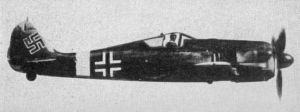
Focke Wulf 190
The Germans left an indelible mark in the history of the helicopter with the famous Focke Wulf 61:
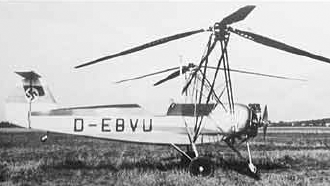
The German Focke Wulf 61 birotor, quite maneuverable to be able to fly in an indoor stadium
The machine was developed in the USA with Sikorsky, after the war of 39-45, after having recovered German prototypes. It played a role during the Algerian War ( with the big S-58 where the engine was in the nose, on which I have flown quite a bit as a passenger ), then during the Vietnam War, the helicopter took its place as our battle horse of an "airborne cavalry".
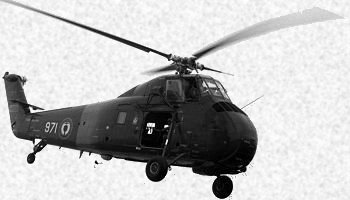
**Helicopter S 58 **
But in the film, we see Hitler's personal pilot, Hanna Reitsch, at the controls of a birotor marked with swastikas, quite maneuverable to be able to fly inside an indoor stadium ( Hanna Reitisch was Hitler's personal pilot. A convinced Nazi and fanatic, she was one of the last to have seen him alive, managing to land near his Berlin bunker, in the last moments of the Third Reich. This is why these sequences were so long before being included in the history of aviation ).
If you want to know more about flying airplanes, call:
http://www.savoir-sans-frontieres.com/JPP/telechargeables/Francais/aspirisouffle.htm
By the way, according to my friend and neighbor Jacques, some people from the French gliding federation would have liked to publish the comic "If we flew" to allow instructors to use it for their courses. [Let them ---
**Number of visits to this page since May 29, 2006 ** :