April 2006: Iran's response
Iran's response
April 5, 2006
****http://www.french.xinhuanet.com
Additional information
April 7, 2006
Resold to Iran
(article published in LE MONDE, edition of 04/07/06, by Laurent Zecchini):
Tehran tests new missiles in the Strait of Hormuz area
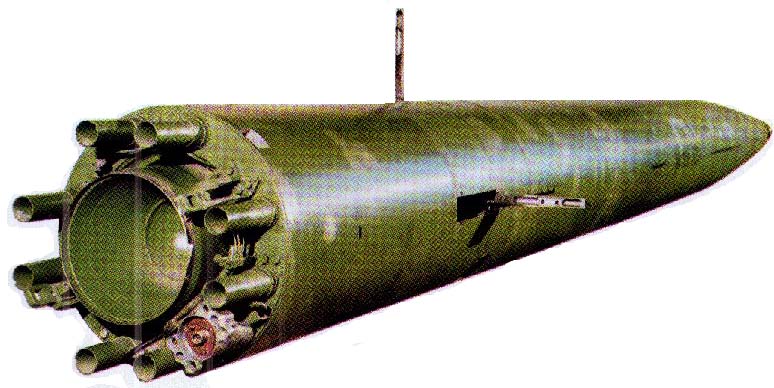
...The Iranian claims regarding the development of an invulnerable "underwater missile," undetectable by sonar and capable of a speed of 100 meters/second, seem more credible. The "Hoot" (whale). Everything suggests in fact that it is the Russian-made VA-111 torpedo, whose code name is "Shkval" ("squall").
"It has a very powerful warhead intended to strike large submarines. No warship can escape this torpedo," General Fadavi declared on state television. On Friday, another general of the Revolutionary Guards had for his part announced the development and first successful test of a multiple-warhead ballistic missile capable of evading radars and striking several targets simultaneously, the Fajr-3.
It is a torpedo
without equivalent in Western armies
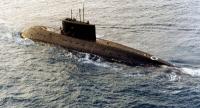
, capable of reaching an underwater speed of 360 kilometers/hour, three or four times greater than that of most torpedoes, thanks to a unique process: the device wraps itself in a gas envelope (cavitation) that spares it any contact and braking caused by water, hence its speed. The Russians sold, via Kyrgyzstan, about forty VA-111s to China, which was able to pass them on to Iran. Tehran ordered and received, from 1992 to 1996, three Russian Kilo-class submarines capable of using this type of torpedo, which could constitute a real threat to ships cruising in the Indian Ocean and the Strait of Hormuz."
My comment
: It is not certain that ships flying the Western flag have the means to cope with attacks carried out with this type of device, fired from Kilo-class submarines and wire-guided toward their target (which makes countermeasures very problematic). The Russian Shkval, from which the Hoot derives, are moreover equipped with very powerful explosive charges. Faced with such a "show of force" in the Strait of Hormuz then, ... anything can happen.
s for China, it may already be largely capable of producing these Shkvals itself. We have seen, see the file on
that it was already interested in devices, MHD torpedoes five times faster. The torpedoes sold by the Russians to China are ... thirty years old, their US equivalent being the Supercav. Let us also recall that China is the third country in the world, along with the USA and Russia, never to have left the field of MHD.
s for the French, they have not even yet understood that rocket propulsion of torpedoes was ... more effective than the propeller.
Additional information
:
April 7, 2006
Resold to Iran
(article published in LE MONDE, edition of 04/07/06, by Laurent Zecchini):
Tehran tests new missiles in the Strait of Hormuz area
:
...The Iranian claims regarding the development of an invulnerable "underwater missile," undetectable by sonar and capable of a speed of 100 meters/second, seem more credible. The "Hoot" (whale). Everything suggests in fact that it is the Russian-made VA-111 torpedo, whose code name is "Shkval" ("squall").
"It has a very powerful warhead intended to strike large submarines. No warship can escape this torpedo," General Fadavi declared on state television. On Friday, another general of the Revolutionary Guards had for his part announced the development and first successful test of a multiple-warhead ballistic missile capable of evading radars and striking several targets simultaneously, the Fajr-3.
It is a torpedo
without equivalent in Western armies
, capable of reaching an underwater speed of 360 kilometers/hour, three or four times greater than that of most torpedoes, thanks to a unique process: the device wraps itself in a gas envelope (cavitation) that spares it any contact and braking caused by water, hence its speed. The Russians sold, via Kyrgyzstan, about forty VA-111s to China, which was able to pass them on to Iran. Tehran ordered and received, from 1992 to 1996, three Russian Kilo-class submarines capable of using this type of torpedo, which could constitute a real threat to ships cruising in the Indian Ocean and the Strait of Hormuz."
My comment
: It is not certain that ships flying the Western flag have the means to cope with attacks carried out with this type of device, fired from Kilo-class submarines and wire-guided toward their target (which makes countermeasures very problematic). The Russian Shkval, from which the Hoot derives, are moreover equipped with very powerful explosive charges. Faced with such a "show of force" in the Strait of Hormuz then, ... anything can happen.
Q
s for China, it may already be largely capable of producing these Shkvals itself. We have seen, see the file on
that it was already interested in devices, MHD torpedoes five times faster. The torpedoes sold by the Russians to China are ... thirty years old, their US equivalent being the Supercav. Let us also recall that China is the third country in the world, along with the USA and Russia, never to have left the field of MHD.
Q
s for the French, they have not even yet understood that rocket propulsion of torpedoes was ... more effective than the propeller.
**
Moreover, citing the spokesman, the official Iranian news agency IRNA reported that any attack against Iranian interests in the Persian Gulf region would meet a "vigorous response by surface and submarine units as well as by anti-aircraft defense from Iranian bases and coastal regions." The spokesman indicated that one of the objectives of the maneuvers is to send a message of peace and friendship to the Gulf countries.
According to Iranian military officials, more than 17,000 soldiers and 1,500 vessels of various types and sizes are taking part in these ongoing maneuvers. The torpedo test was the latest weapons demonstration in these large-scale military maneuvers.
Last Friday, Iran, which faces heavy Western pressure over its nuclear program, successfully tested a missile equipped with sophisticated radar guidance. On Sunday, Iran successfully tested an underwater missile with a speed of 360 kilometers per hour, which according to the Iranians is the fastest of its kind in the world.
No, but never mind....
These ongoing maneuvers come at a time when the issue of Iran's nuclear program is pending, awaiting the UN Security Council's adoption of subsequent measures. Iran is still holding to its firm position on the nuclear issue. Iranian President Mahmoud Ahmadinejad declared on Monday that his country "would exercise its determination to produce the nuclear energy it needs for its economic development."
The United States and Israel have threatened to launch preemptive attacks against Iranian nuclear facilities (...) .
In response, Iran affirmed that it will counterattack any invasion.
*Iran possesses in any case numerous Russian materials. Batteries of SS-N-22 anti-ship missiles are notably positioned in the Strait of Hormuz and the navy has three Kilo-class submarines. *
**Kilo-class submarines, bought from the Russians **
*The rest of the Iranian naval forces, which date from the 1970s, consist of four British-designed corvettes and eleven French La Combattante-type missile patrol boats. *
Additional information
:
April 7, 2006
Resold to Iran
(article published in LE MONDE, edition of 04/07/06, by Laurent Zecchini):
Tehran tests new missiles in the Strait of Hormuz area
:
...The Iranian claims regarding the development of an invulnerable "underwater missile," undetectable by sonar and capable of a speed of 100 meters/second, seem more credible. The "Hoot" (whale). Everything suggests in fact that it is the Russian-made VA-111 torpedo, whose code name is "Shkval" ("squall").
"It has a very powerful warhead intended to strike large submarines. No warship can escape this torpedo," General Fadavi declared on state television. On Friday, another general of the Revolutionary Guards had for his part announced the development and first successful test of a multiple-warhead ballistic missile capable of evading radars and striking several targets simultaneously, the Fajr-3.
It is a torpedo
without equivalent in Western armies
, capable of reaching an underwater speed of 360 kilometers/hour, three or four times greater than that of most torpedoes, thanks to a unique process: the device wraps itself in a gas envelope (cavitation) that spares it any contact and braking caused by water, hence its speed. The Russians sold, via Kyrgyzstan, about forty VA-111s to China, which was able to pass them on to Iran. Tehran ordered and received, from 1992 to 1996, three Russian Kilo-class submarines capable of using this type of torpedo, which could constitute a real threat to ships cruising in the Indian Ocean and the Strait of Hormuz."
My comment
: It is not certain that ships flying the Western flag have the means to cope with attacks carried out with this type of device, fired from Kilo-class submarines and wire-guided toward their target (which makes countermeasures very problematic). The Russian Shkval, from which the Hoot derives, are moreover equipped with very powerful explosive charges. Faced with such a "show of force" in the Strait of Hormuz then, ... anything can happen.
Q
s for China, it may already be largely capable of producing these Shkvals itself. We have seen, see the file on
that it was already interested in devices, MHD torpedoes five times faster. The torpedoes sold by the Russians to China are ... thirty years old, their US equivalent being the Supercav. Let us also recall that China is the third country in the world, along with the USA and Russia, never to have left the field of MHD.
Q
s for the French, they have not even yet understood that rocket propulsion of torpedoes was ... more effective than the propeller.
What can happen? By affirming his desire to send the Israelis "back home" and by loudly proclaiming his intention to push forward his isotope enrichment program, ultimately leading to the possession of nuclear weapons, the Iranian president is putting the Israelis with their backs to the wall. Is a non-reaction possible? Let us recall the destruction of the Iraqi Osirak reactor by Israeli fighter-bombers in 1981. The component of religious fanaticism is an incomprehensible and inestimable parameter for non-Muslims. The Iranian suicide-president perhaps hopes, by drawing upon his country the (nuclear) wrath of America and Israel, to trigger .. a planetary Jihad, while cherishing the hope that every Muslim then turns into a suicide commando.
We live in a formidable era.... ---
**Number of visits since April 5, 2006 ** :