The Truth About Chernobyl. What Has Never Been Revealed
Chernobyl, My Love
August 14, 2007 – Updated August 17, 2007 – Updated February 9, 2008
- ****Updated August 27, 2007 - ****
http://www.tchernobyl.dreamhosters.com/
| October 12, 2008 | : To download the film "The Battle of Chernobyl" in AVI format |
|---|
| October 12, 2008 | : To download the film "The Battle of Chernobyl" in AVI format |
|---|
- They are not passive. They are numbed by their worries, their daily lives.
That’s what a friend of mine said to me about “people’s passivity.” And indeed, it has its despairing aspects. On the Internet, you’ll find yet another video about September 11.
http://video.google.fr/videoplay?docid=-3471566655427096787&hl=fr
But there has been no broadcast, no media debate to counter the record of infamy held by a France 2 Arte program from April 13, 2004 titled "September 11 Never Happened," part of the Thema series hosted by French journalist Patrice Lecomte.
This video is now available on Dailymotion:
http://www.dailymotion.com/video/x217s7_le-11-septembre-na-pas-eu-lieu
Go watch this horror, which disgraces the journalistic profession. You’ll find Pierre Lagrange, “sociologist,” the man who says only what he’s told to say, for thirty years. The “UFO sociologist,” today a close collaborator of Patenet at CNES, author of numerous TV appearances.
I’ll have to watch this video closely when I return from a conference. It seems its content has been significantly edited (?...)
No journalist—no one in the style of "Arrêt sur Image"—will ever pick up on the phrases spoken that day, when Thierry Meyssan was publicly condemned without even being invited onto the set to argue with these so-called “professional journalists” who that day displayed their utter incompetence.
Vox clamat in deserto
There isn’t a single day when I don’t receive congratulations from readers for “my courage,” “my statements,” and so on. One reader even asked me how it was possible I was still alive after all I had revealed. I didn’t know what to say. As a response, I’ll share something new. This summer, during one hour of clock time, an engineer who had worked at the Chernobyl site confided in me. I won’t name him. He carried a heavy burden, but added:
- They made it clear to me that if I spoke...
More things we're not supposed to say? Indeed. But is it really that serious? In fact, we really get the impression today that one can deny all obvious truths, hide the most glaring clues, without anything changing. It’s just… a little something extra.
I recall a scene from Spielberg’s series "Taken." At one point, a group of people investigating the UFO dossier catch members of “the project” red-handed dismantling UFO archives—and even transporting (suspended by helicopter) a flying saucer that is stolen right before their eyes. And the ufologist says:
- How can you keep hiding these facts from people any longer?
And the other replies:
- On the contrary, talk about them! The more you talk about them, the less anyone will believe you.
That’s not untrue. If you want unlimited impunity, go for the monstrous. Since September 11, six long years have passed. And what has changed? Even if Mrs. Clinton were elected, could she open such a dossier and force America to face the greatest monstrosity of all time? I doubt it.
Even if it’s true, it’s false!
said the surrealism of Picabia. We live in a time of complete historical surrealism. But let’s return to this Chernobyl story. Compared to that, it’s just a detail. Let’s say that right after the reactor exploded, the Russians searched for people who had robots capable of approaching the crater and taking measurements. They knew radiation levels were extremely high. But the Russians didn’t have robots able to perform such work. The French did. So they sent a mission with the necessary equipment. Data had to be retrieved via cable. So they connected a one-ton robot to a command post by means of a cable made of optical fibers, sheathed in lead. Optical fibers, because they are unaffected by radiation. Data still passed through.
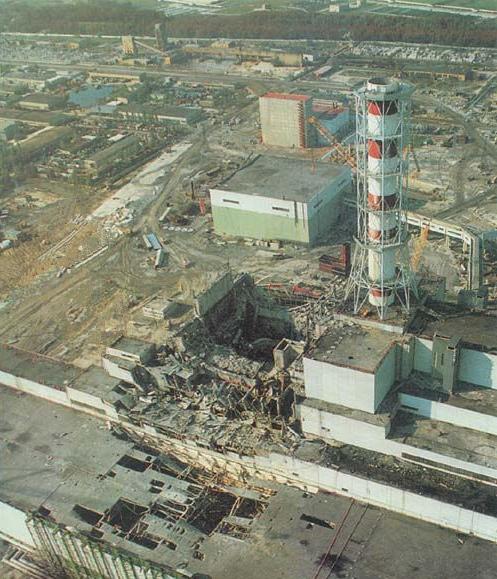
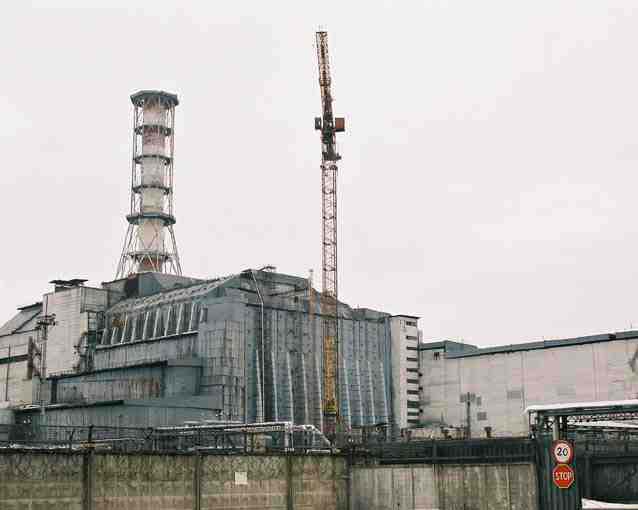
Photo of the Chernobyl reactor, immediately after the explosion
The robot thus approached the crater, bumping along. A crater had formed. The reactor exploded because the system for lowering cadmium control rods—absorbing neutrons—had failed. And my interlocutor added:
- This disaster occurred because the Russians couldn’t manage to replace a component costing five hundred dollars. But anyway, in nuclear matters, anything can happen, anywhere. It’s always a matter of maintenance cost. Wherever these budgets are cut, there is risk of a similar catastrophe occurring.
But what exactly had happened?
According to this engineer, the explosion had caused the reactor core to melt down. Fuel rods had fused, reaching extremely high temperatures. A ball about ten centimeters in diameter formed, which first pierced through the steel reactor vessel, then the concrete foundation beneath it.
*- The Chinese syndrome?
- Yes...*
According to him, the Chinese syndrome had begun. What does this term, coined by journalists, mean? It simply means that when such a disaster occurs, the fusion of fuel rods creates a true crucible, reaching tens of thousands of degrees. It then melts everything in its path and keeps descending… descending. The term “Chinese syndrome” evokes the idea that the object might pass through the Earth and emerge on the opposite side. It’s just an image meant to shock the imagination. But beneath the Chernobyl site there is necessarily a groundwater aquifer, water, at some depth. If the molten ball reached that level, an enormous region of Ukraine would have had its waters contaminated for thousands of years.
*- The Russians wanted to know?
- Yes, they wanted radiation values. That’s why we brought our robot. To go to the edge of the crater with a pole extended, carrying a probe.
- And what did it show?
- It was very simple. There’s a radiation dose that, if a human were exposed to it over one year, would cause death. The probe measured that amount of radioactivity… in just one second.
- So a flux thirty million times stronger? That was it?
- No. We’ll never know the exact value. Our robot wasn’t designed for such measurements. The detector simply reached its limit. It was only “at least that.”
- And what happened to the robot?
- It stayed there, knocked out. Arriving at the crater’s edge, it worked for one second, then stopped.
- What did the Russians do?
- At one point they seriously considered dropping a hydrogen bomb on the reactor.
- That would have worsened the situation.
- Not at all. The H-bomb, exploding at low altitude, would have vaporized everything, and the powerful updraft would have carried debris high into the atmosphere.
- But… everyone would have taken it on their heads!
- Exactly. But at least we’d have removed that damned molten core—the reactor’s heart in fusion—from underground. By dispersing all that debris, we would have prevented the worst: irreversible contamination of the entire Ukrainian groundwater aquifer.
- They ultimately didn’t send a hydrogen bomb.
- No. They sent eighteen hundred miners to dig a massive tunnel under the reactor.
- Really?
- These men—we never heard from them again. They all died very quickly. But it allowed pouring an enormous amount of concrete beneath the reactor.
- To stop the molten core from sinking further?
- Yes.
- And did it work?
- It seems so.
- At what depth did the core stop?
- Nobody knows.
- Is it still active?
- Of course. It continues to emit heat and radioactivity.
- Do we have any idea of its current temperature?
- No. Meanwhile, the Russians installed on the surface what they called the “concrete sarcophagus.”
- They covered everything.
- Yes, but more to divert attention from what was happening below—the tunnel excavation.
- It’s staggering.
- I was told to shut up about all this, or I could get into serious trouble. So I did. *
Description of the Chernobyl disaster on Wikipedia
The True Dimensions of the Chernobyl Disaster
Letter from Professor Nesterenko, January 2005
Dear Colleagues,
Very few of those who directly participated in assessing the radiological situation at Unit 4 of the Chernobyl nuclear power plant during the first days after the disaster—and in actions aimed at preventing the catastrophe from escalating into a nuclear explosion—remain alive today.Unfortunately, Academician Valeri Legassov, a talented radiochemist, passed away one [two] years after the disaster. He was, like me, a member of the USSR’s Interministerial Council on Atomic Energy. Even before the Chernobyl accident, at numerous meetings chaired by Minister of Medium Mechanical Engineering Efim Slavski, in the presence of Academician Anatoli Alexandrov, Legassov demanded stricter safety measures for operating the Chernobyl nuclear power plant, which depended on the USSR Ministry of Energy (Minister Piotr Neporojni).
I will therefore try to reconstruct, using my archives (notes from 1986), the chronology of events and describe the measures taken by the USSR Government and the Special Commission of the Council of Ministers in an attempt to contain the accident at the Chernobyl power plant.
On April 27, 1986, I boarded a plane for Moscow on business. I noticed in the aircraft that my pocket dosimeter was registering strange values—extremely high dose rates (hundreds of times higher than normal at an altitude of 8,000 meters). I thought my device was malfunctioning.
On the morning of April 28, I went to the Kremlin, to the Military-Industrial Commission of the USSR Council of Ministers, to resolve urgent matters related to the mobile nuclear power plant “Pamir,” of which I was chief designer. It was there that I learned the alarming news: an accident had occurred at the Chernobyl nuclear power plant; a fire had broken out there; and on the morning of April 26, a government commission had already flown in by plane.
I knew well the design of the RBMK reactor, which uses several thousand tons of graphite as a neutron moderator. We know that when the reactor operates normally, all the graphite is contained within a steel cylinder. The slowing of neutrons in the graphite contributes 6 to 7% of the reactor’s total power. To maintain the graphite temperature at 500–600°C, the graphite cylinder is filled with an inert gas—a mixture of nitrogen and helium. The coolant fluid (water) circulates inside the graphite assembly.
We know the accident occurred due to operator errors during a dangerous nuclear experiment: they wanted to see how, in the event of an emergency reactor shutdown, residual heat could be used to generate additional electrical energy.
The control rods used in this reactor were shortened and lacked graphite tips designed to fill the channel when the rod was withdrawn from the core; therefore, when the rods were extracted, the channel filled with water (the coolant fluid).
The experiment protocol had been submitted by the Chernobyl plant’s management to the ministry, the chief designer (Academician Nikolai Dollejal), and the reactor’s scientific supervisor (Academician Anatoli Alexandrov). Not having received a written positive response, the Chernobyl plant management decided, despite this, to carry out the planned experiments on April 25, 1986.
The RBMK reactor is distinguished by relatively low fuel enrichment (1.8% uranium-235) and significant positive temperature coefficients, especially at low power levels.
In summer 1986, after the accident, Minister of Medium Mechanical Engineering E. Slavski showed me the entire experiment program. According to this program, the reactor’s power was to be lowered to 800 MW, then, from that power level, the inertial operation of the turbine-generator was to be studied after the safety rods were dropped, to determine how much additional electrical energy could be produced.
At the time of the experiment, the reactor’s power dropped to 60–80 MW, and according to physical laws, the reactor fell into an “iodine pit.” In this situation, the reactor should have been shut down, and one should have waited two or three days for short-lived iodine isotopes to decay before power returned to normal.
According to participants in the experiment, plant personnel extracted the compensating rods from the reactor core and activated auxiliary circulation pumps to pump water into the reactor. The radiolysis of steam in the channel produced a detonating mixture of hydrogen and oxygen, causing the first thermal explosion inside the reactor.
Neutron flux in the reactor deviated, and the water that had filled the channels vacated by the absorbing rods began to boil. Within 3 to 5 seconds, the reactor’s power increased a hundredfold. The ceramic fuel elements (uranium dioxide) with low thermal conductivity were rapidly damaged by extreme thermal stresses.
We know that water decomposition occurs most efficiently on fuel fragments. This was followed by a second detonation of the explosive mixture, tearing open the graphite’s hermetic enclosure and shattering the upper concrete slab (about 1,200 tons; it remains tilted at 60° today). Air thus gained access to the graphite reservoir. When burning in air, graphite reaches temperatures of up to 3,600–3,800°C. At such temperatures, the zirconium cladding of fuel elements and force tubes within the graphite acted as ignition sources and catalysts, further contributing to the accident’s escalation.
The reactor’s 1,700 active channels contained 192 tons of uranium (enriched to 1.8% uranium-235). Additionally, the maintenance channels contained spent fuel assemblies that had been removed from the reactor.
Due to the extreme heat of the burning graphite, the fuel channels began to melt (like electrodes in an electric arc) and the molten fuel started flowing downward, infiltrating all cable openings.
The reactor rested entirely on a 1-meter-thick concrete slab. Beneath the reactor, powerful concrete chambers had been built for collecting radioactive waste.
As personnel continued pumping water into the reactor using circulation pumps, water inevitably seeped into these reinforced concrete underground chambers. A major risk emerged:
If the molten mass pierced the concrete slab beneath the reactor and entered these chambers, conditions favorable to a nuclear explosion could arise.
On April 28–29, 1986, colleagues from the Reactor Physics Department of the Belarusian Academy of Sciences’ Institute of Atomic Energy performed calculations showing that 1,300–1,400 kg of the uranium+graphite+water mixture constituted a critical mass, and a nuclear explosion with a power of 3 to 5 megatons could occur (a power 50 to 80 times greater than the Hiroshima explosion). Such an explosion could cause massive radiation injuries across a radius of 300–320 km (encompassing the city of Minsk), and all of Europe could become severely contaminated, rendering normal life impossible.
On May 3, 1986, I reported these calculation results at a meeting with the First Secretary of the CPSU Central Committee, N. Sliounkov. Here was my assessment of the situation I presented: the probability of a nuclear explosion was not high because, at the time of the thermal explosion, the core had been shattered and scattered not only inside the reactor but across the entire surrounding industrial area. I was asked why I couldn’t guarantee 100% that a nuclear explosion could not occur at Chernobyl. I replied that to do so, one would need to know the condition of the concrete slab beneath the reactor. If the slab had no cracks, fissures, or gaps, and if no such defects appeared later, one could assert that no nuclear explosion would occur.
One thing I know for sure: thousands of freight trains had been gathered around Minsk, Gomel, Mogilev, and other cities within a 300–350 km radius of the Chernobyl plant, in preparation for evacuating the population should such a need arise.
We expected the explosion might occur on May 8 or 9, 1986. That’s why all possible measures were taken to extinguish the burning graphite inside the reactor before that date. Dozens of thousands of miners from mines around Moscow and Donbass were urgently brought to Chernobyl to dig a tunnel beneath the reactor and install a cooling serpent for cooling the reactor’s concrete slab, thereby eliminating any possibility of cracks forming in the slab. The miners had to work under infernal conditions (high temperature and high radiation levels) to save the concrete slab from collapse [dose rate at the tunnel exit was about 200 R/h]. It’s impossible to overestimate what these selfless men accomplished to prevent a possible nuclear explosion. Most of these young men became disabled, many died between the ages of 30 and 40.
Clearly, the radiological situation inside the reactor was terrifying. Since such a disaster had not been anticipated during the plant’s design phase, there were no dosimetric instruments at Chernobyl capable of measuring such extreme radiation levels.
For this reason, I was flown by helicopter from Minsk to Chernobyl in the night of May 1. In the helicopter, we had installed a gamma spectrometer for measuring high-dose radiation, which our institute possessed and which was intended to equip the “Pamir” nuclear power plant, whose reactor had incomplete biological shielding and high irradiation levels.
At dawn on May 1, flying over the reactor with Academician Legassov, we managed to measure the radiation power on the reactor roof: 12,000–14,000 R/h (the lethal dose for a human is 600 R/h). During the flyover—first at 300 meters altitude, then at 150 meters—the internal dose rate in the helicopter rose to 100–400 R/h, respectively.
Academicians Legassov and Guidaspov proposed pumping carbon dioxide into the reactor ruins (considering it would displace air), dropping sand and dolomite powder from helicopters onto the burning graphite, which should extinguish it.
In the first hours after the accident, several thousand tons of lead had been dumped onto the burning reactor to prevent a nuclear explosion. This lead vaporized, rose into the air, and fell back in southern Belarus, contributing to the high lead levels found in children’s blood in the administrative districts of Braguine, Khoiniki, and Narovlia.
We know that on May 7, 1986, the fire raging in Unit 4 of the Chernobyl nuclear power plant was extinguished. Nevertheless, several more releases of radioactive gases occurred from the reactor, and our Institute’s radioprotection service recorded a 3 to 4-fold increase in radioactive contamination in the Narovlia district (70 km from the Chernobyl plant).
The feat of hundreds of thousands of young people—firefighters, soldiers, miners known as “liquidators” of this terrible accident—has no equal.
According to physicists’ estimates, nearly 400 kg of plutonium were present in the Chernobyl reactor.
It is estimated that about 100 kg of plutonium were released into the environment during the fire (one microgram of plutonium is a lethal dose for a 70 kg human).
In my opinion, we narrowly avoided a nuclear explosion at Chernobyl. If it had occurred, Europe would have become uninhabitable.
A dangerously false idea is spreading in the West: since the reactors at the Chernobyl plant are shut down, it seems there is no longer any risk of a nuclear explosion. But as long as nuclear fuel remains inside the ruins of the reactor, it poses a danger not only to Ukraine, Belarus, and Russia but to the entire European population.
In my view, Europe’s peoples should be infinitely grateful to the hundreds of thousands of liquidators who, at the cost of their lives, saved Europe from a grave nuclear disaster.
According to a 1996 statement by the leadership of the “Chernobyl Union” association, over 20,000 men aged 30 to 40 who had participated in cleaning up Chernobyl’s aftermath were already dead by that date.
In the national report titled “The Consequences of Chernobyl in Belarus 17 Years Later” (Minsk, 2003), it is noted that the number of all types of cancer cases (colon, lung, bladder, thyroid) has increased significantly compared to populations in non-contaminated regions, with statistically reliable figures. It is projected that by 2030, only in Belarus, 15,000 cases of thyroid cancer induced by the radiological situation will develop.
Children constitute the most vulnerable group in Belarus’s population. According to official data from the Belarus Ministry of Health, if in 1985 85% of children were healthy, by 2000 less than 20% remained healthy nationwide, and less than 10% in the Gomel region.
That is why it is necessary to urgently organize radiological protection for the 500,000 children living in contaminated areas of Belarus.
V. Nesterenko, Corresponding Member of the Belarusian Academy of Sciences, Professor, Doctor of Technical Sciences, liquidator of the consequences of the 1986 Chernobyl nuclear accident
The True Dimensions of the Chernobyl Catastrophe
Letter from Professor Nesterenko, January 2005
Dear Colleagues,
Very few of those who directly participated in assessing the radiological situation at Unit 4 of the Chernobyl nuclear power plant during the first days after the disaster, and in taking actions to prevent the catastrophe from escalating into a nuclear explosion, are still alive today.
Unfortunately, Academician Valeri Legassov, a talented radiochemist, passed away one [two] years after the accident. Like me, he was a member of the USSR Interministerial Council on Atomic Energy. Even before the Chernobyl accident, at numerous meetings of the Council chaired by Minister Efim Slavski of Medium Mechanical Engineering, in the presence of Academician Anatoli Alexandrov, Legassov had insisted on strengthening safety measures for the operation of the Chernobyl nuclear power plant, which fell under the jurisdiction of the USSR Ministry of Energy (Minister Piotr Neporojni).
I will therefore attempt to reconstruct, using my archives (notes from 1986), the chronology of events and describe the measures taken by the USSR Government and the Special Commission of the Council of Ministers in an effort to localize [contain] the accident at the Chernobyl plant.
On April 27, 1986, I boarded a plane to Moscow for business purposes. During the flight, I noticed my pocket dosimeter registering strange values—extremely high dose rates (hundreds of times higher than normal at an altitude of 8,000 meters). I assumed my instrument was malfunctioning.
On the morning of April 28, I went to the Kremlin, to the Military-Industrial Commission of the USSR Council of Ministers, to resolve urgent matters related to the mobile nuclear power plant "Pamir," which I was chief designer of. It was there that I learned the alarming news: an accident had occurred at the Chernobyl nuclear power plant, a fire had broken out, and on the morning of April 26, a government commission had already flown in by plane.
I was well acquainted with the design of the RBMK reactor, which uses several thousand tons of graphite as a neutron moderator. It is known that during normal operation, all the graphite is contained within an iron cylinder. The slowing of neutrons in the graphite accounts for 6 to 7% of the reactor’s total power. To maintain the graphite temperature at 500–600°C, the graphite cylinder is filled with an inert gas—a mixture of nitrogen and helium. The coolant fluid (water) circulates inside the graphite assembly.
It is known that the accident occurred due to operator errors during a dangerously risky nuclear experiment: the goal was to determine how residual heat generated after an emergency reactor shutdown could be used for additional electricity production.
The control rods used in this reactor were shortened and lacked graphite tips designed to fill the channel when the rod was withdrawn from the core; thus, upon withdrawal, the channel filled with water (the coolant fluid).
The experiment protocol had been submitted by the Chernobyl plant’s management to the Ministry, the chief designer (Academician Nikolai Dollejal), and the reactor’s scientific supervisor (Academician Anatoli Alexandrov). Having received no written positive response, the Chernobyl plant’s management decided nonetheless to carry out the planned experiments on April 25, 1986.
The RBMK reactor is distinguished by relatively low fuel enrichment (1.8% uranium-235) and significant positive temperature coefficients, especially at low power levels.
In summer 1986, after the accident, Minister of Medium Mechanical Engineering E. Slavski showed me the entire experiment program. According to this program, the reactor’s power was to be reduced to 800 MW, and then, from that power level, the turbine-generator’s inertial run after control rod withdrawal was to be studied to determine the amount of electricity produced.
At the time of the experiment, the reactor’s power dropped to 60–80 MW, and according to physical laws, the reactor fell into an "iodine pit." In this situation, the reactor should have been shut down, and one should have waited two or three days for short-lived iodine isotopes to decay and for power to return to normal.
According to participants in the experiment, plant personnel withdrew the compensating rods from the reactor core and activated auxiliary circulation pumps to bring water into the reactor. The radiolysis of steam in the channel produced a detonating mixture of hydrogen and oxygen, triggering the first thermal explosion inside the reactor.
Neutron flux in the reactor became unstable; the water that had filled the channels vacated by the control rods began to boil. Within 3 or 5 seconds, the reactor’s power increased a hundredfold. The ceramic fuel elements (uranium dioxide), with low thermal conductivity, were rapidly damaged by extreme thermal stress.
It is known that water decomposition occurs most effectively on fuel fragments. This was followed by a second detonation of the explosive mixture, which tore open the hermetic graphite casing and shattered the upper concrete slab (about 1,200 tons; it remains tilted at 60° today). Air thus gained access to the graphite reservoir. When burning in air, graphite reaches temperatures of up to 3,600–3,800°C. At such temperatures, the zirconium cladding of fuel elements and force tubes within the graphite acted as igniters and catalysts, further contributing to the accident’s progression.
The reactor’s 1,700 active channels contained 192 tons of uranium (enriched to 1.8% uranium-235). Additionally, the maintenance channels contained spent fuel assemblies that had already been removed from the reactor.
Under the influence of the extremely high temperature of the burning graphite, the fuel channels began to melt (like electrodes in an electric arc), and the molten fuel started to flow downward, infiltrating all cable openings.
The reactor rested entirely on a 1-meter-thick concrete slab. Beneath it, powerful reinforced concrete chambers had been built for collecting radioactive waste.
As plant personnel continued pumping water into the reactor using circulation pumps, the water inevitably seeped into these underground concrete chambers. A major risk emerged:
If the molten mass pierced the concrete slab beneath the reactor and entered these chambers, conditions favorable to a nuclear explosion could have developed.
On April 28–29, 1986, researchers from the Reactor Physics Department of the Belarusian Academy of Sciences’ Institute of Atomic Energy performed calculations showing that a mixture of uranium + graphite + water weighing 1,300–1,400 kg constituted a critical mass, and a nuclear explosion of 3 to 5 megatons could occur (a power 50 to 80 times greater than the Hiroshima explosion). Such an explosion could have caused massive radiation injuries across a radius of 300–320 km (encompassing the city of Minsk), and the entire continent of Europe might have suffered severe radioactive contamination, rendering normal life impossible.
On May 3, 1986, I reported these calculation results to a meeting with First Secretary N. Sliounkov of the Central Committee. Here is my assessment of the situation that I presented at that meeting: the probability of a nuclear explosion was not high because, at the time of the thermal explosion, the core had already been shattered and dispersed not only within the reactor but throughout the entire industrial area surrounding the plant. I was asked why I could not guarantee with 100% certainty that a nuclear explosion could not occur at Chernobyl. I replied that this required knowledge of the condition of the concrete slab beneath the reactor. If the slab had no cracks, fissures, or crevices, and if no such defects would appear later, then one could affirm that no nuclear explosion would occur.
One thing I know for certain: thousands of railway wagons had been gathered around Minsk, Gomel, Mogilev, and other cities within a 300–350 km radius of the Chernobyl plant, ready to evacuate the population should such a need arise.
It was expected that the explosion might occur on May 8 or 9, 1986. For this reason, every possible measure was taken to extinguish the burning graphite in the reactor before that date. Tens of thousands of miners from the mines around Moscow and Donbass were urgently brought to Chernobyl to dig a tunnel beneath the reactor and install a cooling serpentines to cool the reactor’s concrete slab and eliminate any possibility of fissures forming in it. The miners worked under infernal conditions (high temperature and extremely high radiation levels)—the dose rate at the tunnel exit was about 200 R/h. It is impossible to overestimate what these selfless men accomplished in preventing a potential nuclear explosion. Most of these young people became disabled, and many died between the ages of 30 and 40.
It is evident that the radiological situation inside the reactor was terrifying. Since such a large-scale accident had not been anticipated during the plant’s design phase, there were no dosimetric instruments at Chernobyl capable of measuring such extreme radiation levels.
For this reason, I was flown by helicopter from Minsk to Chernobyl on the night of May 1. In the helicopter, we had installed a gamma spectrometer for measuring high-dose rates, which our institute possessed and which was intended to equip the "Pamir" nuclear power plant, whose reactor had incomplete biological shielding and high radiation levels.
At dawn on May 1, flying over the reactor with Academician Legassov, we managed to measure the radiation power on the reactor roof: 12,000–14,000 R/h (a lethal dose for a human is 600 R/h). During the flight over the reactor at first 300 meters, then 150 meters altitude, the dose rate inside the helicopter rose to 100–400 R/h, respectively.
Academicians Legassov and Guidaspov proposed pumping carbon dioxide into the reactor ruins (considering it would displace air), dropping sand and dolomite powder from the helicopter onto the burning graphite, which would extinguish it.
In the first hours after the accident, several thousand tons of lead were dumped onto the burning reactor to prevent a nuclear explosion. This lead vaporized, rose into the air, and fell back down in southern Belarus, contributing to the high lead levels found in children from the districts of Braguine, Khoiniki, and Narovlia.
It is known that on May 7, 1986, the fire raging in Unit 4 of the Chernobyl plant was extinguished. However, several more releases of radioactive gases occurred from the reactor, and our Institute’s radiation protection service recorded a 3- to 4-fold increase in radioactive contamination in the Narovlia district (70 km from the Chernobyl plant).
The feat of hundreds of thousands of young people—firefighters, soldiers, miners, "liquidators" of this terrible disaster—has no parallel.
According to physicists’ estimates, nearly 400 kg of plutonium were present in the Chernobyl reactor.
It is estimated that about 100 kg of plutonium were released into the environment during the fire (1 microgram of plutonium is a lethal dose for a 70 kg human).
In my opinion, we narrowly avoided a nuclear explosion at Chernobyl. Had it occurred, Europe would have become uninhabitable.
A dangerously false idea is spreading in the West: since the reactors at Chernobyl are shut down, there is supposedly no more risk of a nuclear explosion. But as long as nuclear fuel remains inside the ruined reactor, it poses a danger not only to Ukraine, Belarus, and Russia but also to the populations of all of Europe.
In my view, the peoples of Europe should be infinitely grateful to the hundreds of thousands of liquidators who, at the cost of their lives, saved Europe from a grave nuclear disaster.
According to a 1996 statement by the "Chernobyl Union" association, over 20,000 men aged 30–40 who participated in cleaning up the Chernobyl aftermath had died by that date.
In the national report titled "The Consequences of Chernobyl in Belarus 17 Years After" (Minsk, 2003), it is noted that the number of cases of all types of cancer (colon, lung, bladder, thyroid) has increased significantly compared to populations in non-contaminated regions, with statistically reliable data. It is projected that by 2030, alone in Belarus, 15,000 cases of thyroid cancer induced by the radiological situation will develop.
Children constitute the most vulnerable segment of Belarus’s population. According to official data from the Belarus Ministry of Health, while 85% of children were healthy in 1985, by 2000 fewer than 20% were healthy nationwide, and fewer than 10% in the Gomel region.
This is why it is urgent to organize radiological protection for the 500,000 children living in contaminated areas of Belarus.
V. Nesterenko, Corresponding Member of the National Academy of Sciences of Belarus, Professor, Doctor of Technical Sciences, liquidator of the consequences of the Chernobyl nuclear accident in 1986
| Europe |
|---|
http://www.hns-info.net/article.php3?id_article=8901
Sent by a reader.
Hello, A fact almost entirely ignored by the press is the incident that occurred in Sweden in summer 2006, when the nuclear reactor at the Forsmark I plant in Sweden narrowly avoided a nuclear catastrophe following a short circuit, which caused multiple safety systems to fail. An expert in the construction of this type of reactor claims that sheer luck prevented core meltdown.
Europe was likely just minutes away from another Chernobyl. Reactor No. 1 at the Swedish Forsmark nuclear power plant, located north of Stockholm, became nearly uncontrollable following a short circuit and loss of grid power. At the same time, several safety systems failed to function as intended.
Source: Frédéric Malbos. Definitely...
Sweden: Minutes from a Major Nuclear Accident
A week ago, we narrowly avoided a nuclear catastrophe at Reactor No. 1 of the Forsmark plant in Sweden. Following a short circuit, multiple safety systems failed. An expert in the construction of this reactor type claims that luck prevented core meltdown.Europe was likely just minutes away from another Chernobyl. Reactor No. 1 at the Swedish Forsmark nuclear power plant, located north of Stockholm, became nearly uncontrollable following a short circuit and loss of grid power. At the same time, several safety systems failed to function as intended.
"Luck prevented a core meltdown," says someone who knows what he’s talking about. Lars-Olov Höglund was formerly in charge of construction at the Swedish company Wattenfall, responsible for the Forsmark nuclear plant, and knows the reactor inside out. "This is the most dangerous event since..." he said Wednesday in the Swedish daily Svenska Dagbladet.
This near-catastrophe occurred on July 25, 2006, just before 2 p.m., during maintenance work that caused a short circuit, abruptly cutting the nuclear plant off from the power grid. Reactor 1 shut down automatically. Normally, in such a situation, four backup generators would take over to power, among other things, the cooling pumps. However, in reality, the short circuit spread through the entire power supply system, so even the batteries of the backup generators were affected by the short circuit. It wasn’t until 23 minutes later that control was finally regained—when two of the four identical backup generators finally started working and activated the emergency cooling system.
Seven minutes later, reactor destruction would have been unavoidable, says Höglund. And the core meltdown would have occurred an hour and a half later.
Additional problem at Forsmark: the power outage caused computers to shut down, forcing the control center team to act in part "blindly": many measuring instruments failed, so the team had no reliable information about the reactor’s status or the effects of their actions.
The Swedish nuclear authority "Statens Kärnkraftinspektion" (SKI) takes the failure of safety systems seriously and has requested a full investigation.
Ingvar Berglund, Forsmark’s safety chief, finds it "unacceptable" that component design flaws could lead to cascading short circuits without being detectable: "I’d heard about this once before, but it was about a Russian reactor."
According to Berglund, it was only after the incident that it became known that AEG, the company that built and delivered these defective generators in the early 1990s, was aware of their weaknesses. AEG did not consider it necessary to inform anyone. On the contrary, Upsala Nya Tidning claimed to our newspaper that AEG had informed Forsmark nuclear plant after an incident at a German nuclear plant.
Several Swedish and Finnish reactors are equipped with these same generators. Berglund does not rule out this might be a "global" issue.
The International Atomic Energy Agency (IAEA) has been informed.
Plant operators, as well as the state authority SKI, believe the reactor construction expert’s assessment is exaggerated. SKI classified the incident caused by power loss as a "serious incident," level 2 on the [media] INES scale, which has seven levels. No radioactivity was released.
Ole Reistad, director of Norway’s Institute for Radiation Protection in the neighboring country, takes the incident more seriously than his Swedish colleagues. At Forsmark, "we came close to catastrophe" and nearly failed the final safety barrier, he said in TAZ. "Such a thing should never have happened." TAZ, August 3, 2006 (translation by Cécile L.).
Sent by a reader.
Hello, A fact almost entirely ignored by the press is the incident that occurred in Sweden in summer 2006, when the nuclear reactor at the Forsmark I plant in Sweden narrowly avoided a nuclear catastrophe following a short circuit, which caused multiple safety systems to fail. An expert in the construction of this type of reactor claims that sheer luck prevented core meltdown.
Europe was likely just minutes away from another Chernobyl. Reactor No. 1 at the Swedish Forsmark nuclear power plant, located north of Stockholm, became nearly uncontrollable following a short circuit and loss of grid power. At the same time, several safety systems failed to function as intended.
Source: Frédéric Malbos. Definitely...
Sweden: Minutes from a Major Nuclear Accident
A week ago, we narrowly avoided a nuclear catastrophe at Reactor No. 1 of the Forsmark plant in Sweden. Following a short circuit, multiple safety systems failed. An expert in the construction of this reactor type claims that luck prevented core meltdown.Europe was likely just minutes away from another Chernobyl. Reactor No. 1 at the Swedish Forsmark nuclear power plant, located north of Stockholm, became nearly uncontrollable following a short circuit and loss of grid power. At the same time, several safety systems failed to function as intended.
"Luck prevented a core meltdown," says someone who knows what he’s talking about. Lars-Olov Höglund was formerly in charge of construction at the Swedish company Wattenfall, responsible for the Forsmark nuclear plant, and knows the reactor inside out. "This is the most dangerous event since..." he said Wednesday in the Swedish daily Svenska Dagbladet.
This near-catastrophe occurred on July 25, 2006, just before 2 p.m., during maintenance work that caused a short circuit, abruptly cutting the nuclear plant off from the power grid. Reactor 1 shut down automatically. Normally, in such a situation, four backup generators would take over to power, among other things, the cooling pumps. However, in reality, the short circuit spread through the entire power supply system, so even the batteries of the backup generators were affected by the short circuit. It wasn’t until 23 minutes later that control was finally regained—when two of the four identical backup generators finally started working and activated the emergency cooling system.
Seven minutes later, reactor destruction would have been unavoidable, says Höglund. And the core meltdown would have occurred an hour and a half later.
Additional problem at Forsmark: the power outage caused computers to shut down, forcing the control center team to act in part "blindly": many measuring instruments failed, so the team had no reliable information about the reactor’s status or the effects of their actions.
The Swedish nuclear authority "Statens Kärnkraftinspektion" (SKI) takes the failure of safety systems seriously and has requested a full investigation.
Ingvar Berglund, Forsmark’s safety chief, finds it "unacceptable" that component design flaws could lead to cascading short circuits without being detectable: "I’d heard about this once before, but it was about a Russian reactor."
According to Berglund, it was only after the incident that it became known that AEG, the company that built and delivered these defective generators in the early 1990s, was aware of their weaknesses. AEG did not consider it necessary to inform anyone. On the contrary, Upsala Nya Tidning claimed to our newspaper that AEG had informed Forsmark nuclear plant after an incident at a German nuclear plant.
Several Swedish and Finnish reactors are equipped with these same generators. Berglund does not rule out this might be a "global" issue.
The International Atomic Energy Agency (IAEA) has been informed.
Plant operators, as well as the state authority SKI, believe the reactor construction expert’s assessment is exaggerated. SKI classified the incident caused by power loss as a "serious incident," level 2 on the [media] INES scale, which has seven levels. No radioactivity was released.
Ole Reistad, director of Norway’s Institute for Radiation Protection in the neighboring country, takes the incident more seriously than his Swedish colleagues. At Forsmark, "we came close to catastrophe" and nearly failed the final safety barrier, he said in TAZ. "Such a thing should never have happened." TAZ, August 3, 2006 (translation by Cécile L.).
Sent by a reader.
Hello, a fact almost completely ignored by the press is the incident that occurred in Sweden in summer 2006, when the nuclear reactor at the Forsmark I power plant in Sweden came very close to a nuclear catastrophe due to a short circuit, causing multiple safety systems to fail. An expert in the construction of this type of reactor claims that luck prevented the core from melting down.
Europe was likely just minutes away from another Chernobyl. Reactor No. 1 at the Swedish Forsmark power plant, located north of Stockholm, became nearly uncontrollable following a short circuit and subsequent loss of grid power. At the same time, several safety systems failed to operate as intended.
Source: Frédéric Malbos. Indeed.....
Sweden: Minutes Away from a Major Nuclear Accident
A week ago, we narrowly avoided a nuclear disaster at Reactor No. 1 of the Forsmark nuclear power plant in Sweden. A short circuit caused multiple safety systems to fail. An expert in the construction of this reactor type claims that luck prevented the core from melting.
Europe was likely just minutes away from another Chernobyl. Reactor No. 1 at the Swedish Forsmark nuclear power plant, located north of Stockholm, became nearly uncontrollable after a short circuit and subsequent loss of grid power. At the same time, several safety systems failed to operate as intended.
"The luck prevented a core meltdown," is what someone who knows what he’s talking about now claims. Lars-Olov Höglund, formerly responsible for construction at the Swedish company Wattenfall and previously in charge of the Forsmark nuclear plant, knows the reactor inside out. "This is the most dangerous event since..." he said Wednesday in the Swedish daily Svenska Dagbladet.
This near-catastrophe occurred on July 25, 2006, just before 2 p.m., during maintenance work that caused a short circuit, abruptly cutting off the nuclear plant from the electrical grid. Reactor No. 1 shut down automatically. In such situations, normally four backup generators would take over to power, among other things, the cooling pumps. However, in this case, the short circuit spread throughout the entire power supply system, causing the backup generators’ batteries to also suffer a short circuit. It wasn’t until 23 minutes later that control of the reactor was regained, when finally two of the four identical generators started working and activated the emergency cooling system.
Seven minutes later, the destruction of the reactor could no longer have been prevented, according to Höglund. And the core meltdown would have occurred an hour and a half later.
Additional problem at Forsmark: The power outage caused computers to shut down, forcing the control center team to act partly "blindly": many instruments failed, so the team lacked reliable information about the reactor’s status and the effects of their actions.
The Swedish nuclear authority "Statens Kärnkraftinspektion" (SKI) takes the failure of safety systems seriously and has requested a full investigation.
Ingvar Berglund, Forsmark’s safety chief, finds it "unacceptable" that design flaws in components could lead to cascading short circuits that cannot be controlled: "I’d heard about this once before, but it was regarding a Russian reactor."
According to Berglund, it was learned after the incident that AEG, the company that built and delivered these defective generators in the early 1990s, was aware of their weaknesses. However, AEG did not consider it necessary to inform anyone. On the contrary, Upsala Nya Tidning claimed our newspaper that AEG had informed Forsmark nuclear plant after an incident at a German nuclear power plant.
Several Swedish and Finnish reactors are equipped with these same generators. Berglund does not rule out this being a "global" issue.
The International Atomic Energy Agency (IAEA) has been informed.
Plant operators, as well as the state authority SKI, believe the reactor construction expert’s assessment is exaggerated. The SKI classified the incident caused by the power loss as a "serious incident," level 2 on the [media] INES scale, which has seven levels. No radioactivity was released.
Ole Reistad, director of the Norwegian Institute for Radiation Protection in the neighboring country, however, takes the incident more seriously than his Swedish colleagues. At Forsmark, he said, "we came very close to catastrophe" and nearly failed the last safety barrier. "Such a thing should never have happened." TAZ, August 3, 2006 (translation by Cécile L.).
Update from August 27, 2007
A reader informed me that the video "The Battle of Chernobyl" is available on Dailymotion. Watch it, pay attention, and reflect.
Today, efforts are being made to normalize nuclear energy, especially in France. Remember: our country was Europe’s leader in deception when the disaster struck in 1986—simply because France was fully committed to nuclear power. Enormous interests were at stake. The authorities, of course, were under the influence of financial powers, fearing a challenge to France’s "all-nuclear" program and a loss of public confidence in its leaders (our former president, Giscard d’Estaing, is very proud of the nuclear fleet he left to France, which granted it "energy independence"). They lied outrageously to the public.
Today, another hidden agenda overshadows any alternative project: ITER (read in his book what Raoul Dautray, father of the French hydrogen bomb, thinks about the inherent risks of handling tritium). The press is controlled, especially scientific media. "Experts" appear on TV declaring, "There is no other solution than nuclear energy," nodding their heads and adding:
- "Do you know of any other energy source capable of meeting our needs?"
At this rate, we won’t find one. I believe immediate research into neutron-free fusion (Boron-11 + Hydrogen H1 producing three Helium-4 atoms) should be undertaken—especially since such research would cost 200 times less than the ITER project (which will never yield anything usable). The silence of French science media reveals:
- Complicity with the nuclear lobby (or being under its control—same effect)
- Incompetence of science journalists.
I watched this video, where we see previously unseen footage. Journalists did their best. They show the explosion of Reactor No. 4:
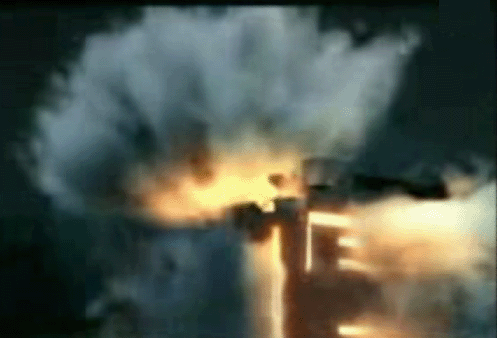
The Explosion of the Chernobyl Reactor in 1986
Then they add that a column of gas rose up to a thousand meters in altitude. Here is the image, first taken at night:
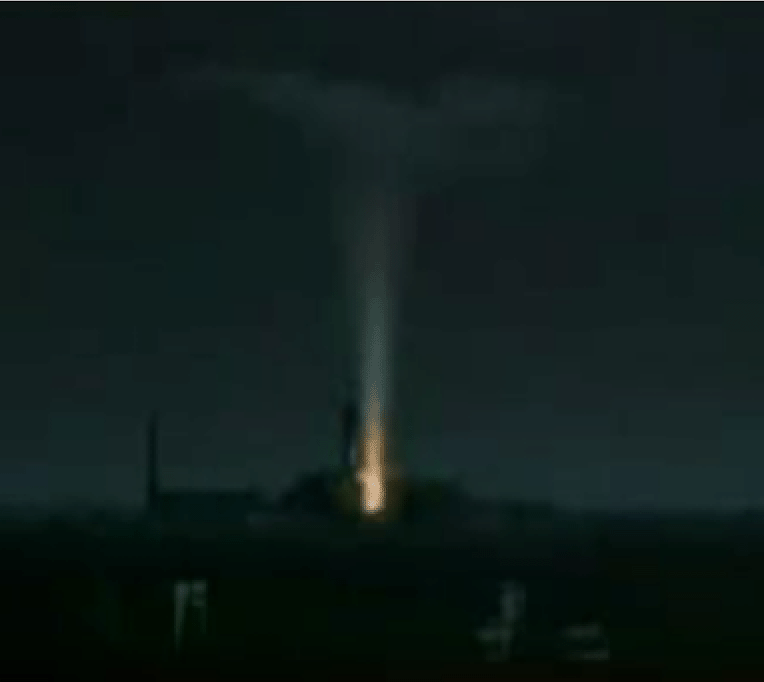
Glow above the Chernobyl Reactor, at Night
Then an image taken during the day:
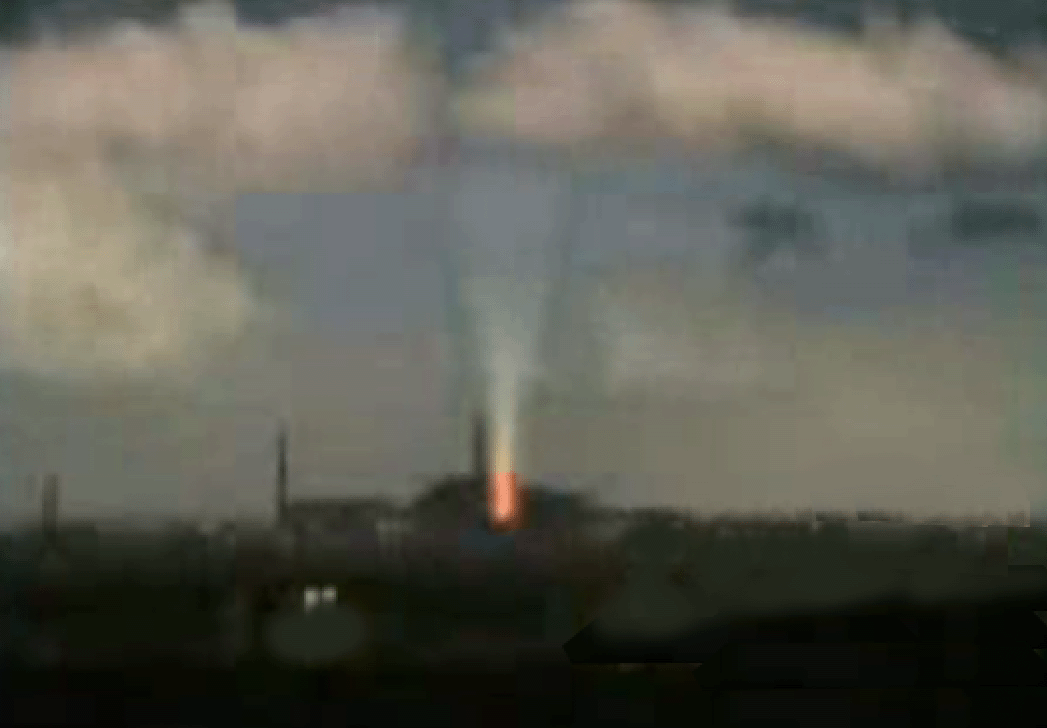
Glow above the Chernobyl Reactor, During the Day
This does not correspond to a vertical column of burning gas. Look at the image of the reactor taken immediately after the explosion, above. The building was completely blown apart. Only a crater remains. If it were a column of burning gas, what gases would it be made of? Where would they come from? Since this phenomenon persisted, it couldn’t have originated from a gas emission from the reactor. If gas were rising, it could only be superheated air, which would first descend toward the heat source due to air suction, then create a turbulent upward column—not this straight, upright glow (especially not in the daytime photo). This glow is the ionization of air caused by intense nuclear radiation. Listen to what a technician says at the beginning of the film:
- "There were all kinds of colors. Orange, blue. A real rainbow. Honestly, it was... very beautiful."
An ascending column of air does not have a bluish hue. I believe specialists in ionizing and nuclear radiation could assess the emitted power from this photo—power that must have exceeded imagination. This supports the claims of a French engineer who had been part of a military mission that brought a robot to the site to take measurements. The robot’s measuring system reached maximum capacity, and the machine stopped dead—“killed instantly.” Refer to the film available on Dailymotion. The robots sent by the Russians onto the reactor roof, littered with radioactive debris, quickly failed, their remote-control electronics rapidly damaged. These robots had to be evacuated in turn, becoming additional debris. The solution found was then to use 500,000 "human robots"—reservists recalled and sent to the site. By limiting their exposure to 45 seconds, they could, protected only by a crude suit made of 25 kilograms of lead sheets, quickly scoop up two shovelfuls of debris and throw them overboard, where teams working below would collect them (again, with limited exposure). A large number of these "nuclear heroes" died or are already cancerous. Russian official statistics minimize the number of affected people outrageously—everyone knows this now. It is a chapter of Russian history that current leaders want "forgotten."
We must reflect on these images and remember the figures presented in the film. There remains 100 kilograms of plutonium in the core. According to a Russian specialist, this is enough to kill "hundreds of millions of people." The issue of irreversible contamination of the groundwater has been raised in the documentary. It reminds us that plutonium has a half-life of 248,000 years—meaning that in 248,000 years, half of the buried plutonium will have decayed. This means that on the scale of human lifespan, this threat will loom... eternally. Gorbachev says: with Chernobyl, we had a small preview of what nuclear war could bring. If I recall the figures correctly, each Russian multiple-warhead missile, such as the SS-18, carried enough destructive power equivalent to 100 Chernobyls. And the Russians had, if I’m not mistaken, twenty thousand such weapons.
Did you notice the comment about soil decontamination? Initially, radioactive dust settles on the surface. Then it can be collected and buried at sufficient depth. But if this isn’t done immediately, other agents take over—deeper down. These are... earthworms. For twenty years, their work has brought radioactive substances down to 20 cm depth. The same thing happened on Gruinard Island, England, where the army had spread anthrax spores during World War II to test the effect of biological weapons on sheep. The British considered this ultimate defense weapon for use against a German invasion. The anthrax spread across the soil, but over the years, earthworms carried it down to 20–50 cm depth. Decontamination of the island thus became simply... impossible, given the volume of contaminated soil. At Chernobyl, given the vast area affected, it is out of the question to dig up and bury soil from 20 cm deep or more, or even dump it at sea. The cost would be prohibitive. Therefore, people across Ukraine and neighboring countries, affected by this pollution, must learn to live on soil contaminated deep underground by radioactive waste, which plants absorb through their roots. They must consume food grown in this soil, now also radioactive, for... thousands of years. All this because a single reactor exploded.
French public authorities and the CEA constantly tell us that nuclear energy is an unavoidable evil. The Russians, meanwhile, have decided not to build any more reactors. Will we need our own Chernobyl before understanding that these plants are potential bombs?
Anti-nuclear protesters, who demonstrate periodically, are now seen as fanatics (just like GMO opponents). They’ve become part of the folkloric scenery of French political life. But the average citizen doesn’t truly grasp the gravity of these issues. France hosts staggering amounts of radioactive material at its La Hague reprocessing plant. There’s enough to kill hundreds of millions of people. At this facility, radioactive waste is "packaged." No one dares imagine the impact of a terrorist attack on such installations.
I have a friend who is a retired researcher (formerly in nuclear research) and who tried for years to draw attention to this danger. He eventually gave up his crusade, tired of speaking to small groups whose members remained, in the end, indifferent.
I remember being told that France declared itself involved after Chernobyl in building a multi-containment reactor designed to study "nuclear incident dynamics." No country had agreed to host such a dangerous test facility. But the French, attracted by the money other countries were ready to offer, considered building such an installation on French soil at Cadarache (in Provence, 40 km north of Aix-en-Provence). I don’t know what became of this project, which some hundred anti-nuclear activists protested against at the time, facing rows of CRS police.
I understand that building such a facility follows a certain logic. But then, let’s choose... the Kerguelen Islands, not the heart of Provence. I recall that the Chernobyl disaster resulted from an experiment aimed at modifying the operating mode of this plutonium-fueled reactor to... save money.
I wrote a book titled "Children of the Devil," which traces the shift following the Manhattan Project and the nuclear era’s intrusion into the global technological-scientific landscape. It is now freely downloadable on my website. When it was released in 1995, the press remained completely silent. In fact, I had written the book in 1986 at Robert Laffont’s request (the publisher). But terrified by its content, he refused to publish it. The book only appeared nine years later, with Albin Michel, and is now out of print. I keep thinking about the preface I wrote, evoking the myth of Cassandra, the Trojan woman whom Apollo endowed with the power to predict the future, but cursed so that she would never be believed. Her brother, Laocoön, a priest at the time, was the only one to hear her message. But serpents sent by the gods emerged from the sea and strangled him. Thus perished my Russian friend Vladimir Alexandrov, assassinated in Madrid for trying, too early, to alert the world to the phenomenon of nuclear winter he discovered with his collaborator Stenchikov, both meteorologists in Moscow.
After Me, the Deluge
The longevity of the sarcophagus imprisoning the reactor remains will never match what is expected of it:
protecting the surroundings from radioactivity that will remain active for 100,000 years—beyond any human history.
Concrete structures are reliable only for a few decades.
Atmospheric oxygen attacks internal structures and oxidizes them irreversibly.
Concrete itself is not chemically stable.
We need a structure more durable than the Great Pyramids. Gorbachev issued a warning and drew conclusions: we must find alternatives to nuclear energy. All this could happen again tomorrow, anywhere.
All it takes is for power plants to stop being properly maintained and become obsolete.
Only complete, unconscious fools can extol the virtues of nuclear energy (no greenhouse effect!).
A Russian cameraman, Vladimir Shevchenko, filmed the first days of the Chernobyl disaster. He was given access to everything and went to the site wearing only a surgical mask for protection. He was irradiated to the maximum and died a few weeks later from widespread cancer. All the people seen in his film are likely dead, especially those working at the hottest locations. The radiation dose recorded was a million times higher than normal—but it was considered "acceptable." Indeed, the Russians, facing the risk of the "Chinese syndrome," had little choice. Since robots kept failing, their electronics fried by radiation, they used humans who also failed—but "later."
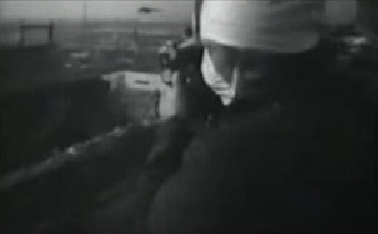
Vladimir Shevchenko filming debris from the reactor up close. He died two weeks later. His camera was buried radioactive.
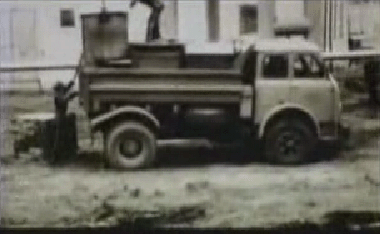
Firefighters arrived first on site. Their trucks, still left at the scene, remain too radioactive to approach.
On the right: workers building a concrete slab under the reactor to prevent the core from sinking into the Earth’s depths. None survived.
Chernobyl stands as a reminder that the danger inherent in nuclear energy is terrifying and ever-present. As a French engineer who worked on-site as a robot specialist once told me: "If any country can no longer afford to maintain its reactors, then there will be a risk of new Chernobyls." This doesn’t stop, for example, the French from declaring readiness to build reactors wherever people can pay—like in Maghreb countries. Imagine the situation decades from now, when these people can no longer maintain these plants. But it’s "after me, the deluge."
These images are a faint echo of what could follow a nuclear war, where, to quote Einstein, "the living would outnumber the dead." We face a widespread recklessness in many areas, driven by short-term profit and the desire to possess "defensive weapons."
The documentary:
http://leweb2zero.tv/video/hugues2_3047ab5b574fa12
Michèle Alliot-Marie, former Minister of National Defense