A chronicle of an announced catastrophe
A chronicle of an announced catastrophe
March 15, 2011
In 2006, a Japanese expert, member of a commission tasked with revising the arrangements planned for Japanese nuclear power plants (the one that was recently hit had been built 40 years ago), resigned from the commission, considering that his repeated warnings had not been taken into account, due to the irresponsibility of the private company managing the sites, and the government authorities; because of the "profitability of the facilities".
Here, the jackpot was won: no matter what happens, the affected reactors, where seawater was injected, will no longer be able to be put back into service.
"Unless drastic measures are taken to reduce the vulnerability of power plants to earthquakes, Japan could experience a real nuclear catastrophe in the near future."
the article in English and its French translation by Turiya
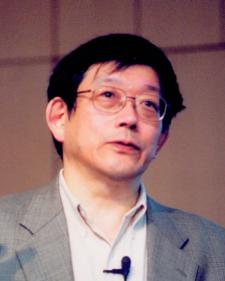
| "Unless drastic measures are taken to reduce the vulnerability of power plants to earthquakes, Japan could experience a real nuclear catastrophe in the near future." This warning comes from an article published on August 11, 2007, in the International Herald Tribune/Asahi Shimbun ( | ). Its author is seismologist Ishibashi Katsuhiko, professor at the University of Kobe (his biography can be read here). | Ishibashi Katsuhiko. | Ishibashi Katsuhiko was part of the expert committee responsible for setting seismic standards for Japanese nuclear power plants. He resigned in protest against the committee's position. | He considered that the recommendations set by the committee were far too lenient. | In other words, Professor Katsuhiko had predicted what is currently happening at the Fukushima plant. He had warned the authorities of his country that Japanese nuclear power plants suffered from a "fundamental vulnerability" to earthquakes. | But his warnings were ignored by both the government and Tepco (Tokyo Electric Power Company), the world's largest private electricity producer, which operates a third of Japan's nuclear power plants, including Fukushima. | Katsuhiko raised his alarm in 2006, the year when Japanese seismic safety standards were strengthened. | According to the seismologist, this strengthening was still very insufficient. | The facts proved him right the following year. On July 16, 2007, an earthquake of magnitude 6.8 caused serious incidents at the Kashiwazaki-Kariwa nuclear power plant, the largest nuclear power generating unit in the world. This plant is located on the island of Honshu, the main island of Japan, as almost all Japanese nuclear power plants, which surround the three largest cities in the country, Tokyo, Nagoya and Osaka. | Before the July 2007 earthquake, another had occurred in August 2005, affecting the Onagawa plant, north of Fukushima; another one in March 2007, with the epicenter 16 kilometers from the Shika plant. And it repeated the following year, with a 6.8 magnitude tremor east of Honshu, near Onagawa and Fukushima. Even though there were no major damages, Tepco reported three radioactive liquid leaks at Fukushima Daini. | Thus, the accident that has just occurred at Fukushima cannot be considered a real surprise, even though it caught the plant operators and authorities off guard. | This accident is a much more serious repetition of events that have occurred at least since 2005. | Ishibashi Katsuhiko had analyzed the risk, explaining that in the different cases, "the seismic movement on the surface of the ground caused by the earthquake was greater than the maximum expected in the plant's design." | During the earthquake that affected the Kashiwazaki-Kariwa plant, the peak seismic acceleration was more than double the value the plant was supposed to withstand. "What happened at Kashiwazaki-Kariwa should not be considered unexpected," wrote the seismologist. |