Troubles in the Sky – Reading Note
March 25, 2007 – Revised March 28, 2007
Jean-Jacques Velasco has just presented his latest book, "Troubles in the Sky," on the March 21, 2007 episode of France's "L'Arène," where host Stéphane Bern introduced him as a "physicist."
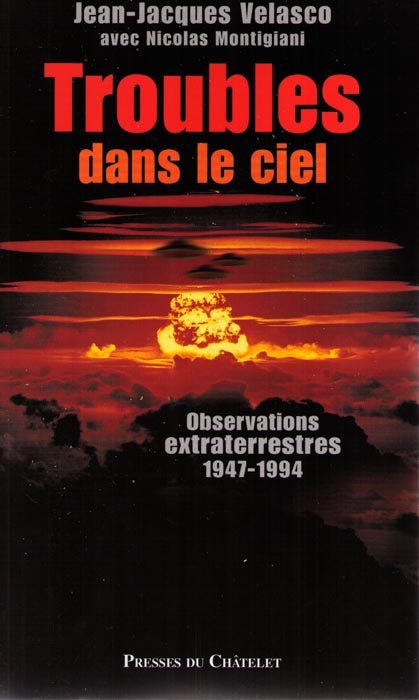
Passages from the book will be italicized. Those marked in red will be commented on later. In English, such passages would be described as "questionable," meaning "dubious."
Let us first examine what the back cover says:
Do UFOs exist? What are they? What connection can be established between them and us?
For nearly thirty years at CNES, Jean-Jacques Velasco examined the most unusual cases of unidentified aerospace phenomena, interviewed hundreds of witnesses, and conducted some of the most advanced scientific analyses ever carried out.
In this book, written in his personal capacity, he presents one of the rare global investigations dedicated to unidentified flying objects.
The author analyzed thousands of pages of declassified historical military and civilian U.S. documents related to UFO sightings detected by civilian and military radars, drawing conclusions that follow inevitably. He particularly highlights the links between nuclear tests and the appearances of these curious craft.
Born in 1946, Jean-Jacques Velasco was responsible at CNES for GEPAN, later renamed the Service d'Expertise des Phénomènes Rares Atmosphériques (SEPREA), from 1983 to 2004. Among his notable works are: Ovnis, la science avance (Robert Laffont, 1993).
Investigative journalist Nicolas Montigiani is the author of books related to the strange and unexplained, including Crop Circles, Maneuvers in the Sky (Carnot, 2003) and Project Colorado: The Existence of UFOs Proven by Science (JMG Éditions, 2006).
We will provide some commentary, with examples, on how these so-called "most advanced scientific analyses ever conducted" were actually carried out, and how, in this regard, the investigations conducted within GEPAN and later SEPREA were frequently conducted contrary to common sense, losing valuable data through incompetence.
On the back cover, we immediately notice a change in the interpretation of the acronym SEPREA, shifting from "Service d'Expertise des Phénomènes de Rentrées Atmosphériques" to "Service d'Expertise des Phénomènes Rares Atmosphériques." This change occurred in 1999. The explanation is simple: in the only case where J.J. Velasco actually intervened and which was a genuine atmospheric reentry event—on November 5, 1990—he produced an "expertise" based on coordinates of pre-entry overflights provided by NASA, resulting in a completely fantastical trajectory with an error of 200 kilometers, likely obtained using a globe and string rather than an orbitography software. This point was highlighted years later, in 1997, by Marseille ufologist Robert Alessandri, who used proper software. Stunned by the inconsistency of Velasco's expertise, he titled his article in a limited-circulation journal—of which only three copies were produced—"When CNES Hires Charlatans." Velasco then sued Alessandri for defamation, winning both at first instance and on appeal, obtaining 5,000 euros in damages and interest. As soon as the judgment was published, he seized Alessandri's bank account. The fine was covered by a fundraising campaign launched on my website. Fearing that the public might truly realize that this "expertise service for atmospheric reentry phenomena" wasn't actually one, CNES discreetly changed SEPREA’s name.
Introduction
Pages 9 to 14, signed Nicolas Montigiani
On page 11, it is recalled why Velasco was recruited into GEPAN’s team, when the group was still led by its first head, engineer Claude Poher, former director of the "rockets-sounding rockets" department at CNES (meteorological rockets). The goal was to develop an apparatus called "Simovni." This device was inspired by the eyeglass helmet originally invented by the Lissac brothers’ optical house. In this case, it was fitted onto a client’s head, and lenses of varying curvatures were slid in front of their eyes to determine the correction needed to improve visual acuity. Simovni was a similar helmet. The witness would direct their gaze toward the direction of their observation, and the operator would slide different slides in front of their eyes, superimposing them onto the background scene until the witness said, "Yes, that’s exactly what I saw."
Page 12:
In November 1978, Claude Poher left his position.
He was succeeded by Alain Esterle, a polytechnician engineer. Under him, the team worked within a more elaborate methodology. Prejudices fell one after another (...).
In 1983, Esterle was called to other responsibilities within CNES.
In fact, Esterle was reassigned following a report by René Pellat, who had visited the site and observed the incredible mess resulting from Esterle’s attempt—with the help of engineer Bernard Zappoli—to develop ideas I had brought forward, but without my involvement, at the Toulouse CERT (Centre d'Étude et de Recherches Techniques). Refer to "Investigation into UFOs," page 88, downloadable for free at:
http://www.ufo-science.com/fr/telechargements/enquete_sur_les_ovni.htm
In this book, first published in 1988, the "UFO study group" refers to GEPAN. By glossing over Esterle’s reassignment within CNES, Velasco contradicts himself. One need only refer to his earlier book, Ovnis, l'Evidence, co-written with Nicolas Montigiani. Page &&& (a reader will send me the exact page; I don’t have the book at hand, and I can’t locate the passage). Velasco mentions the visit of a high-level scientific figure (in fact, René Pellat, as director of scientific projects at CNES, dispatched to the site by CNES director Hubert Curien at the time). After this visit, Esterle was visibly unwell and explained to Velasco that he would succeed him (&&& I don’t have the exact text at hand; a reader will send it).
Page 13: The introduction clarifies that the purpose of creating this group within CNES was to conduct research scientifically.
Later on the same page, Montigiani writes:
Today SEPREA no longer exists.
Velasco has been called to other duties within CNES.
What duties? The answer is provided by Yves Sillard, former president of CNES in 1977, in a long telephone conversation from January 2006. He told me: "Velasco now oversees youth clubs sponsored by CNES that conduct launches of small rockets."
The rest of the introduction explains what has taken over SEPREA’s role:
On September 22, 2005, the first meeting of the successor organization was held. Its name: GEIPAN — for Groupe d'Étude et d'Information sur les Phénomènes Aérospatiaux Non Identifiés. As in the days of GEPAN, a steering committee will supervise and control the activities of this service, led by engineer Patenet.
The chair of the committee is one of the "fathers" of the Ariane rocket, former general director of CNES, and former general delegate for armaments: Yves Sillard. Who could now dare claim that this phenomenon isn’t serious?
According to web sources, Patenet was a GEPAN collaborator in the 1970s. He had applied in 1983 to succeed Esterle, but CNES leadership preferred to entrust the role to Jean-Jacques Velasco. Thus, he reappears a quarter of a century later to reclaim leadership of the organization, just a few years before his retirement.
Regarding Yves Sillard, with whom I had a long phone conversation in January 2006, we should note that he has written his own book on UFOs, which should soon be available. Here are the details:
TITLE: "Phénomènes aérospatiaux non identifiés"
PUBLISHER: "Le Cherche Midi"
ISBN-13: 978-2749108926
PRICE: 17 euros
I will provide a reading note as soon as I have the book in hand. If any readers can obtain a copy, they may deposit it at UFO-science, 83 avenue d'Italie, 75013 Paris.
Chapter 1
Pages 15 to 38
Velasco first provides a classification of "PAN" (unidentified aerospace phenomena) into types A, B, C, D.
Page 21:
Generally, the scientific method leaves ample room for deduction, which in turn reinforces observation. Every scientific fact is reproducible at will. Finally, in science, only measurable facts exist.
And precisely, our PANs are resistant to any reproduction through scientific experimentation.
A fine epistemological flourish. Unfortunately, it is completely false. All our MHD research efforts aim toward at least a partial understanding of UFO behavior. It is thus possible that during their atmospheric evolution, certain maneuvers correspond to an MHD propulsion mode. This method involves creating a plasma around the craft. See below the appearance of a plasma—an ionized environment created in air by high-frequency energy.
Moreover, unexpectedly, we observe HF arcs, which could explain the "truncated rays" reported by some witnesses.
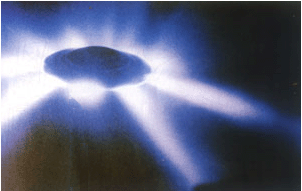
HF arcs generated by high-frequency energy
Those familiar with the UFO dossier will recall the photograph of the Albiosc UFO:

Albiosc UFO. Night of March 23–24, 1974
We are now on page 21. After having skimmed over some unflattering episodes from GEPAN’s history, in the following pages of the book, the word "scientific" recurs frequently and resonates like a kind of exorcism.
After recounting a few historical facts and mentioning Robert Galley, Minister of Defense, Velasco cites, on page 26, an excerpt from the June 20, 1977 report by IHEDN (Institut des Hautes Études de la Défense Nationale). If you wish to consult the unedited version of this report, go to section 8.13 of "Investigation into UFOs," available as a free PDF download or page 183 of the printed edition. In particular (page 186 of the printed version), you can read:
b. Scientific research.
The opinion of certain scientific circles that many other problems deserve study, and that any funding allocated to UFOs would be misused for more urgent research with clear outcomes, is understandable. Nevertheless, serious study of this phenomenon remains desirable and useful, as the scientific and technical outcomes from UFO-related research (such as Jean-Pierre Petit’s magneto-hydrodynamics) could prove significant for a budget that is not exorbitant.
..........
Page 32
End of this chapter. Velasco declares:
"I am now in a position to reveal decisive and often previously unpublished documents, the result of a long scientific study of unidentified aerospace phenomena over a period of fifty years—extensive data collection, investigations, and analyses (France and United States)."
A sentence designed to convince readers that, scientifically, everything was done according to best practices under the direction of Mr. Jean-Jacques Velasco.
Annex to Chapter 1: For Further Exploration – The GEPAN Investigation Method
Here, on page 34, Velasco reproduces what essentially represented the core contribution of polytechnician Alain Esterle during his leadership of GEPAN, when he defined the methodological foundations of investigations. It is the "tetrahedron method," which he presented in numerous conferences.
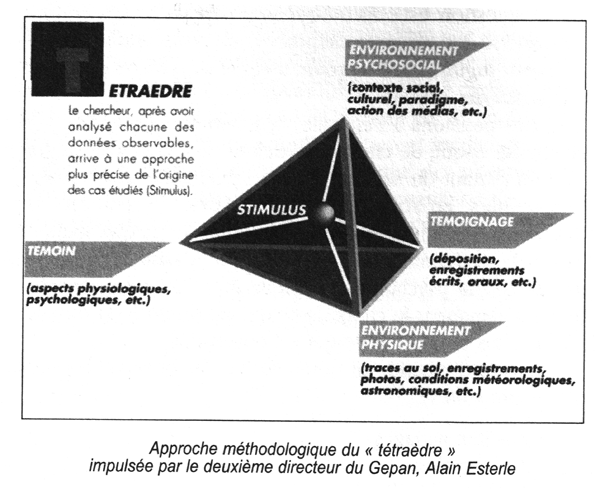
Esterle’s "polytechnician response" to the question: "What exactly is the UFO phenomenon?"
We have:
- The testimony
- The witness
- The psychosocial environment
- Ground traces
According to him, analyzing these four "components" should, he claimed, irrevocably trap the UFO phenomenon. Thanks to this "methodological net."
Chapter 2
Pages 39 to 60, titled "The Word to Statistics..."
In this chapter, Velasco emphasizes the role played by public services such as the gendarmerie. But he omits an important fact: In 1977, when Claude Poher led GEPAN, he immediately had an excellent idea and commissioned French optics company Jobin et Yvon to study "spectacle caps"—simple "grids" (a transparent plate with very fine lines acting as a prism, transforming any light signal into a "spectrum"). These caps were very inexpensive and could have been mass-produced for use in various photographic devices. It was decided at the time that only cameras belonging to gendarmerie brigades would be equipped with them. Thirty years later, Patenet told me on the phone—confirming what engineer Louange of Fleximage, CNES consultant and long-time GEPAN-Sepra collaborator, had previously told me—that he found no photographs of the spectral type in the archives, except those related to system calibration. In the gendarmerie units, these caps were lost or misplaced. No one knows their current whereabouts. Yet for 27 years, Jean-Jacques Velasco managed gendarmerie investigations. The search for these spectra, capable of providing crucial information about the chemical nature of the source, its temperature (Doppler broadening of spectral lines), and magnetic field strength (Zeeman effect), was essential.
Jean-Jacques Velasco will have great difficulty convincing us that he "scientifically managed gendarmerie investigations." Entrusting this task to gendarmes was itself a major error. Today, we will attempt, as best we can, to revive this idea. But instead of assigning the task of obtaining these images to gendarmes, we believe the entire population—indeed, even the general public—should have access to this simple and inexpensive technology. The idea would be to standardize not only digital cameras but also mobile phones with such a device, which users could activate with a simple thumb gesture.
I leave it to the reader to form their own conclusion.
Pages 46 to 58
We learn that the statistical studies conducted by GEPAN-Sepra align with those carried out thirty years earlier by the Swiss Batelle Institute for the U.S. government.
Chapter 3
Pages 61 to 84, titled "On the Wave..."
Velasco discusses the time spent exploring the strange cases documented during the 1954 wave, reviewing gendarmerie reports.
Pages 74 to 84
Reference to the Belgian wave, from November 1989 to November 1990. Let us first recall Velasco’s media response (there must be a record in television archives). During the peak of this wave, he was questioned by viewers and replied:
- SEPREA does not have the mission to study UFO cases occurring outside France.
It so happens that I followed this affair quite closely. I was present at a presentation given in Brussels before about fifty people by members of SOBEPS. The group found itself, by circumstance, at the heart of this story, where over a thousand people witnessed it—including gendarmes and military personnel. SOBEPS is essentially a private residence, a house belonging to a private individual: Lucien Clairebault. He provided the entire first floor of his home to an emerging association, allowing them to set up a meeting room and library. SOBEPS publishes a journal: Inforespace. They also received support from Auguste Meessen, professor at the University of Louvain, a physicist. Physicist Brenig, also a university teacher, regularly attended meetings held at SOBEPS’s headquarters—the home of Clairebault. This is an unusual situation where university professors lend their scientific credibility to a movement focused on the UFO phenomenon. Velasco writes in his book that the association was dormant before this wave. The wave brought its members into the spotlight and led Meessen and Brenig onto television screens. On March 31, 1989, the SOC (Combined Operations Service, under NATO command, led by Colonel de Brouwer) received a call from the Belgian gendarmerie reporting a UFO over the southern part of Brussels. After some time, de Brouwer felt it was his duty to order the two F-16s on permanent "readiness" (ready to take off) to launch, tasked with monitoring Belgian airspace. This was followed by a series of maneuvers I describe in greater detail in "Investigation into UFOs," in Annex 4. It was a press agency dispatch that drew my attention. After gathering some information, I convinced journalist Marie-Thérèse de Brosses, working for Paris-Match, to use her newspaper’s connections so we could interview de Brouwer.
He indeed received us at his headquarters. We began discussing. When he learned that I was a pilot, had served as a French Air Force lieutenant, and had directed radar calibration operations, he suddenly said:
- I don’t have the defense minister’s approval, but I’ll take responsibility to show you the F-16 black boxes.
And so, Marie-Thérèse de Brosses, her young nephew (photographer and sound recorder), and I descended into the headquarters’ basement, where de Brouwer played on screen, with sound, the entire sequence as seen by the pilot monitoring events on the aircraft’s radar. We heard the pilots’ conversations in English with a Belgian accent. I told my nephew: "Take photos, for God’s sake, record it!" But the young man did nothing, merely replying, "It won’t show anything."
Those familiar with the story know that we published a full double-page spread in Match, featuring two radar screen photos. I took those photos myself using a camera I happened to have brought along. As we left, I scolded the nephew, who stammered, "But I didn’t know..." The article was obviously written by me that same evening on Marie-Thérèse de Brosses’s Macintosh. For content, refer to the annex of my book. The article caused a stir. The magazine Science et Vie retaliated, using a photo provided by the U.S. military, showing for the first time in its June 1990 issue the F-117 from the front. The magazine’s cover headline read: "The UFO is him!"
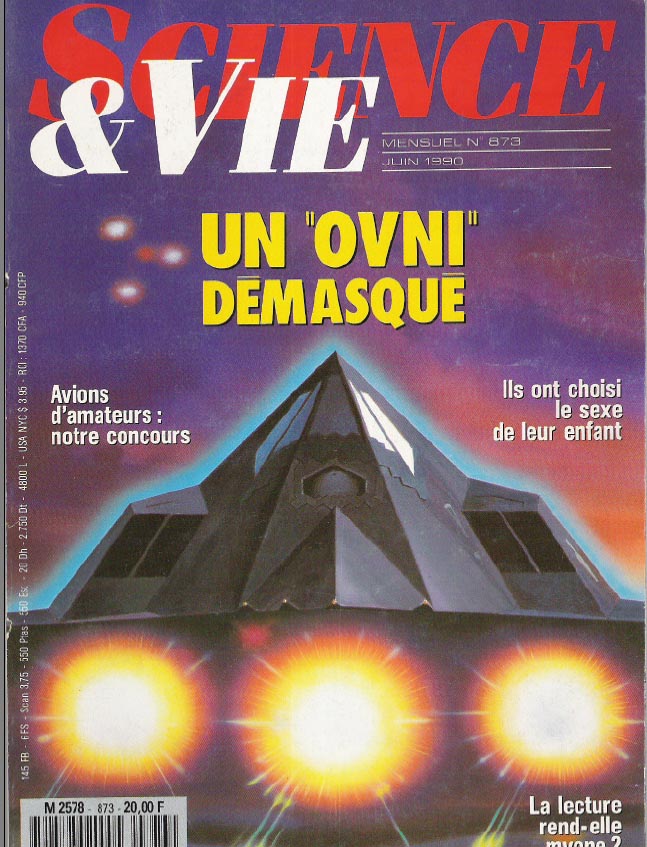
At the same time, shortly before the magazine’s release, using a CAD software I had designed and based on a sketch found in a U.S. magazine, I reconstructed the F-117A quite faithfully. To counter Science et Vie’s article, I presented a model I built at J.T., invited by Poivre d'Arvor.
In Brussels, SOBEPS members showed us an astonishing photo taken by professional photographer Patrick Ferryn. This was the period when a UFO appeared with remarkable regularity in a narrow strip about 20–30 km long and 5 km wide. When visitors came to Belgium, locals would say:
- It’s about time. It won’t be long now. Just wait here.
During one of these trips between northern Eupen and the German border, Ferryn took several photos. This wasn’t the famous triangular craft, but a dark, crêpe-like object with what looked like "four truck headlights" arranged in a line. After taking his shots, Ferryn, as a professional, decided to go to the nearby airfield and finish the film by photographing aircraft landing lights for comparison. Then he returned home and developed the film himself. And there, surprise: while the aircraft lights were clearly visible, "the UFO’s" lights seemed to have vanished. By pushing the development further, four faint reddish spots became visible. I’ve seen the photos. Meessen then had an interesting idea. He conducted experiments showing that visible images can be "inhibited" if the source emits infrared radiation. To demonstrate this, he photographed a colored spectrum in two scenarios: with and without an infrared source placed next to it. The photos showed that infrared radiation could erase much of the colored spectrum. This would explain why some people who photographed UFOs returned empty-handed, convinced they had just dreamed it all. Simply because a strong burst of infrared radiation erased the UFO’s own image.
Below is a drawing corresponding to Ferryn’s description at the time:
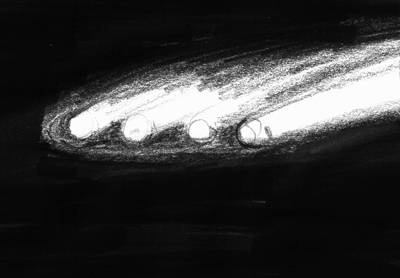
The UFO as seen by Patrick Ferryn, as he described it to me, whose image almost completely disappeared on film
The object was approaching the observer.
Velasco mentions a session where SOBEPS presented the results of their studies on this wave. Meessen presented his analysis of data recorded by the F-16s, provided by Belgian military personnel. He claimed to have analyzed everything on his small Macintosh, and with images in hand, launched into explanations that seemed very confusing to us. This is far less clear than his infrared story of erasing images on film. I confided my doubts to Colonel Schweicher, present at the meeting and a professor of radar techniques at the Royal Military School of Belgium. Later, we had a phone conversation. He then told me that the military high command was dissatisfied with Meessen’s analysis and decided to remove the file from him and assign it to a young military engineer. This engineer wrote a military engineering thesis on the subject. Schweicher later handed me this document during a new meeting in Brussels, introducing me to its author. The radar recordings were fully decoded for one of the nine UFO passages. The flight paths of the approaching aircraft and the evading UFO were located in nearly orthogonal planes. The F-16 banked to pursue the craft, but the pilot quickly abandoned the chase upon realizing it would bring him too low, where the UFO soon disappeared from his onboard radar. This maneuver repeated nine times, with three successful radar lock-ons on the target.
Below, from memory, is the result of the meticulous analysis conducted by Belgian military engineers:
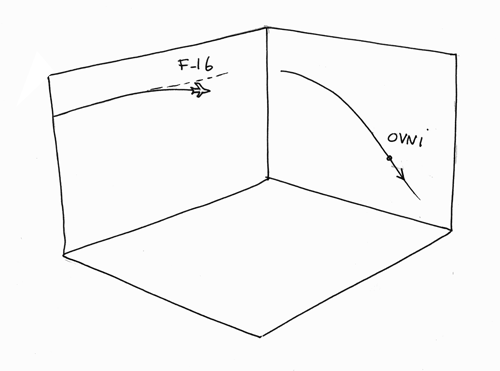
Belgium, night of March 30–31, 1990: The UFO dives toward the ground to escape the F-16
In his book, Velasco expresses strong reservations about this Belgian wave, basing his criticism on "his knowledge of aviation." Everything indicates that he did not study the entire dossier and its various aspects, instead making superficial critiques—just as he criticizes others—without truly examining the facts or the entire (staggering) set of observations reported. No, it couldn’t have been a "stealth" craft. Such an aircraft didn’t exist at the time and still doesn’t today, capable of outrunning F-16s by accelerating to 40 g, diving toward the ground at 2,800 km/h without sonic booms, while remaining completely silent and able to hover in place. These hasty, even outright absurd conclusions discredit the expert he claims to be.
Chapter 4
Pages 85 to 107, titled "I Open My Files"
This chapter, along with some earlier ones, gives the entire book an anecdotal character. For example, here we find four rather colorful, ultra-classic cases beloved by enthusiasts of such stories (Soccoro, Valensole). But through reading his book, the author fails to convince me of the excellence of his approach to the phenomenon. At least not for me. My opinion remains unchanged from what I formed after reading "Ovnis, la science avance (...)" (1993), co-written with journalist Jean-Claude Bourret, and "Ovnis, l'évidence" (2004). The next chapter, when one knows the actual facts and simply takes the time to read the text, reveals how GEPAN-Sepra, after capturing exceptional information through the skills of a talented biologist, allowed this chance to finally place the UFO phenomenon "between slide and slide" to slip completely away.
Chapter 5
Pages 109 to 140, titled "The Rare French Cases Classified as UFOs"
Immediately, the "main course": the famous 1981 Trans-en-Provence case. See GEPAN Note No. 16, republished on the GEIPAN website, downloadable in PDF format.
Page 110: Velasco claims full credit for this exceptional result, the product of sheerest chance.
Once again, exemplary work by the gendarmerie, the investigation conducted by GEPAN, the rigor of analyses performed by multiple scientific laboratories...
To our knowledge, only one laboratory was involved in this case: Michel Bounias’s at the National Institute of Agronomic Research in Avignon.
Page 113, we read:
The gendarmerie’s action
According to the "gendarme manual," the site will be isolated, the trace observed and examined, photos taken, samples collected. CNES is alerted (by telegram on January 12). The witness is interviewed.
Some clarifications are needed. GEPAN did indeed issue instructions to the gendarmerie. Regarding interventions in cases of "UFO landings," it had specified: "Investigators should only intervene if there is more than one witness and if it has not rained." Velasco’s narrative suggests that the success of this investigation stemmed from procedures implemented by CNES based on the "tetrahedron methodology." The reality is entirely different. Nicolaï did not spontaneously report to the gendarmerie. He was contacted by a gendarme after his wife confided in their neighbor. We owe this truly exceptional analysis to the initiative of that gendarme, who, on his own, collected samples of lucerne from within and outside the trace, taking along the soil with the plants—fortunately moist due to rain that had fallen after the event. The samples reached Dr. Michel Bounias’s lab twenty-one days after collection. Velasco describes him as "head of the plant biology laboratory at the National Institute of Agronomy" (INRA Avignon). In fact, Bounias completed his thesis at CES studying the effects of ionizing radiation on plants. He conducted a rapid analysis and detected a significant difference in the pigment equipment of lucerne samples collected inside and outside the trace. He then requested that new samples be collected at increasing distances. All this is discussed in "Investigation into UFOs," in the printed version on pages 120 and following, and in the PDF version on pages 75 and following. Here is a typical appearance of the analysis results, extracted from a GEPAN note.
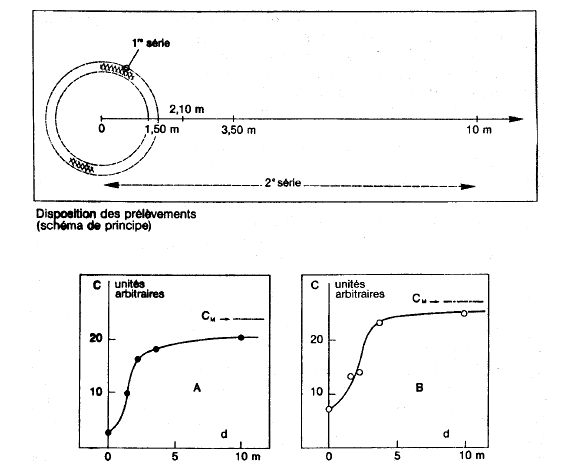
Analyses by Michel Bounias, 1981. Top: lucerne sample collection points. Bottom: variation in pigment equipment of the plants
One thing to note: the samples were taken in only one direction—along the ridge. We will never know what the values of the lucerne parameters were in other directions. See diagram.
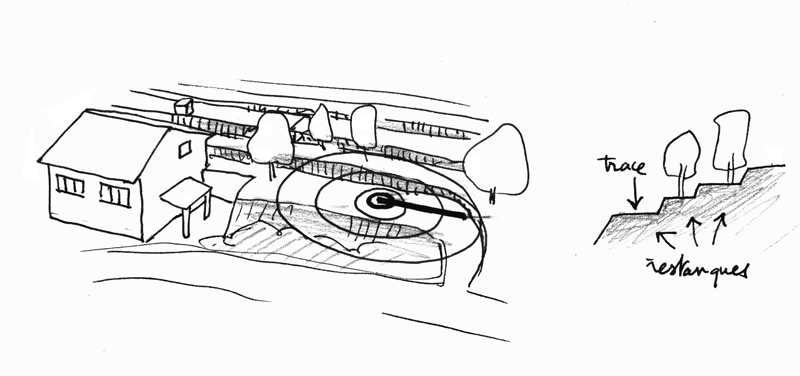
Trans-en-Provence site. Impact point. Thick circle: trace. Dark line: location of lucerne sample collection
Explanation: areas on other ridges are "outside the tetrahedron." Yet on page 118:
"Vegetation samples (collected according to a rigorous protocol) were entrusted to Professor Michel Bounias, head of the plant biochemistry laboratory at the National Institute of Agronomy."
Page 120:
"Michel Bounias applied the procedures developed (...) and approved by GEPAN’s scientific council. These procedures are based on the 'double-blind' experimental method: samples are collected from the area in a geometrically designed distribution. Of course, control samples are collected outside this zone. The laboratory had no precise knowledge of the sample or its collection location."
These lines give the impression that Bounias followed GEPAN’s directives. In reality, it was exactly the opposite. I have never heard Michel mention the double-blind technique. Regarding this, I quote a comment from a reader familiar with such methods used in biology:
Regarding the double-blind method:
Double, meaning neither the doctor (analyst) nor the patient (the one providing their subjective experience) knows whether they are or are not taking active medication...
Regarding the alfalfa... I don't know whether the alfalfa knows or not whether it has been touched... and whether it expresses its subjective experience...
Unless the second blind person is the one interpreting Bounias's report... meaning CNES via Velasco/Esterle.
The entire discourse is incoherent. Note the phrase "geometrically elaborated distribution." These are just words, smoke and mirrors. The gendarmes returned to the site and collected samples from the restanque because they had no desire to complicate their lives by drawing concentric circles with a string and carefully noting the positions of the samples. Moreover, the sampling at increasing distances from the center of the trace, apart from the fact that the gendarmes carefully limited it to the "restanque," the horizontal earthen platform, was carried out only in a single radial direction.
It would have been judicious to also collect alfalfa samples at the same distances in the opposite direction, which would have allowed comparisons between two points equidistant from the epicenter, thereby improving the signal-to-noise ratio.
This reminds me of the story of people asked to "guard the entrance of a tunnel" who don't realize a tunnel has... two entrances.
In conclusion, this "tetrahedral" methodology, this "rigor," these "procedures" are nothing but smoke and mirrors. One would have to be doubly blind not to notice.
On page 118, we read:
"Two years after Gepan's investigation, INRA will carry out another series of samplings on the site. Analyzing them, one will realize that the effects have practically disappeared."
It was not INRA that carried out these samplings, but Bounias himself, on his own initiative. At the time, he was surprised that Gepan no longer showed any interest in following up on this matter. But he had already been rebuffed, as I was, by CNES, after we jointly proposed a reenactment of the observed effects by exposing control alfalfa to pulsed microwaves using a small tabletop source.
On page 116, Velasco writes:
"Scientific analyses and their results"
When I examined the trace on the ground, I observed soil compaction and the presence of grooves in two opposite locations on the crown. I conducted a topographic survey, took photographs, and collected samples (soil and wild alfalfa)...
The text gives the impression that the author conducted these analyses "scientifically." The reality is entirely different, but Bounias, deceased, is no longer there to contradict it. In fact, when considering the Trans-en-Provence incident (1981), its chief, the Polytechnic Alain Esterle, was still in office. Jean-Jacques Velasco does not associate Esterle's name with this case. Esterle would not leave the service until 1983, as recalled on page 12 of the book. Velasco maneuvers to claim all the credit for this case, which is the only one in thirty years of CNES service that produced a result one could qualify as scientific. In 1981, a mere technician, he was merely Esterle's assistant and seems to have forgotten that now. Before leaving Gepan, during its complete collapse, Esterle left behind one final technical note, number 17, thanks to which this case became known. In 1981, Gepan was on the verge of sinking, Esterle and his assistant Zappoli having completely failed in their attempt to implement MHD research at the Cert of Toulouse, based on my ideas and work.
Before moving on to the second part of this chapter, let us recall that after the Trans affair, where Bounias spoke imprudently in the media, he found himself caught in a crossfire from his superiors, quickly lost his personnel, funding, research resources, and office space. He ended up confined to a simple office within the premises of the University of Avignon, despite Velasco describing him as "the head of the laboratory of plant biology at the National Institute of Agronomy." He died prematurely of cancer in 2005, and I claim this is not unrelated to the treatment he endured for having violated the taboo. A quarter of a century later, Velasco crowns himself, without a trace of remorse or decency.
When I mentioned this tragic outcome to Sillard in January 2006, he told me he had not been informed of any of this and was "sorry."
Eighteen months later, in October 1982, a second close encounter case occurred, very near the ground, known as the "Amarante" case, located in the Nancy region. See pages 121 and following in Velasco's book. A biologist observed during broad daylight a strange object descending, resembling the one from Trans, with the shape of a Camembert box whose base was bulging. The object's proximity was astonishing: one meter. The observation lasted twenty minutes. The witness dared not touch the object but approached it to half a meter. Let us quote a passage from the book:
A bit of psychology...
The witness cooperated with the gendarmerie. For the Gepan investigation, Mr. Henry (pseudonym), punctual at our appointment, expressed satisfaction with the investigation's execution, surprised by the speed of the intervention. He stressed his desire to cooperate fully with us (a favor among scientists, he said).
Efficiency, speed of intervention. The reality is entirely different.
Let us be logical. The previous case, Trans-en-Provence, had revealed something unexpected and astonishing: UFOs leave biological traces, not only significant but also long-lasting. The samplings carried out by Bounias himself showed that the site took months to return to normal conditions. It took that long before the biological trace disappeared, astonishingly well correlated with distance. Everything indicates that this phenomenon was caused by a radiation emanating from the center of the trace, at least according to measurements made only in a single radial direction. Bounias could not see what kind of radiation could produce such pigment alterations. Based on studies conducted at the CEA, he specified that to achieve such modifications with ionizing radiation, the dose would need to reach 100 megarads. He saw no chemical agent responsible.
Bounias had indicated the procedure to follow for any future case of this kind. Above all, one had to preserve the information, and to do so, one had to collect the samples immediately by freezing them in liquid nitrogen. We will see later how things actually unfolded.
How did Gepan handle this new UFO case, where Velasco claims he intervened very quickly? Let us refer to the content of technical note number 17, published on March 21, 1983, by Gepan, and now downloadable from the Geipan website. The note, titled "Amarante," spans 70 pages. Let us go straight to the essential, the plant sample collection, described on page 45:
"On the morning of October 22, 1982, the gendarmerie collected the entire upper part of the stems (stem, sheaths, flowers) involved. The samples were immediately packaged, meaning placed in sealed, airtight plastic bags."
We assigned these samples the reference number 24.
Other damaged plants were simultaneously collected and placed loosely in open plastic bags. We packaged these samples on October 29 (a week later) and assigned them numbers 21 and 22.
Outside this area where the samples were collected, the gendarmerie carried out additional samplings in the flower cluster, selecting undamaged plants. Samples numbered 23 and 25 were collected on October 27 and placed in sealed bags.
V.II.2 COLLECTION OF THE SECOND SERIES OF SAMPLINGS
A) Samplings related to the mechanical behaviors observed on the lawn surface.
- These samplings were carried out on October 29, 1982, at 2 p.m. Grass samples were packaged in numbered, airtight plastic bags.
VII.3 TRANSPORT AND PACKAGING
The first series of samplings collected on October 22 and 27 were packaged in plastic bags and kept by the gendarmerie in a refrigerator (vegetable drawer) at a temperature of +4 to +5°C.
The second series, collected on October 29, 1982, packaged in airtight plastic bags, was immediately placed into liquid nitrogen tanks to maintain low temperature during transport to Toulouse.
On the morning of October 30, all plant samples were placed in a freezer and maintained permanently at -30°C.
On page 61 of Gepan technical note number 17, the results of the analysis conducted at the Plant Physiology Center of Paul Sabatier University (Toulouse Rangueil). The following text was written by two researchers, Messieurs ABRAVANEL and JUST.
... Having not had control over the sampling and, to best capture the transient phenomena that might have influenced plant metabolism, we limited our analysis to the two samples collected by the gendarmerie on October 22, 1982 (24 hours after the observation) from a cluster of amaranth showing signs of desiccation.
(i.e., see above, the elements immediately packaged in sealed, airtight bags)
These samples consist of stem tips bearing the flowering stalk, with roots excluded.
The condition of the samples prevented us from conducting a quantitative analysis.
...
IX.3 DISCUSSION:
The results presented call for several observations:
- As in any analysis, mastering the sampling and preservation of samples is essential to ensure the validity of conclusions drawn from analytical results. In our case, considering the methods we commonly use, we chose samples 22 and 23 as they seemed closest in time to the phenomenon, and we hoped to detect significant differences (between plants near the object and those at a distance).
In reality, it has long been known that cold storage at +4°C followed by freezing at -30°C is insufficient to halt enzymatic activity and thus fix the sample. Therefore, we suggest two methods (others exist) which we believe offer full scientific rigor, despite the constraints they entail.
-
Immediate freezing in liquid nitrogen (as Michel Bounias had stipulated after the Trans-en-Provence incident), followed by lyophilization of the sample. This preserves metabolites and enzymatic activity.
-
Sampling a cube of soil containing the plants (as was done at Trans) and shipping it in packaging similar to that used by nurserymen. This method, which includes a control sample, has the advantage of keeping the plant alive and enabling potential cellular-level studies.
-
Given the current state of sample preservation, it is not possible to use plant biochemistry to explain the observed difference in appearance between the control plant and the "wilted" plant.
It would have been equally logical to ask Michel Bounias, expert in plant trauma, to personally intervene at this site. As we see, this task was entrusted to gendarmes who cut the stems with scissors, sealed the samples in plastic bags! The samples arrived completely decomposed at the Plant Physiology Center of Paul Sabatier University (Toulouse Rangueil).
Why such a change in sample destination? Because of an inconvenient move we made in 1981, Michel and I, toward the Gepan scientific council, requesting to be heard. We proposed attempting to reenact the observed effects at Trans by bombarding control alfalfa with pulsed microwaves from a small tabletop source. A simple experiment, such a source could easily have been lent to the biologist. But we were dismissed. The reason was simple: pulsed microwaves do not exist in nature. Bounias went too far. He spoke, gave interviews, appeared in the media. He and I were too loud, too conspicuous.
CNES decided he would be excluded from future cases of this kind. Deprived of his guidance, Gepan then completely failed in this second case.
I discussed this with Sillard, who admitted he had not followed, either closely or distantly, his son's activities for three decades. The Amarante case arose during an interim period. Gepan was decapitated. Esterle, engineers Zappoli and Caubel were reassigned to various obscure corners and told to disappear. Velasco, a mere technician, was placed in charge of a service literally pulverized. I told Sillard:
- I imagine that when he saw these samples arrive, collected by gendarmes, he must have directed them to the first available analysis laboratory, the nearest university.
Sillard's response:
- I think that's probably how it happened.
We can also consider the comment by Patenet, Velasco's successor, in an interview given to Ciel et Espace in April 2006, journalist Jean-François Haït.
http://www.cieletespace.fr/archives/3047_ovnis,le,cnes,ouvre,ses,dossiers.aspx
In this interview, he declares, regarding analysis and investigation techniques:
- It's about re-establishing collaborations that had become strained.
And a little later:
- The Amarante samples were not collected or preserved under good conditions. I doubt they are exploitable today.
Twenty years later, Velasco rewrites the entire story, devoid of any self-criticism.
As I write these lines, I may be accused of wanting to settle scores. I simply state that Velasco's book is smoke and mirrors. But does it really matter? No, because now everything is ruined. During this long phone call with Sillard, I truly grasped the scale of this failure, stretched over three decades. He told me:
- I'm doing the best I can. At CNES, the situation is very difficult. There are very strong oppositions. Within this institution, there are many people actively working to prevent any research on this UFO dossier.
In this affair or this series of affairs, the behavior of the institutional leviathan looms in the background. There is, and Sillard and I agree on this point in any institution:
- 20% of people fiercely opposed to any research on the UFO dossier and actively working to prevent anything from developing.
The source of this behavior is entirely irrational, but the suppression strategy, stemming from a psycho-socio-immunological mechanism, is merciless.
-
79% couldn't care less, know nothing about the subject, or follow it with only vague curiosity.
-
1% think "maybe we should do something small."
Some might wonder what could be the source of such hostility. During Stéphane Bern's show, a psychoanalyst spent her time repeating "we don't take into account the possibility it could be hallucinations," while adding:
- Personally, I wouldn't mind at all shaking hands, patting, touching the tentacle or antenna of an being from another planet.
On the panel, I made the following comment, which was cut during editing, like 80% of my interventions:
- Madam, if you were confronted with such a situation, you'd be terrified, like everyone else.
That's what I called "Cosmotrouille" in a book. And it goes far beyond mere fear. The prospect of beings far ahead of us is extremely destabilizing, for scientists, but also for military personnel and politicians. These 20% of actively hostile people are merely expressing a powerful psycho-socio-immunological reaction of our planetary society to the idea of extraterrestrial visits. This hostility is present everywhere, at CNES, CNRS, in the Army, in the political sphere. Nothing has changed in thirty years.
Let us return to Velasco's book.
Chapter 6, pages 109 to 140, titled "Proof by Radar"
More anecdotes, and an evocation of recordings made with radars. Velasco reproduces large fragments of an article written by Donald Keyhoe in the American magazine True in 1952, where the essential aspects had already been analyzed with great pertinence. For those unaware of the subject, Keyhoe's text refutes the interpretations of "debunkers" like astronomer Menzel, who attempts to attribute the recorded echoes to "temperature inversions," the consequences of a meteorological phenomenon.
We continue in the anecdotal vein. The classics: the RB-47 case (1957), the Tehran case (1976), the encounter by pilot Gorman in his Mustang (1948). Like any good ufologist, Velasco digs into archives, old or more recent (Japan Airlines flights, 1986, United Airlines 94, 1977, Swissair 127, 1997).
After having participated many times in disinformation operations, for example explaining during a show produced with the Bogdanoff brothers in the early 1990s that "only a small number of cases remain unexplained, but they will eventually be reduced to known phenomena," Velasco changes his stance and becomes a fervent advocate of the extraterrestrial visitation thesis. He had already hinted at this position in his 2005 book: "UFO, the Evidence," just before his transfer. I learned this from Yves Sillard: he now manages youth clubs that launch small rockets under CNES patronage. Having nothing left to lose, he "lets loose." He discusses the role played by American organizations in disinformation, catalogs various groups worldwide that claim interest in the problem, but deliberately omits our work over thirty years, particularly because he is not equipped to understand its foundations and implications.
Chapter 7, pages 195 to 228, titled "Censorship Maneuvers and Forgotten Report..."
Another recourse to anecdotes. The Kenneth Arnold case, June 1947. The death of pilot Mantell, at the controls of his F-51 (1948). The Blue Book and Condon reports. Then Velasco mentions the Pocantico conference, 1997, where astrophysicist Peter Sturrock gathered "Velasco types" from various countries. Contrary to what the exotic sound might suggest, Pocantico is the name of a property belonging to the Rockefeller family, north of New York.
Pages 222 and 223:
Velasco thus participated in a conference organized by plasma physicist Peter Sturrock, backed by a Rockefeller and his muse, Madame Galbraith, wife of a former American ambassador to Paris. He reproduces the interview of Sturrock by aviation journalist Bernard Thouanel:
Thouanel:
- What was the impact of the Pocantico conference?
Sturrock:
- Remarkable. It had a huge impact on the public and media (...).
Thouanel:
- Were you contacted by colleagues, officials?
Sturrock:
- Not at all. I remind you we gave no recommendations to any government agency. That wasn't our objective (...).
Thouanel:
- What do you plan to do next?
Sturrock:
- Nothing more (...). We've taken the first step. The second must be taken by the scientific community.
Thouanel:
- What is your personal conclusion?
Sturrock:
- The main message to deliver is that the UFO issue deeply concerns people. Yet scientists continue to ignore it. We must bring it into the public arena so the scientific community will address the answers the public is entitled to expect....
And Velasco continues by writing:
I must admit that upon returning to France, I experienced a kind of unease, as if we had "cut the water with a sword."
First, because there was too great a gap between the investigating participants and the scientists on the panel
(he naturally includes himself in the latter group).
It seemed to me that the presentation of certain cases—my opinion being that they were far from the best—did not meet scientific expectations and lacked methodology. I regretted later the lack of abundant and reliable data, such as those we developed within the CNES database.
Sturrock demonstrated that the CNES position—and particularly that of Sepra—was undoubtedly the path to follow and emulate for future events.
I first heard of Sturrock in 1975. At the time, he was active and directed a plasma physics laboratory in the United States. In the spring of 1976, before being confined to bed by my October workplace accident, I had the opportunity to visit the USA for the bicentennial of their Declaration of Independence, sent by the magazine Science et Vie. It was during this trip that I visited the scientific laboratories of Livermore and Sandia (read "The Children of the Devil," freely downloadable on my website). I took the opportunity to detour to Evanston, Illinois, near Chicago, where Allan Hynek had founded CUFOS (Center for UFO Studies). I imagined a real research center and was somewhat surprised to find only a small two-room office with a secretary. Hynek spent most of his time giving lectures and editing a small magazine featuring sections like "UFO of the Month." Velasco, who met him, writes about him on page 249 of his book:
Allen Hynek will remain in my mind as the indispensable figure on the UFO dossier, the one who significantly contributed to giving this issue a genuine scientific dimension.
At Evanston, Hynek had organized a conference that seemed to me nothing more than a gathering of Bandar-Logs. A genuine scientist, at the end of this meeting, stood up, exasperated, saying:
- But where are your real scientists? Where are your physicists, biologists, astrophysicists? What is this new science you keep repeating, which you call "ufology"? I crossed the entire American continent to attend this conference, and for days I've heard nothing but empty talk. The paranormal interpretation has seduced you clearly. You reduce everything to this kind of phenomenon.
Scientifically, Hynek was not a light. When I came to the USA, I had hoped to meet Sturrock and hand him my MHD ideas outright, despairing of being able to negotiate them in France. But this meeting only occurred a few years later, when he visited me in Aix-en-Provence. In the meantime, he had founded The Journal for Scientific Exploration with Jacques Vallée.
It took us, the late Pierre Guérin and me, many years to understand the game played by people like Sturrock and Vallée, who turned out to be nothing but disinformation. When they became editors-in-chief of this journal, I sent them a long article on my conceptions regarding MHD aircraft. This paper was... rejected, Vallée having served as an expert, a... referee. A few years later, Madame Galbraith contacted me about a book she intended to write, saying she wanted to "try to make some progress on the UFO dossier." I took the opportunity to propose including that paper in her book. But she declined, claiming "it was premature in its current state."
I had to wait until the year 2000 to realize (read "UFOs and American Secret Weapons") the fantastic American lead in the field of MHD in general and its applications to hypersonic flight in particular. I know Bernard Thouanel labeled my theses in the book's release as "technological delirium." He presents himself as "very well informed about American black programs." Regarding this, when we have the chance to start experiments in the small lab we are trying to rent in Paris, I will begin hydraulic analogy experiments illustrating how the "MHD-controlled" air intake of the hypersonic Aurora craft functions.
If what I think is correct, the American lead is considerable and took off as early as the 1970s. Sturrock and Vallée, aware of this, did their best, on orders, as did Madame Galbraith and her close friend Rockefeller, to keep all these small Europeans in blissful ignorance.
The Pocantico conference goes in this direction and evokes dinners where people amuse themselves by inviting guests they manipulate, without their knowledge.
Pages 224 to 227: Brief mention of the Cometa report. Velasco reports the comments from the Express. The newspaper describes a delirious report, an updated version of "The Gendarme and the Aliens." Velasco calls these comments "distressing."
Chapter 8, pages 229 to 250, titled "Men Who Knew..."
Page 231:
Velasco mentions the "formidable censorship procedure Janap 146 (Joint Army Navy Air Force Publication)" established by the Joint Chiefs of Staff. But he says nothing about the 1979 ordinance in France, which extended the waiting period for ordinary citizens to access reports and transcripts related to UFO cases to sixty years.
In this chapter, nothing we didn't already know long ago, and which can be found in numerous books published earlier.
Chapter 9, pages 251 to 280, titled "Atomic Bomb and UFOs: A Species Under Surveillance?"
As the UFO phenomenon spread across the planet, thousands of authors noticed in every country and language that this phenomenon, although seemingly observed earlier (the "Foo Fighters" surrounding WWII aircraft), had visibly developed rapidly after the first atomic bomb explosions in Hiroshima and Nagasaki. This correlation is presented by Jean-Jacques Velasco as a major, original discovery, the result of methodical and "scientific" analysis. These facts are found in numerous books and articles published in various magazines. We have known for ages that missile heads were neutralized by a UFO that came to frolic around missile silos. Velasco forgets what may be the most singular story, near the Kjwalen atoll in the Pacific. This is where Americans test the re-entry phase of their multiple-warhead systems. These warheads are mounted on a "bus," visible in particular in the film "The Abyss." During re-entry, the warheads detach from their support and converge toward their respective targets. It is then necessary to control their altitude so they can be fired simultaneously, to the millisecond. During WWII, bombs equipped with detonators were dropped in groups. The first explosion triggered the others. But with a string of nuclear warheads, this doesn't happen. If one warhead explodes prematurely, it destroys the others. Simultaneity is therefore required. During one of these tests, seven warheads descended, etching their trajectories into the sky. Six hit the ground. The sixth was simply... stolen by a UFO right under the observers' noses!
All these stories are juicy but long known. Velasco presents them as "the conclusions of patient and meticulous research in archives," which he affects to reveal to us.
Chapter 10, pages 281 to 294, titled "Very Serious Hypotheses"
Drake's formula, saying... everything and anything. Some barroom reflections. Here, the author reveals himself as humanist, issuing alarm cries.
Page 291:
How far will this dark, destructive madness go?
Will we be stopped before it's too late?
Space, the future of Homo sapiens sapiens?
Can we bet that this people will become good and wise?
Chapter 11, pages 295 to 314, titled "Peaceful Coexistence and Technology Theft..."
The former optical technician, who couldn't distinguish an integral from a bicycle, gathers all his neurons and ventures into the field of scientific reflection. He first evokes totally inconsistent hypotheses, which one could qualify as "historical."
Page 297:
A Frenchman named Marcel Pagès, a physicist engineer, filed a patent on January 5, 1960, for "Vehicles for Cosmic Flight." According to Pagès, any craft capable of generating an electromagnetic field would reverse gravitational force and be able to escape gravity and move without resistance. To achieve this, one would need to cancel the "craft's" weight by rotating electrons around it at the speed of light (...). Another theory was proposed in 1953 by a young French army lieutenant. Jean Plantier proposed a craft that would move using a force field created by cosmic energy in space, by applying a force to all atomic nuclei of bodies (...).
The ellipses are Velasco's. They abound throughout the book. Pagès, Plantier: we're in a barroom discussion. But the worst is yet to come. Always drawing "from his classics," Velasco reproduces the photograph of the Avrocar craft, by John Frost, which I saw in his hangar at the James Forrestal Center in Princeton in 1961, when I was a young, somewhat curious student. Read the account in "Investigation into UFOs." This photo has circulated in thousands of books.
Page 300.
The author contradicts himself now. He writes:
"Some skeptics argue that UFOs are military prototypes. To answer them, I'll take as an example the famous stealth bomber F-117 Nighthawk, nicknamed the 'flying bug'; several ufologists hastily claimed it was responsible for the UFO wave over Belgium in 1990..."
The secrecy surrounding this aircraft was well maintained. Its unprecedented shape was bound to surprise! The F-117 appeared at the Bourget airshow near Paris. I was able to examine it from every angle and even witness it take off. At that precise moment, I realized it could not possibly be behind the Belgian sightings. Its aerodynamic qualities betrayed a complete lack of stability at low speeds. Its harsh, powerful noise announced it from miles away... No, the F-117 was far from silent, high-speed UFOs.
I invite the reader to consider alongside me the work of our future aerospace engineers...
There must be something to understand in these ellipses that punctuate the book constantly, everywhere. Anyway, this argument is in complete contradiction with the statements made in Chapter 3, where Velasco leaned toward the thesis that an American stealth aircraft was flying over Belgian territory, particularly because "these aircraft seemed to stop abruptly at the French border."
Now Velasco becomes... a research director. We're approaching the grand finale. Without the slightest awareness of absurdity, the author reuses images he had already presented in his previous book, "UFOs: The Evidence." Let him speak:
"At the end of the year 2000, two students from the National School of Aeronautics and Space came to see me. They wished me to supervise a study project as part of their curriculum (...). My surprise was great: their goal was to model, aerodynamically, the behavior of a hypersonic flying saucer! The challenge was interesting because, aside from the work of a French physicist, few engineers had examined this fundamental question."
I suppose that "this French physicist" must be me.
Let us continue bravely.
Was the "saucer" shape simply suited for flight?
Their professor accepted the topic, and the two students quickly got to work. First, they had to define the problem to be solved. What was the aerodynamic behavior of such a craft? Did the discoid shape offer real advantages? They had to apply hypersonic flight theory and then test it against the constraints of a flying saucer-type craft, particularly concerning shock waves and the devastating consequences they could entail (at the bottom of page V, Velasco gives his definition of a shock wave: "a shock wave is a type of wave, mechanical or of another nature (...), associated with the idea of a sudden transition").
They also had to propose and find ways to control the terrible thermal effects experienced by aircraft and rockets when moving through the atmosphere.
Based on studies carried out at SEPRa (...), particularly through the engineer Laurent Gonin's study of visual/radar observation cases, the two students selected several cases to illustrate their study.
...
They reviewed all the problems of hypersonic flight.
Here is their conclusion:
"When attempting to create a craft capable of hypersonic flight, the temperature spike caused by the shock wave leads to phenomena that make the craft's design more difficult and its performance prediction more uncertain. Similarly, as we have not emphasized, this extremely high temperature can damage the craft's structures and hinder its operation. This is why we set out to find possible methods to eliminate the shock wave."
But first, how to reveal these shock waves using a flying saucer geometry?
Conducting a wind tunnel study at such high Mach numbers is impossible. Naturally, we turned to numerical simulation, that is, solving the Navier-Stokes equations using a mesh of the craft's geometry and the surrounding fluid.
Commentary by Velasco, page 302:
"To carry out this study, our two brilliant students (...) chose a craft with characteristics as close as possible to real flying saucers, while respecting the constraints of the software used (computer-aided design software Catia, version 5)."
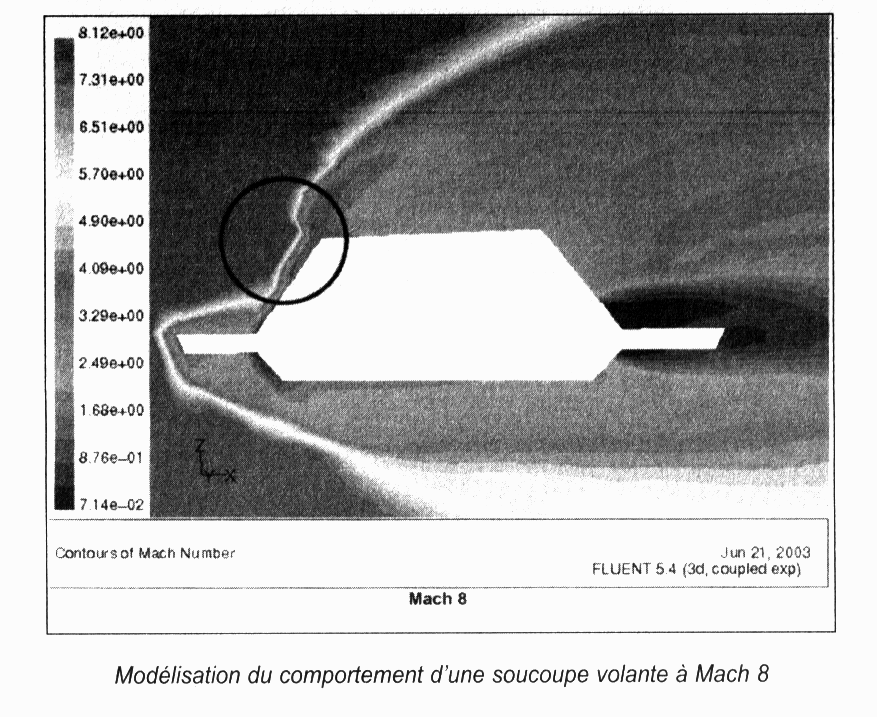
The Bluebook project showed that the discoid shape recurs frequently. For reasons of simplification, we opted for a double trapezoidal configuration, with a central disc.
And here is the result of this brilliant "scientific" study:
Commentary by Velasco:
"This study required several days of computation to evaluate aspects related to shock waves and the resulting thermal incidents at different hypersonic speeds. For example, at Mach 8 (see diagram above), the shock wave effects form a "bulge" undoubtedly resulting from the interaction between the disc's edge zone and the upper trapezoid. But the key point (...) highlighted by these simulations remains temperature. The Rankine-Hugoniot mathematical relationship shows that at high Mach numbers, extremely high temperatures occur downstream of the shock wave.
We observed that possible damage to the saucer's surfaces proved very severe, as we had anticipated (...). The study thus shows that the saucer shape is poorly suited thermally for atmospheric flight at supersonic speeds... Considering this single aerodynamic aspect, we must admit that Avro (John Frost's Avrocar), even if they had overcome their "engine problems," would never have preserved their vehicle's integrity at such speeds."
Therefore, the friction problem must be circumvented. Physically, engineers have found a way.
Magneto-hydrodynamics (MHD) saves the situation...
New ellipses.
Several clarifications. I published my first work on what I called "magneto-hydrodynamic aerodynamics" as early as 1975 at the Academy of Sciences in Paris, under the guidance of mathematician and academician André Lichnérowicz. This initial note was followed by many other publications in peer-reviewed journals, submitted to the referee system (such as the European Journal of Mechanics). There were presentations at international MHD conferences (Tsukuba 1987, Beijing 1990), where I could not attend due to lack of funds. Moreover, a doctoral thesis was completed under my supervision and defended in 1988 by Bertrand Lebrun, demonstrating through numerical calculations (less absurd than those discussed here) that shock waves could be eliminated by Laplace electromagnetic forces. Velasco pretends ignorance of this entire body of work. But in fact, he simply isn't capable of reading a single line of it. The heating caused by the frontal shock wave is not due to "friction," as he believes, but to the abrupt recompression of the gas.
I would describe this chapter as... pathetic. What follows will be the grand finale, the cherry on top. Before addressing it, I tell the students at the National School of Aeronautics in Toulouse that if their academic director agrees, I would be willing to give a course on MHD at the school, focused on propulsion and air intake control for ramjets—work we will undertake through hydraulic simulations as soon as we can secure a 20-square-meter space, or even 15. I would even be ready to supervise them for a doctoral thesis, of course provided they can obtain a grant.
I don't know what reaction readers of this book will have. Some "might perhaps learn a lot." Everything is relative. Others may well question how the scientific study of the UFO phenomenon was managed at CNES over thirty long years.
What will Patenet have in store for us, who already declares, "I am not a physicist" (yet Velasco was introduced as a "physicist" by Stéphane Bern during his March 21, 2007 broadcast)?
Jacques Patenet
I listened to an interview with him. He speaks of a "steering committee" composed of "a few academics." He adds that "GEIPAN will be in contact with the army, the gendarmerie, civil aviation, and national meteorology." Data will reach GEIPAN in the form of investigations conducted by the gendarmerie (...). GEIPAN will then examine these reports and cross-reference them with information from the army, meteorology, and civil aviation." Throughout the interview, it becomes clear that GEIPAN is actually composed solely of Jacques Patenet assisted by a secretary. Nothing has changed compared to SEPRa. Just a name change. But "France is the only country that... blah, blah, blah...". Patenet refused to be interviewed with me on radio. Probably to avoid overly direct questions that journalists wouldn't dare ask, such as:
- Mr. Patenet, where are the thousands of networked helmets distributed to the gendarmes?
What motivates all these people? One might wonder. In 27 years, an optics technician, Jean-Jacques Velasco, later promoted to "in-house engineer," was by sheer chance (due to his boss Alain Esterle's transfer) thrust into the media spotlight. When he had Robert Alessandri, the "mystifier," arrested and successfully obtained a 5,000-euro damages verdict on appeal (Alessandri had called him a fraud in his writings, based on his completely bogus analysis of the only atmospheric re-entry phenomenon he had addressed—the November 5, 1990 event)—unfortunately, I found out and immediately published the bailiff's documents on my website (for those who doubt, I could bring these pages back at any time). Initially, CNES renamed the "Service d'Expertise des Phénomènes Rares Atmosphériques" to the "Service d'Expertise des Phénomènes Atmosphériques Rares" (which would have become SEPAR).
Velasco, "called to new missions" in the years preceding his retirement, supervised young people launching miniature rockets under CNES patronage. Benefiting from the CNES label, he published his third book, co-written with journalist Montigiani.
We now await Yves Sillard's book.
Claude Poher, like Jean-Jacques Velasco, is a "self-made man." Poher, a simple technician, attended evening classes at Arts et Métiers and, like Velasco, became an "in-house engineer." There are autodidacts who achieve remarkable knowledge that even graduates lack.
In 1975, Claude Poher, an engineer at CNES, contacted me. He had heard about my work through my friend Maurice Viton, an astronomer at the Marseille Space Astronomy Laboratory directed by Georges Courtès. So one day, Viton arrived at my home in Aix, bringing Poher, after sending me a manuscript he had written explaining that CNES was preparing to launch a large-scale research program on UFO flight mechanics. In this manuscript, I was "in charge of the details." You'll see how.
Like Velasco, Poher tries to imagine what a UFO sustained by MHD might look like. In his manuscript, he includes a drawing worthy of The Little Prince (the one where the pilot draws a boa that swallowed an elephant). It is the only illustration in the document.
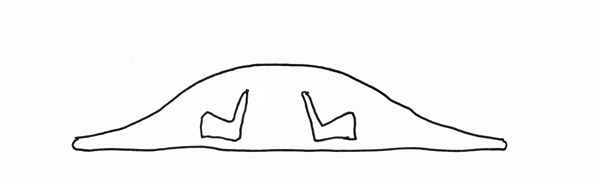
Claude Poher's MHD Saucer
Since he isn't sure what to put inside his saucer, he places two types of benches inside. Then he writes:
"In an MHD craft, aerodynamic forces are created using Laplace forces. These tend to concentrate air beneath the machine while stretching it above. This results in a pressure difference. An airflow then tends to form, moving from below to above, which would reduce this pressure difference, thus eliminating lift. This is why saucers have disc shapes (...). Mr. Petit calculated the necessary diameter to prevent such gas circulation:
D = E
After the equals sign, he leaves a blank space. When we were together at my home, I took Poher's manuscript, opened it to that page, and wrote to the right of the equals sign:
D =
infinite
Poher was flustered. I tried to explain:
"When a pressure difference arises in the atmosphere, a phenomenon occurs known as
wind
."
His eyes didn't light up. I tried again.
"Listen, suppose you and I were in a box-shaped boat, with flat bow and stern perpendicular to our direction of travel. You're at the front, I'm at the back. You try to create a 'depression' ahead of the boat by vigorously pushing water with your oar. I use my oar to try to press water against the stern. In which direction does the boat move?"
"It moves forward."
"No, it moves backward."
"It doesn't matter; we just need to reverse the signs."
That day, I realized one of the qualities required to become head of a CNES department (in this case, the rocket-sounding rockets division) is unshakeable composure, the ability to remain confident in any situation, a kind of
professional calm
beyond the norm.
Maurice Viton, witness to this meeting, could confirm this anecdote word for word. I am not making anything up.
After resigning from GEIPAN in 1978, Claude Poher spent thirty years managing "advanced projects." After retiring, he published a book titled:
The Universons, Energy of the Future
Note that if you're a collector, you can still buy both books—the one by Poher and Velasco's—to add to your collection of absurdities. In its genre, Poher's book is a gem. Velasco reuses its main elements in his book, pages 310 and 313. I'll summarize briefly. Over three decades of deep reflection, Poher became convinced that the universe is filled with invisible particles, which he decided to call "universons." Since he speaks of particles, he labels his theory "quantum." Every object in the universe is constantly bombarded by a stream of universons, just as an object submerged in still air is incessantly hit by air molecules moving at 400 m/s (the thermal agitation speed of the air molecules you're breathing right now). But the net result of these
pressure
forces is zero.
Place two objects near each other. In relation to this bombardment of universons, each will act as a "parasol," shielding the other. A high school senior will then easily calculate that these objects attract each other with a force inversely proportional to the distance between them. Poher grasped what Newton failed to understand in formulating his famous law. The gravitational force, 1/r², postulated by the Englishman, is merely the result of the "universon flux." And thus he embarked on this brilliant intuition, occasionally punctuated by internal CNES "notes." This lasted thirty years. Questioned, Poher will tell you he has worked, "alongside the best international specialists," on the subject of antimatter propulsion.
What's extraordinary is that Poher pursued this idea without even knowing that a Swiss had already had the same idea—and that it had long since been refuted. We're swimming in full pataphysics.
Going further than Velasco, Poher offers an explanation for the sudden, lightning-fast takeoffs of UFOs. It's a safety measure. A farmer arrives, armed with a pitchfork. Danger. Quickly, the UFO, by modulating an universon flux, accelerates to relativistic speed. In doing so, it leaves the "temporal bubble" of the farmer. When it turns around and returns, the man has been "ejected into the past."
But of course!
What Poher lacks, I believe, is a principle famously stated by Pierre Dac:
The faster you go, the slower you are; the slower you go, the faster you are.
Let's see how Jean-Jacques Velasco, in his book, page 310, mentions "the work of Dr. Poher." He begins by reproducing passages from Claude Poher's book:
"After becoming aware of the various characteristics inherent to interstellar travel, we are confronted with its feasibility. Answering this question amounts to assuming that there exists, throughout the universe, an energy source enabling a spacecraft to be greatly accelerated without needing to carry stored energy on board.
...
We must revise our concepts regarding gravity."
This suggested to me as early as 1979
(when he left GEIPAN)
the necessity of designing a new model of gravity. Its foundation rests on a quantum phenomenon (...) explaining the colossal energy exchanges involved in gravity.
The confrontation of the consequences of this new theoretical model with observation now confirms, after many years of solitary labor (...), that it is acceptable as it stands. It is based on the hypothesis that gravity is not an "attractive force" between two masses of matter, as Newton thought, but rather a "pressurizing force" from all directions in space, pushing the two masses against each other. Simplified thus (...), this notion is insufficient. The sole hypothesis of the existence of "something" capable of pushing matter—I named it the "flux of free universons." The "universons" belong to a new (...) concept, tiny autonomous units capable of transferring kinetic energy, moving at the speed of light and briefly captured by matter. This interaction with matter is gravitational interaction, exerting a weak pressure on matter. It is now possible to verify the validity of the universon theory through numerous experimental facts (...).
I almost forgot a "small detail": this theory also perfectly explains the facts reported in the thousands of UFO sightings worldwide!
Commentary by Velasco:
"This theory represents the first approach capable of integrating complex physical principles with undeniable experimental data. I know, having spoken with him at length, that Claude Poher wishes young theoretical physicists to take up his theory and discuss it scientifically."
Scientifically.
The book ends with an interview of Jean-Jacques Velasco by Nicolas Montigiani, co-author of the book, dated September 2006 in the book. Pages 315 to 322. Velasco seeks to justify his departure from SEPRa. He begins by referencing the content of an "internal audit" written by engineer François Louange of Fleximage, a long-time consultant to GEIPAN. Velasco responds to Montigiani:
"Two extremely important decisions emerged from François Louange's report. First, the institutional continuation of the study of Pans, relying on the competencies of civil and military organizations existing in our country. Second, the creation of a steering committee, the 'Copilpan,' tasked with supervising and controlling the study's activities through an active information policy."
From today onward, it will be exactly as it was before.
Velasco then addresses the painful issue:
"Some have suggested I was 'removed' due to my views on the phenomenon, as Science and Avenir did without asking me. Nothing could be further from the truth. The current situation is rather the result of accumulated issues.... Regarding the November 5, 1990 incident, everyone wanted the official service's response to match their own! This affair grew so large that individuals or groups crossed boundaries, attacking my personal integrity... I was deeply shocked, as was my circle, by the numerous excesses it provoked. This is one of the reasons I decided to leave this activity (...)."
He presents himself as a victim. I'll briefly recall the facts. I had, shortly before Velasco's departure from SEPRa and the disappearance of the service, produced all the judicial documents relating to this case. In 1990, Jean-Jacques Velasco, head of the "Service d'Expertise des Phénomènes de rentrées Atmosphériques" (SEPRA), was requested following numerous observations made by thousands of witnesses during the night of November 5, 1990. It was the atmospheric re-entry of a Russian rocket stage. NASA provided the coordinates of the last three points of passage. Using these data, Velasco produced a map of France showing the re-entry trajectory from southwest to northeast. Witnesses were surprised. Indeed, the response provided by this "official service," namely himself, did not match their observations. Those supposedly on the re-entry path saw the objects at a 45-degree angle, while observers supposedly 200 km from the line saw the objects pass directly overhead.
Years later, an obscure ufologist, a "mystifier" from Marseille, took NASA's data and recalculated the re-entry corridor using a small orbitography software running on his PC. He showed that Velasco had made a 200-km error (I think in 1990 he used a globe and a piece of string). In a small ufology magazine printed in 200 copies, Robert Alessandri titled "When CNES Hires Fakes." Velasco immediately sued for defamation and succeeded in having him condemned to 2,000 euros in damages in the first instance. Alessandri appealed and was again condemned, with the fine raised to 5,000 euros. Velasco had the judgment enforced and seized the little money the ufologist had in his bank account. Informed, I published on my website the bailiff's seizure report of the account.
At Velasco's request, we, the bailiffs...
And I immediately organized a collection that enabled the ufologist to escape this difficult situation, at a cost of 1,000 euros from my own pocket.
So this is "the attack on Mr. Velasco's personal integrity." If necessary, I can republish these documents.
Thus concludes this reading note on his book. I'll wait for Yves Sillard's book to examine it in turn.
In the meantime, Jean-Stéphane, Julien, and I will continue searching in Paris for a 15-20 square-meter space to conduct our research. We can contribute 200 euros per month. We'll also prepare video documents, JPP conferences, archival images, drawings, animations, to present what a genuinely scientific approach to the UFO phenomenon would look like. I know we can count on the help of many people in the field of images. These video files will be available on the website
I'll also need to write a book where readers who prefer to read can find a discourse that, operating on multiple levels, presents the different facets of the UFO phenomenon from the perspective of real scientists, not clowns. It could be an "HTML book" with links leading to different reading materials.
For me, there is no difference between approaching the UFO subject and discussing the current convulsions of our planet, as well as cataloging solutions (non-polluting fusion, deserts considered as fantastic energy sources). We must remind ourselves daily that
The future is written nowhere
Back to News
Back to Guide