April 5, 2007: Launch of UFO-Science
Launch of UFO-Science
April 5, 2007
The GESTO report has been finalized and is currently being distributed.
We will gather the cheques, organize the secretariat,
Letters, follow-ups, complaints to be sent to
GESTO 83 Avenue d'Italie, 75013 Paris
I followed the broadcast of "C dans l'air" on UFOs.
During this program, we repeatedly heard Alain Cirou, editor-in-chief of the magazine Ciel et Espace, stating that the UFO phenomenon is not a scientific fact, that "scientists have nothing to chew on." At one point he even said:
- Name me a team of scientists working on the UFO dossier. You won't find any—there aren't any. Jacques Patenet, head of Geipan, knows this as well as I do (...).
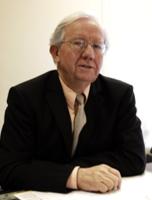
Jacques Patenet, head of Geipan
What would be the point of endlessly criticizing this broadcast? Many people have requested my presence on this panel, and later questioned my absence—without ever addressing it. At Stéphane Bern’s show, we witnessed censorship in action. At "C dans l'air," it's the Wall of Silence.
We all know: without the Internet, our fight would already be lost. It's pointless to hope that "authorities will move."
The CNES is currently "setting up a new structure." Only someone my age can have the necessary perspective to recognize that we're reliving the same bad play from 1977, with different actors. For people under fifty, it seems new—but in reality, it's completely false. We're doing exactly what we did in 1977. The "scientific council" has merely changed its name to become a "pilot committee." The architect of this "new venture" is Yves Sillard, former president of the CNES, a pure administrator who spent his entire career in the civil service. I spoke with him at length on the phone in January 2006. I realized he had absolutely no idea what a high-level scientific approach entails. For the UFO subject, we need people at the top level in charge. Poher, despite all his goodwill and enthusiasm, was merely a former technician turned in-house engineer. The same goes for Velasco. Patenet? He's just an IT engineer who admitted over the phone that he has no knowledge of physics. The members of the "pilot committee" are also not "selected with care." When Esterle, a young polytechnician, succeeded Poher, Sillard probably thought Geipan was now in the hands of "a real scientist." Look at the outcome.
So it won’t work. But Sillard is incapable of realizing this. Readers of these lines might think: "He’s being difficult and won’t give these people a chance..." No—I’m simply realistic. Even Patenet doesn’t realize he lacks the necessary skills.
It's equally futile to expect our media to do their job, to do anything other than pour wax into our ears. So we’ve launched our own media. We’ll produce video documents aimed at various audiences: lectures, archival footage, animations. These will be posted online at http://www.ufo-science.com. Fortunately, we’ve found support from many graphic designers, camera operators, sound recordists, and editors. Anyway, producing videos today is within reach of anyone. There’s no longer any need for an expensive Betacam camera. You can find HF microphones in large supermarkets. We’re equipped, and the project is underway. We’re launching a real "video production factory."
People have joined the UFO-Science association (83 Avenue d'Italie, Paris 75013). We’ve received cheques. However, since the association’s creation is recent, the bank account has not yet been opened, and these cheques haven’t been cashed yet. To move forward despite this, we’ll use leftover funds from the GESTO account (Group for Scientific Studies of the UFO Phenomenon). Readers may wonder why we didn’t use this existing structure from the start, why we created a new one. The answer lies in the 40-page GESTO report we’ve begun sending to our members.
Alain Cirou is very familiar with my work, having known it for a long time. When he was young president of the AFA (French Astronomical Association), he invited me over twenty years ago to give a lecture on UFOs and my own research. Some readers of these lines may remember attending that talk in the former premises of the École Polytechnique, Rue Descartes, Paris. They’ll recall that young Cirou mentioned, during his introduction, the intense pressures he had faced from people wanting to cancel my presentation. They’ll also remember that Cirou himself denounced, before giving me the floor, this obstruction of scientific freedom. Today, he’s probably struck by... amnesia—and certainly doesn’t want to lose his position.
Let’s move forward. With funds from the GESTO account, we’ve decided to purchase an Edwards vacuum pump:

The used equipment offered to us didn’t seem reliable. This pump will allow us to rebuild a low-density test bench, which previously produced results like these:
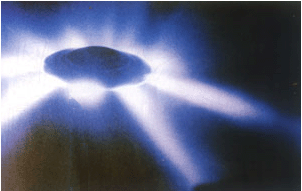
High-Frequency Arcs
We’re not just making pretty pictures. Certainly, these experiments are spectacular. I simply remind everyone that it was using a setup similar to the one we’re rebuilding that I managed to achieve the annihilation of Velikhov instability in the early 1980s. Beware those who would try to paint us as charlatans or illusionists. That would be very inappropriate. I always keep a shotgun loaded to the brim, just in case I need to aim it at such people’s backsides.
Our projects are numerous and will involve various techniques. We’ll report on our progress through video documentaries of our experiments.
The main issue is the workspace. We’ll have to make do with temporary arrangements for now. We haven’t found what we’re looking for within Paris city limits. It’s not feasible to conduct these researches elsewhere, even in the suburbs, simply because those who will manage them voluntarily are full-time workers based in Paris. We’ll eventually find a solution. In the meantime, let’s start equipping ourselves with the funds our members have sent us. We’ll need between five and ten thousand euros worth of diverse equipment. Measurement instruments and scientific instrumentation in general aren’t cheap.
A word about the issue of diffraction gratings. Below is a message from an authentic scientist:
http://www.ldi5.com/ovni/sepra.php
April 5, 2007 Message from Fabien Buisson, PhD.
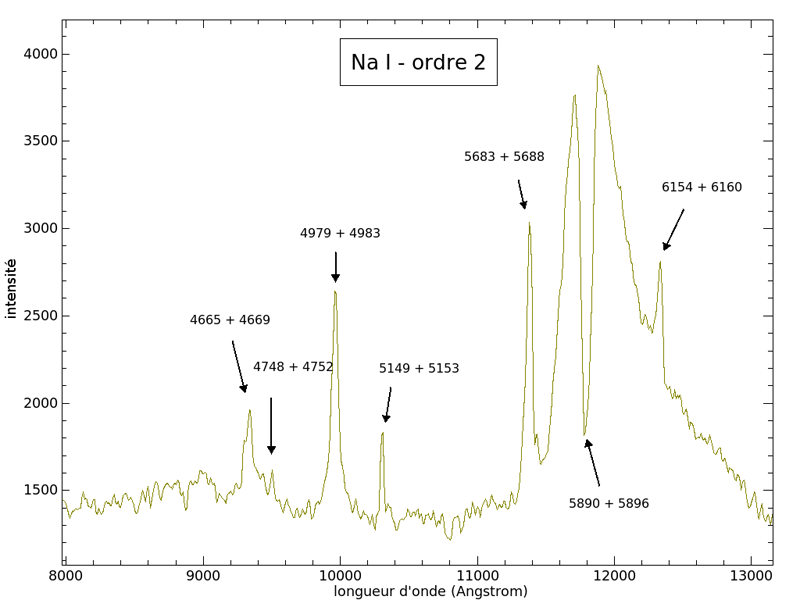
Since I worked on diffraction during my thesis, I’m interested in the topic of diffraction gratings. I tested my digital camera with a 140-line-per-mm grating held by hand in front of the lens. To calibrate the device, I used a distant yellow public streetlamp. These lamps use sodium bulbs, and we can clearly see the Na I spectral lines (see attached files).
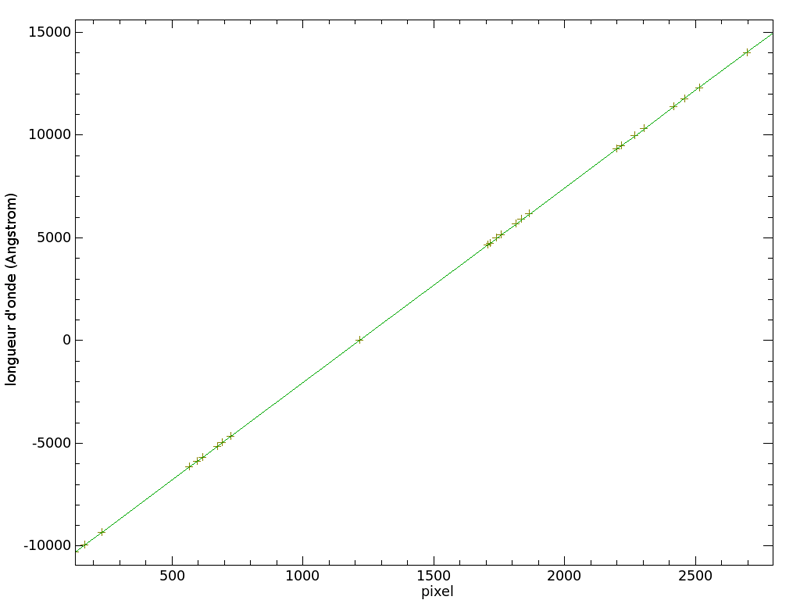
The pixel-to-wavelength calibration appears fairly linear. The spectral lines are relatively broad: ~30 Å. The first order is saturated, as is the zeroth order, despite a 1/60-second exposure time. I forced the flash to trigger to avoid longer exposures that would blur the spectrum slightly due to small camera movements during the exposure. But this doesn’t desaturate the zeroth order.
I found at this address ( ) the technical note from Geipan on this subject. The document suggests using gratings that don’t concentrate most of the intensity in the zeroth order. That way, we could deconvolve the spectrum using the shape of the zeroth order, which corresponds to the resolution of the combined grating + camera system.
I don’t understand why the “famous” sodium doublet (5890 and 5896 Å) is visible in absorption rather than emission like the other lines. It sits in the middle of a very broad peak. It should be the strongest line (200 times stronger than the others). It’s as if it were reabsorbing itself...
Rather than waiting years to convince mobile phone manufacturers to install gratings in their devices, I think it’s better to directly distribute gratings to people. I had the idea of having credit-card-sized gratings manufactured. That way, people would have them handy (in their wallets) for the day—actually, the night—they witness a strange phenomenon. It could also serve as advertising for the association.
Fabien Buisson Spectral image obtained using a grating placed in front of a camera lens.
Light source: sodium lamp
April 5, 2007 Message from Fabien Buisson, PhD.
Since I worked on diffraction during my thesis, I’m interested in the topic of diffraction gratings. I tested my digital camera with a 140-line-per-mm grating held by hand in front of the lens. To calibrate the device, I used a distant yellow public streetlamp. These lamps use sodium bulbs, and we can clearly see the Na I spectral lines (see attached files).
The pixel-to-wavelength calibration appears fairly linear. The spectral lines are relatively broad: ~30 Å. The first order is saturated, as is the zeroth order, despite a 1/60-second exposure time. I forced the flash to trigger to avoid longer exposures that would blur the spectrum slightly due to small camera movements during the exposure. But this doesn’t desaturate the zeroth order.
I found at this address ( ) the technical note from Geipan on this subject. The document suggests using gratings that don’t concentrate most of the intensity in the zeroth order. That way, we could deconvolve the spectrum using the shape of the zeroth order, which corresponds to the resolution of the combined grating + camera system.
I don’t understand why the “famous” sodium doublet (5890 and 5896 Å) is visible in absorption rather than emission like the other lines. It sits in the middle of a very broad peak. It should be the strongest line (200 times stronger than the others). It’s as if it were reabsorbing itself...
Rather than waiting years to convince mobile phone manufacturers to install gratings in their devices, I think it’s better to directly distribute gratings to people. I had the idea of having credit-card-sized gratings manufactured. That way, people would have them handy (in their wallets) for the day—actually, the night—they witness a strange phenomenon. It could also serve as advertising for the association.
Fabien Buisson Spectral image obtained using a grating placed in front of a camera lens.
Light source: sodium lamp
Fabien used a small computer program he created to analyze this first image. He will prepare an article to be posted on the UFO-Science website, as well as a presentation for the GESTO symposium in Paris on May 26, 2007. He will also contact amateur astronomers who use gratings to analyze stellar spectra and who have developed their own analysis software.
Initially, we considered approaching manufacturers of digital cameras or mini-cameras used in mobile phones. Contacts have been made with an international manufacturer whose production unit is in China. This reader has an excellent idea: we should manufacture our own gratings embedded in a credit-card-sized holder. On the front: the UFO-Science logo and the website URL. On the back: advertising for a sponsor.
Would anyone be interested?
Users could keep these gratings in their wallets and pull them out to place in front of any camera lens. As I’ve said before, this idea is thirty years old—it was first proposed by Claude Poher, the first head of Geipan. See CNES Note 18, signed by engineer Louange, published on March 15, 1983.
The GEPAN Note No. 18 on the technique of diffraction gratings
As Fabien notes, it would also be possible via a site like UFO-Science to provide internet users with instructions on how to obtain a grating (a bit over ten euros) and start experimenting with analyzing spectra from almost anything, using freely distributed analysis software—on an international scale. This seems far more promising than the SETI program (which has yielded nothing). And this until someone finally manages to capture a UFO passing by.
You’ll read there that most gendarmerie units were equipped with such gratings at the turn of the 1970s and 1980s. The result of this spectral hunt? Nothing. What happened to these gratings? That’s a question no journalist will ever ask Patenet or Velasco.
A few remarks on the "revelations" made by CNES.
These are technical GEPAN notes. Detailing them would be tedious. One of them lists Velasco as "research director." Another, Note 9 dated November 17, 1981, is signed by Bernard Zappoli, PhD, who was hired by CNES and integrated into GEPAN as a research engineer at the end of the 1970s. Zappoli, like Esterle, remains at CNES in various "closets," following how they botched a research attempt on MHD propulsion in Toulouse due to greed and incompetence. Will a journalist ever question them about these failed experiments? (I have the report written by Zappoli, demonstrating this fantastic incompetence and waste of money.) I doubt it. Note 9 is just a bluff—Zappoli used it to convince CNES leadership that he was competent to lead research based on my ideas, while I was excluded. The report mentions they repeated the experiment we conducted with Viton in 1976 (annihilation of the bow wave). Zappoli then played the theorist, lining up impressive differential equations. Satisfied with results from a simple hydraulic experiment, the team thought it would be equally easy in gases.
Unfortunately, MHD in air (necessarily two-temperature) has nothing in common with MHD in liquid environments where the fluid is acidic water. I had warned Zappoli:
- Without me, you’re going to fail.
- Well, we’ll see...
These notes, none of which constitute a "revelation" since they were published and circulated in the early 1980s, reveal the disastrous way these "researches" and this "collection of information using scientific methods" have been managed over thirty years.
Download now Note No. 16 and Note No. 17.
Note 16 refers to the famous Trans-en-Provence case. It contains the only truly scientific investigation ever conducted within a CNES framework—essentially because a competent biologist, Michel Bounias (now deceased), contributed historically.
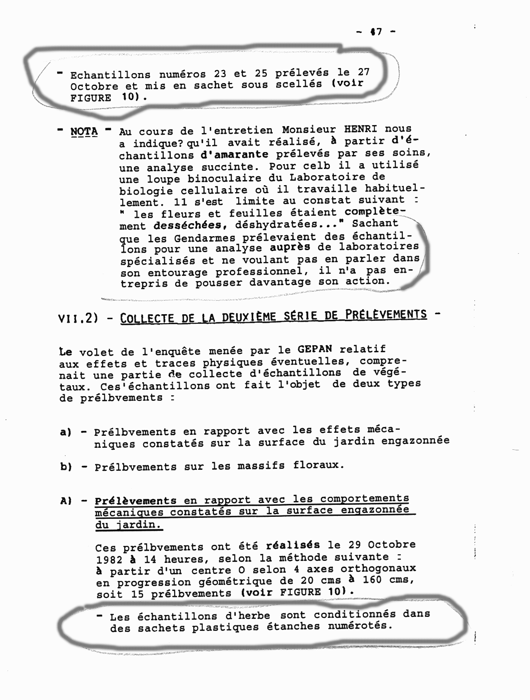
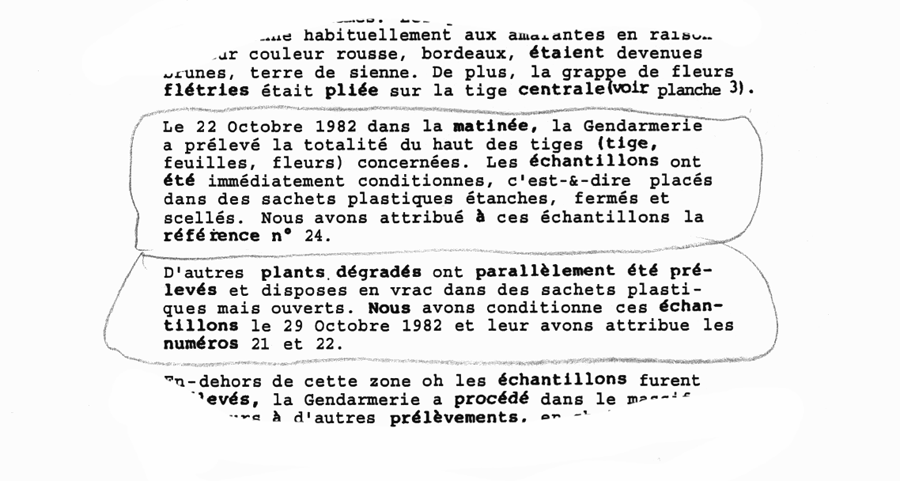
Go immediately to page 32, paragraph 4.3 "SAMPLE COLLECTION."
On January 8, 1981, Renato Nicolaï (deceased) saw a craft land in front of him on his property in Trans-en-Provence. On the 9th, the gendarmes contacted him. One of them had the fortunate idea to independently collect grass samples, taking along the soil substrate. Moreover, prior to sampling, there had been a heavy downpour and thunderstorm. The ground was thus moistened, which providentially preserved the clover samples. Alerted, Geipan decided not to intervene immediately, "because there was only one witness and it had rained." However, the samples eventually reached Geipan, which forwarded them to Michel Bounias, who had completed his PhD thesis at CEA on the effects of ionizing radiation on plants.
Read the rest of the report, detailing the results obtained. Intrigued by the observed alterations, Bounias requested a second sampling at increasing distances. On January 23, fifteen days after the event, Geipan conducted this second sampling—but no one thought to take samples in directions other than a single radial line (Figure 8, page 31). Nevertheless, these analyses showed:
- That the UFO’s landing site created a significant, lasting impact on the vegetation.
- That these effects on plant pigments were remarkably well correlated with distance.
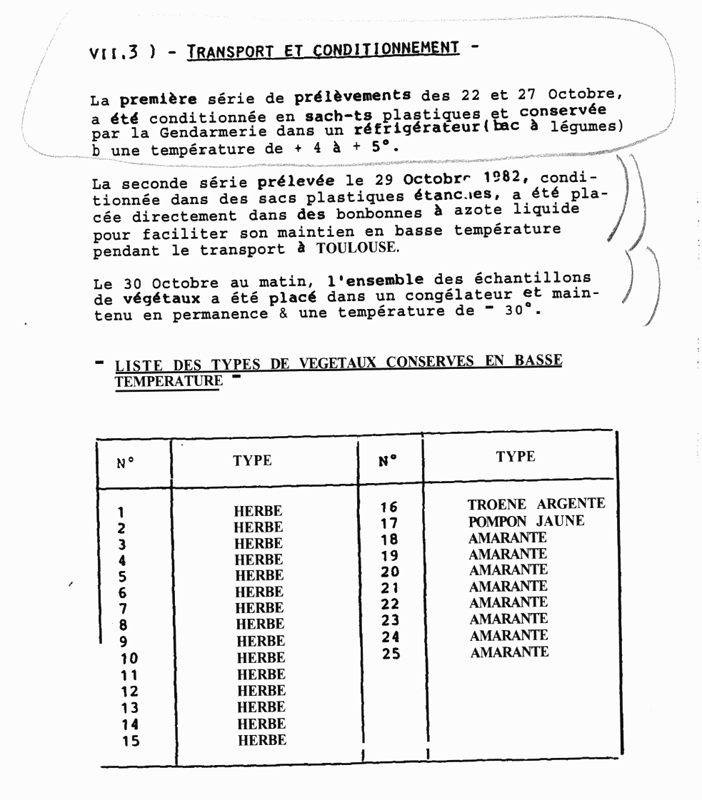
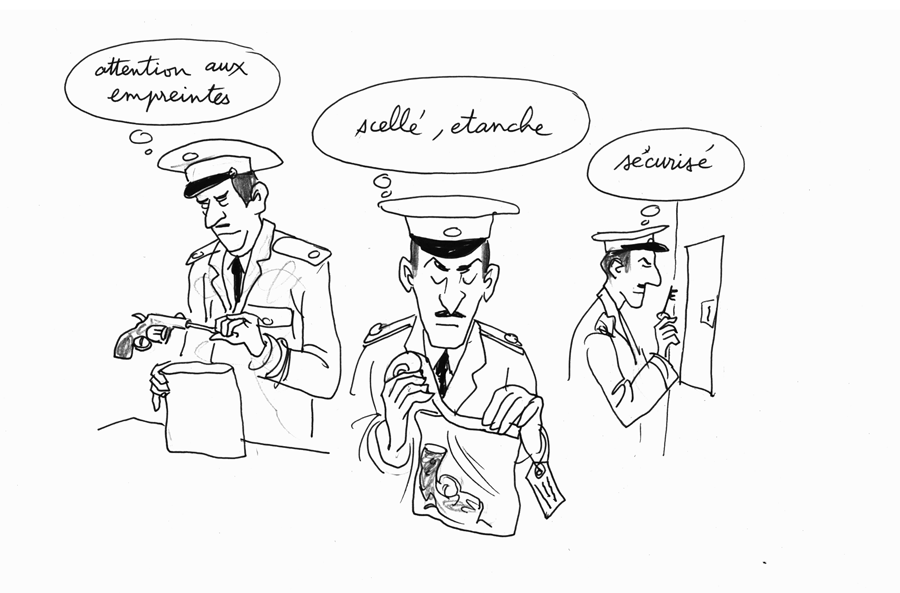
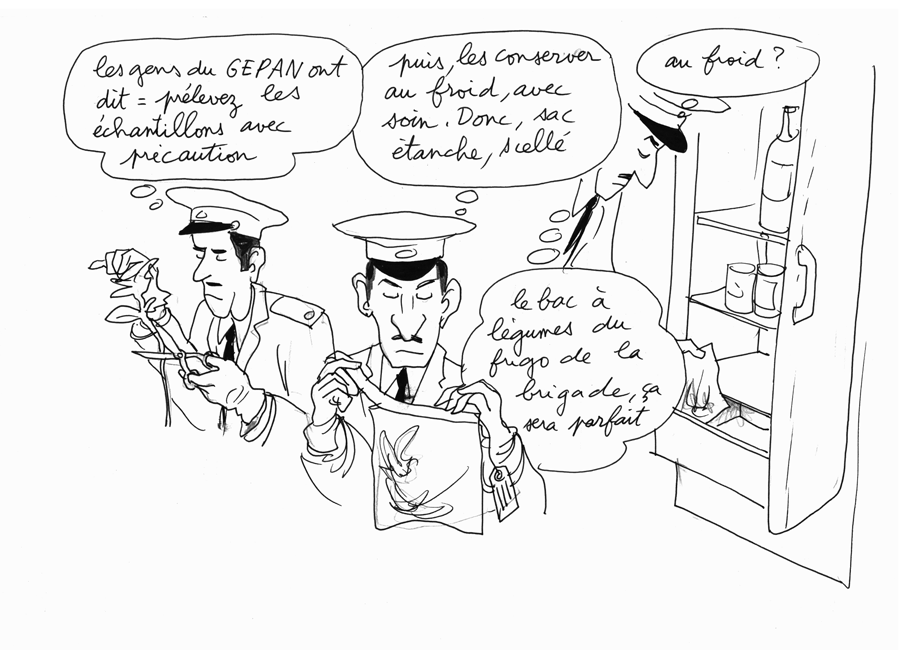
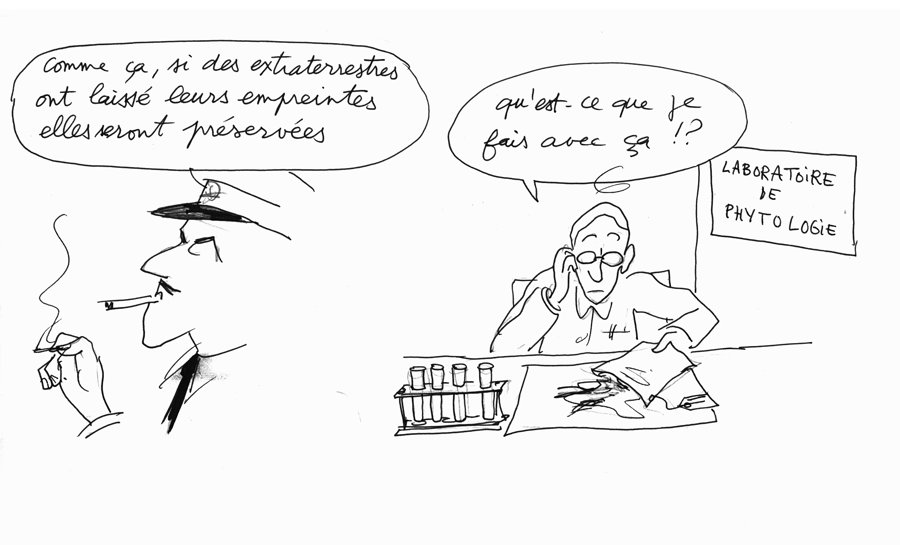
Bounias emphasized he could see no natural or artificial agent capable of producing such effects. The "UFO trap" was therefore set. All that remained was to wait for the next landing. That would occur 18 months later. Refer to GEPAN Note No. 17, "The Aramante Case." In the meantime, Geipan had issued instructions to French gendarmes: collect plant samples "with the utmost care" and "immediately protect them." They did so—in their own way—treating the plant samples like 9 mm cartridge cases found at a crime scene.
Download this Note 17, if not already done
Page 45:
Page 47:
Page 51
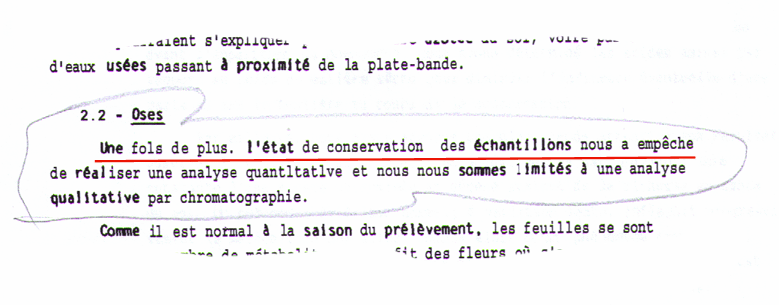
Bounias was completely excluded from this second case. Why? After the Trans-en-Provence incident, we proposed attempting a simulation of the observed effects by exposing control clover samples to pulsed 3 GHz HF radiation. CNES refused to listen. We were going too far. Indeed, such radiation could not be considered a natural phenomenon. Eventually, the samples reached a lab at Paul Sabatier University—completely decomposed.
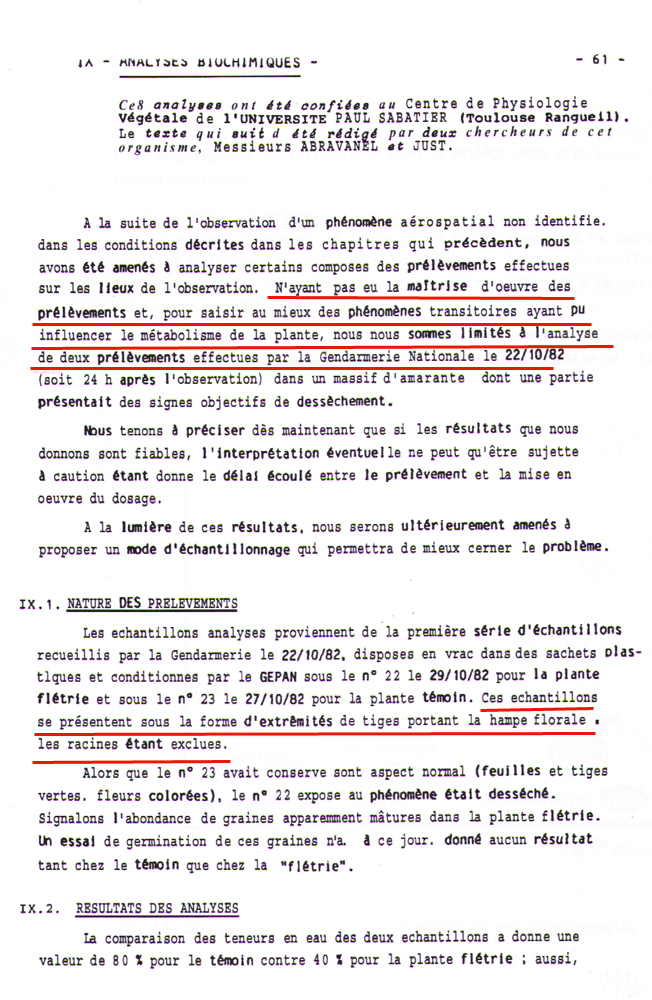
Page 63:
And finally, the final discussion, after the failed biochemical analysis of the decomposed samples:
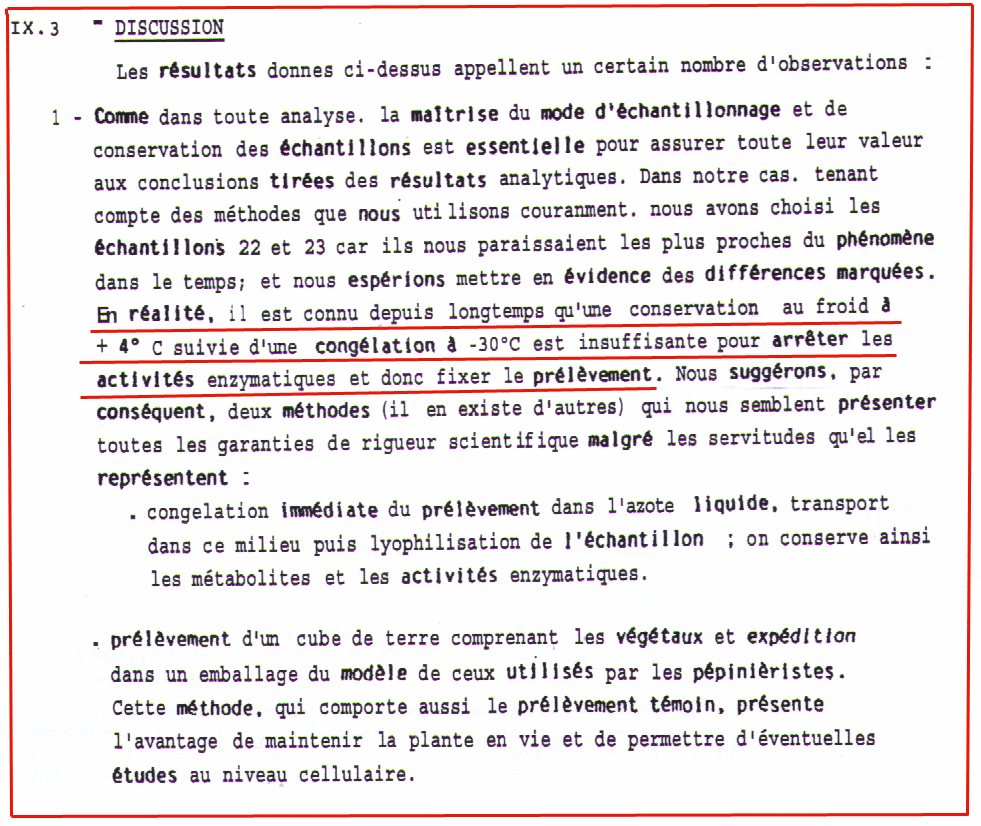
Bounias had been very clear in his recommendations: immediately plunge samples into liquid nitrogen and keep them there until they reach the analysis lab.
Who is the idiot at Geipan who gave gendarmes instructions for future sampling after the lesson learned at Trans-en-Provence?
The hallmark of true idiots, of multi-incompetents, is that they are utterly unaware of their condition. While it was well known at Geipan that biological effects persisted for months after the event, no additional samples were taken.
Here are the facts, in all their stupidity and brutality. The real responsible party for this thirty-year debacle is the man who created Geipan in 1977, Yves Sillard, then president of CNES, who later let the service "live its life" without concern. It wasn’t until 2005 that he decided to create Geipan, endowing it with a "pilot committee." Empty words. A new "Cnesserie," as Viton might say.
A reader told me he’d sent me the book he recently published (in collaboration with Patenet). I’ll write a review after completing my work on Jean-Jacques Velasco’s recent book, published by Éditions du Châtelet: "Troubles in the Sky."
This won’t stop journalists from serving up their usual soup to newcomers. By criticizing as I do, I’m behaving like... a madman, nothing more.
Know this, straight from Jacques Patenet’s own mouth—whose profile matches that of his predecessor—that investigations will continue to be entrusted to gendarmes. Why? Because no other social body is capable of covering the entire French territory and responding in case of a UFO wave. Patenet said: "Right now it’s fairly quiet—on average, only 25 cases per year trigger gendarme investigations."
It’s a square circle. These poor gendarmes are not at all to blame. We simply ask them to perform tasks for which they were never trained. But things will remain as they are, and Geipan, by centralizing "information," will cross-reference data from radar operators, astronomers, and the national meteorological service. That’s all.
Patenet has neither the desire nor the competence to do anything else. Scientists won’t move. Not only because they know the treatment reserved for those who venture into this forbidden field. Bounias was methodically stripped by his hierarchy at INRA (National Institute for Agronomic Research) of his staff, work resources, and office space—met with complete indifference. No one at CNES lifted a finger to oppose this punitive treatment. Michel ended up desperate, confined to a small office at the Avignon faculty, and died of cancer two years ago. I survived—by some miracle. Mainly because I’ve repeatedly been able to recover through other activities.
I recall a phrase from academic Rémy Chauvin:
- In our circles, nothing should be exaggerated. It never goes beyond assassination. --- ---