From In-Ekker to Mururoa. De Gaulle, the Machiavellian
From In-Ekker to Mururoa
August 21-23, 2009.
Addition dated August 25, 2009
A reader sent me a copy of an article published in Le Monde:
I will now reproduce its content, along with my commentary. "The irradiated," it's sad, but it won't surprise anyone.
Go to the AVEN website (Association of Nuclear Veterans) and read in particular the testimonies.
In passing, I went back to check the pages I had composed between 2003 and 2004. Already six years since this affair, when I had raised the question of the possibility of conducting secret underground nuclear tests within the French territory, following confidences made in front of witnesses during a dinner by a high-ranking official of the CEA's military applications. He then sued me for defamation, and after an initial rejection, I was condemned to 5,000 euros in damages and interest, following an appeal trial where the court simply chose to disregard the two testimonies provided, through a procedural trick, even though they had been considered in the first instance. The judgment omitted to mention a key document: a report from the American Geological Society describing the technique of secret underground tests, which had been attached to the file.
In a letter, my lawyer had previously concluded:
- Everything suggests that the Tribunal was set up to obtain your conviction
I remember that during the appeal trial, I found myself alone before the court and the opposing party, knowing that I had no tongue in my pocket, had preferred to play this second round before the Tribunal de Grande Instance (where only lawyers can speak) and not in the correctional court (where the parties can speak freely), where I had clearly dominated my opponent, Antoine Giudicelli.
How far away it all seems now.
I admit that I had difficulty focusing on these lines, which went completely unnoticed in the mainstream press. But where is the problem? No one in the world has conducted underground nuclear tests since 1996, as is well known, since the signing of the Comprehensive Nuclear-Test-Ban Treaty, signed by France.
****
Highlights February 1956 France decides to acquire the atomic weapon.
February 13, 1960 First air test ("Gerboise bleue") at Reggane, in the Sahara, followed by three more air tests.
November 7, 1961 First underground test at In-Ekker, named "Agathe."
May 1, 1962 Second underground test, named "Beryl," "uncontained."
February 16, 1966 Last test in the Sahara.
July 2, 1966 First air test at Mururoa (French Polynesia).
January 27, 1996 Last underground test.
September 26, 1996 France signs the Comprehensive Nuclear-Test-Ban Treaty
At the time I write these lines, thirteen years have passed, during which none of the nuclear powers that signed this treaty have conducted even a single test, let alone to ensure the operational status of their warhead stockpiles.
Yet, everyone knows that these technological marvels degrade over time. And this is true for any weapon. Would one consider putting an entire air force "in a cocoon" for thirteen years without ensuring that one of the aircraft, chosen at random, remains flightworthy? Artillerymen who are responsible for a stock of shells take one out from time to time. This has always been the case. But the nuclear weapon is exempt from these reliability tests. It's wonderful, this trust, isn't it?
In fact, and this is very well described in a report by the American Geological Society, the secrecy of underground nuclear tests is ensured when they are conducted in, or near, an active mine of any kind.
Geological and Engineering Constraints on the Feasibility of Clandestine Nuclear Testing by Decoupling in Large Underground Cavities
Translation:
**Feasibility and Constraints of Clandestine Nuclear Testing in Large Underground Cavities. **
http://geology.er.usgs.gov/eespteam/pdf/USGSOFR0128.pdf
The seismic impact of firing an explosive depends entirely on how it is in contact with the surrounding solid medium. Mine blasts commonly use dynamite charges of 500 kilograms. They then try to break the rock or the ore vein as efficiently as possible. Miners drill deep holes, in which they place the charges. This typically results in seismic signals of magnitude 3.
If these same charges were simply placed on the floor of the mine gallery, the seismic signal would then be negligible.
The same applies to a nuclear explosion. The TNT equivalents of today's tests are 300 tons of TNT. If the device is placed at the geometric center of a cavity about twenty meters in diameter, filled with gas, the spherical shock wave produced by the explosion will create a well-distributed overpressure on the inner face of the cavity. This will result in a seismic signal of magnitude 3. The effects can be further reduced by filling the cavity not with air, but with a different gas, which will act more effectively as an energy absorber (converting it into radiative energy, which will simply heat the inner face of the wall).
**** --- **** ******** **** **** **** **** **** **** ********
Highlights February 1956 France decides to acquire the atomic weapon.
February 13, 1960 First air test ("Gerboise bleue") at Reggane, in the Sahara, followed by three more air tests.
November 7, 1961 First underground test at In-Ekker, named "Agathe."
May 1, 1962 Second underground test, named "Beryl," "uncontained."
February 16, 1966 Last test in the Sahara.
July 2, 1966 First air test at Mururoa (French Polynesia).
January 27, 1996 Last underground test.
September 26, 1996 France signs the Comprehensive Nuclear-Test-Ban Treaty
In total, France conducted 210 tests, 50 atmospheric and 160 underground. 150,000 civilians and military personnel participated.
--- **
On the same subject**
Subscription Edition Archive: Compensation for victims of nuclear tests: the end of a long silence
To leave, Pierre Tarbouriech becomes a gendarme, is assigned to Algeria in the mid-1950s. It's already a change of scenery, but it's also war. Four years like that before finally getting a posting in the south, in the desert. He is transferred to the Hoggar as a deputy chief at In-Ekker, 130 km north of Tamanrasset. The small post is nestled in a fortress at the foot of a black mountain, Taourirt Tan-Afella, 1,990 meters in altitude. In saroual pants, he has to patrol through a vast territory where 2,000 people live. "At first glance, it was the life I dreamed of. Then I learned that the place had been chosen for nuclear tests."
After carrying out several air tests at Reggane, the engineers chose this granite massif to continue their research underground. Soldiers of the engineering corps were sent in 1961. They started digging a spiral tunnel in the rock.
Pierre-Louis Antonini arrives at In-Ekker on July 15 with "the feeling of stepping into an oven."
**" The army had once considered conducting its tests in Corsica, just a few kilometers from my home. " **
At 20, the son of a farmer, the child of San Antonino, leaves the island to perform his service. He is assigned to the 11th Saharan Engineering Regiment, leads the miners into the tunnel, then sets up the command post and, in the heat, pulls cables in all directions.
Originally from Thiers (Puy-de-Dôme), Valentin Muntz is in charge of seismographs, which he places every 960 meters. This son of a worker moves the instruments used in Reggane, handles the already irradiated equipment with his bare hands. "It's obvious that I was contaminated," he says. At the time, he saw his mission as a blessing. "We were happy not to be further north, fighting in the djebel. We didn't get shot, that's for sure. But the pathologies we developed afterwards are not necessarily better."
The installation of the Center for Military Experiments of the Oases (CEMO) grows with the months. A base emerges from the sand at In-Amguel, 35 km south of In-Ekker, as well as an intermediate camp, named Oasis 2, occupied by the Commissariat à l'énergie atomique (CEA). 2000 people, mainly from the 621st Special Weapons Group (GAS), live on site. The round of Breguet and Super-Constellation planes maintains contact with the outside world. Mail is censored, photo films are controlled. It's not good to talk about the bomb, even less to say that you're afraid of it.
In the routine of the camp, everything seems to point to carefree, bravado of young people. "We were 20 years old," summarizes Valentin Muntz. During the first test at In-Ekker, named "Agathe," on November 7, 1961, the Auvergnat was less than a kilometer from the epicenter, in shorts, shirt, and bush hat. The "little bomb" exploded. Then Valentin Muntz retrieved his instruments and the engineers returned to dig another spiral in the irradiated massif.
MASK AROUND THE WAIST
The second shot, named "Beryl," took place on May 1, 1962, in the late morning. With great fanfare: the Minister of War, Pierre Messmer, the Minister of Research, Gaston Palewski, and dozens of civilian and military personalities were present. At Oasis 2, a snack was planned for these gentlemen: chicken, fries, salad. Maurice Sicard, the restaurant chef, was waiting to serve them. This civilian, recently demobilized after 27 months of fighting in southern Algeria, worked for the Maritime Catering Society, which was under contract with the CEA. He had climbed, along with the cook, onto a hill to watch the show.
Since the early hours of the day, Didier Pailloux has been waiting at the foot of his breakdown truck. Originally from Blois (Loir-et-Cher), this conscript soldier arrived in the Sahara on January 4 as a heavy vehicle mechanic. He parked his vehicle along the road, in view of Tan-Afella. He killed time, his mask around his waist and a dosimeter around his neck. "They gave me a white suit, but some guys didn't have any."
The command staff had neglected survival suits but distributed rifles. "He feared more attacks from the OAS or the FLN than radiation. There is visible death and invisible death," notes Pierre-Louis Antonini. The Corsican was requisitioned as a driver and waited at the wheel of his vehicle on the officials' parking lot, three kilometers from the epicenter.
Claude Jouin admires the landscape to pass the time. "It was very beautiful, I hadn't had time to get used to it yet." The Norman arrived only on April 21. Originally from Flers (Orne), he was in garrison in Nancy when volunteers were requested for the Sahara. "I thought it would be nice weather, I applied." On May 1, he was sent with eight comrades, by jeep, to a guard post, an isolated height, a few kilometers from the epicenter.
Around 11 o'clock, the bomb exploded. Tan-Afella shook. "We thought the mountain was going to take off," says Valentin Muntz. "It was shaken like you shake a carpet," says Pierre-Louis Antonini. "The earth began to tremble as if thousands of horses were galloping, remembers Maurice Sicard. It approached. It passed under our feet. The stones rolled when the shock wave passed. " "We felt the vibrations spreading through our bodies," says Pierre Tarbouriech, assigned to the officials' parking lot. Then, a smoke was ejected, gray-black. "The accident. A radioactive cloud began to escape into the atmosphere, rose to 2,600 meters altitude, then headed towards the PC. "Someone shouted: "It exploded!" A siren sounded. And then, it was a general scramble. "
Two commanders climbed into Pierre-Louis Antonini's jeep and ordered him to leave. The soldier wanted to wait for his section chief. "Go!" ordered one of the officers. "We started to see people running," says Didier Pailloux. There were vehicles everywhere. I had a moment of panic. My sergeant told me: "Turn on your siren! We're leaving!" Men jumped into the truck, grabbing as they could. "I left with my foot to the floor towards In-Amguel. " Debate on health impacts in French Polynesia France conducted the majority of its nuclear tests (193 out of 210) in French Polynesia between 1966 and 1996, at Mururoa and Fangataufa, aerial tests from barges, balloons, planes, or underwater. After years of silence, a debate is developing on the impact of these tests on the island populations. A local association, Moruroa e tatou, created in 2001, fights for the army to recognize that Polynesian workers and local populations were contaminated. After long denial, the French authorities now admit that "five tests have resulted in somewhat more significant fallout on inhabited areas," but contest any health impact. So far, no compensation has been granted. On April 27, a new request made by five patients and three dependents of deceased persons was examined by the Papeete court. The judgment was deferred to June 25. The controversy also concerns the level of contamination and potential environmental risks in the areas used for tests.
On the parking lot, Pierre Tarbouriech tries to ensure a semblance of traffic. "The cloud was coming over our heads. I waited until all the vehicles had been evacuated to leave myself, after half an hour. We drove off-road towards the base. We passed by the gendarmerie of In-Ekker where our belongings remained. We were asked to leave everything wide open. "
Away from the scene, Valentin Muntz observes the chaos without understanding. "We stayed there for three quarters of an hour, an hour. We admired the cloud that was going and coming back to us. A captain came rushing in a jeep: "What are you doing here again?" We then understood that there was danger. A few seconds later, we found ourselves ten in a vehicle driving at full speed in the desert. "
At Oasis 2, Maurice Sicard returns calmly to the restaurant when cars and vans appear. "People were panicking. Some told us that the lead door had given way, others that the mountain had split. So we left everything on site but the cloud had already passed over us for a long time. In my opinion, the chicken, the fries and the salad will not be edible for a hundred years... "
DECONTAMINATION SHOWERS
Louis Bulidon remained at In-Amguel, camped in front of his measuring devices. A chemist, the conscript, originally from Aix-en-Provence, arrived on December 5, 1961. "I was waiting for the shot alone in front of my screen, with my recorder, my generator, my filters. " He felt the explosion, 35 km away. "What a bang!" he thought. After half an hour, two jeeps came rushing. From them, a small group of men in white suits demanded a tap and some scouring powder. "They were guys from the CEA. They were dazed, terrified. They took their clothes off and rubbed themselves. They scraped their skin like you scrape the rind of pigs. They rolled in the sand to decontaminate. When I saw that, I went to get my mask and put it on. Seeing me, soldiers asked an officer:
- And our masks? – You don't have any? – We have nothing. – Then go back to your premises.
On the device that measures radioactivity, Louis Bulidon does not take long to see the curve soar and exceed two-thirds of the scale: the cloud passes over In-Amguel. After twenty minutes, the curve finally bends. An officer arrives "like a madman," tears the recording strip and takes it away. That same evening, Louis Bulidon asks about the written record. "It was the curiosity of the mess and then it disappeared," the officer replies. Louis Bulidon will never hear anything more about his recordings.
At the entrance of In-Amguel, a decontamination post has been set up. Dosimeters are collected. They are not immediately readable; they need to be developed to know the radiation, which is measured in an old unit of measurement, the roentgen. Men in white suits subject those returning to the Geiger counter. The most contaminated are undressed and sent to the shower. "It was Geiger counter. Shower. Re-Geiger counter. Re-shower. Like that 30 times," says Valentin Muntz. They brushed us with a broom. At certain points, it didn't feel good. One man considered shaving me completely. Another said: "It's okay." I was given a pair of shorts and I left. But I can say that I saw Messmer as naked as a worm. He was yelling, demanding pants. " The filtering is lacking: Didier Pailloux returns to the camp with his truck without undergoing any control.
Meanwhile, Claude Jouin is still at his post. "We didn't know anything. When we saw the black smoke coming out, we thought it was normal. We had lost contact with the command post. We called, it didn't answer. We thought it was part of the exercise, that they were testing us along with the bomb. " The Geiger counter then starts to crackle constantly. "We finally stopped it. We consumed the rations while waiting. Eventually, around 2 p.m., we decided to leave. " To find the track, the men approach the mountain, up to a kilometer from the epicenter. "We ended up in the cloud. We were driving in the dark. "
The nine men arrive at the decontamination center. "The guys asked us where we came from like that. They confiscated our weapons and buried them. We, they didn't bury us because they didn't dare. We ended up in the shower. There were officer caps lying on the ground. " The patrol is isolated in the infirmary. "We were followed every two hours. One guy was crying, I wasn't: I'm not naturally anxious. " "I wasn't at all worried," explains Pierre Tarbouriech. No one told me anything that day, nor during the rest of my life. "
CRAMPS AND HEADACHES
At the base, the events rather fuel a good humor a bit bravado. "We laughed in the evening, having seen people running in all directions, clinging to the truck," recalls Didier Pailloux. "We had no information," says Louis Bulidon. Anyway, nothing had been planned to evacuate the base. The officials left the same day by plane, abandoning the soldiers to their fate.
That same evening, Pierre-Louis Antonini receives the order to return to Tan-Afella. "I had to retrieve objects left on site, bags, personal effects. " He discovers shoes abandoned in the flight. "The day after the shot, we returned to the area to re-pave the track," he continues. The Geiger counter crackled. I was beginning to worry. I had read about Hiroshima and Nagasaki. "
Debate on health impacts in French Polynesia
France conducted the majority of its nuclear tests (193 out of 210) in French Polynesia between 1966 and 1996, at Mururoa and Fangataufa, aerial tests from barges, balloons, planes, or underwater. After years of silence, a debate is developing on the impact of these tests on the island populations. A local association, Moruroa e tatou, created in 2001, fights for the army to recognize that Polynesian workers and local populations were contaminated. After long denial, the French authorities now admit that "five tests have resulted in somewhat more significant fallout on inhabited areas," but contest any health impact. So far, no compensation has been granted. On April 27, a new request made by five patients and three dependents of deceased persons was examined by the Papeete court. The judgment was deferred to June 25. The controversy also concerns the level of contamination and potential environmental risks in the areas used for tests.
On May 3, Valentin Muntz is only half reassured when asked to retrieve his seismographs from the field. "We had a white suit closed with Velcro, with a wool sweater and wool socks underneath. It was 50°C. We couldn't breathe. So, regularly, we took off the mask. We made six or seven trips to get the seismographs. " A decontamination center is installed on the route from In-Amguel. "We took a shower and then went back to the base where we unloaded the seismographs from the truck with our bare hands. " An order is given to bury the most radioactive equipment on site. The jeep of Claude Jouin is thus buried under a thin layer of earth.
In the infirmary, in the hours following the explosion, the Norman and his comrades began to suffer from cramps and headaches. They remained under surveillance for a week. On the evening of May 8, a Super-Constellation evacuated them discreetly to the Percy Hospital in Clamart (Hauts-de-Seine). "They emptied an officers' pavilion where they put us. We were guarded. Journalists were prohibited. It lasted three months. Then, I became the driver of the chief physician. Then I was transferred to the health service of Vincennes until January 1963. "
Maurice Sicard quickly developed hives that lasted three weeks. "I had doubled in size." Pierre-Louis Antonini spent the months of May and June working at the foot of the mountain. "I returned on leave to Corsica in July. I had nosebleeds, bloody diarrhea. I went to the family doctor who sent me for tests in Bastia: my white blood cell count had dropped. I was anemic. I had a transfusion. After twenty days, the army said I had had enough and I returned to In-Amguel where I worked in the contaminated area until December 1962. "
In the weeks that followed, Louis Bulidon participated in air, well, and camel grass measurement campaigns. The army pushed its investigations as far as Djanet or Agadez, more than 1,000 km away. "There was an embargo on the results," says the engineer.
Raymond Sené carried out similar work for four months. Holder of a third cycle in nuclear physics, the conscript arrived urgently at In-Amguel after the test. "The army had no trust in the CEA," he says. The tests were conclusive. "The filters were saturated with iodine. We recovered residues at the foot of Tan-Afella. Even buried in the sand, the sensors screamed. " The information is still kept secret.
A month after the shot, Pierre Tarbouriech returned to live at In-Ekker. He found his belongings. The Tuaregs also returned. They let their animals drink from the wells but avoided the pastures around Tan-Afella. 5,000 people lived in the Hoggar massif at the time. The army examined this population but the conclusions were never revealed to the interested parties. Over the years, the inhabitants will dig up part of the equipment to use it.
HEALTH PROBLEMS MULTIPLY
Pierre Tarbouriech returned to France in 1963. The conscripts were demobilized one after another. After the leave, they took a job, got married, started a family, and forgot. Louis Bulidon had a successful career in the oil industry. Didier Pailloux became a sales representative near Blois, Claude Jouin a carpenter-roofer in Flers and a companion of the Tour de France. Valentin Muntz changed several jobs, ended up in Angers (Maine-et-Loire). Pierre-Louis Antonini took over the family farm in San Antonino.
Health problems soon multiplied. By the end of 1963, Didier Pailloux complained of joint pains. He limped so much that he was hospitalized the following year in Paris. He had a few years of quietness, under anti-inflammatory drugs, but the crises resumed in 1971 and 1974. A bladder cancer was discovered.
For Valentin Muntz, the problems started in 1966. Small black spots appeared on his face. The hair began to fall out in patches. The gums swelled. He was given injections of Nivaquine to relieve him. In the 1980s, he lost his teeth, which crumbled one by one, became huge, aged prematurely. Pierre-Louis Antonini developed lymph nodes ten years after his stay, was operated on several times. He was soon diagnosed with cancer. Claude Jouin also suffered from lymph nodes. He lost his teeth and had a right breast removed. His medical file also mentions bronchial syndromes and calcified plaques.
The veterans talk about miscarriages of their wives. And then, there are the children, especially the children, who have developed pathologies, with this nagging feeling of guilt. Some prefer not to talk about it. Maurice Sicard wants to "bear witness": his son, born in 1964, had cancer, his grandson also. Claude Jouin also wants it to be known: "My eldest son developed leukemia at 8. The youngest had eczema. A granddaughter has bone problems. "
The veterans gradually make the connection. The army refuses. In early 1977, a military medical commission rejected Pierre-Louis Antonini on the grounds that he had not declared the illness within 90 days. He persisted, appealed to administrative courts, went as far as the Council of State, which rejected his request in 1988. When Valentin Muntz later met Pierre Messmer, he mentioned his physical problems, especially his hair loss. "He told me to change shampoo." The man protested: "We were test subjects."
Only Claude Jouin was admitted a "wound received in the course of service, May 1, 1962." The medical report mentions "specific radiation intoxication sequelae." A disability pension was granted to him in 1963: 53.55 francs per quarter (equivalent to 70 euros in 2008). "It didn't pay for tobacco." The reform council removed the wonderful pension in 1966, considering him cured, before declaring him "hypochondriac."
Did the army know the risks it was taking? Raymond Sené says yes. Having become a researcher at the CNRS, he has been denouncing the opacity of the nuclear environment for forty years. He pulls out from his archives the 733 pages written by the American Samuel Glasstone on radio-induced pathologies. "This report was translated as early as 1963 by the military. They knew." In 2001, the Association of Nuclear Test Veterans (AVEN) was created. Through random newspaper cuttings, the 150,000 men and women who participated in the French experiments in the Sahara and the Pacific discovered that they were many who were fighting against the disease. The former of In-Ekker convinced themselves that they had been irradiated. They asked for access to their medical records. A long correspondence followed, with a brief, more or less the same letter in return. "The results are all negative. It seems there is no anomaly in your dosimetric monitoring." For Claude Jouin, however, a letter mentions an "important and perfectly established exposure." In 2003, a pension was again granted to him: 77 euros per month.
Today, the former of In-Ekker express their anger. They are approaching or have passed 70 years old, don't care about money. "I reproach them for not telling us," says Valentin Muntz. "I carried high the colors of France. I helped them to acquire the atomic weapon." "They deceived us," also says Pierre-Louis Antonini. We were proud to participate in this adventure, to contribute to France being a great country. They didn't warn us of the danger. I expect recognition."
A bill is about to be discussed in Parliament, intended to open up more widely the possibilities of compensation. Claude Jouin has doubts. "While my case is recognized, I have hardly received anything. Tell me about the others..." Regularly, the Norman meets the eight comrades who had been left to themselves on May 1, 1962. One was missing this year, taken by illness. The AVEN quarterly newsletter lists the death notices of members. The last issue had 19 names.
Benoît Hopquin
Highlights February 1956 France decides to acquire the atomic weapon.
February 13, 1960 First air test ("Gerboise bleue") at Reggane, in the Sahara, followed by three more air tests.
November 7, 1961 First underground test at In-Ekker, named "Agathe."
May 1, 1962 Second underground test, named "Beryl," "uncontained."
February 16, 1966 Last test in the Sahara.
July 2, 1966 First air test at Mururoa (French Polynesia).
January 27, 1996 Last underground test.
September 26, 1996 France signs the Comprehensive Nuclear-Test-Ban Treaty
A small piece of information on the way: the relationship between the power of a nuclear weapon and the altitude reached by its mushroom cloud:
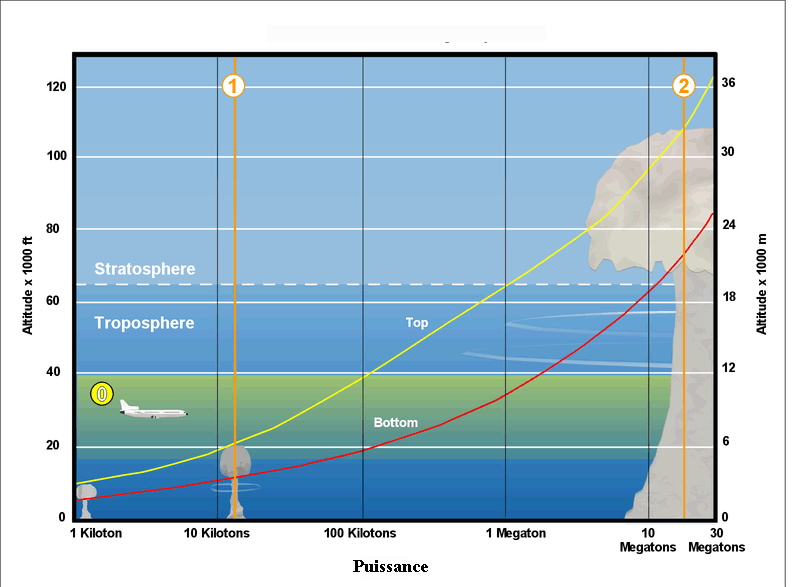
The typical tactical device, equipped with MIRV heads on submarine-launched ballistic missiles, has a power of 100 kilotons. This places its mushroom cloud above the cruising altitude of commercial airplanes (11,000 meters: 30,000 feet). This also means that radioactive waste will travel easily everywhere due to jet streams. The mushrooms from 30 megaton devices reach altitudes of 35 kilometers. When you imagine the "Tsar Bomba" (60 megatons, which goes beyond the Earth's atmosphere.
I have already written a page on the underground nuclear test Beryl, in In Ecker, here are some photos, which speak for themselves.
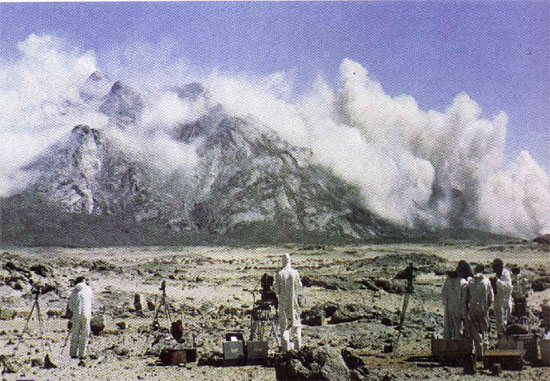
The cap pops and the radioactive gas escapes
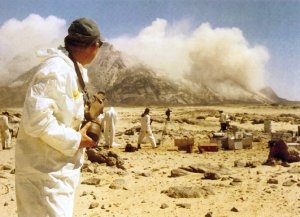
Fortunately, I have my equipment....
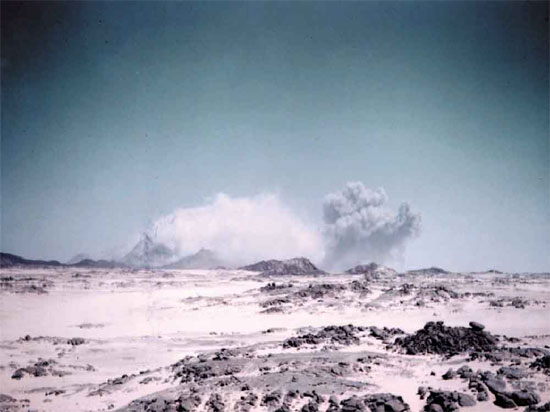
The mountain, completely hidden by the radioactive cloud, which will continue to expand
The bomb did not develop 20 kilotons, but 50. The armored doors gave way !
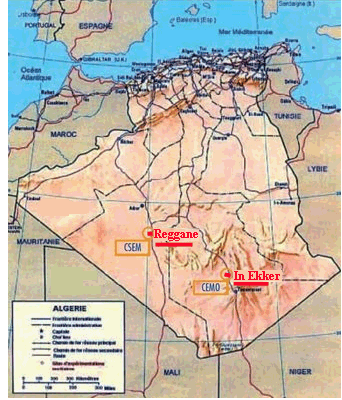
Location of nuclear test sites in the Sahara
The elected officials were hesitant. Some refused to swallow the lies that their "scientists" fed them. In the end, de Gaulle lost patience:
Tahiti, "military strategic territory"?
Should we attribute to General de Gaulle the "last punch on the table" that was supposed to "convince" the Polynesian elected officials. The testimony before the inquiry commission of Mr. Jacques-Denis Drollet, then President of the Permanent Committee of the Territorial Assembly, sheds new light on the vote of February 6, 1964, which freely ceded the atolls of Moruroa and Fangataufa to France, by three votes for and two abstentions. Jacques-Denis Drollet reveals that he was called by Jacques Foccart, special advisor to the General. He doesn't remember the exact date, but he remembers being secretly introduced into a room in the Elysée, then passing through a back door, he found himself surprised face to face with the General-President.
"I met General de Gaulle who made it clear that for the supreme interests of the Nation, he was ready to decree that French Polynesia would become a 'military strategic territory' with a military government if we did not comply with his request for transfer. And since this general does not have a reputation for joking, I took the threat or the blackmail seriously. We had fought so hard and paid dearly for our democratic gains that in my mind, I considered giving way to avoid the yoke of a military government."
- page 33 -
It is easy to find reports and programs on the subject. It's worth watching.
http://www.aven.org/aven-accueil-galerie-video-resultat
http://www.aven.org/aven-accueil-galerie-video-canopus
http://www.aven.org/aven-accueil-galerie-video-visite-a-reggane
http://www.aven.org/aven-accueil-galerie-video-commemoration
http://www.aven.org/aven-accueil-galerie-video-le-paradis-nucleaire
http://www.aven.org/aven-accueil-galerie-video-compil
http://www.aven.org/aven-accueil-galerie-video-reportage-fr3
Life aboard nuclear missile submarines The aerial test Canopus, Mururoa 1968, the most powerful: 2 megatons Reportage on site In Ecker The balance drawn by the Polynesians. The homeland of human rights Film broadcast on ARTE October 2007 Compilation of images of different nuclear explosions FR3: 8,000 to 15,000 people exposed
In these videos you will see the Greenpeace episode, and the boarding of sailboats sailing near Mururoa, incidents qualified as "benign" by our idiot Minister of Defense, Messmer:
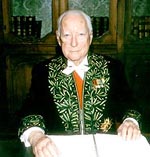
**Messmer at ... the French Academy. **
- We simply told these people to go do their antics elsewhere
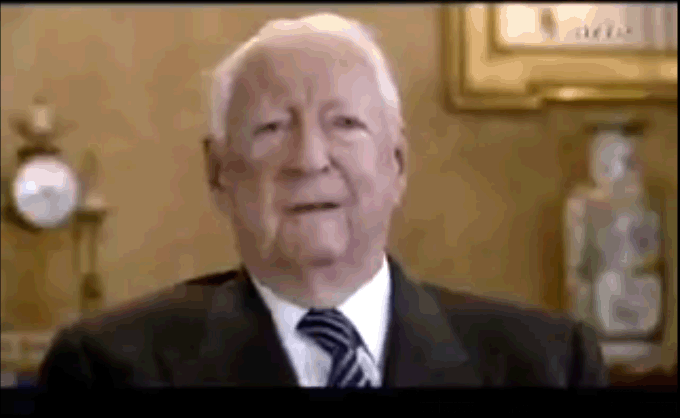
The weight of words, the impact of photos
- Yes, it's true, I sent two hundred legionnaires with tanks, to move just at the zero point, after an aerial test in the Sahara. We wanted to know if it would be possible, just after a nuclear explosion. But, you know, at that time, we didn't know very well the effects...
(The ground was covered with sand that had become radioactive. The vehicles, not airtight, drove through this sandstorm and the drivers swallowed a lot. Many died very quickly, shortly after.)
- When we had to stop the tests in Algeria, we looked for a place to continue, a quiet place. And from that side, an island was good....
- When the general saw the test at Mururoa, he said to me " it's beautiful! ..."
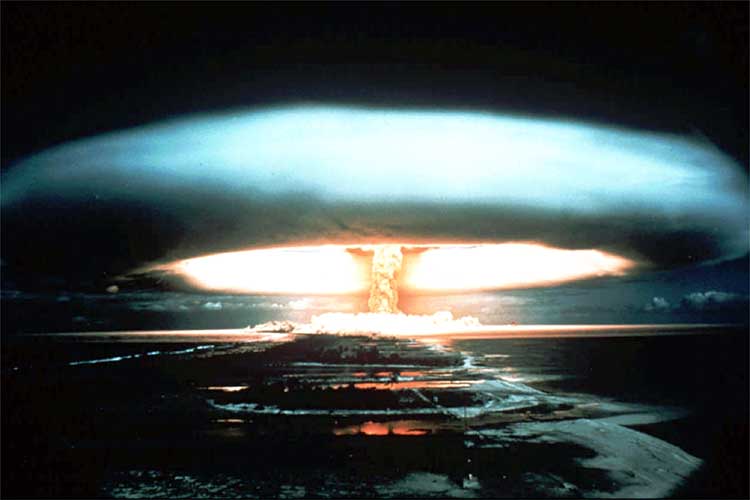
What a beautiful! ...... (De Gaulle, Mururoa)
You are facing the people who influence the destiny of the world and then leave the bill to future generations, for millions of years, after having passed the gun and taken their place in our history books. But, still, Gaston Palewski, at the time Minister of Research, witness of the failed test at In Ecker, later died of leukemia: it happens that ministers swallow radioactive filth. But it's exceptional. De Gaulle was never irradiated.
But there are always young generations, "loaded with diplomas," to take over on the battlefield of stupidity. In the video
http://www.aven.org/aven-accueil-galerie-video-le-paradis-nucleaire
you will hear a young upstart, a professor at the Foundation for Strategic Research, who probably has never seen a dead person or an irradiated one in his life.
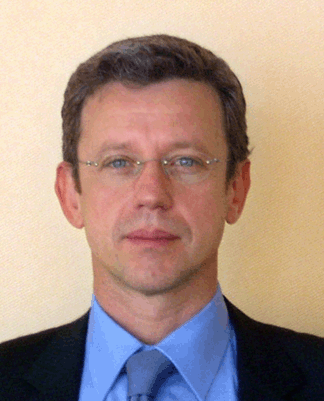
Bruno Tertrais, very pleased with himself, very media-covered
Professor at the Foundation for Strategic Research
The clear gaze of the boy without any qualms, resolutely "Atlanticist," consultant at the Rand Corporation.
At the question "was it appropriate to carry out these tests in Polynesia?" you will hear him answer "Completely? Polynesia is France!"
Regarding his political ideas, see the book he published in 2005, at the start of Bush's second term:
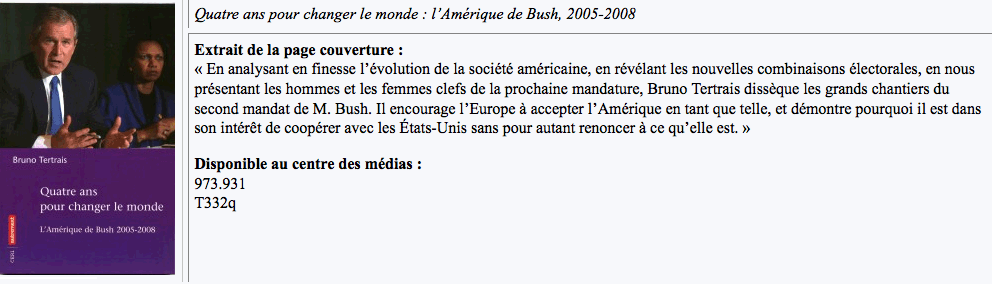
Political analyst, who "dissects"? You talk about it...
These people should be lowered into a well, with provisions, water, and then lowered next to them, at the end of a rope, a good piece of irradiated iron, or radioactive sand, saying "here, it will keep you company for a few hours." This kind of thing where "nothing is seen, nothing is felt." They would wet their pants from fear and beg crying to be taken out of there.
Elsewhere, those who died from radiation died in terrible suffering. An engineer irradiated at Mururoa died in France, writhing on her bed, gripping the bars, even heavily medicated with morphine. Her mother "I thought for a moment to suffocate her with her pillow to shorten her suffering." It would be good for Tetrais to see these things with his own eyes. Him or Messmer, or so many others. Like these spokespeople who carefully avoided eating salads harvested in Polynesia and made me think of the phrase by Prévert:
*- Those who manufacture pens in basements with which others will write that everything is fine. *
Politicians are not automatically accomplices and guilty. They can be manipulated, like any ordinary person. Look at this photo of Chirac, taken by Bush over the twin towers, to see firsthand, on the same day, the horrors committed by ... Al Qaeda. A French president, convinced, then ready to send French troops to Afghanistan.
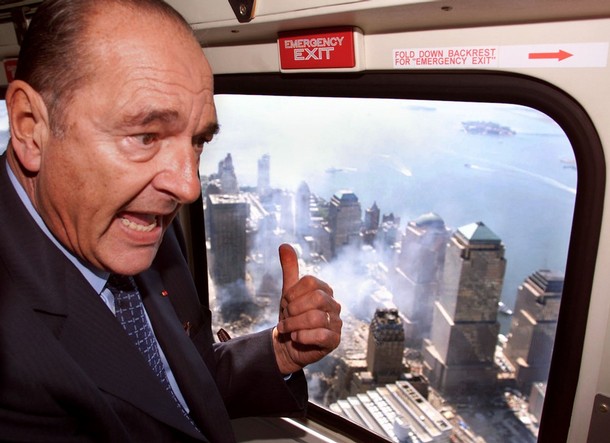
Chirac, flying over Manhattan in Bush's helicopter, September 11, 2001
America is attacked, we must fly to its aid!
But a few years later, better informed, he refused to associate France with the Iraqi adventure.
On the other hand, remember, Tony Blair was convinced after watching ... a simple video. After that, it was too late to go back, to give credence to another tune...
Above all this story, de Gaulle, perched on his cloud, with his megalomaniac dream of greatness and French independence. I have chosen to give you this photo of the chief promoter of the French deterrent strike, next to a young military engineer, Pierre Billaud. Born in 1920, he is now 89 years old.
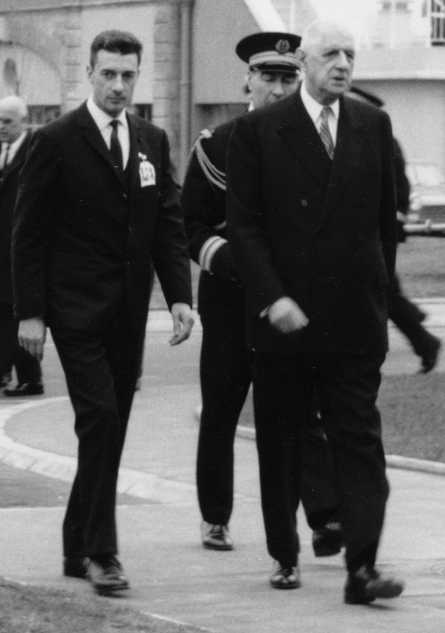
De Gaulle visiting the nuclear center of Limeil, next to Pierre Billaud
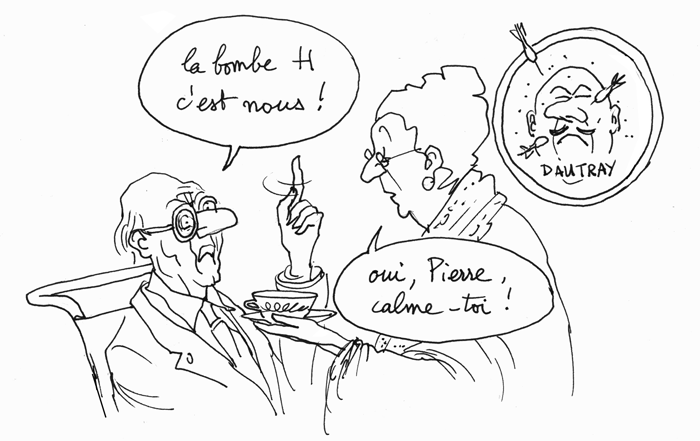
For more details, refer to the page I dedicated to heroism. There you will find excerpts from Pierre Billaud's website, whose obsession, if he hasn't already passed away, is that finally, it is him, and not Dautray, "the father of the French H-bomb."
I have a personal anecdote about Pierre Billaud. He contacted me by email a few years ago, when I had written on my site that France had conducted (and still conducts) nuclear tests on its own territory. Billaud found this idea absurd and added:
- The only solution, if we wanted to resume tests, would be to have the balls to do them in the ocean depths....
More ecological, you can't get.
In a recent article (2008), Billaud pays tribute to Carayol (deceased in 2003), as the true "father of the French H-bomb" (and not this opportunist Dautray who, closer to de Gaulle, took credit for it. It was the very young Carayol who had, in France, the simple and bright idea (Sakharov's assembly in Russia and Teller-Ulam's in the USA. An idea qualified at the Los Alamos mesa as "technically sweet").
It was indeed time that France finally did justice to its atomic pioneers, even posthumously:
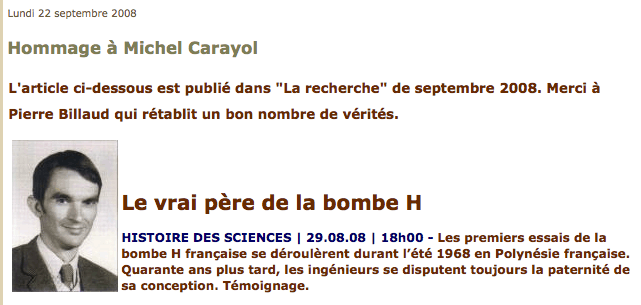
A Carayol judged by all who knew him as "very human," but wonderfully unaware, like Billaud, of the work he was doing. He never saw an irradiated person die. He may not even have seen a dead person in his life. Like Billaud...
Wasn't it Oppenheimer who said;
- We have done the devil's work ...
A small remark in passing. We know much more about these techniques now. The very beginning of the secret tests consists indeed in conducting them in active mines, which allows to camouflage the seismic signal in the background noise of the normal activity of the mine. But today, all of this is frankly outdated. But then, how do they proceed to continue studying, to advance nuclear armaments in different countries?
A more sophisticated technique was initiated by the Russians, at their site of Semipalatinsk, in Kazakhstan more than forty years ago. It consists of using a tank, with a diameter ranging from 10 to 30 meters, depending on the power to be managed. Sufficiently thick and solid to withstand the shock of the explosive wave. These installations are "semi-buried." It is not necessary to operate by housing these spherical enclosures at great depth. Why? Because we reuse them, of course! After the shot, we open, empty and clean. Specialists will talk to you about "cold shots." The seismic signal is almost nonexistent since the "tank" absorbs the shock. The shock wave reflects on its wall, converges towards the geometric center, new rebound, etc. Until the energy of this explosion is quietly converted into heat. We line the inner face of this spherical enclosure with a material that causes an inelastic reflection of the shock wave, accelerating the transformation of its kinetic energy into heat, not radiative excitation.
August 25, 2009:
You can do a very simple calculation on the art and manner of negotiating the stealth of underground nuclear tests.
O n knows that one can reduce the power of A bombs to less than one kiloton. Let's say 3 hectotons to fix the idea. We know that:
1 kilo of TNT = 4 10 6 joules A u passage, note that the energy contained in a kilo of dynamite (a good piece of this explosive) represents a million calories (a calorie = 4.18 joules). A calorie is the amount of heat needed to raise one cubic centimeter of water by one degree.
S uppose I want to take a bath and the water I have is at 15°. I want to raise it to 30°. I could therefore raise to this temperature a volume of 66.666 cubic centimeters of water, that is 66 liters.
Y ou see that the energy stored in a piece of dynamite does not allow you to take a warm bath.
O f course, if you put the piece of dynamite under the bathtub, the effect will be completely different.
A bomb of 300 tons of TNT represents 1.2 10 12 joules, or 2.4 10 11 calories. Could such a bomb vaporize the water of a lagoon, assuming that it would need to raise its temperature by 70°? It would be capable of boiling 3.54 billion cubic centimeters, that is 3.4 million liters or 3400 cubic meters. You can see that once the test is carried out, the heat released can be dissipated by heating a fairly modest body of water. A rather unecological solution to heat a nearby real estate complex.
T he lagoon of Mururoa has an area of 15 square kilometers. Approximate its average depth to ten meters. This represents 150 million cubic meters. We see that a bomb of 300 tons of TNT would vaporize two hundred thousandths of the water of the atoll.
W e are touching on the aspects that characterize the explosives. It is an energy that is rather modest, considering what nature can deploy (in the smallest tropical cyclone), but delivered in a very short time.
R evert to the question of explosions in steel tanks (a technique invented by the Russians in the 1950s) 300 tons of TNT therefore represent: 1.2 10 12 joules. Take a cavity of thirty meters in diameter, with a volume of 113,000 cubic meters. When all this energy is dissipated in the form of heat, the pressure that will be established in the chamber will be equal to the volumetric energy density, that is 10 7 pascals, or 100 bars. It is not gigantic.
T he central question is the dissipation. The energy is initially concentrated in the thermonuclear medium in the form of a detonation wave and an intense flux of X-rays. But the X-ray flux alone represents 90% of the energy. It is this X-ray flux that, absorbed by the air, gives the "fireball". A hundred meters in diameter for bombs of 10 to 20 kilotons (Hiroshima, Nagasaki). This gives an idea of the distance of X-ray photon absorption in the air.
I n these experiments, we are not obliged to fill the tank with air. If we use a gas that gives a shorter absorption length, on the order of the tank's radius, the entire gaseous mass will be raised to high temperature, all at once, instantly (in 50 nanoseconds), with a pressure applied on the shell, of 100 bars. We can also reduce the absorption distance by increasing the pressure. We line the inner wall of the tank with a material that absorbs gamma rays and traps all the filth that will be produced by the explosion, a layer that will then be scraped by robots and put into barrels, and also analyzed, for decoding the experiment.
I f the gas in the tank is raised to 100 bars, this would mean that its absolute temperature, assuming the initial pressure is 1 bar, would be multiplied by 100. After the shot, the enclosure is filled with gas at 3000°, that of an electric lamp filament. We are not "at the heart of the sun", far from it. But if the tank is made of steel, this heat is quickly dissipated, by simple thermal conduction. A one-centimeter thick enclosure would easily withstand 100 bars. There, we put ten and this mass of metal makes a heat sink. There is an entire technology of tank management to imagine. The envelope must be strong enough to withstand the pressure (100 bars: moderate). Around it, a concrete envelope dampens the noise, by modifying the acoustic impedance. The whole thing, "decoupled from the ground" and "semi-buried," is mounted on the equivalent of "block cylinders," so that we do not wake up the neighbors.
O f course, this pressure rise is very rapid. All means will be used to dampen this water hammer. The Russians line the inside of their tanks with foams, which they then remove after the shot, to reuse the object. They play several roles at once, already mentioned.
T he Russians also surround the tank with a concrete shell, to increase the acoustic impedance, reduce the noise. A noise ... inaudible, the cube not being connected to the surrounding medium. These "semi-buried" tanks are not in contact with the ground.
U nder these conditions, you can see that it is actually extremely easy to carry out, even near populated areas, underground nuclear tests, without anyone noticing. When reusing the tanks, they must be emptied, "decontaminated". If we decide to put these gases and solid products into containers, then bury them or throw them into the sea, no one sees or knows.
All of this with calculations that can be done on a two-dollar calculator.
D o French military engineers conduct experiments of this kind today?
N o, of course, because it is well known:
the French are committed to respecting international agreements on the prohibition of underground nuclear tests Who would believe such a fable?
In a nuclear weapon, the explosive is mainly plutonium 239. It does not exist in nature, having a lifespan much shorter than that of uranium 235, which is present at 0.4% in natural uranium ores, the rest being the isotope U238. When a nuclear reactor is operated by making it produce fast neutrons, these are directed towards a "fertile blanket" made of uranium 238. If a neutron is captured, plutonium 239 is produced.
In the concept of the "cold shot", the implosion compresses what is called a "ghost", that is, a non-fissile material, whose properties are very close to those of the nuclear explosive. One can then think of uranium 238. It is not really ecological. But ecology has never been the main concern of atomists. A second formula consists of using a non-fissile isotope of plutonium, even closer to Pu 239 (it has the same "equation of state"), which is Pu 242, which is also formed by bombardment with fast neutrons. Very, very expensive....
Finally, the French follow in the footsteps of the Russians, who have long dominated the "warm shots". These are "failed" nuclear tests, attenuated, where they barely touch the critical mass. You can see that between the "cold shot", without nuclear reactions, and the underground nuclear explosion, there is now room for an entire range of "warm" shots, and these are carried out continuously by the nuclear powers, including France, of course. In other words:
The Comprehensive Nuclear-Test-Ban Treaty is a complete farce
Now, you can still believe it, if it can reassure you. You can also believe that the army is content with computer simulations, or that the Megajoule laser will serve as a test bench for future French thermonuclear weapons. A nice mirage.
In passing, you also discover the basic concept of "mini-nukes", mentioned by the Americans. All of this has been operational for a long time, both in the West and in the East.
In these tank experiments, one can thus modulate the power of the "warm" shots between one to ten tons of TNT equivalent, which today is sufficient to study a new weapon.
Regarding the tests conducted at Mururoa, the military first drilled their wells (seven hundred meters deep, one meter in diameter) in the coral barrier, made of limestone. You know what an atoll is [http://fr.wikipedia.org/wiki/Atoll]. It is an ancient volcano, made of basalt, which has gradually sunk. The corals then grew to maintain contact with the sunlight. As this basalt mountain sinks, the corals grow.
This coral rim, made of limestone, was easier to drill than the basalt, from a derrick installed on the surface, while the basaltic base, at the center of the atoll, is 20-30 meters deep. But this limestone is also more fragile. During a test carried out in 1979, the coral platform cracked and a section of a million tons slid into the sea, causing a tsunami, a wave of twenty to thirty meters high, which injured one person seriously. Afterwards, the military took measures to protect themselves, in sort of watchtowers, whose feet were thin enough to be insensitive to the passage of the wave. But it did not happen again.
Once the well was drilled, the device is lowered, then the measuring instruments, contained in a container of about ten meters in length. The hole is then refilled with parts of the drilling debris. This material, made loose, is a good damper. Finally, a concrete plug is placed at the exit. The explosion compresses the basalt and creates an underground cavity, at seven hundred meters depth, whose diameter depends on the power of the device. At Mururoa, typically between ten and thirty meters in diameter. This cavity is filled with hot gases and lava. The pressure it exerts is less than that of the seven hundred meters of basalt debris that fill the well.
At this stage, the military want to know more about what happened. Teams then drill a ten-centimeter diameter hole, at an angle, aiming at the nuclear chamber. Thanks to the survey, they can collect gas and even molten rock, lava, and analyze it. These specialists are "radiochemists." Activities that are not devoid of risks for the military engineers who manage them. Many have contracted cancer and died in terrible suffering.
Finally, the gases contained in this magmatic nuclear chamber cool down. The basalt wall cracks, disintegrates and gradually fills the cavity. In Nevada, where the tests are conducted at a lower depth, this results in a crater-like subsidence.
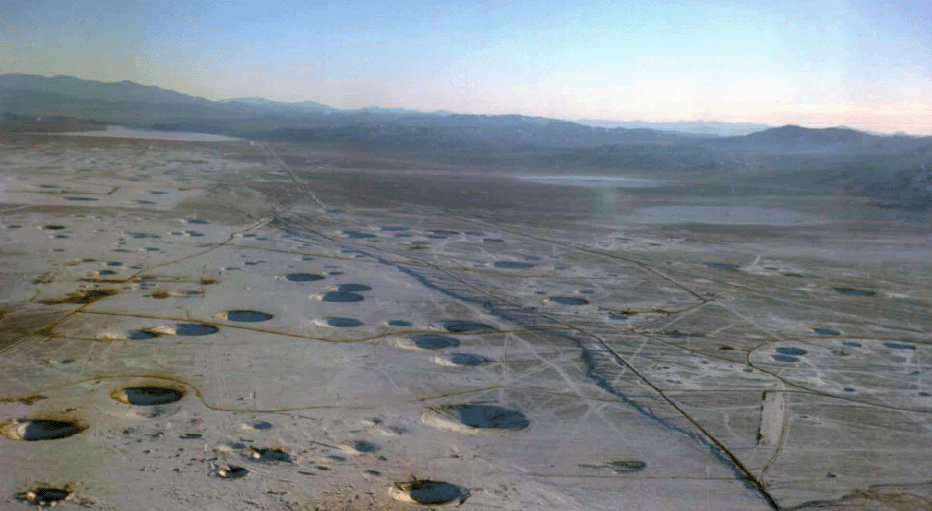
The site of the underground nuclear test site in Nevada, USA
I believe that the American tests, conducted in ... sand, are not as deep. When the explosion occurs, under the lagoon of the atoll (Mururoa was one of the most beautiful in the region, and before using it, they started by completely deforesting it), the explosion creates a shock wave, which propagates through the basalt. In terrestrial experiments, this wave causes a tremor of the ground. At Mururoa the shock is communicated, at the contact, to the water of the lagoon. A shock wave propagates in the liquid medium, at a speed higher than that of sound in water. This mass of water is projected into the air. It rises slightly. And since water is an inelastic material, it reacts by a phenomenon of cavitation. The white mass that appears in the lagoon are water vapor bubbles, which then resorb.
In 1992, Mitterand decided to stop the nuclear tests in the Pacific. Chirac decided to resume them in 1996, for a few last tests, intended to validate the power of the new weapons, until France decided to sign, as expected, the famous Comprehensive Nuclear-Test-Ban Treaty.
The balance of this is summed up in a simple sentence from a Polynesian:
*- They have polluted the belly of the sea. *
For a few decades of illusion of power, autonomy, and national independence, the French created a monstrous potential pollution. We do not know when a crack will occur, in ten years, a hundred years or a thousand years, but one day, someone will pay the bill left by an old man dreaming of greatness who, upon witnessing the first aerial thermonuclear explosion at Mururoa, exclaimed:
- How beautiful it is!
Hope that the dandelions of Colombey les Deux Églises have good taste.
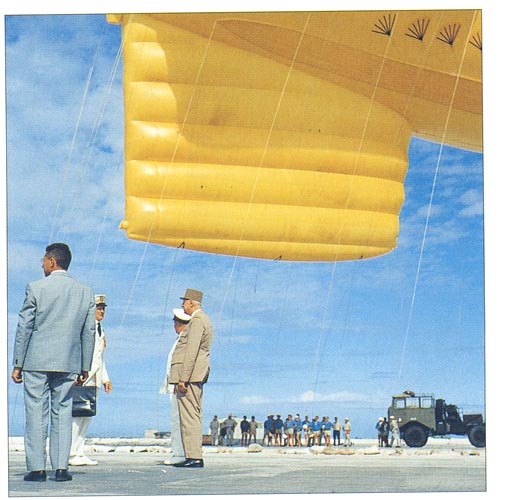
A world led by the dreams of megalomaniac old men
Beyond the ecological damage, all agree to conclude that the French military presence in Polynesia proved disastrous on the social and human level. This great liar, always de Gaulle, playing on the naivety of the locals, praised the "development" of the region, which was never anything but a myth. In fact, the French, loudly proclaiming "Polynesia is France" irreversibly damaged the local culture, bringing above all everything that the modern world could have the most despicable: the taste for useless things, "junk food" (the country has become populated with obese and alcoholics), show-off. The world that Alain Gerbaut had known disappeared forever, crushed by the dream of an idiot megalomaniac.
What use are our nuclear-powered submarines, armed with rockets with thermonuclear warheads, supposedly "hardened," today? To dissuade whom? Does having these weapons give us more credibility in the eyes of the world than the European countries that do not have them? De Gaulle, who said "the logistics will follow," was wrong in his war. This one is now fought on the economic and social terrain, on the human terrain, with which this disciple of Machiavelli has never been in contact all his life.
Below are the different sites of aerial nuclear testing in the world. In 22, you can see the site supposedly where the nuclear weapons, which the state of Israel is equipped with, with the discreet complicity of South Africa, were developed.
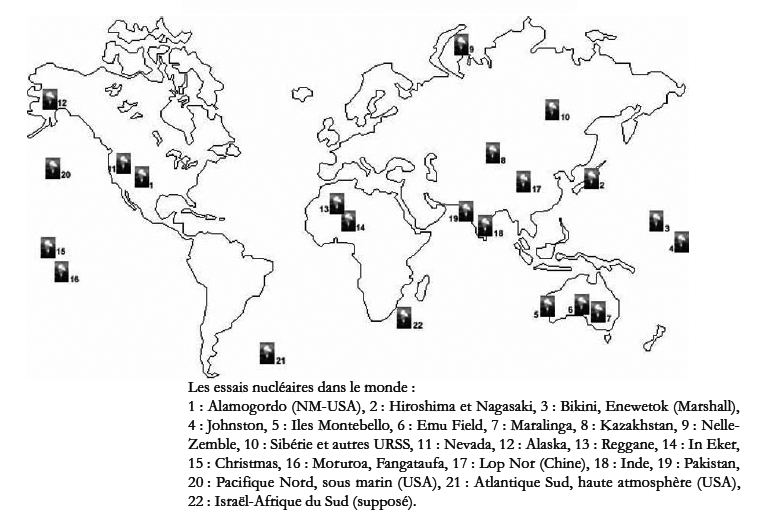
Nuclear test sites around the world
The UK has 200 nuclear warheads, France 350, China 2350, the USA 11,000 and Russia 19,500
Israel? Unknown. More than 33,500 warheads.* Surreal, isn't it? *
That's it, I've done my job. I've relayed the information. It seems that I have a certain audience in the Hexagon. I'm willing to believe it. That's why I will continue to write these posts, to increase the amount of information contained in my site. But I remain surprised and disappointed by the general apathy. No reaction to the message contained in my last book which, I believe, is important.
There are major issues that remain perceived as a kind of incitement to dreams, to imagination. The mind proves unable to go further.
A memory comes to mind suddenly, from the early 1980s. At the time I was the first, following the assassination, in Madrid, of my colleague and friend Vladimir Aleksandrov, to try to draw the public's attention to the phenomenon of nuclear winter, which he had discovered and published with his colleague Stenchikov. Aleksandrov was eliminated, presumably by the American secret services, at the moment when he had begun a crusade to make known what others (the military-industrial lobby) preferred to keep secret. But time has passed. All of this is known now. They even made movies about it.
I vainly tried to move the French big press. No results, after months of effort. Finally, a friend told me:
*- Have you tried Humanity? *- No, I admit .....
I then contacted Claude Cabanne, its editor-in-chief at the time and it was then possible to publish several long articles (three if my memory serves me right) covering each a ... double page of the newspaper. The illustrations were very recognizable and I remember having seen at the time Georges Marchais, at the party's headquarters, consult one of these pages, when the camera showed him on television. I can say one thing for sure: in this article, I did not spare either side. Russians, Americans and other members of the nuclear club were put side by side. But no one censored a single line of my text.
What I just want to point out is the sentence from Cabanne, when I met him and had pleaded for the publication of articles on this subject. He literally replied:
- Yes, it would be a good topic for Humanity-Dimanche.
And I immediately said to him:
*- Do you realize that I am suggesting an article that mentions a major, perfectly objective and well-founded risk, in which the global military-industrial complexes are plunging humanity. And you are putting this information in the "magazine pages" section. *
Cabanne reacted, as if emerging from a dream:
- Yes, you are right..... ---