Untitled Document
The Sukhoi 30 is reversing
April 15, 2010
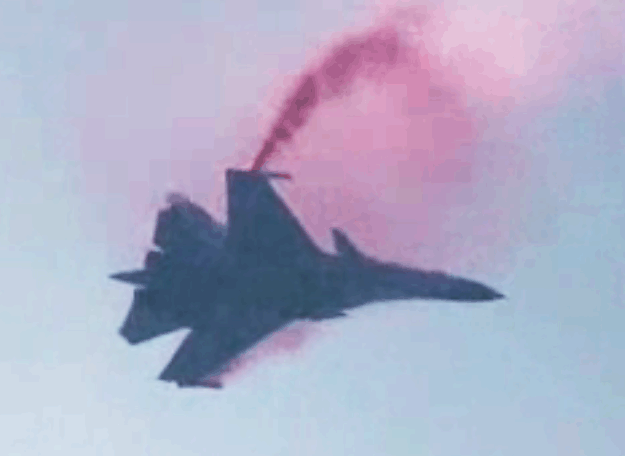
../../VIDEOS/RussianJetCA_SU-30.wmv
****Watch the video
The Russian Sukhoi 30 defies all understanding from an aerospace engineer like me. We recall that the Russians were the first to surprise the aviation world with fighters capable of performing the "cobra maneuver." The secret lay in the use of "nozzles that can spit into corners," otherwise known as "thrust vectoring." In the case of the cobra maneuver, this vectoring appeared to occur vertically—up and down. The nozzles on the first jet aircraft of the 1940s, such as the Thunderjet, were fixed nozzles with a "constant expansion ratio."
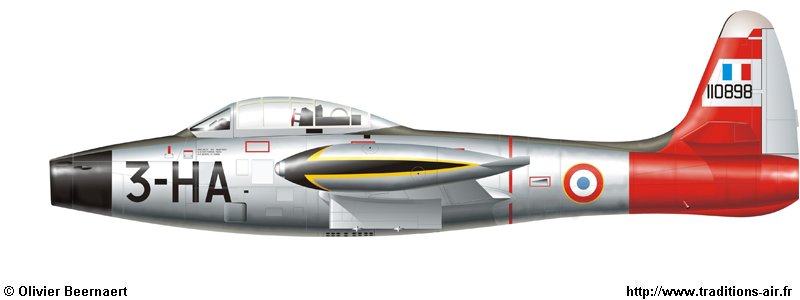
Thunderjet 8-84 (here in the colors of the French Patrouille de France). Image source: link above
These nozzles were designed to operate optimally only at high altitude, when the exhaust gases were at ambient pressure. On the ground, these gases were "overexpanded," leading to reduced efficiency. The first improvement was therefore the development of variable-geometry nozzles:
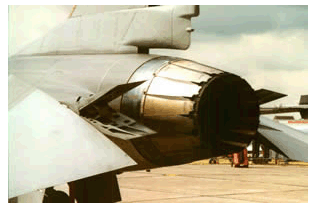
"Petals" of a variable-geometry nozzle, here at ground level, at minimum expansion ratio
The petals are actuated by hydraulic rams.
Today, aircraft manufacturers have succeeded in creating nozzles that not only have variable exit areas but can also direct their jet in a specific direction.
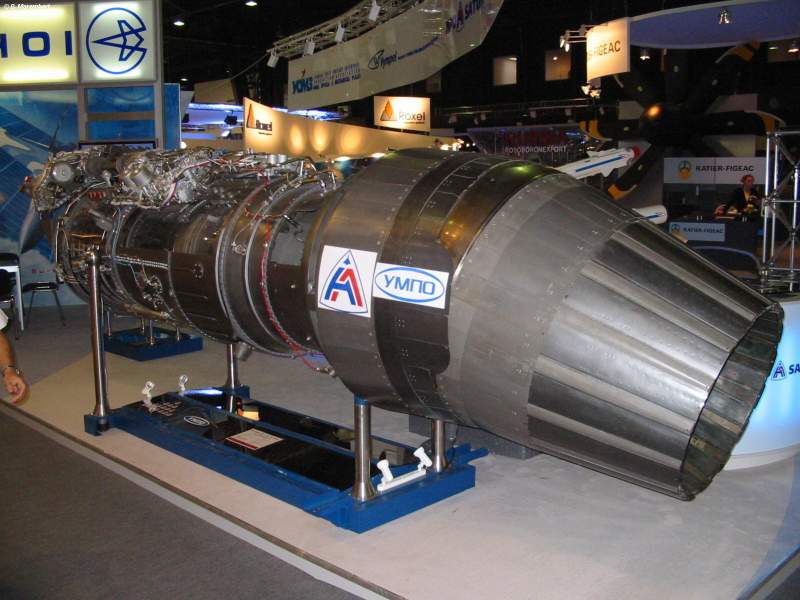
Thrust-vectoring nozzle: steerable
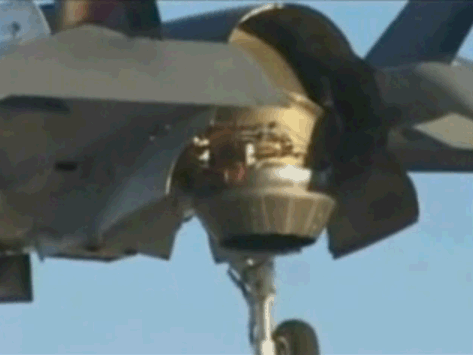
This vectoring can reach 90 degrees. For example, the American vertical takeoff fighter F-35 B:
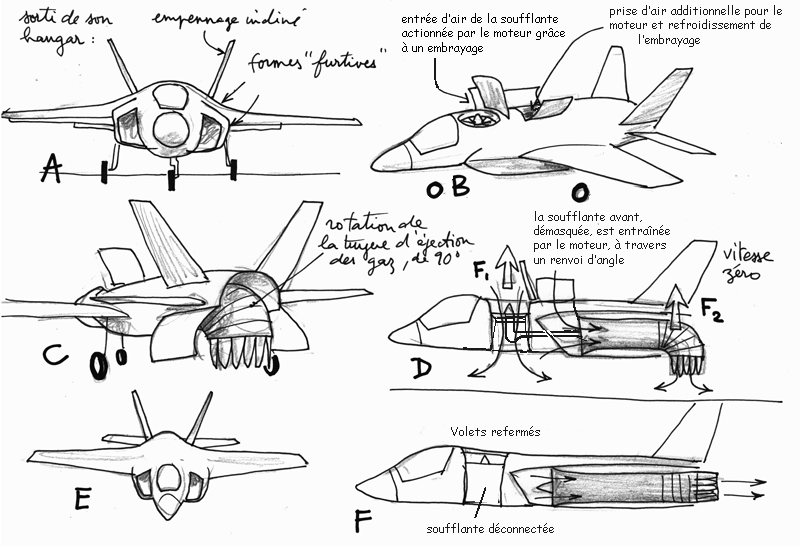
Takeoff from an aircraft carrier deck
Videos showing the maneuvers of this aircraft:
:
:
:
:
:
Detailed view of the F-35 B's vectoring nozzle, tilted downward at 90° ****
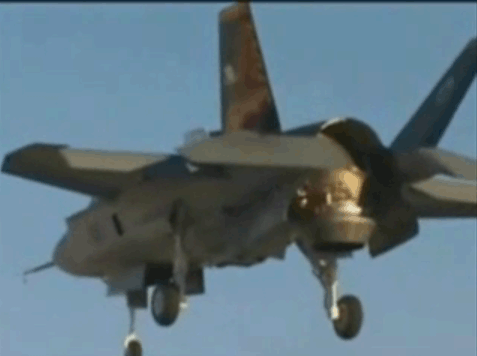
The F-35 B performing a perfectly stabilized vertical takeoff ****
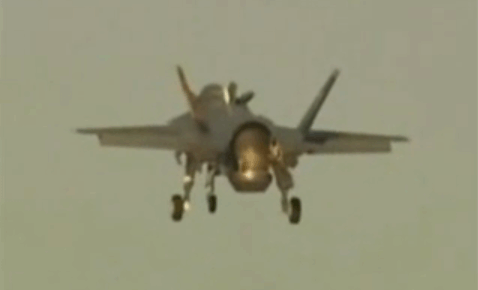
Same view from behind
Fans of the Largo Winch comic albums (Issue 15, page 25) will note the hero's mention of the "secret weapon of the aviation division of Group W": the Mowgli III business jet, capable of vertical takeoff.
The video of the Russian aircraft now suggests complete mastery of thrust vectoring, combined with aerodynamic control surfaces—those "mustaches" clearly visible in the photo above. These control surfaces move chaotically during maneuvers.
The aircraft transforms into a... clothes iron, then enters a spin and exits like a cat, with a sudden twist. Indeed, despite the severe crisis following the collapse of the former Soviet Union, the Russians remain truly skilled engineers. A comparable example of high maneuverability can be found in this video showing the maneuvers of the American F-22 "Raptor," which also exploits the capabilities offered by thrust vectoring.
http://www.youtube.com/watch?v=GW2Hvu_mUdU&feature=related
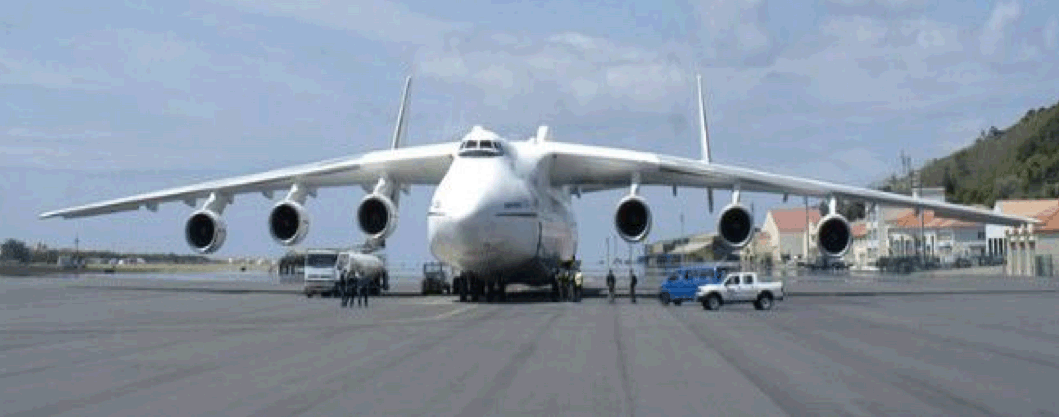
In the next PowerPoint presentation, you'll find a description of another "Made in Russia" product: a cargo plane landing on a train composed of 28 wheels (spare wheels are visible in the cabin). Appreciate the ruggedness and lack of design, consistent with the character of these machines.
../../VIDEOS/Antonov 225.pps
The Antonov 225, the world's largest aircraft
Wingspan: 85 meters (73 for the Airbus A380). Length: 90 meters (80 for the French aircraft)