Colloquiums in Korea and Strasbourg, 2010
Colloquiums in Korea and Strasbourg
October 20, 2010
My oral presentation at the Korea colloquium (Video)
Cold plasmas **** **
Excerpt from this brochure:
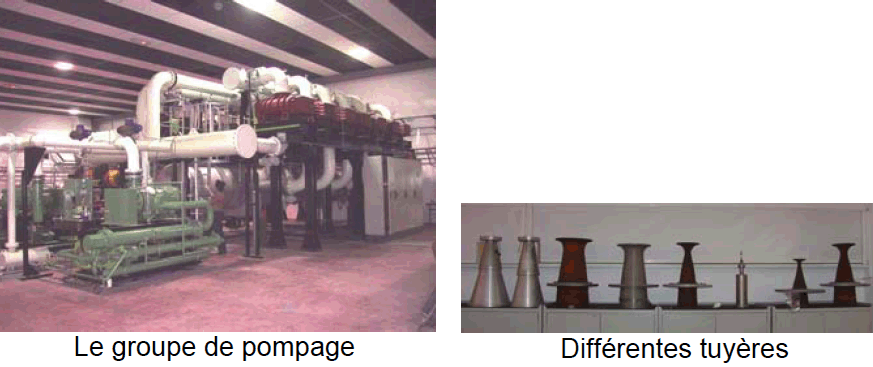
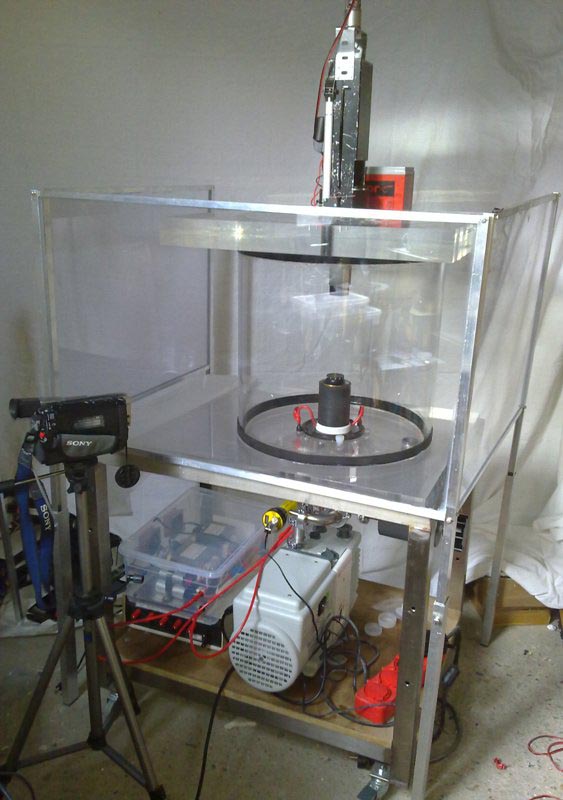
Influence of a DC electric discharge on a rarefied supersonic flow over a flat plate
The goal is to generate a plasma around the model. The model is equipped with two electrodes between which a voltage difference is applied. When the electric field becomes sufficiently strong (around 1000 volts for a 30 mm inter-electrode gap), a plasma is created.
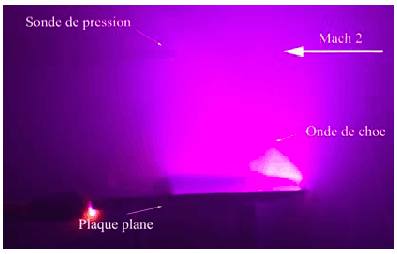
Researchers have recently observed (...) the consequences of such a plasma. They demonstrated modifications in the velocity profiles near the obstacle, as measured via stagnation pressure, an effect on the shock wave position, and a change in drag (...).
How can we explain that the presence of an electric discharge alters the airflow over the plate?
The first idea that comes to researchers’ minds is the thermal effect. Electrons present in the discharge, accelerated by the electric field, could locally heat the gas, thereby modifying the airflow properties. However, it appears that this heating alone does not explain all observed phenomena. A completely different explanation involves the concept of ion wind. Ions in the discharge are accelerated by the electric field and, through collisions, transfer their momentum to neutral molecules (somewhat like a billiard ball striking another), resulting in a modification of the flow velocity profile (acceleration or deceleration depending on the electric field sign). These two phenomena may be superimposed (...).
The ICARE laboratory, building on previously obtained results (...), intends to fully leverage its facilities and expertise to actively contribute to the development of
the aeronautics of the future.
After standing still, now incompetence in action
Read the grandiose phrases at the end of the ICARE brochure.
Department of Information and Engineering Sciences (ST2I) Its philosophy
The merger of the Department of Engineering Sciences and the Department of Information and Communication Sciences has given birth to the Department of Information and Engineering Sciences. Its hallmark of openness is one of its greatest strengths: openness toward other disciplines, openness toward industry, openness toward society… It serves as a privileged interface.Its objectives
Its primary goals are to build a scientific approach centered on knowledge production and centered on humanity—human beings and their needs, human beings and their health, human beings and their products—and consequently to develop a systemic approach to design, produce, and operate systems that are safer, more communicative, more economical, more efficient, and more environmentally respectful. These objectives align with the CNRS strategy: to develop foundational concepts and technologies; to be at the forefront of knowledge and to foster emerging topics; to respond to society’s major challenges.Its main research themes
Communications, security and safety of hardware and software systems, mechanical systems, energy, engineering for life... The department aims for breakthroughs in information sciences and engineering sciences. To achieve these goals, the department seeks to strengthen synergies among disciplines while reinforcing their individual strengths: Computer science, automation and robotics, signal and communications; micro and nanotechnologies, electronics, photonics, electromagnetism, electrical energy; Materials and structural engineering, solid mechanics, acoustics, biomechanics, biomaterials; fluid and heterogeneous reactive media mechanics; characterization, transfer properties, transformation processes… It also aims to adopt a common approach to: understand—model and observe through intensive simulation and experimentation; design and build—specify starting from expressed needs and trace specifications back to components and systems; master, optimize, and manage complexity related to mobility, large data volumes, and networks: Energy, Life, Human and Social Sciences; and generate new applications.A policy of interdisciplinarity
The problems faced by science and society have become complex and can only be resolved through a convergence of methods and concepts. Interdisciplinarity is reaffirmed as the essential element of the ST2I department’s scientific policy. ST2I maintains numerous interfaces with other CNRS departments, especially MPPU, SHS, SdV, and SC. It also maintains strong ties with other organizations such as CEA, INRIA, and INSERM...A policy of partnership and valorization
The ST2I department pursues a proactive policy of partnership with socio-economic communities and of research valorization. Indeed, ST2I research finds applications in numerous sectors: energy, transportation (land, air, space), telecommunications, electronics, information, health. Listening to industrial needs, its laboratories provide solutions to problems raised by companies, relying on high-quality fundamental research. Partnerships with other organizations are also encouraged to enhance interdisciplinarity and complementarity of skills, as well as with universities and schools.The ST2I department strengthens the innovation capacity of its personnel and supports their valorization efforts: patent and software filings, technological transfer support, and facilitating the creation of companies exploiting laboratory innovations. A policy of international openness
The ST2I department engages in intense international scientific collaboration involving more than 20 countries across all continents. These collaborations take various forms: from International Joint Units established in France or abroad and hosting personnel from CNRS and partner countries, to simple researcher exchanges.Currently, we have:
- 4 International Joint Units
- 8 Associated International Laboratories
- 2 International Research Groups
- 22 International Scientific Cooperation Projects
These collaborations result in numerous co-publications in prestigious journals, participation in high-level international conferences, and the development of scientific platforms.
New International Joint Units are currently being created. The ST2I department intends to develop targeted collaborations in Asia and Latin America.
A policy of openness toward Europe
The department also pursues an openness toward Europe:
- 8 European Research Groups
- 4 Associated European Laboratories
- 27 international scientific cooperation projects
- Creation of European International Joint Units
ST2I in figures
CNRS researchers: 1,461
University researchers: 6,728
Non-CNRS researchers: 291
PhD students and postdocs: 8,016
CNRS technical staff: 1,388
University and other technical staff: 1,795
Research and service structures primarily affiliated: 227
Budget excluding personnel and contracts:
28.390 million €
http://www.cnrs.fr/st2i/
Keywords: Openness, privileged interface, systemic approach, communicative, emergence, challenge, breakthroughs, concepts, synergy, model, proactive policy, master, optimize, manage, partnership, valorization, attentive to...
Department of Information and Engineering Sciences (ST2I) Its philosophy
The merger of the Department of Engineering Sciences and the Department of Information and Communication Sciences has given birth to the Department of Information and Engineering Sciences. Its hallmark of openness is one of its greatest strengths: openness toward other disciplines, openness toward industry, openness toward society… It serves as a privileged interface.Its objectives
Its primary goals are to build a scientific approach centered on knowledge production and centered on humanity—human beings and their needs, human beings and their health, human beings and their products—and consequently to develop a systemic approach to design, produce, and operate systems that are safer, more communicative, more economical, more efficient, and more environmentally respectful. These objectives align with the CNRS strategy: to develop foundational concepts and technologies; to be at the forefront of knowledge and to foster emerging topics; to respond to society’s major challenges.Its main research themes
Communications, security and safety of hardware and software systems, mechanical systems, energy, engineering for life... The department aims for breakthroughs in information sciences and engineering sciences. To achieve these goals, the department seeks to strengthen synergies among disciplines while reinforcing their individual strengths: Computer science, automation and robotics, signal and communications; micro and nanotechnologies, electronics, photonics, electromagnetism, electrical energy; Materials and structural engineering, solid mechanics, acoustics, biomechanics, biomaterials; fluid and heterogeneous reactive media mechanics; characterization, transfer properties, transformation processes… It also aims to adopt a common approach to: understand—model and observe through intensive simulation and experimentation; design and build—specify starting from expressed needs and trace specifications back to components and systems; master, optimize, and manage complexity related to mobility, large data volumes, and networks: Energy, Life, Human and Social Sciences; and generate new applications.A policy of interdisciplinarity
The problems faced by science and society have become complex and can only be resolved through a convergence of methods and concepts. Interdisciplinarity is reaffirmed as the essential element of the ST2I department’s scientific policy. ST2I maintains numerous interfaces with other CNRS departments, especially MPPU, SHS, SdV, and SC. It also maintains strong ties with other organizations such as CEA, INRIA, and INSERM...A policy of partnership and valorization
The ST2I department pursues a proactive policy of partnership with socio-economic communities and of research valorization. Indeed, ST2I research finds applications in numerous sectors: energy, transportation (land, air, space), telecommunications, electronics, information, health. Listening to industrial needs, its laboratories provide solutions to problems raised by companies, relying on high-quality fundamental research. Partnerships with other organizations are also encouraged to enhance interdisciplinarity and complementarity of skills, as well as with universities and schools.The ST2I department strengthens the innovation capacity of its personnel and supports their valorization efforts: patent and software filings, technological transfer support, and facilitating the creation of companies exploiting laboratory innovations. A policy of international openness
The ST2I department engages in intense international scientific collaboration involving more than 20 countries across all continents. These collaborations take various forms: from International Joint Units established in France or abroad and hosting personnel from CNRS and partner countries, to simple researcher exchanges.Currently, we have:
- 4 International Joint Units
- 8 Associated International Laboratories
- 2 International Research Groups
- 22 International Scientific Cooperation Projects
These collaborations result in numerous co-publications in prestigious journals, participation in high-level international conferences, and the development of scientific platforms.
New International Joint Units are currently being created. The ST2I department intends to develop targeted collaborations in Asia and Latin America.
A policy of openness toward Europe
The department also pursues an openness toward Europe:
- 8 European Research Groups
- 4 Associated European Laboratories
- 27 international scientific cooperation projects
- Creation of European International Joint Units
ST2I in figures
CNRS researchers: 1,461
University researchers: 6,728
Non-CNRS researchers: 291
PhD students and postdocs: 8,016
CNRS technical staff: 1,388
University and other technical staff: 1,795
Research and service structures primarily affiliated: 227
Budget excluding personnel and contracts:
28.390 million €
http://www.cnrs.fr/st2i/
****November 4, 2010: Network caps, self-adhesive, available
http://bourgogne-franche-comte.france3.fr/evenement/fugues/
Media coverage of the Strasbourg colloquium
: Here is the link to watch online, starting Monday or Tuesday, the "Fugues" program that will be broadcast this Sunday at 11:30 a.m. on France 3 Bourgogne:
A 26-minute episode from the "Fugues" series dedicated to UFOs. Thirteen for the colloquium.
It was extremely tough, you can imagine. Paris to Korea: outbound, eleven hours, return twelve hours, packed like sardines in a 747 where the seats were so close together, in economy class, that it was impossible to rest your head on your arms or on the folded tray. A real cattle car. Eleven and twelve hours seated.
On this island of Jeju, famous for its tourist sites and with a climate comparable to that of the French Riviera (the streets are lined with palm trees), we left sightseeing to the other participants, feverishly preparing our Strasbourg presentations in our hotel room.
Back from Korea, where I lost my cane, we immediately had to drive four hours in a rented car from Korea to avoid being caught by strikes, whose echoes we were hearing, bringing us to Strasbourg at 12:30 a.m. on Friday for a colloquium starting the next day, Saturday.
My wife couldn’t come with us because she had her passport stolen a few days before departure, on the TGV. Doré, in addition to his own luggage, had to carry part of my bags to spare my spine. Honestly, I don’t know how we managed to endure it, both of us.
Since 2008, we have continued to score goals, meaning accumulating scientific presentations—obviously related to UFOs—at major international colloquiums and in high-level peer-reviewed scientific journals.
2008 – International MHD colloquium in Vilnius, Lithuania. Three presentations and one oral talk in the session.
Early 2009 – Transformation of these same papers into the peer-reviewed journal Acta Physica Polonica. Warm comments from the referees.
Bremen colloquium, October 2009. Chair provided by a reader
The setup that enabled the presentation of an experimental result at the international MHD congress
(Parietal confinement of a plasma by magnetic field gradient inversion)
The desired result was obtained from the very first experiment. Like Hannibal in "The A-Team," I like it when plans unfold exactly as expected.
A paper written in one day was sent to the colloquium committee and accepted immediately with an oral presentation. In 2008, it was the committee that had contacted me, expressing their wish that, as a pioneer in MHD and expert in non-equilibrium plasmas, I participate in the Vilnius colloquium.
Korea hosted 400 participants and 275 papers, with only a portion presented orally; the rest were displayed as posters (scientific work presented on panels). When we arrived, we noticed our presentation had been moved to the section dedicated to Z-pinches, whereas we had originally submitted it to another section.
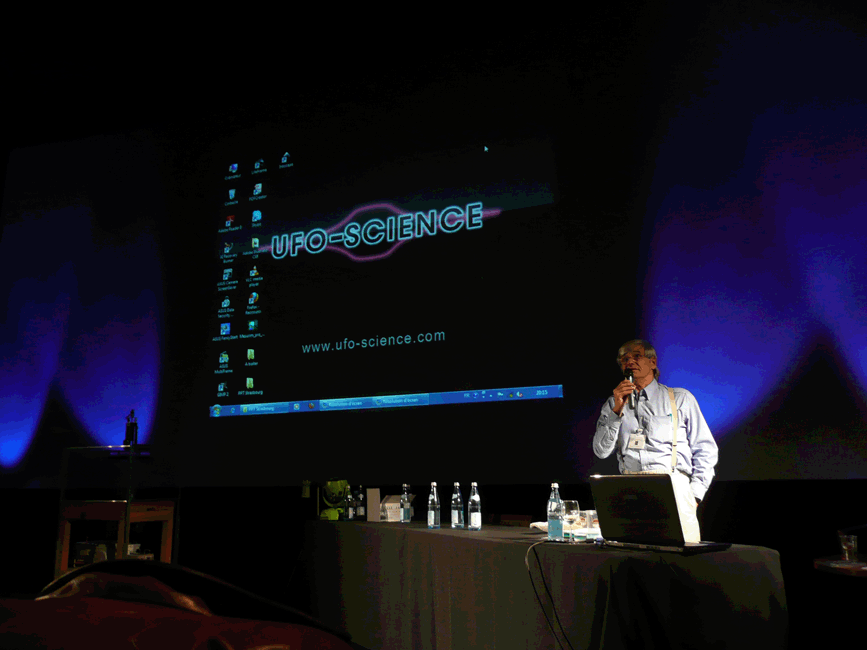
Everything went very smoothly, and this time, Doré was able to film my talk, which will be posted online as soon as possible (we’ll start with that).
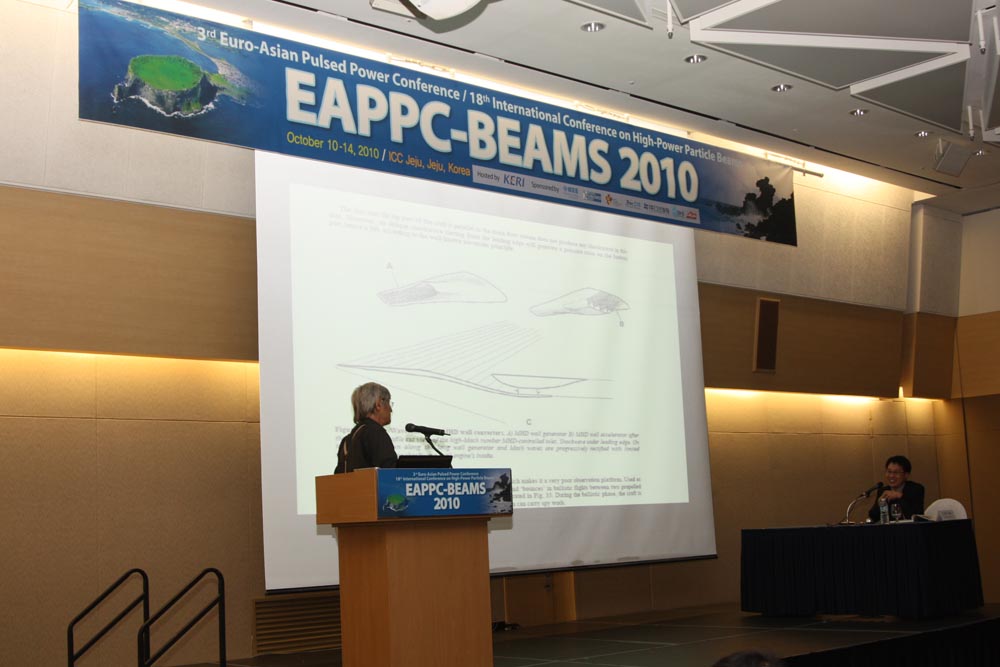
Video of this presentation at the Jeju, Korea colloquium, October 2010
In the hall, people took photos, videos, and notes. Then came the questions. Doré, sitting in the front row, wasn’t well positioned to record them, but he captured perfectly audible the chairman’s comment immediately after my speech:
- In short, you're building a UFO.
No irony, no smirk. Just a simple remark, which provoked no mocking reaction in the room, which received it with attentive silence. The exchange was rich, but I won’t say more here. Indeed, UFO-science urgently needs financial support. We need money for experiments, equipment, and work related to building a pulsed hypersonic wind tunnel. We also need funds for travel. The Korea colloquium cost us 5,000 euros for two, including the cheapest hotel. Travel and high registration fees.
As soon as I finish the page I’m currently writing, I’ll immediately start drafting a new book, printed at the association’s expense and sold for its benefit. 170 pages, including a color section. Selling price (direct, by mail, without publisher or bookseller): 20 euros, 25 for international orders (in both cases, postage is extra. UFO-science will specify). I believe it will be available before year-end. But you can already order it by visiting the UFO-science website. Mathieu Ader, secretary and webmaster, will set up a payment system: checks, bank transfers, PayPal.
I estimate we’ll need a budget of 30,000 euros for 2011 (equipment, experimentation, and missions). My priority is therefore to launch a book sales campaign that, I hope, will bring in this money (this would require only 200 sales, since we earn 15 euros per book).
Finalizing the Fishbird album, for which readers have already sent checks (these are kept carefully), will come after. If people wish to donate to UFO-SCIENCE, please don’t hesitate. If they send, for example, 200 euros, we’ll send them 10 copies as soon as they’re printed. And if they send N × 20 euros, they’ll receive N copies.
I’ll recount what I’ve learned about American and Russian Z-machines in the book. Many readers will be completely astonished upon reading what I write about them.
Angara 2, the Russian Z-machine
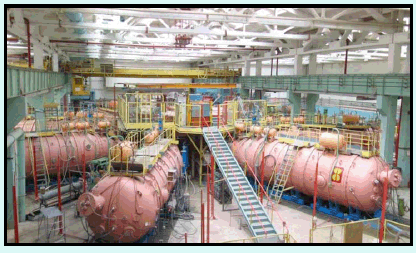
Eight elements. 4.2 MA in less than 100 ns
Thus, comments in the book, but the conference video will be freely accessible online as soon as possible.
Now to the Strasbourg colloquium. I begin by saluting Michel Padrines, organizer of this event, whose prostate cancer is progressing (bone metastases in the spine, constant need for morphine patches). I believe the success of this colloquium constitutes the best response to the indefensible attacks he endured in the months preceding it and to the discredit campaign, emanating from "ufologists," aimed at discouraging speakers from attending.
Everyone came, except Michau and Duboc due to health or family reasons. I co-organized with Jack Krine the session originally dedicated to pilot testimonies.
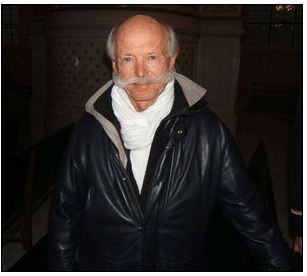
Jack Krine, UFO witness, former solo leader of the French Patrouille de France
Everything was filmed by Antoine, a friend of J-C Doré, in high definition (thus suitable for television; the low-definition version is for YouTube). Five hours of conference: over 100 gigabytes. As soon as possible, this will be formatted and uploaded online. We’ll start with the recording of my presentation from Korea. As announced, everyone will be able to access these videos for free. But patience is required, as we’ll provide English subtitles, reaching hundreds of thousands of internet users. The Korea video, in English, will be subtitled in English.
Many thanks to my team and everyone who helped us,
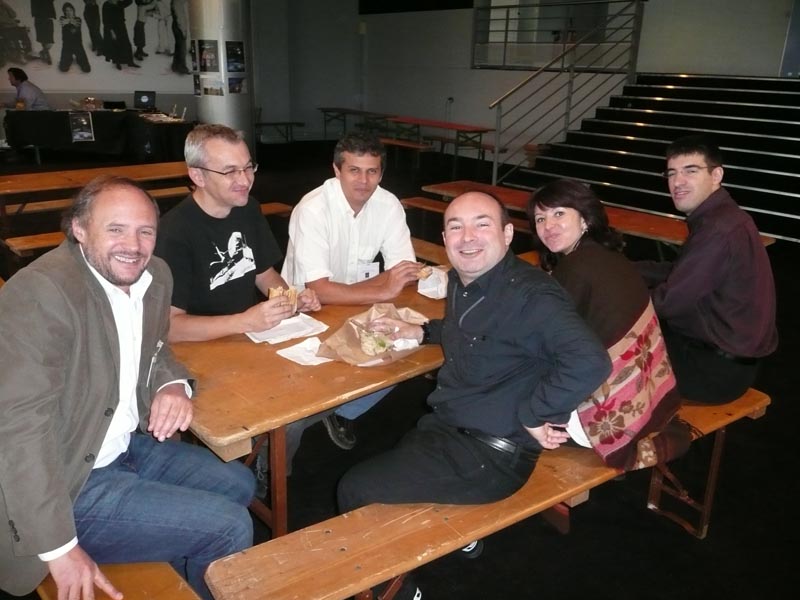
Christel Seval, Antoine Favreau, Xavier Lafont, Jean-Christophe Doré and his wife Valérie, Mathieu Ader
alias "the research pirates"
Christel Seval delivered an excellent intervention, covering the "human sciences" aspect of the UFO phenomenon, a role previously occupied for thirty years by Pierre Lagrange, dreadfully boring.
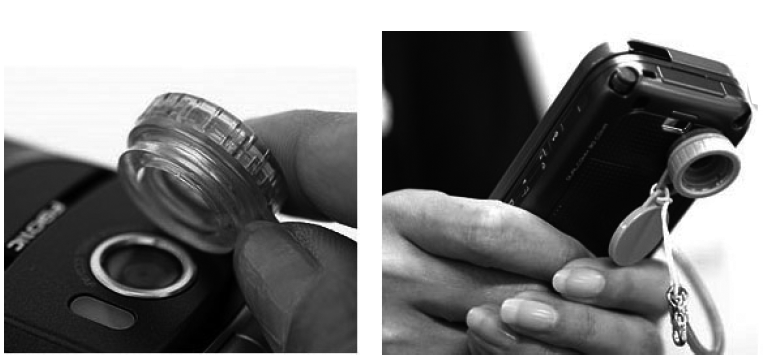
Doré’s wife and brother hastily retrieved the network caps, manufactured in China, which arrived... the day before the colloquium.
****http://www.ufo-science.com/wpf/?page_id=2303
| Now available. Order from UFO-Science (10 euros, postage not included) | To order these self-adhesive network caps |
 |
|---|
I don’t know if we’ll be able to offer a "book plus cap" package, but I don’t think it will be a problem. We had a thousand pieces made in China.
Since UFO-science rented a truck, it was possible to transport on-site the stand elements prepared by Ader, along with UFOcatch and the low-density MHD bench. The demonstration of the latter, brought into the hall, couldn’t be performed due to a simple blown fuse. But the proximity of the two colloquiums made on-site adjustments impossible. Doré and I had to endure an additional 7-hour time difference on both the outbound and return trips.
An additional speaker joined our program, so we canceled the lunch break, asking attendees to get sandwiches from nearby cafeterias before the session, which ran non-stop from 6 p.m. to midnight. The 200-seat hall was nearly full for all presentations. For ours, organizers admitted 50 extra spectators who sat on the steps, but they judged it contrary to basic safety rules to admit more. About fifty people thus couldn’t enter. But everyone will be able to view these lectures on YouTube once the team has formatted and uploaded them.
No one left the hall during these six hours, and attention remained strong.
On the left, the MHD bench, with its beautiful wooden support made by Mathieu Ader (for safety reasons)
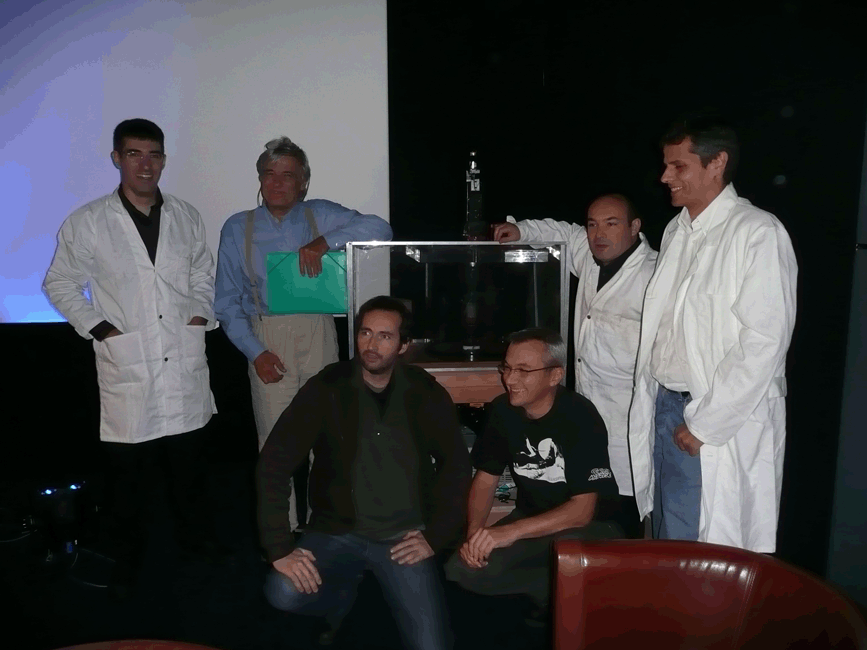
Ufoscience almost complete: Mathieu Ader, JPP, Christophe Tardy, Antoine Favreau, Jean-Christophe Doré, and Xavier Lafont
In the hours preceding, Swiss astronaut Claude Nicollier, who participated in four consecutive Space Shuttle missions for the repair and maintenance of the Hubble Space Telescope, and even commanded one of them (the only non-American to hold that position), delivered a highly engaging talk.
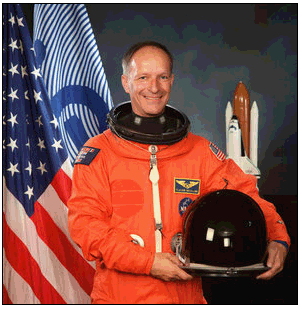
Swiss astronaut Claude Nicollier
In the months before, he had worried about the atmosphere that might prevail at this colloquium. But seeing how it unfolded, not only did he attend our session, but he also came to the Sunday sessions before departing, congratulating Padrines on the quality of what he had heard. For Padrines, I believe there could be no better reward.
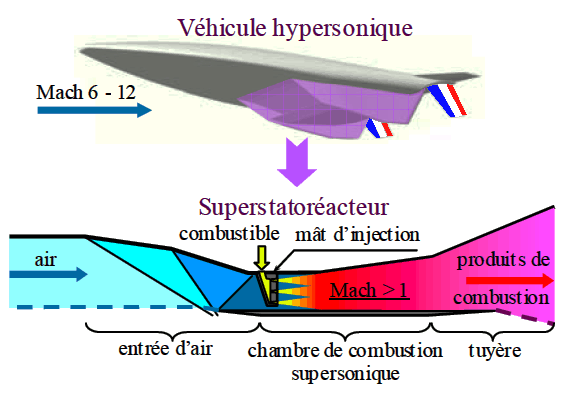
If our promise is kept—that the video recordings of our lectures will be posted online—I will temporarily reserve my comments for the book I am writing non-stop.
Brief aside (but I had warned Padrines): the Raëlian sect had gathered around fifty members in front of the conference hall door. A bailiff came to ask whether we would allow or deny them entry. We replied that anyone could attend the sessions, provided they refrained from displaying symbols indicating their affiliation with the sect, and from making any proselytizing statements. But a large number of members were already wearing these visible signs, and we photographed them. The police were called, and with their help, we were able to bar the sect members.
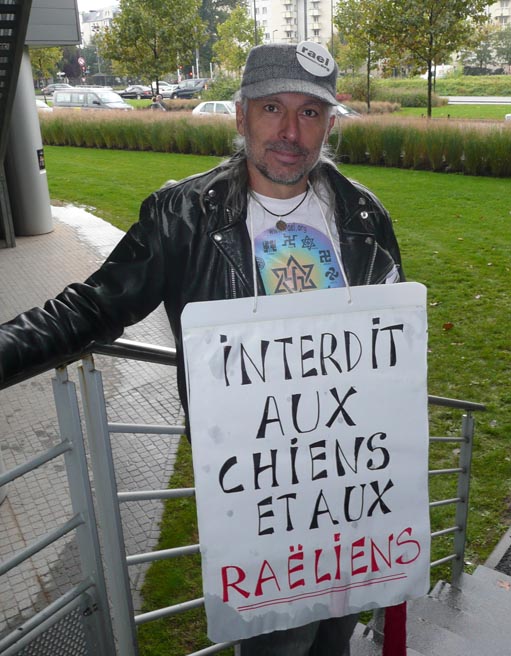
We had previously specified in the colloquium’s preliminary guidelines that signs of sect affiliation would not be tolerated.
This presence of these lamentable clowns—the Raëlians—stands in stark contrast to the exceptional quality of some of the speakers.
Professor Chandra Wickramasinghe, former collaborator of Fred Hoyle
Director of the Cardiff Astrobiology Laboratory, UK
We had a very pleasant intervention by Major Jesse Marcel Jr., son of Major Marcel, who was responsible for security at Roswell and spent his entire career as a physician in the U.S. military.
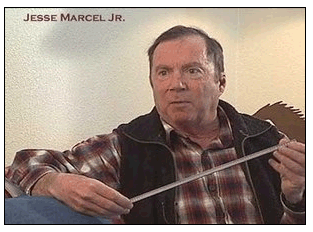
.
Before closing, I’ll make several remarks.
Thanks to Jean-Luc Guilmot from Brussels, an English-language interview conducted the day before the colloquium across the Atlantic, and whose French translation he immediately prepared in text form, could be broadcast. Attendees heard the English audio while reading the French text on screen. Many people, given the identity of the interviewee, considered this the highlight of the colloquium. We agreed with Guilmot that this text would be included in the book to facilitate sales, and later disseminated online to reach a broader audience.
From this interview, it emerges that the ruling classes of the world’s most powerful nations are fully aware of the true nature of the UFO phenomenon. They are extraterrestrial visits. The reaction of these elites has been to conduct reverse engineering to seize scientific and technical knowledge, with the sole purpose of weaponizing it.
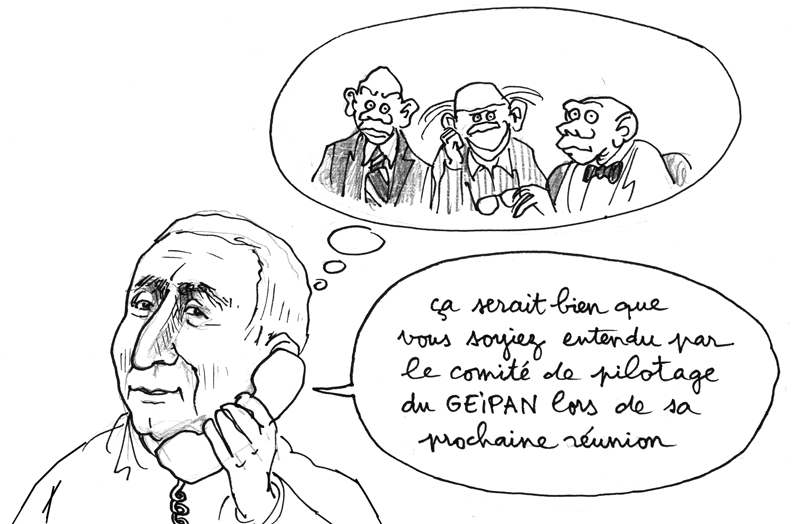
We can have no illusions about GEIPAN, which was created and remains controlled by Yves Sillard, a military engineer and former head of DGA (General Directorate for Armament). The inefficiency and incompetence of Yvan Blanc, head of GEIPAN, who declined Michel Padrines’ invitation, is irrelevant to the matter.
Behind GEIPAN stands the military engineer Yves Sillard, and behind him, the Army. In the minds of such people, military application is immediate. Thus, Ufocatch is an "automatic sentinel" capable of directing fire at any person entering a restricted zone, even at long range, for example by commanding a mortar strike, with the "hostile" positions determined by two sensors performing precise triangulation (which could also be used to adjust the elevation of a weapon firing projectiles). This kind of reflex is literally "hardwired" in their minds. I’ve encountered hundreds of such individuals in my career.
It is this same Army that sabotaged all the projects we attempted to launch (first with Esterle and Zappoli at CNES, then with the Rouen laboratory). Launching a project typically requires five years of effort and work each time. In the end, the military transmitted its message, its dictate, even though these were ostensibly civilian contracts funded by civilian sources—in this case, the Ministry of Research and Technology for the Rouen project, conducted through CNRS channels. And the message was always the same:
- Jean-Pierre Petit must be excluded from any involvement in this contract and from any responsibility in conducting this research.
The CNRS, in turn, deprived me of all funding for thirty years.
Thirty lost years
Every time, deprived of my guidance, these expensive projects failed miserably, and the same would happen if we were to currently attempt to conduct our experimental research within any institutional framework.
Demonstrating that the UFO phenomenon lends itself to scientific research is also a form of "reverse engineering." But our goals are different. Once we have experimentally proven the feasibility of supersonic, even hypersonic flight, in a wind tunnel, and incidentally operated a model of the Aurora craft, equipped with a second air intake controlled by MHD, to silence a foolish aerospace journalist who claimed it was "technological delirium," we won't go any further.
We will have given credibility to the vehicle hypothesis, and that is the goal we pursue. Sorry, Mr. Sillard, this isn't about equipping France with hypersonic cruise missiles or hypervelocity torpedoes (which will be tested in another... garage).
Military representatives attempted contact (not with me!) at the UFO-Science booth, stating, "Sooner or later, these research efforts should benefit from military support; it would be unreasonable to imagine otherwise."
Well, no—thanks to you, thanks to those who have helped us, and if they continue to do so.
After thirty years of helplessness, things abruptly changed. Thanks to donations and the sale of a book, a test bench was assembled in just a few months, an experiment was quickly developed in a few hours, a paper was written within days and immediately accepted by the scientific committee of a major international conference. The setup of subsequent experiments is already underway.
Brief aside: The beginnings of this association, Ufoscience, founded in 2007, were indeed very difficult. We encountered the usual problems that plague all associations under the 1901 law. Yet we couldn't afford to deal with various human issues, and that remains true today. After the 2008 crisis, a few troublemakers were expelled, and a forum that had become filled with idle chatter—like all forums revolving around UFOs—was closed. The association regrouped around a core of active members, numbering no more than the fingers on one hand. But the amount of work these individuals accomplished was fantastic.
Everything could restart on solid ground after the Bremen conference, from which I returned so disillusioned that I had decided to shut down the association (its statutes allowed me to do so) and transfer its assets to some random charitable organization, like the Restos du Cœur. Sensing the danger, Jean-Christophe Doré came to my home, bringing with him the incredible achievement that is Ufocatch. Seeing it, I realized I couldn't abandon the project.
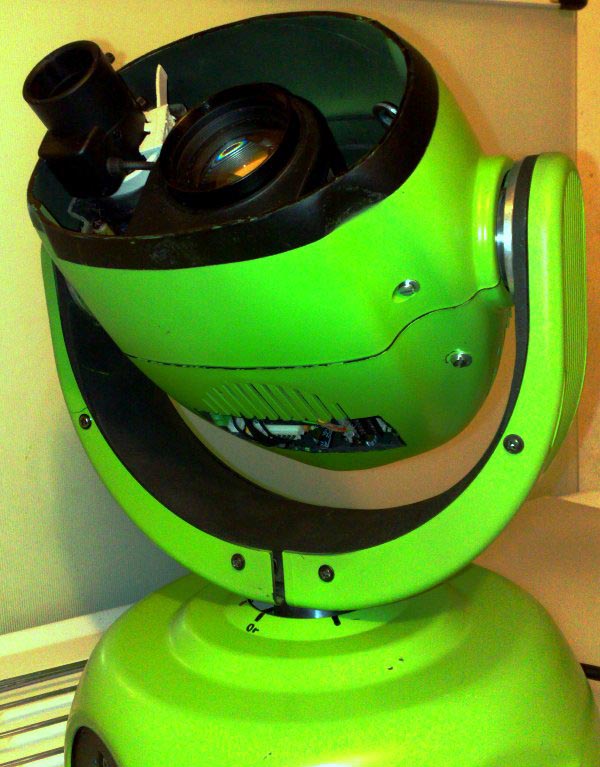
The automatic tracking system designed and built by Jean-Christophe Doré
He, the real MacGyver, finally completed the low-density MHD test bench, a project that had been drifting for two years, sparing no effort.
At the same time, Ufoscience completely changed its way of operating. Mathieu Ader became the website's webmaster. From the beginning of 2009, we started refusing renewal cheques, simply because in 2008, a few idiots had loudly declared, "I paid 15 euros. I have rights. I demand a general assembly, with motions, renewal of the board, and democratic decision-making on how the funds from the book published by Ufoscience will be used." The only way to avoid power struggles: finance the association's activities through donations and book sales written by me.
In the meantime, we're still stuck with a 5,000-euro laboratory freezer that has never been used, and we don't know what to do with it anymore—we'll soon be selling it on eBay.
Meanwhile, Xavier Lafont has taken charge of reviving a website on the Ummo case, which is ready and will be launched as soon as possible. I dare hope that making these documents available in a completely different spirit will cause the band of apes who, ten years ago, had appropriated André-Jacques Holbecq and others, to disappear from the top of Google's results when someone types "Ummo."
Recently, the actions of this "Ummo-science" group had become grotesque when a certain Denocla, already selling over a hundred items like T-shirts, underwear, mugs, and caps, printed with screen-printed images taken from the Ummo dossier, went on to sell a DVD containing "songs in Ummitic," composed by himself! We can hope that soon, thanks to Xavier's tireless work, these "Augean stables" will be cleaned up.
Because the UFO dossier is not a business for every kind of petty trader.
We chose to delay the opening of this website until after the conference, to avoid the arrival of so-called "experts," real apes, who had already made themselves heard in that farce that was the Châlons-en-Champagne event, "first European ufological meeting," organized by Gérard Lebat, founder of the "ufological dinners." The absolute absurdity.
End of this aside.
The second remark concerns the absence of scientists outside our association, and of science journalists (like Philippe Chambon from Science et Vie, or Alain Cirou, editor-in-chief of Ciel et Espace, whom we solicited but who didn't have the courtesy to respond).
We received minimal media support (half a page in a major local newspaper and the recording of a documentary interview by FR3's local affiliate).
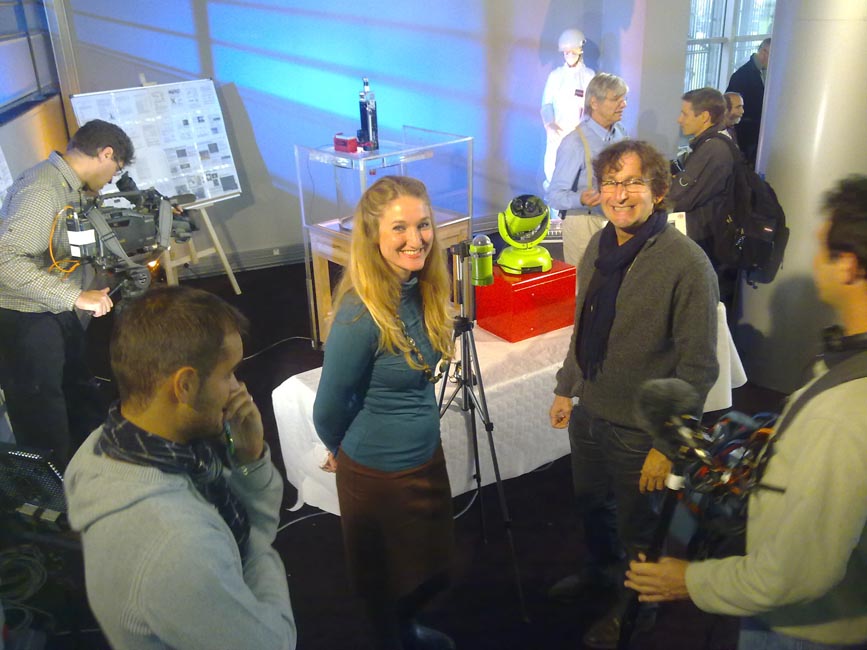
The FR3 journalist and her director. In the background: Ufocatch and the low-density MHD test bench
Science from Above and Science from Below
The expression "France from above, and France from below" was coined. Now we could speak of "the Press from above and the Press from below." Similarly, "Science from above and Science from below" have meaning.
In all three cases, oligarchs serve the interests of financial powers and the military-industrial lobby. At the top, they serve their masters. Below, they stay silent, fearing career or job repercussions.
French citizens, and citizens of all countries, are gradually becoming aware of this reality, which the Press from above immediately labels "conspiratorial."
I'll cite the example of President Giscard d'Estaing, who got a compliant or oblivious assembly to pass the 1973 law, forbidding the Bank of France from issuing interest-free money, supposedly to limit inflation. This system effectively plunged the country into an interest-bearing debt to private banks, just like the United States with the Federal Reserve Bank—a debt, of course, inherently unpayable. It was the same Giscard d'Estaing who drafted the European Constitution, rejected by the French in a referendum, which included an article allowing police to fire on demonstrators "if the demonstration took an insurrectionary turn."
This winter, French citizens also discovered that their health minister, Roselyne Bachelot, served pharmaceutical conglomerates more than their own interests.
The former Minister of Justice, Rachida Dati, through a slip of the tongue that went viral worldwide, undoubtedly expressed something profound. But what? You decide for yourself. Freud said that when people make slips of the tongue, they reveal something important that played—or still plays—a crucial role in their lives.
Elsewhere, the European Union voted a law banning the use of medicinal plants, forcing those who used or distributed them to comply with pharmaceutical industry approval procedures. A market currently escaping the grip of lobbies.
The military-scientific lobby leads us into the absurd disasters that are ITER and Megajoule.
We recently discovered that our elected officials had overwhelmingly rejected, by a huge majority, a motion proposed by a few, aiming to eliminate their retirement privileges and bring them back to the status of ordinary citizens.
And it won't stop.
We are governed and managed by thugs and mediocre, incompetent individuals, or those in the pay of financial powers and the military-industrial lobby.
I don't know how things can change, but on our small scale, thanks to my mastery of a scientific discipline considered highly advanced, we are witnessing the emergence of "citizen science," directly funded by French citizens, with a return on investment that defies all competition.
When I spoke in Strasbourg, after thanking many people, I wanted to thank, at 73 years old, all those anonymous individuals who had financially supported us for three years, and who deserved our gratitude. At that moment, words caught in my throat, overwhelmed by emotion—I admit it. The audience clearly perceived it, and this will be evident in the video.
The last international congress I attended was in 1983, that is, twenty-seven years ago. It was the VIIIth International MHD Congress in Moscow. As at previous congresses, I had to pay my own way, eating breakfast and dinner on pastries I stuffed into my bag during breakfast at the luxurious National Hotel where we were forced to stay. There was no restaurant nearby. The era didn't allow it. And of course, I couldn't have lunch with my colleagues. That day, I said, "Stop, you can't go on like this."
I missed the conferences in Tsukuba, Japan, in 1987, and in Beijing in 1990, whose selection committees had accepted my presentations.
Today, if people continue to support us, we'll go everywhere, around the world, to the most prestigious conferences, scoring goals each time. We'll also go to France when plasma physics conferences are held. As a bonus, at these French conferences, we'll bring our lab along for demonstrations. I've never met a plasma physicist. It's worth trying.
To avoid the pitfalls and quicksand of 1901 association management, we refuse membership fees. So only donations remain. Not a single cent will be wasted. I'm aiming for a budget of 30,000 euros for 2011. That's too much for one man, a retired CNRS researcher. But if 300 people each donate 100 euros, we're set. I have 3,000 daily connections and tens of thousands of fans. If even a few euros come from each, we'll make it. Then we can run experiments and participate in major international conferences, like in Korea in October 2010, or in Bremen in 2009, or in Lithuania in 2000. Our papers are accepted immediately, and in these gatherings, we don't have only enemies—far from it. None of our scientific presentations since 2008 have even elicited a smile. Next time, we'll target a plasma physics conference in France. If attacks come, there will be plenty of lead to take. In physics, I remain in the heavyweight category.
That's the whole advantage of an experimental approach—more expensive than pen-and-paper science, but impossible to dispute. Of course, it may seem crazy to think of outperforming super-equipped labs like the CNRS in Orléans, with their continuous hypersonic wind tunnels, all funded by the military. But by designing a pulse wind tunnel lasting just one second, we become a thousand times cheaper—not just a hundred, but a thousand times!
And the ideas, the knowledge? We have them. They don't. It's obvious. Look at their research projects—there are none. At best, they're considering installing a passive French-made X-43 model, a simple passive model, "dissipating heat collected by radiation." Look, they've added lower fins so it doesn't look entirely like the American mess.
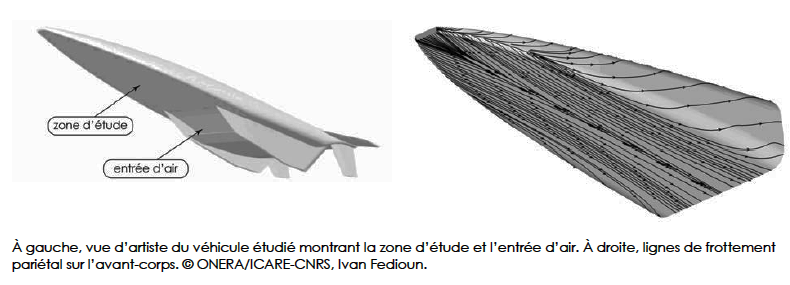
You can't wake up after thirty years of sleep, abandoning a discipline, and suddenly say, "Let's do MHD." A field hyper-specialized in theory, not a discipline but almost an art, where the Russians are masters (remember, the father of Russian MHD is none other than Andrei Sakharov, who generated 100,000 amperes in 1954 with an explosive generator, equivalent in capacity to a small technical power plant).
The Korea presentation, with its original and brilliant experiment, is a first example of solid experimental results that didn't go unnoticed. There will be more. The setup of the next experiments is already underway—and it's already working!
We can afford to operate solely with public support, something Nicolas Hulot couldn't do. His sponsors are wealthy, gold-plated companies—and also, by the way, polluting. Let him make even one linguistic slip, and he'd vanish from television with a single button press. Our official media are paved with ejectable seats.
I remember the experience of Jean-Yves Casgha with his Science Frontière festival. People like Benveniste and I were there. The atmosphere was hellish. But Jacques and I were deeply disruptive. People offered him substantial financial help. It went to his head. Then he was dependent on official media, whereas we aren't. The method has proven effective: provide "powerful financial aid," then cut off the tap, and the company faces serious difficulties. Impose restrictions, bans, and the job is done. Casgha had to tone it down, until he became cowardly.
What do you think happened in Strasbourg? Exactly the same thing. "Investors" appeared (but with the military and power behind them—heard the sound of boots a hundred paces away). Not so stupid. We replied:
- We're doing very well in our garage, with a few tens of thousands of euros a year. With that, we produce results regularly and keep scoring goals at major international conferences—where a Nicolas Hulot couldn't even sit down. For him, the podium is the small screen, nothing else. Same with the Bogdanoffs, who must flirt with Sarkozy's son to survive, and who wouldn't dare invite someone like me on their shows (they told me so on the phone, adding that the order came from France Télévision).
The small screen belongs to Lagardère and other groups defending private interests. Freedom has its price.
Someone said:
- You'll eventually have to go through the military—the only institutional financier with substantial resources.
Doré replied:
- I built Ufocatch in my kitchen. And a reader said to me, 'Your lyre? I import them. I'll send you one immediately.'
Ufocatch, in an institutional framework, would represent a million euros just to start thinking about it. And it's a device where 99% is software. Everything is in the signal management and processing program, expertly handled by Jean-Christophe, who forgot to be stupid.
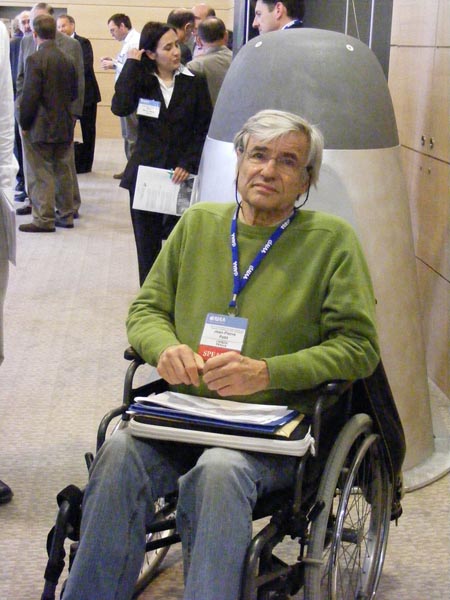
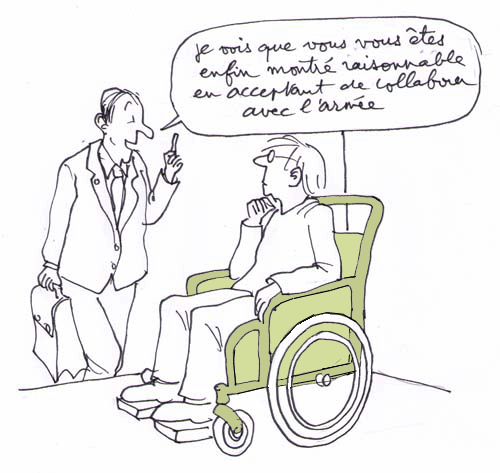
Even the wheelchair I used to attend the Bremen conference in Germany was immediately paid for by a reader—can you believe it? (I picture myself rolling into Bremen in a khaki-colored wheelchair, paid for by the military.)
In short, onward to citizen science. Goal: 30,000 euros for 2011. I reproduce what we posted on the Ufo-science website:
http://www.ufo-science.com/wpf/?page_id=2529:
Do you wish to support UFO-Science with a financial donation, a material donation, or by purchasing one or N copies of the book currently in preparation, expected to be available by year-end?
By CHECK:
Please make your check payable to UFO-SCIENCE and send it to our postal address, located at the association's headquarters:
UFO-SCIENCE 8 boulevard F. Buisson 17300 Rochefort By BANK TRANSFER:
IBAN: FR76 1360 7005 2714 2194 4235 602 BIC: CCBPFRPPNIO By PAYPAL or CREDIT CARD:
Please specify if you would like to receive the equivalent of the book in preparation, expected to be available by year-end. Your donation will then become the purchase of N copies at 20 euros each, including shipping. This will help promote our actions.
For material donations, please contact us first to learn about our current needs.
The third remark is that managing the UFO topic resembles a football game. It's on the field where you must move, not in the locker room, and it's there you must score goals. The reader will perfectly understand what I mean.
September 27, 2010: **High-ranking military personnel gave a press conference in the United States. ****** **** ****
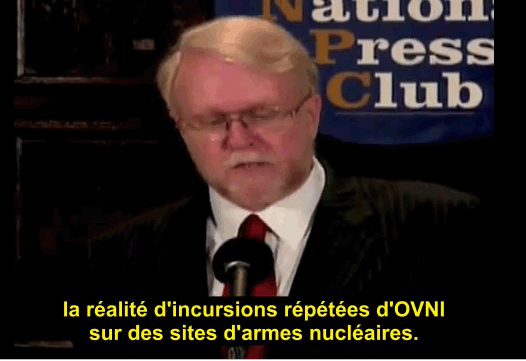
Present at the September 27, 2010 press conference: Robert Salas, former USAF missile launch officer; Dwynne Arneson, retired USAF Lieutenant Colonel, responsible for the Communication Center; Robert Jamison, former USAF officer, responsible for missile targeting; Charles Halt, USAF Lieutenant Colonel, former deputy base commander; Jérome Nelson, former USAF officer, assigned to missile launch; Patrick Mac Donnough, former USAF officer, responsible for geodetic surveying at missile sites; Bruce Fenstermacher: former USAF officer, responsible for missile launch
All testified that UFOs had hovered near nuclear missile silos, and after the event, the deactivated launch systems had to be reinitialized. One participant added, "One missile launch system, okay. But ten at once? No."
http://www.youtube.com/watch?v=73ZiDEtVms8&feature=player_embedded#
All are convinced these events occurred numerous times, but they are the only ones to have testified. The systems had been deactivated but not damaged. All agree that these actions—attributed by all to extraterrestrial interventions—send an unmistakable message about the danger of nuclear weapons, which humanity must urgently eliminate. A pious wish, obviously.
Emphasis is also placed on the decades-long cover-up related to the UFO phenomenon. One participant concluded, "If you expect countries like the United States and Russia to ever admit the identification between the UFO phenomenon and extraterrestrial visits, you can keep waiting."
Their presentation was poised and impactful. But they noted that major media outlets gave no echo to their statements, except to present the affair in a mocking tone (we always laugh at what terrifies us). This can be compared to the reception given by France's major press to the Cometa report upon its 1999 publication. Its authors, retired military officers of high rank, were described as "old men who had lost their minds." Yet when you watch this video above, you can't take such testimonies lightly.
What does this mean? That today, we can place no trust in "the Press from Above." They are either under orders or mentally impaired. A journalist from this press is to information what Bernard-Henri Lévy is to philosophy.
The vast majority of scientists, in most countries and certainly in France, remain completely deaf to such appeals, as well as to events like the one we participated in Strasbourg. The conclusion is that we can absolutely not trust this "Science from Above," which is either under orders or mentally impaired.
I recall an article by Jean-Claude Charpentier, who at the time was director of the important Department of Physical Sciences for Engineers at CNRS, published in a special issue of the CNRS newsletter dedicated to relations between research communities and the military, titled "Researchers, we need to talk." He essentially stated that the military couldn't produce a number of research contracts commensurate with the number of researchers wanting to collaborate. Science without conscience is only the ruin of the soul. I don't know if this maxim still holds in today's science.
Where can one find free thinking today? Simply within the general public, clearly more aware, equipped with simple common sense, more honest than the oligarchs populating every sector of our society. Facing such a failure, such irresponsibility from our "elites," we feel tragically alone. I am probably one of the very few high-level scientists willing to speak openly about the UFO topic, and it distresses me.
They say the fish rots from the head down. We are led to wonder why we've reached such a state. Beyond all this, we return to the theme of the "cursor."
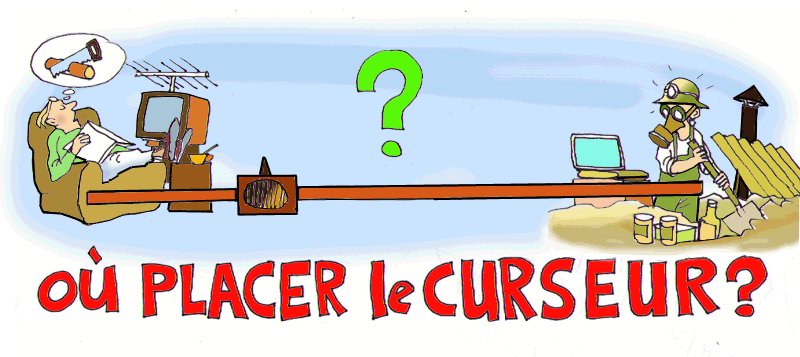
Where to stand between blindness and deafness fostered by pervasive media dumbing-down, and all-out conspiracy theorizing propagated by the Internet?
First, I'd say the term "conspiracy theorist" was very well chosen for its negative and ridiculous connotation, and it still has many good days ahead. I'd prefer the expression "whistleblower."
How far can one think too far?
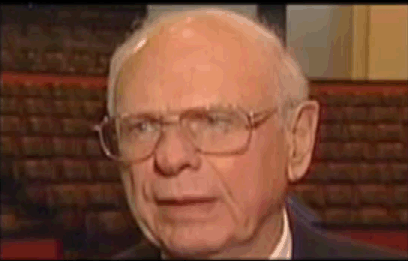
Paul Hellyer, former Canadian Minister of Defense
It's significant that it's relatively older people who are leading this campaign against widespread disinformation. And with time, I've joined them, now 73. One might think these people have nothing left to fear or lose.
We will all die one day. Every time I think of this, I can't help but recall Oscar Wilde's quip:
- I know no one is immortal, but I hoped God would make an exception for me.
If some elderly people cling to life, it's out of fear of death, apprehension about that Great Leap whose destination we, a priori, don't know. Facing this subject, scientists show the same failure, the same denial. Another taboo.
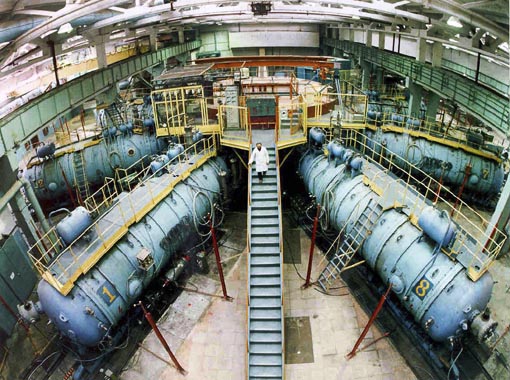
Move along, nothing to see here
I could change my phrase and write:
Science is an organized system of taboos
To remain scientifically correct, one must navigate skillfully among a whole set of taboos.
-
No need to worry about beings living on other planets: they can't come visit us, nor can we visit them.
-
Never say that aspects of nature confuse you; you'd stop being taken seriously. If that's the case, invent a word immediately to patch the gap, like dark matter, dark energy, superstrings, giant black holes. It always works.
-
Strive to cling to the idea that you're immortal, until they put you on morphine. Then these questions won't matter anymore, and you'll remain medically correct. That's what counts above all.
-
If you ever experience something that seems to go beyond rational explanation, try to forget it as soon as possible. Out-of-body experiences are just dreams. As for the feeling of accessing past lives, don't even mention it!
-
If you ever see a flying saucer, turn around and look the other way. Even better, close your eyes—then it's safer.
-
Avoid talking to an alien you don't know—remind yourself, as the surrealist Picabia did, that there are situations where even if it's true, it's false.
-
Hold fast to the idea that science progresses. If people talk to you about a paradigm shift, avoid them. These are statements that can only destabilize you and your surroundings, discourage people from funding you.
-
The history of Earth is perfectly linear. Don't listen to those who claim our planet might have experienced successive recessions. They're villains.
-
Darwin forever. Trust chance blindly. It's the engine of evolution. Trust the evolutionary patterns concocted by proponents of this theory. Trust gradualism. Don't complain about the chronic absence of missing links in various evolutionary schemes. On the contrary, rejoice that we have at least a few fossils to study. Tell yourself it could have been much worse.
-
Try to convince yourself that consciousness is an enzymatic phenomenon, arising from encounters between biomolecules, and that thought is governed by chaotic phenomena. Once you've convinced yourself, try to convince others.
etc...
So-called scientific thinking is a fantastic patchwork of inconsistencies.
To be a scientist is to weave through a multitude of inconvenient facts. I'd compare their approach to that of a municipal police officer, a zealous little bureaucrat, issuing tickets for improperly parked cars, but who is instructed to move away as quickly as possible if, through one of the car windows, he glimpses a decomposing corpse.
How strange these old men are, spreading such disturbing ideas. If you watch Paul Hellyer's video at 86 today, you'll hear him mention comments by a certain Wilbert Smith regarding aircraft losses during UFO encounters. Words like "differential gravity," "temporal differential" emerge. I don't know who Wilbert Smith is or where he comes from. I believe he's deceased. Facing these words, I'm unable to attach a well-constructed theory. Only conjectures, no better than others, circulating in academic corridors.
http://www.youtube.com/watch?v=mR2tVJ2SRk0
I've worked for 35 years on an MHD propulsion method, and I continue to do so. Some may be very surprised if I tell them it's extremely likely that UFOs don't use this technology, at least when they're near the ground. What I want is to eliminate shock waves around objects immersed in supersonic gas flows, much like someone trying to prove an Airbus can fly by building a rubber-band-powered model.
Indeed, a heavy craft (some leave deep impressions on the ground when landing, allowing their mass to be estimated in tens of tons) that sustained itself near the ground using MHD would function like a helicopter, sucking air from above and projecting it downward. Even in laminar flow, this would stir up dust.
But there are countless testimonies where people were very close to a UFO, even directly underneath it, without feeling any air current, without their hair or a single blade of grass moving—such as in the so-called "Amarante case" in France in 1982, where the witness was 1.5 meters from the object, which hovered just 1 meter above the grass.
All those who know a bit of mathematical physics (based on the coadjoint action of a dynamic group on its momentum) know that particles with negative energy and negative mass can exist. Worse still, in this "parallel world," this negamundus, photons emitted by these negative-mass particles also have negative energy, meaning we couldn't see them. Neither we nor our telescopes, by the way.
But there's worse. If you're sitting on your chair and don't fall through it, it's because the atoms and molecules in your buttocks interact with those of the chair via electromagnetic forces, which operate through photon exchange. If suddenly all the particles composing you changed their mass sign, those "buttock-chair" electromagnetic forces would vanish. But gravity would remain.
You'll say, "Then I'd fall through my chair?"
Lost! It's the opposite. Since particles with opposite masses repel each other, you'd be shot toward the ceiling of the room with an acceleration of 9.81 meters per second. You'd pass right through, like Garou-Garou, the character from Marcel Aymé's book, the Man-Through-Walls. Continuing on your way, you'd pass through the attic, the roof, and after traversing Earth's atmosphere without experiencing air resistance—since these molecules pass right through your body—Earth would keep pushing you away.
In short, "you'd fall upward."
If you had a system allowing you to reverse the sign of your mass at regular intervals, you'd alternate between falling down and falling up. In short, you'd give the impression of no longer having weight, being in a state of anti-gravitation, or "differential gravity," if you prefer.
It should be noted—Souriau's theorem, 1972—that reversing your mass is equivalent to traveling backward in time. Hence the "temporal differential."
- Quick, an aspirin...
Imagine you're near an alien spacecraft and persist in bothering it. Worse, at close range you fire a volley of bullets or a missile at it. How does it defend itself? It reverses its mass. To your eyes, it ceases to be visible (noting that it also stops seeing you, since its instruments can no longer detect your positive-energy photons). It also stops interacting with all the positively-massed particles around it, and your shells or missile pass right through it without affecting it in the slightest.
Incidentally, it "falls upward," repelled by Earth—something that's a minor inconvenience for it.
There's another point to consider. Around the ship are air molecules, constantly colliding with one another and, at standard pressure, moving at an average speed of 400 meters per second—known as "thermal agitation." In the volume where the UFO was before reversing its mass, that volume remains, but has become "infinitely transparent." Nothing now obstructs the path of these air molecules. In other words, the spot where the UFO was now behaves like a vacuum—a "hole in the air." So the air molecules rush in to fill this void, causing a significant pressure disturbance (possibly even a shock wave), especially if the UFO is large enough to potentially disintegrate an airplane if it's close enough.
This might be what happened to Captain Mantell in January 1948, when he took off in his aircraft attempting to approach a spherical UFO he estimated to be 170 meters in diameter (a precision suggesting he must have been fairly close when he reported it).
Captain Mantell
We can't blame the UFO pilot for deciding to reverse the craft's mass upon seeing this insect-like threat. Suddenly, the craft faced a vacuum bubble of 640,000 cubic meters, instantly filled by the surrounding air in a tenth of a second.
Some readers have reminded me of the official theory—that Mantell was chasing a weather balloon. These do indeed expand as they rise, due to the helium inside expanding. Mantell may have lost consciousness due to lack of oxygen. But he was flying a fighter jet. These aircraft carry their own oxygen. Look at a fighter pilot. What does he wear on his face when flying? An oxygen mask! The onboard tanks are capable of supporting N flights, and mechanics always check they're fully stocked before takeoff. As glider pilots, we're not allowed to exceed 3,000 meters without carrying an oxygen tank. It's unthinkable that Mantell could have flown a fighter jet without oxygen.
I can already see you're about to ask a follow-up question:
- If the UFO decides to "re-materialize" a bit farther away, what happens to the air molecules occupying the volume where it will reappear?
Good question. If we assume the craft can reverse the mass of everything inside—not just its hull, but of a surface immediately surrounding it—it will simultaneously reverse the mass of the air molecules present there. These molecules, interacting with each other via electromagnetic forces but not with oppositely-massed air molecules, will behave like a gas bubble released into a vacuum and simultaneously repelled by Earth.
So, when you watch a video of an old man seemingly losing his mind, there might actually be something worth examining.
If we accept that Paul Hellyer isn't just an elderly man with a clouded mind, and suppose he speaks this way for good reason, then his statements are genuinely alarming. It takes blindness and deafness not to see that in our absurd world, the vast majority of people are walking on their heads, their leaders urgently need to be locked up, and Earth's scientists behave like three-year-old children playing with defensive grenades. Moreover, paranoia is everywhere—everyone sees the other as a potential enemy.
Returning to the previous video, it discusses what might happen if humans were suddenly confronted with irrefutable proof of extraterrestrial presence on Earth.
In the book I once printed—though I've exhausted the print run—UFOs: The Message, I considered a way to soften the shock, at least in my view. Summarizing briefly, I observed phenomenologically that through its mode of evolution, Life becomes increasingly complex and expands its relational field. I then hypothesized that this is a cosmic fixation. Under purely biological evolution, it's hard to imagine how a bird could appear with wings large enough to span the light-years separating us from our nearest neighbors. "Pure biology" isn't the answer.
Therefore, a "technological solution" must be considered. A species must acquire the ability to develop technology. Hence Homo rerectus, Homo faber, Homo sapiens, Homo nuclearis, etc.
But this technology carries hyper-teleological risks—risks of goal displacement. It can, as we say today, turn collaterally against its creator, who doesn't understand its true purpose: to eventually build ships to visit our friends. To continue expanding the relational field.
Thus, humanity—let's call it by its name—needs a behavioral attribute enabling it to reflect on the consequences of its actions.
This is what we call moral consciousness, and on a grand scale, ecology.
I largely agree with one participant who said these beings observing us couldn't care less about us. What interests them is our planet and its entire biosphere, which we're currently destroying at breakneck speed like vermin. Not to conquer it, but because they see us on the brink of rendering it uninhabitable for a long time after a joyous global nuclear holocaust.
If humans understood something like this, contact might become possible. But such awareness would force them to question every single framework they hold—science, beliefs, and ultimately their religions, which might be kaleidoscopic visions of a single metaphysical reality, possibly local: "We create our gods, and our gods create us."
A whole program. Esotericists say "what is above is like what is below." Without wanting to discourage you, our afterlife might be just as chaotic as our here and now.
Don't touch my egregor.
Well, I've finished this page. Before returning to the book, I'll take a short out-of-body journey—it'll help me relax.
The negative response from Mr. Yvan Blanc, head of Geipan, to the invitation extended by Mr. Padrines and myself to participate in this conference. Link
****Before it disappears from the web
The page announcing the conference (October 16–17, 2010)