Is there a bottom limit to inhumanity?
August 3, 2002
Updated April 30, 2010. Eight years have passed already.
Recently, I watched an episode of Arte’s series “Scientists in War,” where I saw things I never thought were possible. It was so shocking that I took notes.
In 1930, the Japanese set up a “research center” called “Unit 731,” under the command of General Shiro Ishii. The ruins of this center still remain; they’re quite impressive. Arte showed footage of it. This facility was destroyed by the Japanese themselves when they withdrew from the area. Starting in 1930, the Japanese began developing biological weapons. In fact, contrary to what the documentary claimed, they weren’t the first to use such weapons. It seems that the British had already done so during their conquest of New Zealand. At that time, vaccination against smallpox was known. It appears that British troops used infected blankets to wipe out the indigenous population, while the soldiers themselves remained protected due to vaccination. This genocide proved very effective and also saved considerable ammunition and lives. Another reader reminds us that the use of biological weapons dates back to ancient times. For instance, during the Middle Ages, corpses and dead animals were thrown inside fortified towns. A simple trebuchet could easily launch such corpses hundreds of meters away.
My Canadian reader, Alex Berube, informs me that the British also used this technique against the Huron people. See this link.
But let’s return to Japan. These methods of exterminating populations weren’t developed at the end of the war, during the era of kamikaze attacks, as some desperate defense measure. Instead, they were developed methodically and deliberately starting in 1930. Japan felt cramped on its own islands, lacking energy and mineral resources. They had expansionist ambitions. Japanese strategists knew that many peoples might oppose them, including the giant United States. Japanese leaders developed what became known as “the poor man’s atomic bomb.” Had they been able to do so, they would have mercilessly killed tens of millions or even billions of people by unleashing deadly epidemics on their lands. If these folks had managed to develop fission and fusion bombs, they would have done so—not to defend themselves, but to exterminate inhabitants of lands they’d consider new territory, a “Lebensraum.” It’s hard to believe that Unit 731’s activities resulted in 3,000 deaths.
The Americans discovered the potential of biological weapons after Japan’s defeat. I recall that the Japanese launched numerous balloons across the Pacific, timed to descend when they reached land, like California. No one knows exactly how many balloons were launched. Some did reach the US coast, but authorities kept this fact strictly secret. Without any feedback, the Japanese didn’t increase these efforts. It’s now clear that these operations aimed at biological warfare, since explosive payloads carried by balloons wouldn’t have caused much damage. However, balloons carrying plague-infected fleas or anthrax spores dropped over major US cities could have killed countless people. From the start, the Japanese clearly intended their war to be fought with utter disregard for human life. When the Americans prepared the bombs to drop on Hiroshima and Nagasaki, they probably had no idea what the Japanese could have done to US civilians. As Arte’s commentary says, “With their atomic bombs, the Americans outdid the Japanese.”
After Japan’s defeat, when the Japanese learned of the progress made on biological weapons, they feared that such knowledge might be acquired by the Soviets, or worse, that these “valuable research results” might be lost. So they promised total immunity to anyone involved who handed over documents. That’s exactly what happened. During Japan’s “Nuremberg-style” trial of “Japanese war criminals,” officers responsible for Unit 731, like General Ishii, weren’t indicted; the term “biological warfare” wasn’t even mentioned. These officers simply retired peacefully and died of old age. The documentary shows that there’s even a “memorial erected in memory of Japanese soldiers who worked in Unit 731”—a simple stone marker. Given that such a unit might someday become known, the disinformation strategy aimed to ensure that “its victims and heroes” wouldn’t be forgotten by the Japanese populace.
American Bill Patrick became head of biological weapons development in the US. In an interview on Arte, he noted that “Japanese research wasn’t particularly interesting because it lacked proper methodology.” Bill Patrick mentions the birth of a new discipline systematically developed in the US: “aerobiology,” the art of spreading bacteria via aircraft, making optimal use of weather conditions. A huge spherical chamber was built as a simulator; it was shown on screen. Experiments were conducted on various animal species, including 2,000 monkeys. Anthrax quickly emerged as the best pathogen. The Americans’ goal was, in case of nuclear war, to augment destruction caused by nuclear weapons by infecting regions surrounding targets, where panicked civilian populations would flee. Bill Patrick adds that experiments were conducted in the Pacific, but since they’re still classified, he can’t discuss them. One can imagine large-scale “aerobiology” experiments, involving dispersal of spores across the Pacific. But we also know, as Arte’s documentary demonstrates, that the Americans didn’t know the lethal dose of anthrax for humans. Tested on animals, the bacterium produced widely varying results. Ten spores sufficed to kill a mouse, but five hundred were needed to kill a hamster. Rats seemed totally unaffected by it. I firmly believe that the Americans conducted secret experiments on Pacific island populations. How could people who, with Oppenheimer’s explicit approval, studied carcinogenic effects of plutonium injections on their own recruits possibly avoid such interesting results? The Russians likewise pursued similar experiments, using human subjects too, since like the Americans they subjected their own troops to radiation from atomic bombs.
What would have happened if the Americans hadn’t developed nuclear weapons?
Eight years have passed already. Time flies. I watched online a long Arte documentary titled:
Sometimes downloads fail; just try again.
I realize my readers need visual aids to complement my written descriptions. That makes sense, but it’s also exhausting work: screenshots must be taken, stored, and inserted. I’ll begin by showing you General Ishii’s portrait as seen in this Arte documentary.
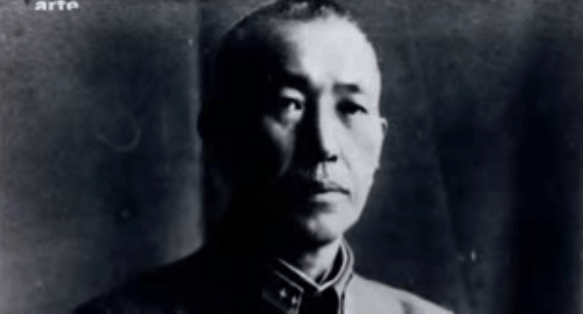
General Ishii, creator of Unit 731 in Manchuria, 1931
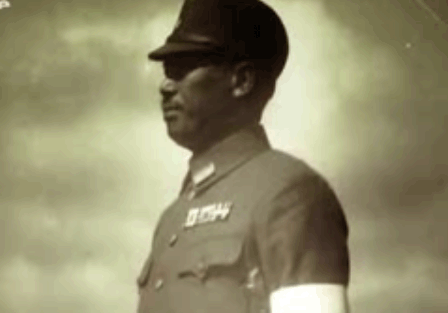
Same man, in Imperial Japanese Army uniform
In my text, I described Japanese experiments in Manchuria, a Chinese territory renamed Manchukuo, where they placed Puyi, the “Last Emperor,” as a puppet ruler. This invasion was motivated by alleged sabotage of a railway by Chinese “terrorists”; actually it was orchestrated by the Japanese themselves.
In short, a false-flag operation, nothing more.
In occupied Manchuria, the Japanese behaved like the worst barbarians imaginable. Civilians were massacred en masse, buried alive. There, the Japanese finally found the human material needed to create their dreaded weapon of mass destruction: biological weapons. This was in 1931. Japan faced no wartime pressures requiring such measures. War with the US hadn’t even been declared.
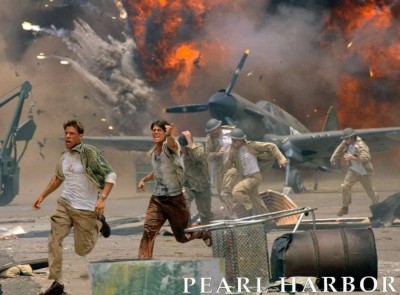
Attack on Pearl Harbor, 1941, ten years after Unit 731’s creation
Looking back, it’s clear that the Japanese contemplated confronting the US as early as the 1930s. They even planned to defeat Americans by deploying biological weapons against their entire population. These experiments lasted until the end of the war, spanning nineteen years, killing two to three hundred thousand Chinese. Japanese medical staff involved in these operations—doctors and nurses—numbered around ten thousand. These weren’t “minor experiments.”
American Bill Patrick became head of biological weapons development in the US. In an interview on Arte, he noted that “Japanese research wasn’t particularly interesting because it lacked proper methodology.” Bill Patrick mentions the birth of a new discipline systematically developed in the US: “aerobiology,” the art of spreading bacteria via aircraft, making optimal use of weather conditions. A huge spherical chamber was built as a simulator; it was shown on screen. Experiments were conducted on various animal species, including 2,000 monkeys. Anthrax quickly emerged as the best pathogen. The Americans’ goal was, in case of nuclear war, to augment destruction caused by nuclear weapons by infecting regions surrounding targets, where panicked civilian populations would flee. Bill Patrick adds that experiments were conducted in the Pacific, but since they’re still classified, he can’t discuss them. One can imagine large-scale “aerobiology” experiments, involving dispersal of spores across the Pacific. But we also know, as Arte’s documentary demonstrates, that the Americans didn’t know the lethal dose of anthrax for humans. Tested on animals, the bacterium produced widely varying results. Ten spores sufficed to kill a mouse, but five hundred were needed to kill a hamster. Rats seemed totally unaffected by it. I firmly believe that the Americans conducted secret experiments on Pacific island populations. How could people who, with Oppenheimer’s explicit approval, studied carcinogenic effects of plutonium injections on their own recruits possibly avoid such interesting results? The Russians likewise pursued similar experiments, using human subjects too, since like the Americans they subjected their own troops to radiation from atomic bombs.
What would have happened if the Americans hadn’t developed nuclear weapons?
Eight years have passed already. Time flies. I watched online a long Arte documentary titled:
Sometimes downloads fail; just try again.
I realize my readers need visual aids to complement my written descriptions. That makes sense, but it’s also exhausting work: screenshots must be taken, stored, and inserted. I’ll begin by showing you General Ishii’s portrait as seen in this Arte documentary.
General Ishii, creator of Unit 731 in Manchuria, 1931
Same man, in Imperial Japanese Army uniform
In my text, I described Japanese experiments in Manchuria, a Chinese territory renamed Manchukuo, where they placed Puyi, the “Last Emperor,” as a puppet ruler. This invasion was motivated by alleged sabotage of a railway by Chinese “terrorists”; actually it was orchestrated by the Japanese themselves.
In short, a false-flag operation, nothing more.
In occupied Manchuria, the Japanese behaved like the worst barbarians imaginable. Civilians were massacred en masse, buried alive. There, the Japanese finally found the human material needed to create their dreaded weapon of mass destruction: biological weapons. This was in 1931. Japan faced no wartime pressures requiring such measures. War with the US hadn’t even been declared.
Attack on Pearl Harbor, 1941, ten years after Unit 731’s creation
Looking back, it’s clear that the Japanese contemplated confronting the US as early as the 1930s. They even planned to defeat Americans by deploying biological weapons against their entire population. These experiments lasted until the end of the war, spanning nineteen years, killing two to three hundred thousand Chinese. Japanese medical staff involved in these operations—doctors and nurses—numbered around ten thousand. These weren’t “minor experiments.”
American Bill Patrick became head of biological weapons development in the US. In an interview on Arte, he noted that “Japanese research wasn’t particularly interesting because it lacked proper methodology.” Bill Patrick mentions the birth of a new discipline systematically developed in the US: “aerobiology,” the art of spreading bacteria via aircraft, making optimal use of weather conditions. A huge spherical chamber was built as a simulator; it was shown on screen. Experiments were conducted on various animal species, including 2,000 monkeys. Anthrax quickly emerged as the best pathogen. The Americans’ goal was, in case of nuclear war, to augment destruction caused by nuclear weapons by infecting regions surrounding targets, where panicked civilian populations would flee. Bill Patrick adds that experiments were conducted in the Pacific, but since they’re still classified, he can’t discuss them. One can imagine large-scale “aerobiology” experiments, involving dispersal of spores across the Pacific. But we also know, as Arte’s documentary demonstrates, that the Americans didn’t know the lethal dose of anthrax for humans. Tested on animals, the bacterium produced widely varying results. Ten spores sufficed to kill a mouse, but five hundred were needed to kill a hamster. Rats seemed totally unaffected by it. I firmly believe that the Americans conducted secret experiments on Pacific island populations. How could people who, with Oppenheimer’s explicit approval, studied carcinogenic effects of plutonium injections on their own recruits possibly avoid such interesting results? The Russians likewise pursued similar experiments, using human subjects too, since like the Americans they subjected their own troops to radiation from atomic bombs.
What would have happened if the Americans hadn’t developed nuclear weapons?
Eight years have passed already. Time flies. I watched online a long Arte documentary titled:
[The Heirs of Dr. Mengele](http://www.ubest1.com/index.php?option=com_seyret&Itemid=27&task=commentaire&