Torpedoes and submarines
Torpedoes, submarines, etc...
February 18, 2009 - March 25, 2010 - July 31, 2010
Through a propeller, a mass flow rate Q, in kilograms per second, passes. If the propeller provides a thrust force, it is because it accelerates the fluid as it passes. The thrust force, transmitted to the shaft, is then
Q ( V2 - V1 )
the quantity in parentheses representing the gain in speed.
This is how the propeller stirs a gas or a liquid. However, there is an important difference between these two media. Liquids are much more viscous than gases. The word viscosity does not mean much to the average person. To him, something that is viscous is "sticky". To a fluid mechanic, a viscous fluid is a fluid that, flowing at a speed V and with a density ro, will produce a greater friction force. It is this high viscosity of water that limits the speed of conventional torpedoes to 100-120 kilometers per hour. Beyond that, the power required to make them go faster would become prohibitive.
Small parenthesis: how do "hypervelocity" torpedoes work?
We manage to make them move, not in contact with water, but with steam, which is created at the nose of the device by injecting a gas produced by a rocket. This is the case of the Russian Shkval torpedoes, adopted by the Chinese, which have passed this technology on to the Iranians. I had mentioned this in my book "UFOs and American Secret Weapons" as early as 2003 (Albin Michel). The American equivalent is the "Supercav" torpedo. Cav, for cavitation. Cavitation is what happens naturally when a propeller creates a sufficient depression for the water to vaporize (when the local pressure drops below the "saturated vapor pressure"). This is what led journalist Larousserie to write, and to tell me again during a meeting, "it was enough for the torpedo to enter the water quickly for cavitation to occur and be sustained." He cited as support for his claims the bullets fired into water.
Mamma mia. Scientific journalists are no longer what they used to be....
I vainly tried to get this idea out of his head (this idea and many others of the same kind). But in such cases, giving up is the only option. Quod feci.
In 2002-2003, this concept of hypervelocity torpedoes gave rise to some rather tasty remarks. Take the example of a French admiral, responding to a friend, present at an annual "Euronaval" event:
- "You know, in terms of torpedoes, speed is not everything....."
It seems that this admiral is pushing a project. Modern torpedoes are propelled by solid-fuel rockets. They easily exceed 400 km/h underwater, are wire-guided, guided by wires that unwind from reels carried by the torpedo (and not installed on the submarine). To prevent the gases expelled by the nozzle from burning the guidance wires, these wires are unwound from arms that deploy after the torpedo is ejected from its narrow tube, using a jet of compressed air (intercontinental missiles are also ejected in the same way, then ignited outside the submarine).
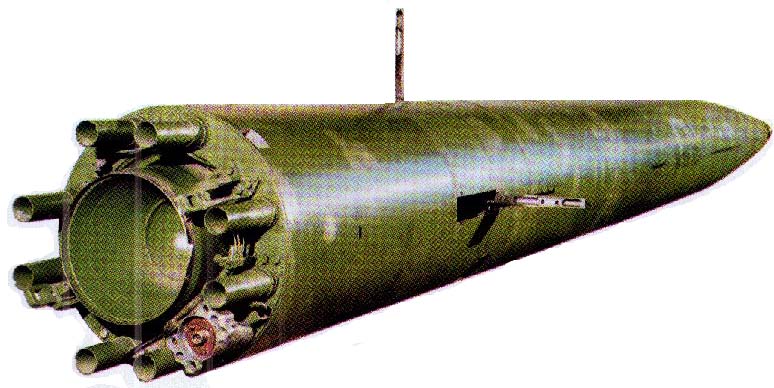
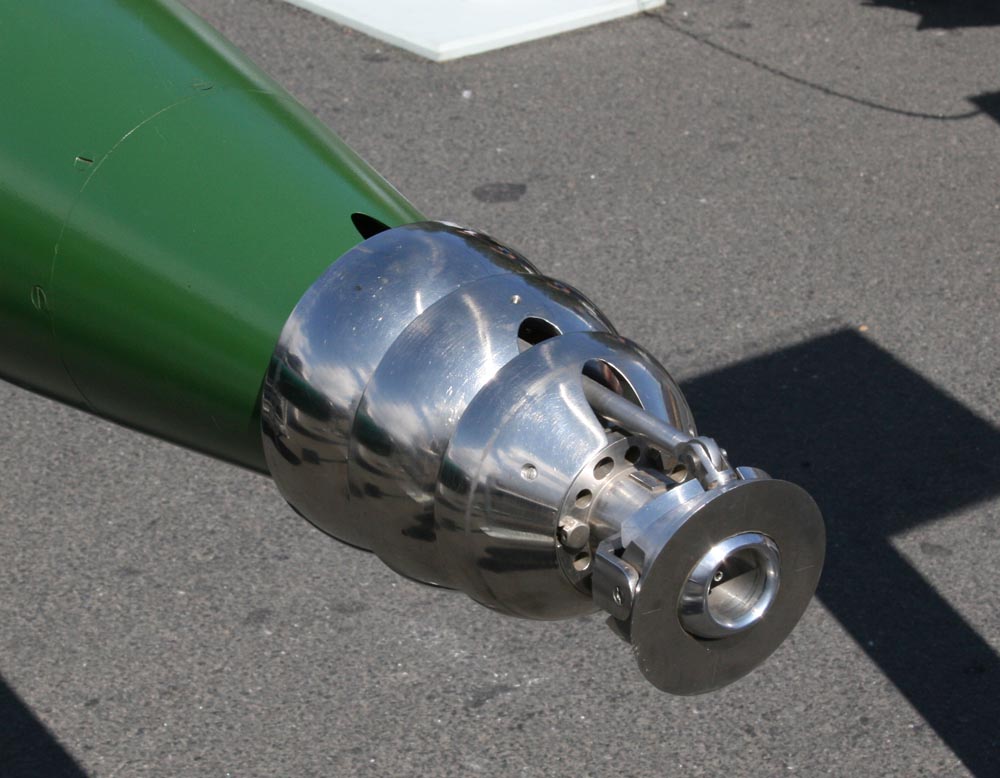
**The Russian Shqwal torpedo, viewed from the rear. On its sides, its lateral wire-guidance channels are deployed. **
The tubes surrounding the "coquetier" of the central nozzle may be injectors of lower-temperature gas, allowing to surround the main jet, presenting a different acoustic impedance, which would then allow the sound waves (turbulence) emitted by the solid-fuel propeller, which is presumably very noisy, to be reflected.
That said, you may wonder how such a torpedo can be guided. It is extremely simple. The photos of the front of this machine are now everywhere.
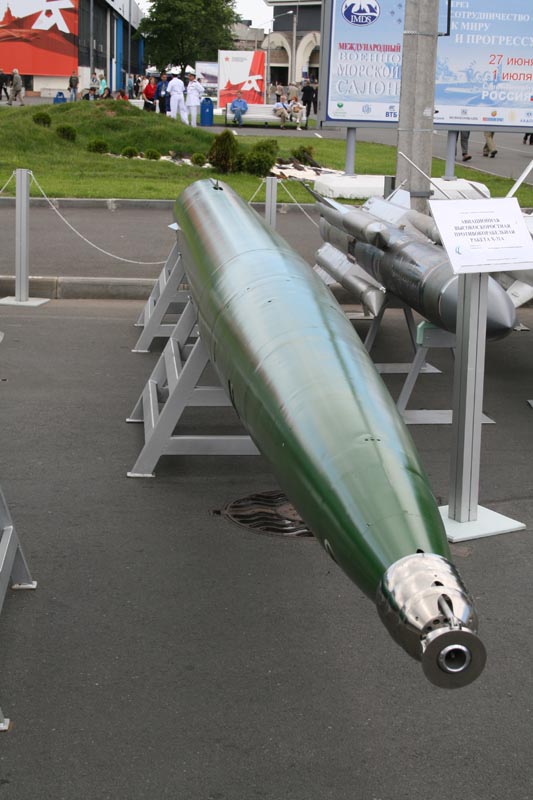
**A Russian Shqwal torpedo, viewed from the front, during a public presentation **

Detail of its hot gas ejection orifice, with a deflector mounted on gimbals, ensuring guidance
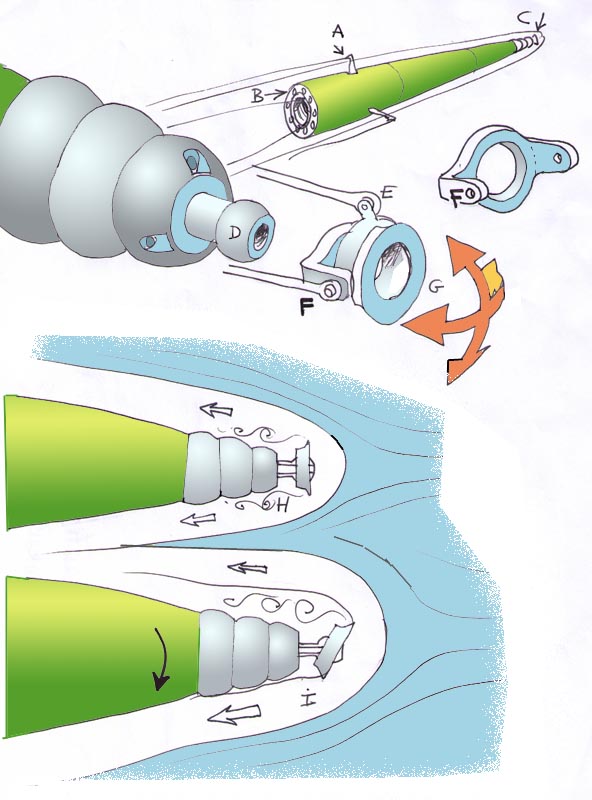
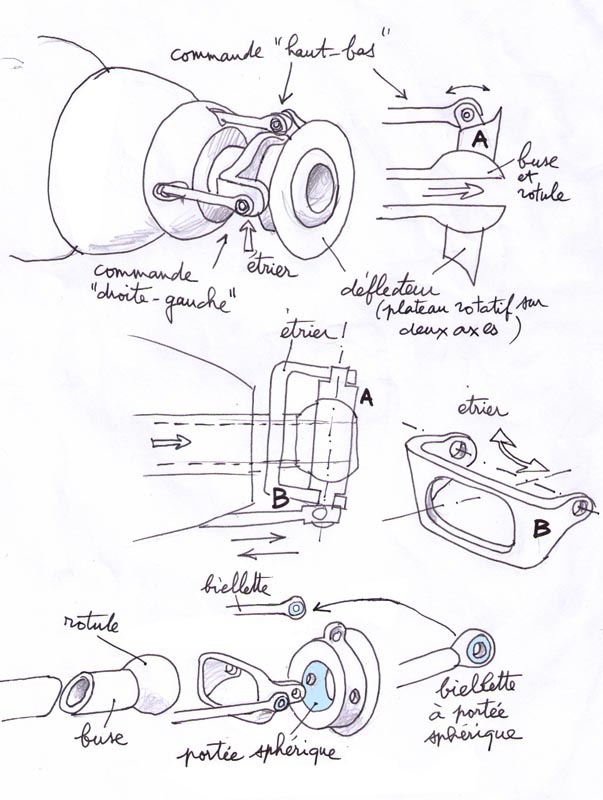
The gas exits in line, vaporizing seawater, which flows at 500 km/h. The nozzle is surrounded by a spherical joint around which a circular plate rotates, allowing the steam to spread around the torpedo. By tilting it with two jacks, one of which is visible, the layer of steam licking the torpedo's walls is modified, thus changing the contribution, at each point, of the local friction drag. This wire-guided torpedo, without self-guidance, is therefore very maneuverable.

July 31, 2010.
I met a colleague researcher, who heads a thermal laboratory in Marseille. It is the one who accepted a contract with ITER, to study thermal shocks on metal walls.
- Yes, I know that ITER is nonsense. But, you see, if I didn't accept, I could say goodbye to my position at the university.
Telling this, I know it won't please him. But it shocks me that a researcher has so little ethics and honesty. That said, nowadays, what teacher-researcher still knows what the word "ethics" means, except for people like Vélot who fight against GMOs at INRA, and end up stripped of all means and funding.
About fifteen years ago, Jean-Claude Charpentier was the director of the Department of Physics for Engineers at CNRS. The CNRS had published a special issue dedicated to the relationship between researchers and the army, titled "Researchers, we need to talk". In these pages, Charpentier said he did not have enough contracts with the army to satisfy the researchers' demands....
I won't insist on the irreparable flaws of ITER, I've talked about it enough times. Still, they are pushing hard to pass this "dancer" for 15 billion euros during a period of austerity. Nonsense...
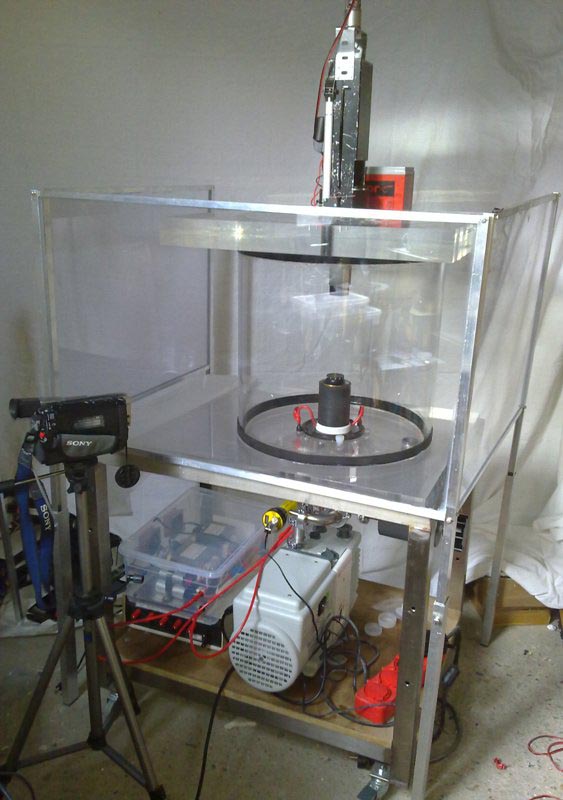
That day, the site was cleared at Cadarache. You can see this vast scar when flying in a glider. But the works are currently halted until this even more pharaonic budget is approved. When I think about our "MHD laboratory, which fits on a rolling table and is already producing publishable results, it seems surreal...
Our test bench for low-density MHD experiments, operational since July 2010
Cost: 2000 euros
In the same thermal laboratory, researchers have a contract with the Navy, to study cavitation torpedoes. According to their boss, this cavitation "would simply be obtained by speed". In other words, a cone is placed at the front of the torpedo (propelled by a rocket: the French are finally abandoning the propeller, 40 years late) and behind which cavitation occurs, so that the rest of the torpedo advances in a water vapor environment, which reduces the friction drag on the sides.
-
But, what about the drag due to the cone?
-
Ah, I don't know....
These guys know nothing about the technology of the Russian Shqwal or the American supercav. We can talk about it since it's a well-known secret. Even the Iranians have Shqwals bought from the Chinese, who produce them under license. The product is originally Russian, over 30 or 40 years old.
In the Russian system, a hot gas generator ejects the gas forward. It then turns seawater into steam. A system that the French apparently have not yet understood.
How is a Shqwal guided? First by wire-guidance. The wire supports come out of their housings after the torpedo exits the launch tube. You can see the guidance system, with a ruggedness that combines efficiency, on the photos. But I'll detail it with some drawings.
I told you this to remind you that when moving an object in water, a significant friction force appears. One first thinks of the drag aspect, but one forgets the entrainment. Take a look at the following sheet:
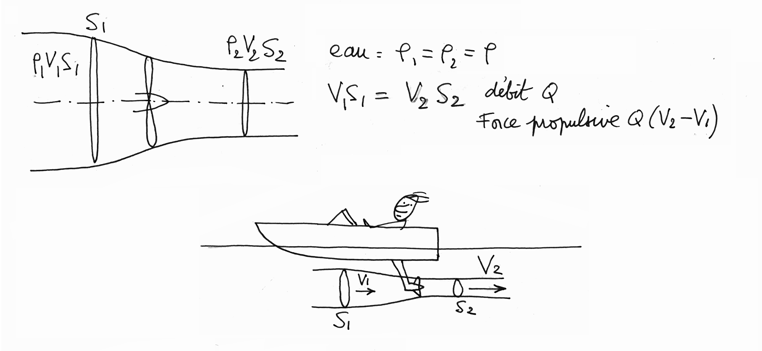
It was said that if a propeller provides a force transmitted along its axis, a thrust force, this goes hand in hand with the acceleration of the water as it passes. This corresponds to the figure at the top left. There is conservation of the product ro V S, where ro is the density, V the velocity, and S the cross-sectional area of what is called a "flow tube" in fluid mechanics. The density of water, one kilogram per liter or one thousand kilograms per cubic meter (in MKSA units) is constant, since water is an incompressible fluid. Therefore, the product V S is constant. In front of the propeller, the same water flow Q is ensured in a more constricted flow tube.
The evolution of propellers.
Earlier, I spoke about cavitating propellers, whose purpose is to increase efficiency. Indeed, a propeller blade is a wing of very limited span, with a low aspect ratio. A pressure difference is created below a wing (inlet side) while a depression is established on the top (outlet side). At the wingtip, the air flows from the inlet to the outlet side. This leads to the formation of two marginal vortices at each wingtip. These swirling vortices are energy losses, these vortices do not serve to support the airplanes, but to warm the small birds.
The lower the aspect ratio, the higher the share of energy spent, dissipated in these vortices. This is why gliders have enormous aspect ratios. The albatross flies better than a pigeon.
The cavitating propeller is a way to prevent vortices from forming, implying that the blade tips, cut off, circulate very close to the casing. However, a remark immediately arises: this casing must be adapted to the regime in which the propeller operates. The product of the water speed V by the section S must be the same at the entrance and at the exit. That is, the casing design must be related to the variation of speed (V2 - V1) corresponding to the propeller regime, which depends on the number of revolutions per minute.
In submarine launchers or attack submarines, the goal is to reduce noise as much as possible. The vortices of the propellers are sources of noise. The adoption of a casing is a solution to reduce this, and it has been adopted on many units, in all countries.
**Model of a submarine with a cavitating propeller **
**Submarine with a casing **
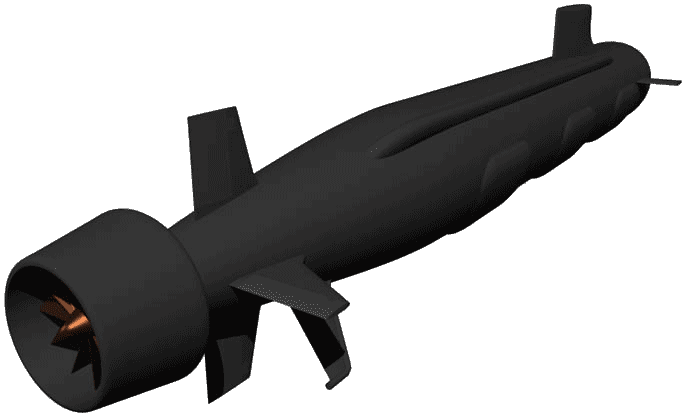
**Sea Wolf submarine **
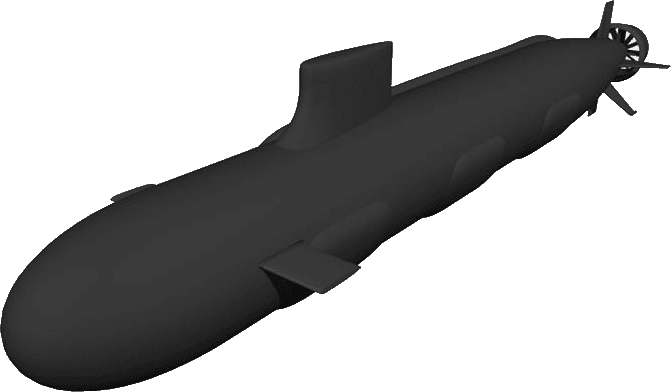
The same, viewed from the front
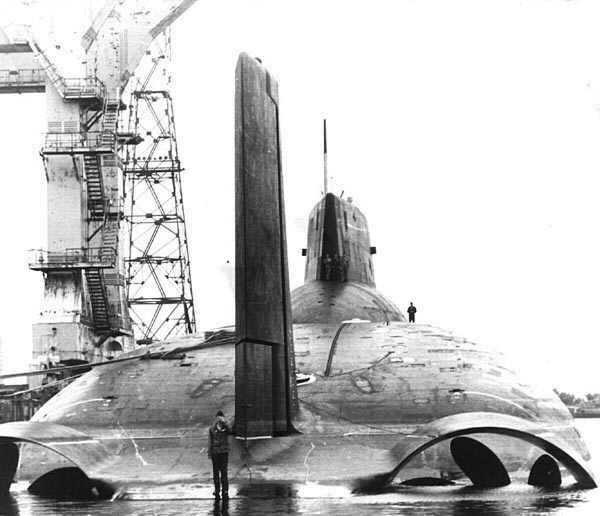
One of the Russian Typhoon monsters, viewed from the rear
These casings only work at a given speed, their "adaptation speed". Outside of that, they become noisy (low speed or low speeds). It would be too complicated to give them a variable geometry. A solution is to counter the formation of marginal vortices by MHD, by equipping the blades with wall accelerators.
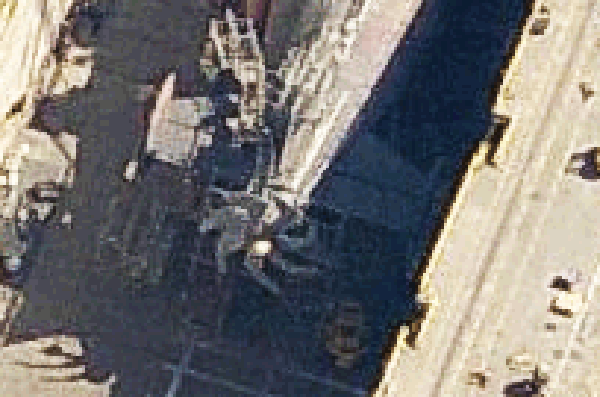
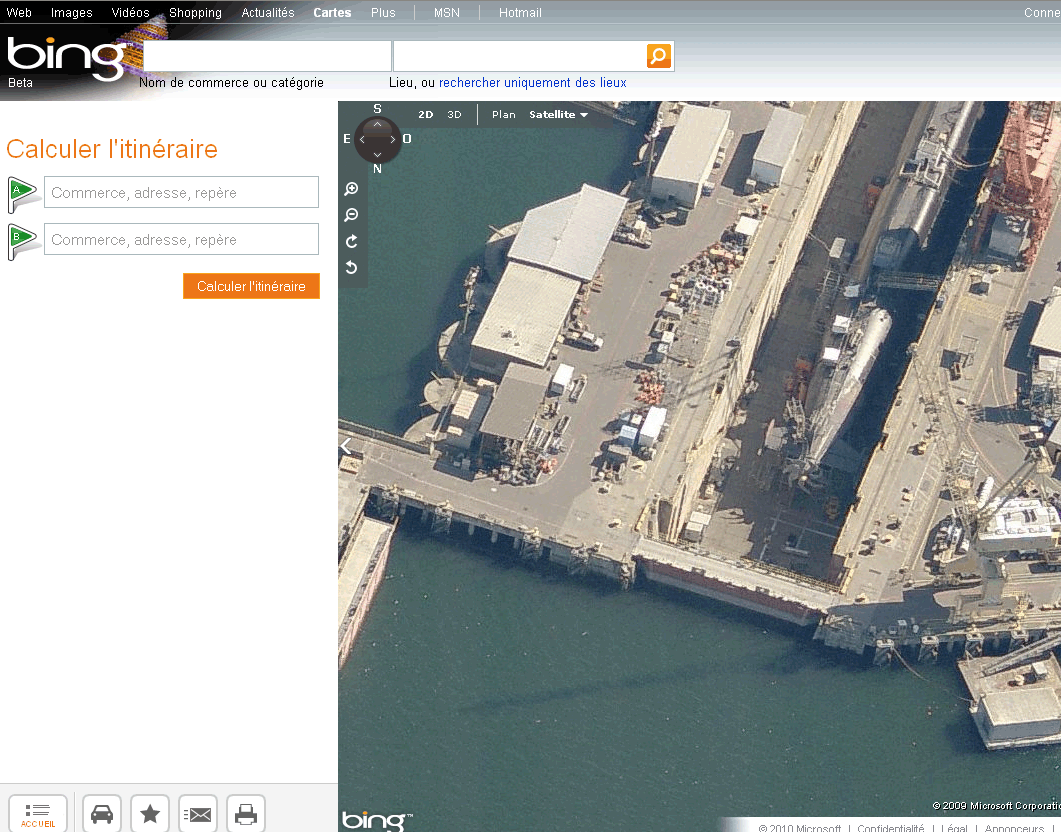
In recent years, new submarines have been equipped with "cimeterre" propellers. Recently (2010), an Internet user was able to capture this image of an American nuclear submarine, with a casing, in its base in Kitsap-Bangor, in the state of Washington. Here are two images, the second one corresponding to a zoom.

**It should be noted that the American internet user captured these images by surfing on a route search software for car trips .... **
Cimeterre propeller of an American submarine
This propeller has many hydrodynamic qualities, which I will tell you about one day, showing that in a field as well-trodden as marine propellers, essential progress can still be made.