A 15 billion euro experiment
ITER:
A 15 billion euro experiment
The fusion reactor: dangerous
Lithium plus water = explosion!
July 13, 2011: A reader informed me that a hacker had modified a word in the code on the server, "search" having been replaced by "custom", which rendered the search engine inoperative. This complete word modification could not correspond to a bug.
The restoration was performed. Thank you. The canceled code line:
Restoration: Now the internal search engine works
http://www.dissident-media.org/infonucleaire/iter.html
July 13, 2011:
A reader's reaction:
I read your article: enlightening.
I found this in memory:
There are interesting things there. I strongly recommend readers to click on this link, which will make them discover the world of scientific-technological surrealism. The more I learn, the more I am disturbed. One could summarize it like this:
waste improvisation recklessness "We hadn't foreseen the problems" bargaining Coué method "who doesn't try, doesn't get"
July 13, 2011:
A second reader's reaction, which you will appreciate:
Dear colleague, plasma physicist at CNRS, I read with interest the document on ITER "15 Billion Euro Experiment".
It is excellent and contains no errors.
But it must be known that all serious and honest plasma physicists know very well all this, including the physicist-engineers at CEA (unfortunately, there are fewer and fewer plasma physicists in the ITER project).
It is quite clear that those who would support the opposite are either completely dishonest, or completely incompetent, or naive theorists far from this world.
Hence the refusal of a contradictory debate on the subject ...
What to do then? Of course, we must react.
But knowing some local officials well, I would suggest targeting certain people at the General Council 13 and the Regional Council. It is locally that it is possible to act, while ITER Organization is only an empty technical management structure (no scientific management, in particular).
Ecologist officials in committees should be good advisors in this approach.
Not having finished my career at CNRS, I count on your discretion as a former colleague to keep this message confidential.
(I contacted E.... recently, and we had a long discussion during which we found our views similar on many points).
Sincerely, ......, from the Group of Applied Plasma Physics at CNRS Professional website:
http://www.........
Personal mail: ..........
The person is a laboratory director......
In summary:
1 - You are completely right, your arguments are scientifically relevant 2 - We must react!
3 - But keep me out of it, because I have not yet finished my career at CNRS....
[Announcement regarding this public inquiry](/sauver_la_Terre/ITER/OUVERTURE ENQUETE PUBLIQUE_LA PROVENCE 26 MAI 2011 A (1).pdf)
http://www-fusion-magnetique.cea.fr/cea/next/couvertures/blk.htm
July 13, 2011: A reader informed me that a hacker had modified a word in the code on the server, "search" having been replaced by "custom", which rendered the search engine inoperative. This complete word modification could not correspond to a bug.
The restoration was performed. Thank you. The canceled code line:
Restoration:
Readers have informed me of attempts to contact Eva Joly, or Nicolas Hulot, or other highly media-impact figures, to enlighten them about the existence of such solutions, perfectly and immediately operational. I have made contact attempts.

July 13, 2011: A reader informed me that a hacker had modified a word in the code on the server, "search" having been replaced by "custom", which rendered the search engine inoperative. This complete word modification could not correspond to a bug.
The restoration was performed. Thank you. The canceled code line:
Restoration:
/sauver_la_Terre/ITER/experience_quinze_milliards_es.htm
Link to the final summary of this page
On May 16, 2011, a delegation from the European Parliament came to the Hotel du Roy René in Aix-en-Provence, where they heard various presentations by the project's managers. I was able to give the parliamentarian Michèle Rivasi, just before this meeting, 40 copies of a memorandum I had printed at home, half in color, representing an abridged version of the text that follows. She distributed them to the parliamentarians.
Outside the hotel, about 200 anti-nuclear demonstrators had gathered. It's few, given the stakes, and I was the only scientist, or even the only engineer or technician. The demonstrators were "basic anti-nuclear activists".
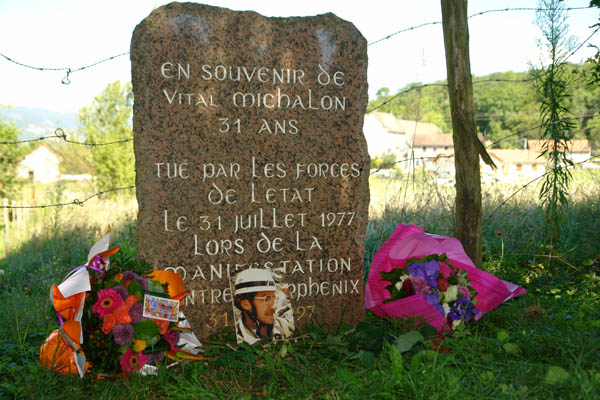
It is true that people like me are waking up after the reminder represented by Fukushima. But this awareness, for me, of the deadly nature of nuclear energy, is definitive. I had simply never looked into the issue. Previously, early activists had suffered from the beatings of the "forces of order", the throwing of tear gas grenades, or even the throwing of defensive grenades that resulted in the death of the activist Michalon, protesting against the installation of a fast breeder reactor at Creys-Malville, on July 31, 1977, who was hit by one of these grenades in the chest, which exploded.
Even today, there are those who chain themselves to the rails on which the convoys bringing radioactive waste to the "La Hague reprocessing center" (in fact a plutonium extraction center, with which the French-made MOX nuclear fuel is produced, which equips 20 reactors in France, the third reactor of Fukushima, and which France sells to the "foreign countries"). These people are brutally removed, injured, while they fight for us and our children to remain healthy, to escape the profit-driven actions of nuclear pathologists.
The deadly caravan must pass at all costs
I confess that I felt ashamed to react so late, and a certain discomfort at seeing none of my scientific colleagues, or engineers, join this legitimate protest. The awareness of the deadly danger of nuclear energy is taking shape, stimulated by the Fukushima disaster, and this despite the blackout we are witnessing in the major media, orchestrated by the nuclear barons.
But before this, those who protested against nuclear energy were seen as marginal, dreamers, while they simply had a much clearer and earlier vision of the situation.
As we will see later, things are much worse than one could think.
So far, the arguments against the implementation of ITER were mainly of an environmental, or even landscape nature. I just watched a grotesque, shocking video, taken during the presentation of the site, where the guide indicated that the bats had been carefully moved from their natural habitat to encourage them to nest elsewhere. They also took care of protected plant species.
What nonsense, when you discover what is coming next.
We know the criticisms regarding the radiotoxicity of tritium, a radioactive substance with a half-life of 12.3 years. Yes, the problem is real. Tritium is an isotope of hydrogen, whose nucleus contains one proton and two neutrons, accompanied, like for ordinary (light) hydrogen (whose nucleus consists of a single proton), and for the isotope deuterium (whose nucleus consists of one proton and one neutron), by a single electron. This electron constitutes what is called the "electron shell of the atom considered." It is this shell that determines the chemical properties of the substance considered.
Thus, from a chemical point of view, light hydrogen and its two isotopes, deuterium and tritium, have exactly the same chemical properties.
When heavy hydrogen combines with oxygen, we obtain what is called "heavy water." All combinations are possible, including those where the water molecule can contain one or two tritium atoms.
This tritiated water will therefore be radioactive.
Opponents of the ITER program will argue that since tritium is hydrogen, it is therefore extremely difficult to safely contain it (they will say there is no zero risk). The molecules of heavy hydrogen, like the molecules of light hydrogen, being tiny, tend to bypass obstacles such as valves or seals. Worse still, hydrogen passes through solid walls! Tritium is a champion of escape, passing through seals and most polymers.
When it comes to light hydrogen, or even deuterium, the danger is non-existent, from a biological point of view. As for tritium, it's another story. The hydrogen molecule has the property of being able to bind to a large number of other atoms, giving rise to a considerable number of molecules, belonging to "mineral chemistry" or biochemistry.
In doing so, this tritium can integrate into food chains and even into human DNA.
ITER supporters can retort that a release or leak of tritium, corresponding to the operation of the test machine, or its descendants, would only result in insignificant pollution, "not presenting a danger from the point of view of public health."
We have become accustomed to hearing this from all the nuclear barons, for decades.
Another argument, put forward by the defenders of the ITER project: there are "water cycles" in the human body. If tritiated water were absorbed, the human body would return it to nature relatively quickly. Its "biological half-life" (from one month to one year) is shorter than its "radiological half-life" (Wikipedia).
http://fr.wikipedia.org/wiki/Tritium#Fixation_biologique_du_tritium
http://fr.wikipedia.org/wiki/Tritium#Cin.C3.A9tique_dans_l.27organisme
Things would be different if tritium atoms were bound, for example, to DNA molecules. This touches on the consequences of very low pollution, exerting their effects over long periods, and especially affecting pregnant women and children.
Again, the supporters of the ITER project will shrug their shoulders, saying that the quantities of tritium involved will remain very low, and that even a nearby potable freshwater reservoir would receive tritiated water, with such a low dilution rate that ... etc.
So it may not be on this ground that effective criticism should be sought.
Of course, there is the cost of the project, which is exploding and its tripling is only a pale beginning, as we will see later, joined by the calendar's uncertainties, with this nagging question:
*- When will we get electrical energy? *
The technical and scientific aspects we will discuss in what follows make these predictions impossible, both in time and cost, and simply in terms of feasibility and profitability.
**Let us first try to find the origin of the ITER project. **
http://www.iter.org/fr/proj/iterhistory
It is read that this project resulted from a discussion between Gorbachev and Reagan, in Geneva, in 1985, after the Cold War.
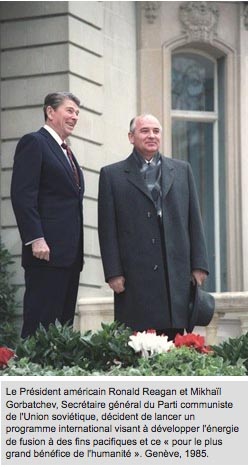
Reagan and Gorbachev in Geneva, 1985
For humanity, the possession of staggering stocks of nuclear weapons and missiles gave the atom a completely negative image, barely mitigated by the positive connotation of civil nuclear energy. It is indeed known that a civil reactor can be converted into a plutonium-producing reactor and thus produce the explosive-type of fission bombs: plutonium.
-
Add the inextricable problems related to the storage of waste and the dismantling of nuclear power plants, for which there was not even the beginning of a solution.
-
Add the inescapable phenomenon of the spread of nuclear weapons.
Add, by the way, that one year after this meeting it was Chernobyl
The need therefore arose to find a "peaceful atom," which could not give a new weapon, whose waste would consist of an innocuous gas: helium, which could not lead to the spread of "sensitive materials."
Right away, one thought of deuterium-tritium fusion generators, immediately endowed with all the virtues.
An "inexhaustible" energy, they said. And to evoke the enormous quantities of deuterium and tritium (or lithium, from which tritium can be made) contained in the oceans' water (see below).
The energy from fusion is therefore initially a myth, a very strong one, that of the "beneficent atom," safe, peaceful, and of "limitless energy."
Add an image that speaks to the human imagination, that of the "sun in a test tube."
Humanity has always linked major natural phenomena to mythological constructions. Water that falls from the sky allows for good harvests. Among the pre-Columbians, they implored the sky to dispense this vital liquid: rain. But water is also that of floods, that which destroys, that which kills.
It is the same with the Sun. Among the Ancient Egyptians, the gods were often just the declination of the central solar deity. Ra was the beneficent sun, ensuring good harvests, while Seth was his brother, the terrible desert sun god, who dries the harvests and causes the lost traveler to die of thirst.
There is a myth of the atom. When Oppenheimer, who knew how to read Sanskrit, first saw the nuclear fire unleashed before his eyes, he instinctively recited an Indian poem from the Bhagavad Gita (verse 33, chapter 11), which ended with:
I am death, the destroyer of all worlds
http://en.wikipedia.org/wiki/Bhagavad_Gita
The atom therefore began to mix with history, taking its place in the imagination of men, in the form of the expression of a terrible god, comparable to the thunder of Jupiter, the hammer of Thor, with biblical echoes of the Apocalypse, of the end of the world.
Then came the time of the peaceful atom, a dispenser of comfort, of a better life. An atom that heats homes, powers the TGVs that transport us so comfortably and quickly.
But the tragedies of Chernobyl and Fukushima are brutal, violent reminders. Then the atom becomes a kind of white plague, invisible, odorless, slowly deadly.
- They would not all die, but all were struck.....
Even when the operation of the power plants seems to proceed without incident, we observe effects, on the health of those who work there. An INSERM study shows that there are twice as many cancers among those who work on the maintenance of the power plants, even when their dosimeters record doses below the standards set (arbitrarily) by the Nuclear Safety Authority.
[Lien audio](/AUDIOS/11 mai 2011.mp3)
This is the civil atom, despite the powerful lobbying by the nuclear barons, taking on an alarming appearance.
So why not turn to "this sun in a test tube," this atom that has become beneficent, without risk. Indeed, if a passenger plane crashes into a tokamak, or a terrorist damages it with an explosive, what a fine affair! What would be the consequences? A little deuterium, tritium, lithium and helium would be released into the air, nothing more, it is said, and the next day, we would no longer think about it.
*A myth emerges with the idea of a "risk-free and waste-free atom." *
On this second point, it is only partially true. Deuterium-tritium fusion produces neutrons. These will contaminate all the reactor structures, which will become radioactive by "activation," due to the transmutations created in all materials by this neutron flux. Thus, the dismantling of a fusion reactor would be just as complex, problematic and costly as that of a fission reactor.
The supporters of the ITER program will object that it would then only be waste whose half-lives are counted in centuries, while fission generates deadly radionuclides *for hundreds of thousands of years. *
With this preamble, it is necessary to try to get out of the myth, forget the beautiful phrases, such as "the sun in a test tube" and "limitless energy," come down a bit to Earth and examine the issue in terms of feasibility.
To do this, I will have to use a physicist's discourse. Where possible, I will try to keep this discourse accessible.
Fusion remains an ivory tower, protected by the extreme complexity of the phenomena attached to it, and this allows the nuclear baron to cut short any question by answering "it's very complicated." Then he will deploy before his interlocutor, possibly a politician, the cloud of ink of this complexity, which will allow him to avoid the questions, like the octopus releasing its cloud of ink.
Let us therefore enter the heart of these scientific and technical questions, moving beyond the usual jargon for laymen.
The ITER project relies on two sets of results. On the one hand, the British result, that of the JET (Joint European Torus), obtained at the Culham laboratory in October 1991, where, for a second, the injection of various forms of energy allowed the maintenance of fusion reactions, with a coefficient
Q = 0.7
What does this Q coefficient mean? It is the ratio between the raw energy released by the fusion, and the one that is injected in the form of microwaves, neutral injection, etc...
A fusion reactor produces energy whose flow is proportional to the volume of its nuclear boiler, therefore to the cube of its characteristic dimension (take, for example, the diameter of the plasma torus).
Energy losses occur at the wall, therefore are proportional to the chamber's surface, which varies as the square of the characteristic dimension.
The corollary is that the Q factor follows the law of evolution:

If the JET was limited to this value Q = 0.65, it is because the machine was too small. ITER, twice as large, should allow a coefficient twice as high, that is:
Q = 1.4
In the ITER leaflets, it is mentioned that its designers hope to obtain a factor higher than 5, with a running time of 400 to 1000 seconds.
Some details about this experiment conducted on the JET. This tokamak is not equipped with a superconducting magnet. The magnetic field is created by a copper-wound solenoid. The current that flows through it is in the megampere range, and the heat generated by the Joule effect prevents the experiment from being prolonged.
http://fr.wikipedia.org/wiki/Joint_European_Torus
http://claude.emt.inrs.ca/VQE/sources/fusion_futur.html
The heating systems of ITER (microwaves, neutral injection) are extrapolations of those used in the JET.
So ITER "will work".
No one doubts it. Deuterium-tritium fusion will be achieved, with a Q factor higher than one, and for a much longer time, made possible by the use of a superconducting magnet.
But is that all?
The machine, as we will show, is incomplete.
In its current state, it cannot even be considered a prototype, focused on validation. Simply because it lacks one, and even essential elements, if we include those whose operation has never been tested.
The reactor will be loaded with a 50/50 mixture composed of two isotopes of hydrogen, deuterium and tritium. The fusion reaction consumes this mixture, producing a helium nucleus, with two positive charges, carrying an energy of 3.5 MeV and a neutron, with an energy of 14.1 MeV.
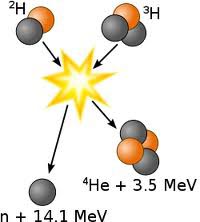
Deuterium-tritium fusion
An image that has been pounded into the public for decades, although it only represents half the story!
The magnetic confinement field opposes the escape of this helium nucleus, as much as possible. By exchanging energy with the deuterium and tritium ions, it will contribute to maintaining the plasma temperature, which tends to continuously cool down by radiation. But this field has no effect on the neutron, which, being electrically neutral, will inevitably hit the wall. Captured by its materials, it will create radioactivity in its elements, through "activation," various transmutations.
The late Nobel Prize winner Gilles de Gennes doubted that one could protect the delicate superconducting magnet material from the bombardment of fusion neutrons. Superconducting elements are fragile. The damage caused by neutrons, by causing transmutations, can locally eliminate superconductivity, put the very expensive magnet out of service, or even cause its destruction.
Faced with this, the ITER managers respond that behind the first wall (the first wall) and the magnet is an envelope of lithium, or rather a lithium-based compound, which, in addition, by absorbing the neutrons, regenerates the tritium, through the exo-energetic reaction:

http://www-fusion-magnetique.cea.fr/gb/cea/next/couvertures/blk.htm#ch1
**See also **:
It should be noted that this reaction is a fission reaction, stimulated fission of a lithium-7 atom, which is in an unstable state and splits into two atoms, respectively 4 (helium) and 3 (tritium) nucleons.
This tritiation cover is in liquid form, forming a mixture of Lithium and Lead. Lead has the function of slowing down the neutrons and, when struck by a neutron, can emit two. This liquid mass at 500°C is cooled by pressurized water. It is out of the question that this liquid metal mixture be brought into contact with this water. Lithium melts at 180°C and vaporizes at 1342°C.
Lithium does not burn in air at normal temperature, unlike its alkali metal cousin, sodium. But if the temperature is sufficient, it burns like its other cousin: magnesium, and this combustion is violently exothermic.
http://www.plexiglass.fr/materiaux/metaux/lithium.html
http://www.youtube.com/watch?v=ojGaAGDVsCc
****http://www.youtube.com/watch?v=hSly84lRqj0&feature=related
****http://www.youtube.com/watch?v=oxhW7TtXIAM&feature=related
Excerpts:
Lithium is the only alkali metal that can be handled in air without danger, while the others oxidize, often with inflammation. In dry air, lithium slowly covers itself with a layer of oxide and nitride.
In humid air, the attack, catalyzed by water vapor, is much faster.
The metal does not ignite in dry oxygen above 200 °C, giving the oxide Li2O and not the peroxide, a property that clearly distinguishes it from its higher homologues and brings it closer to the alkaline earth metals.
The combustion of lithium is very exothermic and is accompanied by the emission of an intense white light like magnesium.
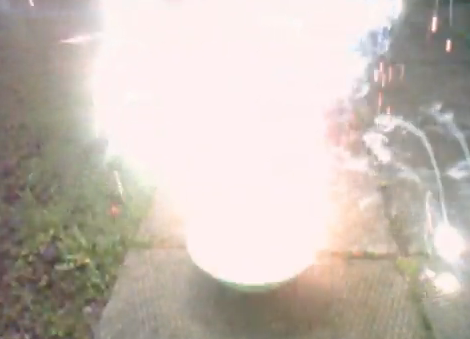
Lithium burning in air, in the presence of water: immediate explosion. Lithium fire in water:
Lithium plus water:
In the presence of water, at 500°C, it decomposes it, taking its oxygen and releasing ... hydrogen. You find a similar reaction to that of the zirconium cladding surrounding the fuel pellets, in the reactors of Fukushima, and in general in all water-cooled reactors, when the temperature rises to the point that this water turns into steam.
The hydrogen released by the reaction of lithium with the water used to cool it releases hydrogen, which, when combined with air, can cause an explosion, like those you saw at Fukushima. Lithium is a very reactive substance, which can combine with oxygen, hydrogen (, giving lithium hydride, the explosive type of hydrogen bombs). It can even combine with ... nitrogen, at normal temperature, giving lithium nitrides. All these reactions are exothermic, capable of experiencing a damaging runaway.
And no one has told you about this
No one has mentioned what would happen if, in a "fusion" reactor, lithium were to catch fire, or to combine with the water that is supposed to cool it. These tritiation covers have not been tested. As Michèle Rivasi pointed out during this meeting, it would be preferable to test the behavior of these tritiation covers on other machines, like the JET, or the German machines (ASDEX, at the Max Planck Institute), or Japanese ones, before launching a project
- expensive
- dangerous
- problematic
Around these tritiation cells, whose image you will discover below (source: CEA website), you have two things:
- Directly in contact, the first wall, made of beryllium. It is a metal that melts at 1380°C. Its behavior in a tokamak has not been tested either. Beryllium is highly toxic, causes a disease called berylliosis, an incurable lung disease. It is also carcinogenic.
Source :
http://fr.wikipedia.org/wiki/B%C3%A9ryllium#Contamination_du_corps_humain
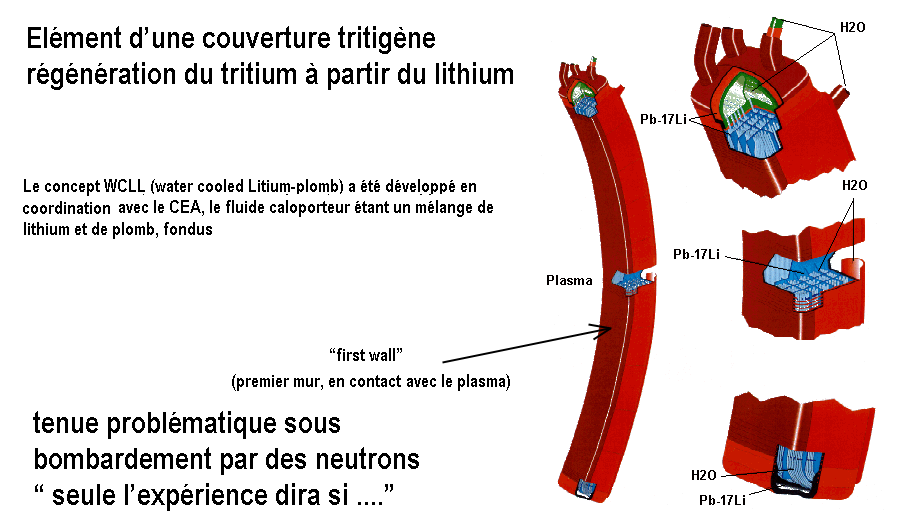
Element of a tritiation cover (another "unprecedented experience")
Some could object that lithium is in these elements in the form of an alloy, perhaps less flammable, due to the lead component. The boiling point of lithium is 1342°C and that of lead is 1749°C. In case of temperature excursion, lithium vaporizes first and separates from lead, forming bubbles, much less dense.
On the other side you will find the superconducting magnet, cooled by liquid helium, at 3° absolute. At the slightest temperature rise, this superconductivity ceases. The part of the magnet that loses this superconductivity property becomes resistive, a site of a violent Joule effect, which propagates this destruction of superconductivity, vaporizing the refrigerant, liquid helium.
When these conductors are in a superconducting state, there is no Joule effect, no heat release. The cryogenic system that manages them is there only to prevent the heat from the surrounding environment from warming these elements, which are immersed in liquid helium.
If somewhere this superconductivity is broken, the affected element becomes resistive, generating heat. An accident occurred at CERN in 2008. There was a loss of superconductivity at a weld. The current flowing through the magnets is 9000 amperes. An electric arc occurred, vaporizing the surrounding liquid helium. The explosion displaced magnets weighing 40 tons by several meters (...).
On a fusion reactor, equipped with its indispensable tritium blanket, a catastrophe is then possible, with:
- Violent combustion of the lithium contained in the tritium blanket (it burns like magnesium. It will be necessary to demonstrate this on a television show).
*- In contact with water: explosion. *
*- The heat generated disturbs the neighboring superconducting magnet, which vaporizes. *
*- This lithium fire carries lead vapors (toxic: saturnism) as well as tritium (radioactive) that had been synthesized in the tritium blanket. *
- The "first wall" (one to two millimeters of beryllium) is also vaporized and mixes with toxic pollutants.
*- Add the dispersion of a few kilograms of tritium representing the reactor's charge. *
The total....
Relax, such a reactor explosion would immediately stop any fusion reaction within it. That's something. This is what you have been told for decades, praising the safety of these nuclear reactors of the next century.
But, in terms of chemistry, it's ... Seveso.
During these meetings on ITER, Michèle Rivasi caused a clear discomfort when she asked "who would pay in case of a problem, a catastrophe? Who would be held responsible?" The answer was an awkward silence, meaning:
*- But what are you talking about? What catastrophe? All precautions will have been taken, of course! * ****
| This presence of lithium, essential to form this tritium blanket | makes the reactor | fundamentally dangerous | . |
|---|
This unavoidable danger has been carefully hidden from the public, behind the smoke screen of the "basic reaction of fusion", that of the deuterium-tritium mixture.
Let us understand clearly. A "fusion reactor" does not operate with a single reaction, but with two.
Let's detail them :
2 Deuterium + 3 Tritium gives 4 Helium plus 1 neutron, plus energy.
( the most publicized reaction in the history of nuclear energy )
Neutrons alone represent 80% of the emitted energy: 14 MeV (Mega electron volts)
Helium represents 20% of this energy. This energy is expected to be transmitted in the plasma through collisions to maintain the temperature of 100-150 million degrees in the reactor.
Neutrons, free of electrical charge, pass through the "magnetic barrier" and hit the "first wall", made of beryllium. Either they pass through without interacting, or they interact and are involved in a reaction:
9 Beryllium + neutron gives 2 4 Helium plus 2 1 neutron
The second reaction, if not for a fusion reactor, is the one that regenerates the tritium:
1 neutron + 6 Lithium gives 4 Helium plus 3 Tritium, plus energy.
We can group these two basic reactions:
2 Deuterium + 3 Tritium gives 4 Helium plus 1 neutron, plus energy (fusion).
1 neutron + 6 Lithium gives 4 Helium plus 3 Tritium, plus energy (stimulated fission)
into one:
2 Deuterium + 6 Lithium gives 2 4 Helium, plus energy
Thus, "a fusion reactor", which is related to breeder reactors, does not consume a mixture of Deuterium and Tritium, but Deuterium and Lithium, these two substances being indeed abundant in seawater.
D'où cette idée "d'énergie illimitée".
All of this is indeed true. However, it is necessary to know how to operate the tritium regeneration reaction, which is extremely dangerous and untested. It will only be "tested on ITER".
It took an intense campaign of disinformation and media anesthesia, spanning decades, for the local population, except for a few "eco-enthusiasts", to passively accept the installation of such a dangerous project in the region. Maryse Joissains, mayor of Aix, has reaffirmed her unwavering support for ITER.
The tritium blanket should be composed of a number N of elements like the one described in the figure above. In the ITER experiment, only a few elements of this type will be used. Probably even just one, the others being replaced by a shell serving as a barrier against neutrons. Probably simple lead.
The deployment of this tritium blanket, all around the chamber, will be for DEMO, the next toy.
No matter which way you look at it, regarding the ITER project, you come across very complex problems, with solutions that have not been tested, and which are no less untested. And complexity means development time and cost explosions.
In terms of complexity, there is as much distance between ITER and a fission nuclear reactor as between a jet engine and a kettle.
To the designers of ITER, one can ask the question :
*- Will the behavior of the entire "first wall", flanked by its tritium blanket, associated with a heat evacuation system, be satisfactory? Isn't this an "unprecedented experiment"? *
Another problem related to the operation of ITER refers to the ablation of its first wall, due to the impact of hydrogen ions. There, the guiding ideas are based on the results obtained in France on the Tore Supra device, a French tokamak installed in Cadarache, equipped with a superconducting magnet developing 4 teslas. The temperatures achieved have not reached the values allowing fusion. Unless I'm mistaken (I would appreciate clarification), these were in the range of a few million degrees. However, the operating time reached a record duration of 6 minutes.
It was thus possible to study the behavior of walls, very close or in contact with a hot plasma. The chamber was then lined with carbon tiles (CFC), quite similar to those of the Space Shuttle. That is, a mixture of carbon and carbon fibers. Carbon conducts heat well and has good thermal resistance. Therefore, researchers studied the capture of heat, by conduction, through a wall called "limiter". This is the kind of circular path that can be seen at the bottom of the toroidal chamber.
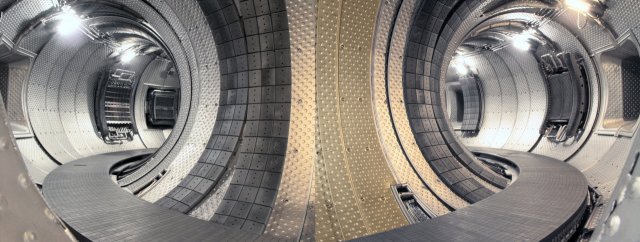
The chamber of Tore Supra. At the bottom, its limiter
The walls of the chamber were tested with heat fluxes of 1 Megawatt per square meter, this flux rising to 10 Megawatts per square meter at the limiter, whose surface temperature reaches 1200-1500°C. This limiter is a heat exchanger, behind which water at 220°C circulates under 40 bars, this setup allowing the testing of the possibility of recovering heat in a tokamak.
A clarification, which I recently had confirmed. It was announced with much fanfare that "deuterium-tritium fusion, the 'magic couple', had been achieved on the JET. In fact, and this is probably little known, most fusion experiments have been conducted with deuterium, this requiring a slightly higher temperature, 150 million degrees.
****http://fr.wikipedia.org/wiki/Fusion_nucl%C3%A9aire
The reactions that occur in a reactor using deuterium as a fusion fuel
Source:
• deuterium + deuterium → (helium 3 + 0.82 MeV) + (neutron + 2.45 MeV)
• deuterium + deuterium → (tritium + 1.01 MeV) + (proton + 3.03 MeV)
• deuterium + tritium → (helium 4 + 3.52 MeV) + (neutron + 14.06 MeV)
• deuterium + helium 3 → (helium 4 + 3.67 MeV) + (proton + 14.67 MeV)
The British have done some tests with deuterium-tritium, to validate the concept. But, according to my source, the majority of tests would have been conducted with deuterium, perhaps for cost reasons.
**Radiative losses. **
The plasma loses energy by radiation, the radiating species being "the electron gas". There is first the synchrotron radiation, which represents the loss of energy of these electrically charged particles, orbiting in the magnetic field of the machine. The second source of loss is the "bremsstrahlung" radiation. When an electron passes close to an ion, it deviates its trajectory. It is slowed down and emits this type of radiation, whose intensity increases as the square of the electric charge Z of the ion.
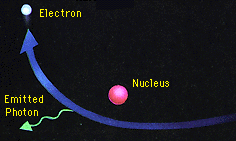
Bremsstrahlung radiation (bremsstrahlung)
Carbon was therefore interesting because:
*- Of its good thermal resistance (these "tiles" are very similar to those of the Space Shuttle) - Of its good thermal conductivity - Of the small number of electric charges carried by carbon ions (four). *
Therefore, in this mechanism of radiative loss by bremsstrahlung, a carbon ion (stripped from the wall and polluting the plasma) causes a loss 16 times greater than when an electron meets a hydrogen ion, which carries a single charge.
But carbon undergoes an abrasion phenomenon and behaves like a real hydrogen pump, which it absorbs, giving rise to hydrocarbons in the process. If these mix with tritium atoms, it means carbon pollution, which then becomes radioactive (the half-life of tritium is 12 years).
So, out with carbon, except (as we will see later) as a waste absorber.
For ITER, whose internal wall represents 1000 square meters, the choice is made. 700 square meters will be covered with beryllium, the lightest metal, with a melting temperature of 1280 °C. It is expected that this will be able to withstand the thermal shock thanks to a sub-epithelial circulation carrying away the heat (pressurized water). With regard to plasma pollution by ion stripping, it will carry 6 electric charges, thus causing radiative losses 36 times greater than those accompanying an electron-atom hydrogen encounter.
Fusion produces helium anyway. A reactor like ITER could not function with 10% helium, which constitutes the "ash" of the reaction. Therefore, it must be eliminated continuously.
This was also the function of the limiter, but engineers were led to imagine another geometry that led to the design of a divertor. This corresponds to the two grooves that run along the base of the toroidal chamber:
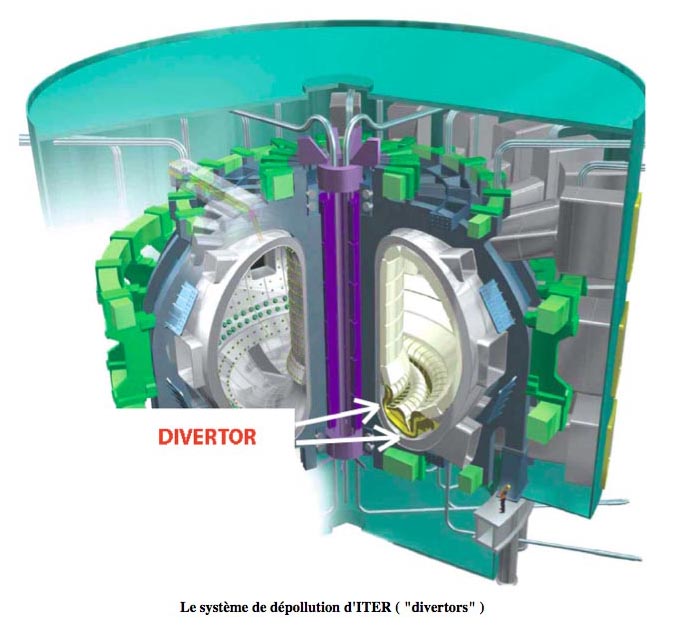
The divertor is composed of modules, segments that can be manipulated and replaced. Here is one of them.
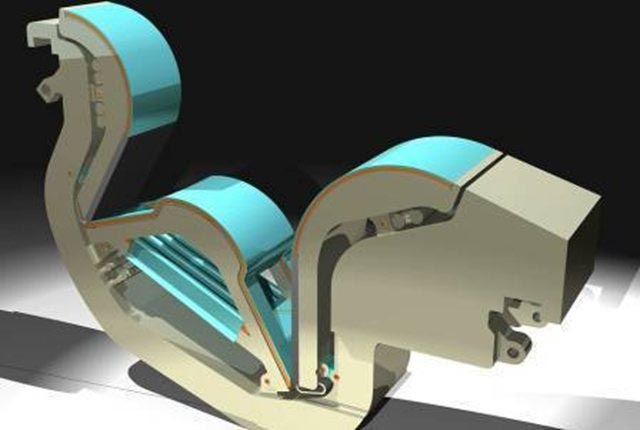
Divertor module
The green parts correspond to a tungsten cladding. This metal, which constitutes the filaments of incandescent lamps, has a melting temperature of 3000°C, the highest for all metals. Its shape is explained if we add a particular magnetic geometry, which allows capturing and trapping ions:
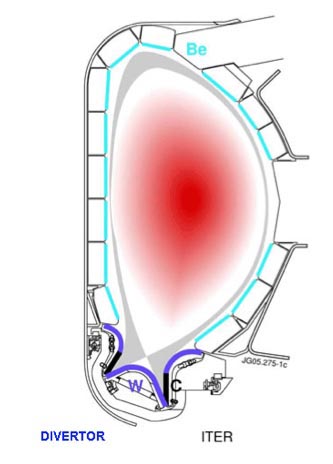
**In light blue, beryllium. In dark blue, tungsten. In black, carbon. **
A fish-tail magnetic geometry is visible. The grooves located at the bottom of these two grooves are intended to form the orifice, the lip allowing plasma pumping, then its reinjection into the chamber, after elimination of the "ash", helium, and unwanted ions (cause of radiative cooling): carbon, beryllium and tungsten.
Tungsten is the most harmful pollutant in this regard. Indeed, the atom has 74 electrons. Specialists told me that tungsten ions, mixed with the fusion plasma, could carry 50 to 60 electric charges. As a result, the encounter of an electron with one of these ions leads to a radiative braking loss 3600 times more intense than when encountering a hydrogen ion.
Here we are talking about radiative losses by bremsstrahlung. But there are others that are much more important, associated with "free-bound" transitions.
When electrons meet Deuterium, Tritium, Helium, or Beryllium ions, the nuclei will have lost all their electrons. This will not be the case for tungsten, under operating conditions. Fifteen to twenty-five electrons (out of 74) will remain bound to the nucleus. The encounter with a free electron will then cause an excitation of this residual electron shell, followed immediately by a radiative de-excitation, with the emission of a photon. Another, very important loss.
*The pollution by tungsten ions could therefore lead to a decrease in performance, up to extinction. *
After consulting a specialist, I learned that the pumping of heavy ions would be carried out at the bottom of the grooves separating two divertor elements, through centimeter-sized openings.
The JET was initially equipped with a limiter, similar to that of Tore Supra. The British modified their setup to line the chamber with tungsten and install a divertor at its base. As Michèle Rivasi pointed out on May 16th in Aix, it would have been wise to wait for the results of the British tests before launching the ITER "scandal".
*Same remark regarding the beryllium wall. *
Has the divertor system been tested anywhere?
Will it ensure the purity of the fusion plasma?
**Answer from specialists: **
***- Only experience will provide the answer. ***
Conclusion :
When you venture into the ITER machine, you discover a complexity that is dizzying. This device is a hundred times more complicated than a fission nuclear reactor. It carries dozens of problems, with solutions that have simply not yet been tested. The efficiency of the divertor and the ability of a beryllium wall to withstand it remain speculative. However, the success of this continuous plasma purification formula is a prerequisite for further development.
From this perspective, ITER is an exciting experiment, a collection of thesis topics and sophisticated studies. But it is also
An experiment costing 15 billion euros
(for now)
Any additional problem will lead to a new explosion of the budget. Our parliamentarians must be aware of this and not be dazzled by the usual grand formulas intended to anesthetize and confuse them:
- The sun in a test tube - Unlimited energy ...
When I asked a researcher involved in the project the question:
*- When, and at what price, can we expect this machine to become an electricity generator? *
His answer was :
***- You won't be short of tens of billions of euros, nor of several decades. ***
*The menu is on the table. Too expensive, too slow, too problematic. *
**At the level of energy needs, what are the solutions? **
Nuclear, via fission:
*- Dangerous - Harmful to the environment, health. - No solution for waste management. *
Fusion, via ITER:
- Too expensive - Too problematic - Too slow
I will be present at the DZP colloquium (dense Z-pinches) in Biarritz, between June 6 and 9.
DZP2011 is the principal conference for specialists working in the field of dense Z-pinch research and closely related topics. Previous held in Laguna Beach (1989), London (1993), Vancouver (1997), Albuquerque (2002), Oxford (2005) and Alexandria (2008) have attracted more than 100 delegates from up to 20 countries.
The topics to be covered by DZP2011 include all aspects of dense Z-pinch research, including fundamental Z-pinch physics and the broad range of applications of Z-pinches to such areas as inertial confinement fusion, laboratory plasma astrophysics, soft x-ray lasers and fundamental high energy density physics. Related dense plasma configurations such as X-pinches, plasma foci and high current capillary discharges are among the topics of interest.
On Monday, June 6, 2011 at 8:30, my friend Malcom Haines will "open" the conference by presenting his analysis of the results obtained on Z-machines since 2005, and will persist in his conclusion "at Sandia, more than two billion degrees were obtained as early as 2005". His intervention, in this international conference on Z-machines, is essential.
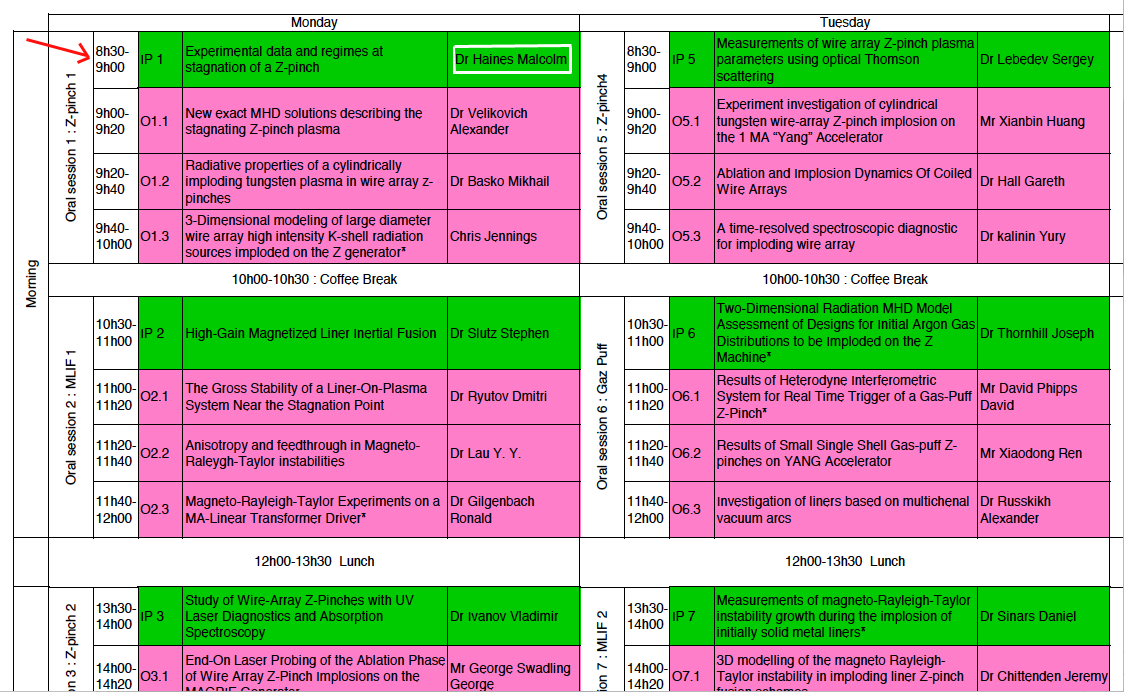
Excerpt from the Biarritz conference program on Z-machines (June 6-9, 2011)
(will a French journalist cover the event himself, or will he be satisfied with the statements of CEA and other places? )
The explanation of the phenomenon lies in these words: "turbulent resistivity".
I will support Malcom's presentation.
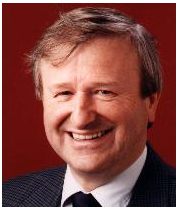
Malcom Haines,
pioneer of plasma and MHD physics
I think the Americans are disinforming, and aiming at the conception of pure fusion bombs (where fusion is initiated by MHD compression and not by an A-bomb, the primary energy being delivered by a conventional explosive, according to the old Russian method). Miniaturizable and "green" bombs (Boron Hydrogen fusion)
I said that Haines would be present, but we are not certain. He currently has health problems that may prevent him from attending the conference.
If Haines is not present, no one will be able to counter, as only he can, with all the weight of his scientific credibility, the blatant, odious lies of the Americans.
Eric Lerner will also be present, who works on a Focus and strongly advocates for a non-polluting Boron Hydrogen fusion path, very weakly neutronic, which starts at a billion degrees.
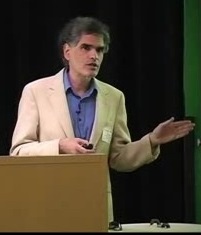
Eric Lerner, champion of aneutronic fusion
As I have already said on my site for 5 years, I think that one day generators based on this aneutronic fusion will emerge (which I had already mentioned in my comic strip "Energétiquement vôtre", freely downloadable on the website of Savoir sans Frontières), operating like "two-stroke engines", with a temperature excursion at the end of MHD compression.
http://www.savoir-sans-frontieres.com/JPP/telechargeables/Francais/energetiquement_votre.htm
Like "explosion" engines. It has been a century since they replaced steam engines.
*ITER is nothing more than ... the steam engine of the third millennium, highly complicated. *
If nuclear energy is to regain a new breath, it will be with impulsive fusion generators.
Then, a fusion without any waste, neither in the form of fusion products, nor in the form of structures made radioactive by neutron bombardment will appear.
Persisting in fission, accumulating highly radioactive waste (100,000 tons alone in France), storing waste with a lifespan of hundreds of thousands of years is an absurdity, in the face of future scientific progress.
C'est nier le pouvoir de progrès des sciences.
The Sandia breakthrough shows that a path is possible. But, as usual, it will be:
- Bombs first, energy later
Nothing says that the exploration of this Boron Hydrogen pure fusion path could give rise to electricity generators quickly.
But these machines cost 500 times less than ITER.
Let's resume the examination of the solutions :
Fission: dangerous, highly polluting, harmful to health
The fusion path via ITER: problematic, uncertain, too expensive
The aneutronic fusion path: undefined horizon but low cost. Therefore, start fundamental research.
Shale gas: pollution of groundwater
Returning to gas, oil: weight on imports, limited resources, pollution (including oil spills), emission of greenhouse gases.
Renewable energy remains, vast, varied, with a low technological level required.
If all countries of the world accepted to invest massively in these solutions (far beyond simple domestic installations), dedicating the money spent on nuclear energy and on the development of weapons, all problems would be quickly resolved!
But such a move raises many fierce oppositions, for various reasons.
*- The efforts, the pharaonic investments made in nuclear energy would become obsolete. Let us hasten to add that if such investments have been made, and continue to be made, it is above all in the context of military applications (focused on the generation of plutonium). *
*- The low technological level required by the development of renewable energy (in deserts, geothermally active regions, oceans, etc.) would place technologically advanced countries and those previously considered incapable of catching up with modern technology on the same level. *
*- This approach represents a "anti-New World Order, anti-globalization and even anti-capitalist" policy. * ---
The opinion of President Nicolas Sarkozy, during his visit to Tokyo, on March 31, 2011
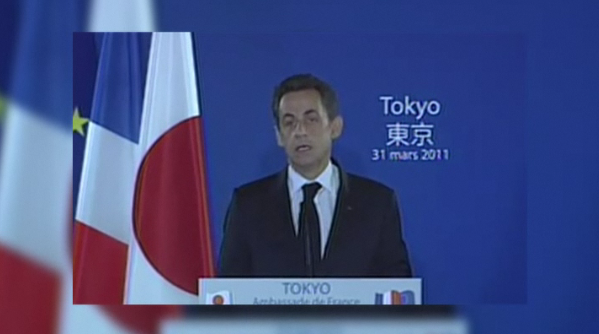
- France has chosen nuclear energy .....
Which France? The one of its elected representatives, manipulated by our nuclear barons, by the engineers of the <mines, by the military? By the atomic barons?
The French "have not chosen nuclear energy".
L'opinion du prix Nobel Japonais Masatoshi Koshiba à propos d'ITER
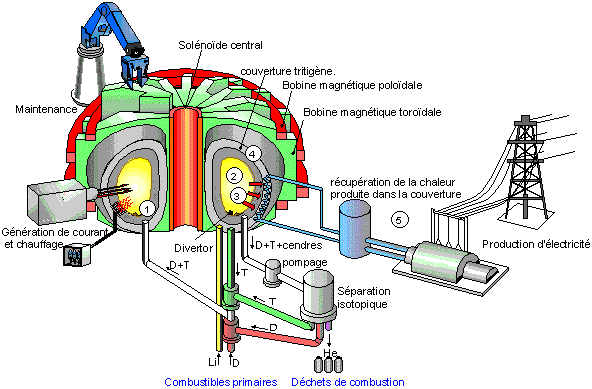
(1) : Injection of the deuterium-tritium mixture, by the divertor
(2) The plasma, in yellow
(3) The 14 MeV neutron flux hitting the tritium generating blanket (4), which also serves as a heat capture system, the heat being directed to a heat exchanger-turbine-alternator (5)
Nouveautés Guide (Index) Page d'Accueil