Definition of styles
The mystery of the Mées
August 8, 2015
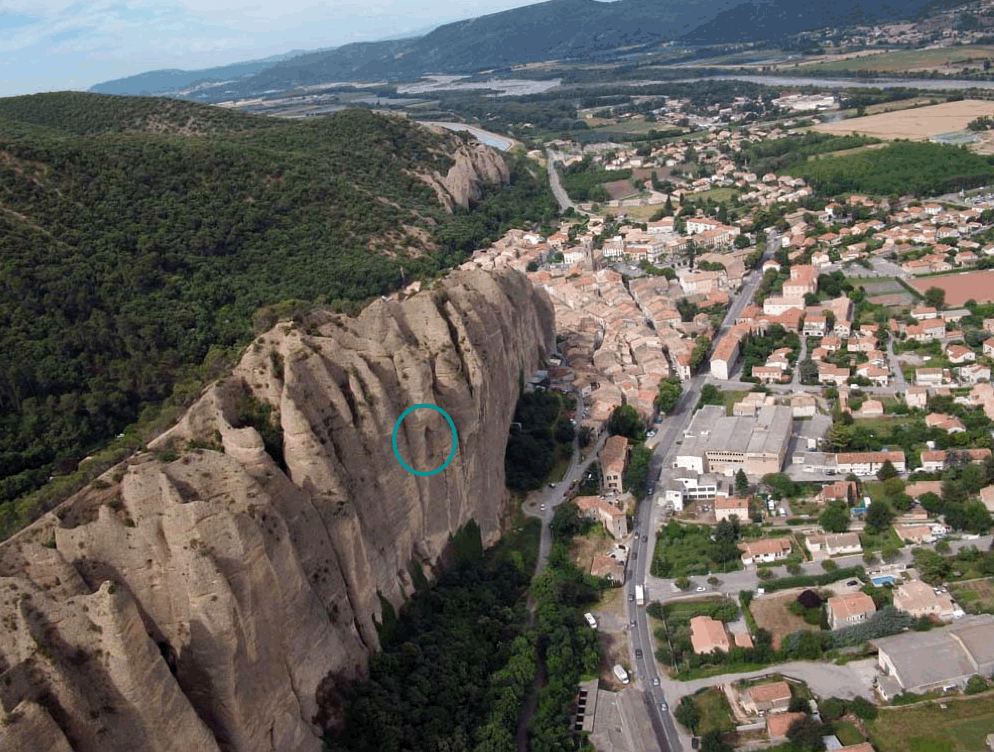
The village of Mées. In the blue circle, the cave, at 65 meters high. In the distance, the Durance
It is first of all a geological curiosity. Opposite the village is the valley of the Durance. In the past, it was a powerful glacier that extended far to the south. The Mées massif is what remains of its moraines, a mixture of earth and pebbles, which geologists call "poudingue" (a French deformation of the English word "pudding"). The moraine has been eroded by rain and wind. Curiously, this strange cliff has remained above the village, with its "capucins" reaching 117 meters high and standing, overhanging, above the valley.
On the left, you can see the beginning of a green valley, which in fact functions as a rainwater collection basin. Before the French Revolution of 1789, this basin was vegetation-free. When heavy rains came, the village was flooded. At that time, the people of Mées asked the young republic to fix this. Its engineers then dug a 450-meter-long tunnel, whose exit you can easily find directly above the cave. It's a fun walk, to be done with a simple flashlight and sneakers, with the family. This tunnel opens into the valley, where the engineers had placed dams to break the force of the floods and redirect all this water into this "forced conduit." It was extended by a viaduct, of which some fragments remain, and which sent the water back to the Durance. Since this system prevented the rain from washing everything away, vegetation developed and now the dams and the forced conduit would become unnecessary.
What is strange about this cliff is this:
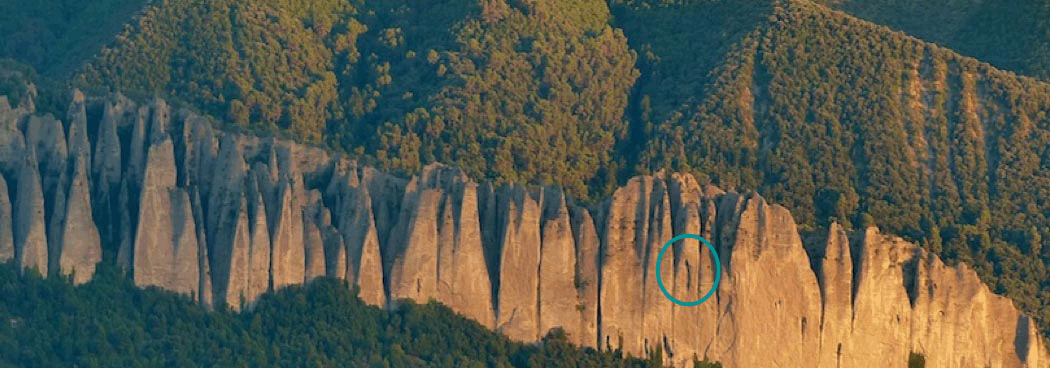
This cavity, located at 65 meters high.
Let's get a little closer.
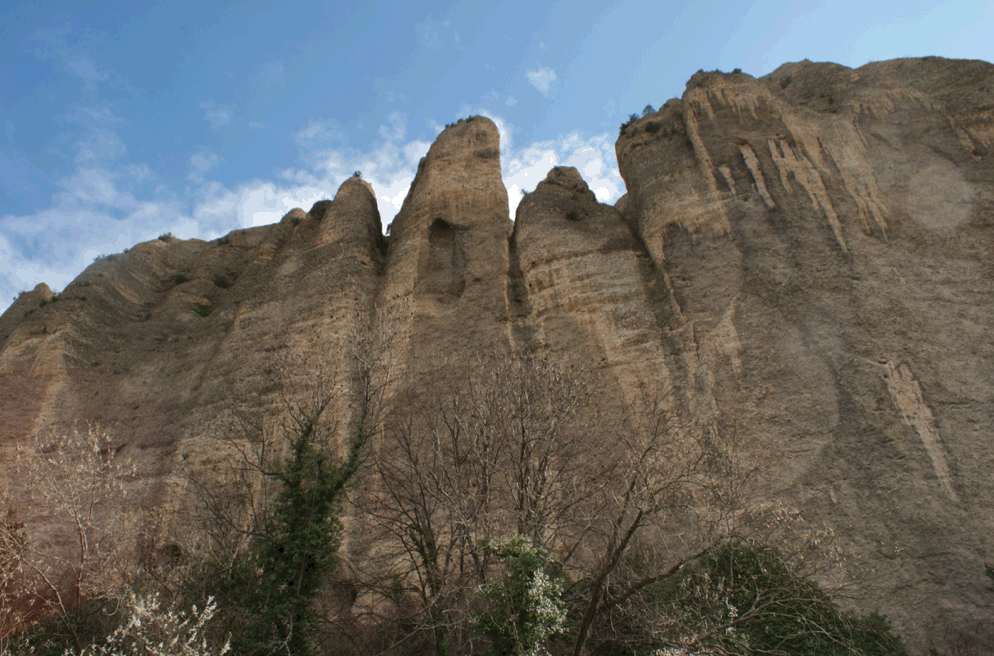
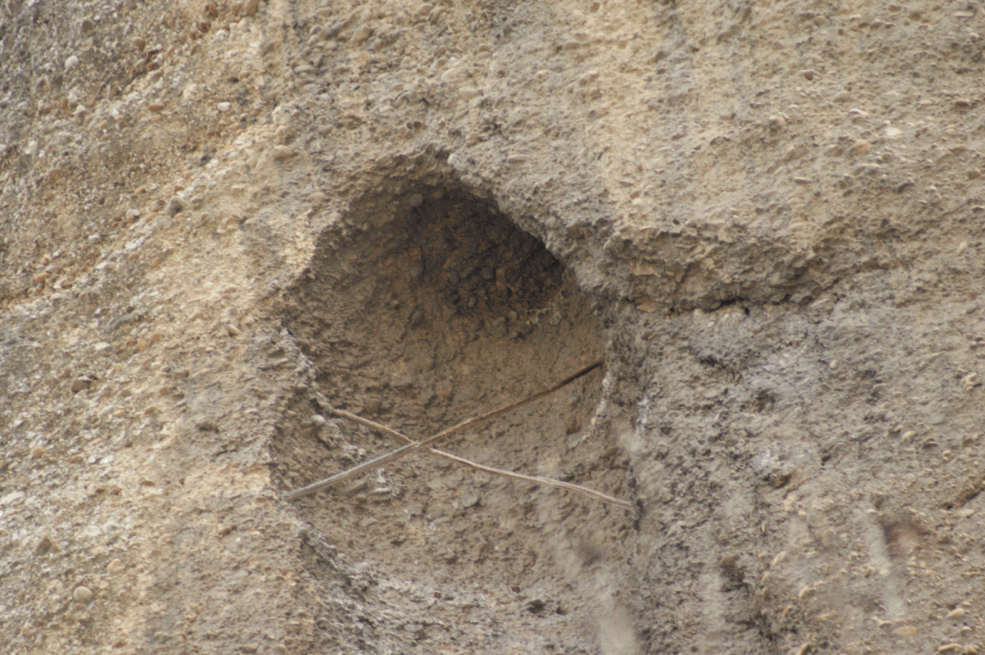
Close-up
What is this cross up there, who placed it, when and how?
The problem is not simple, because even with today's means, poudingue is impossible to climb. This cross is mentioned in 15th century chronicles. I was the first to approach it, 48 years ago, by rappelling down. It was impossible to touch it: the cliff is overhanging, and it is precisely this situation that may have protected these woods from the rain. A few years later, a climber, Patrice Cordier, was able to touch it for the first time by rappelling down a lateral flow, then by crossing while planting many pitons into this problematic material. In doing so, he brought back a fragment.
I approached the object several years later. To attach to the "poudingue," the technique consists of drilling 50 cm deep with a long 2 cm diameter bit, operated by a battery-powered drill, then sealing a threaded rod into the hole with resin. With such a technique, which was implemented and allowed to touch this cross again, it would then be possible to install a path and allow archaeologists to work at 65 meters high, by hoisting them with a winch and harness. I will explain all of this.
If you look at the previous photo, you will see a strange formation at the top of this cavity. Here is a telephoto view:
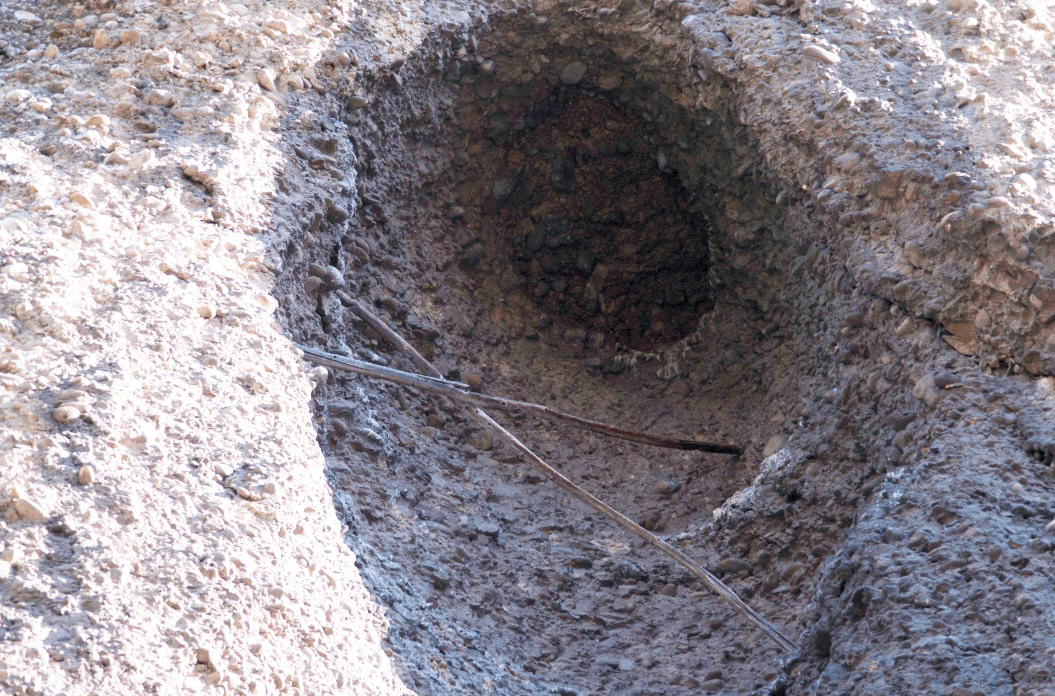
You can see white streaks at the bottom and to the right, which are crow droppings, as crows nest up there and disappear... no one knows where.
Since I became interested in this cross, I quickly hypothesized that it could have been installed... from above. From below, it is not clear how people, in those distant times, could have placed it. This dark disc would then be the visible part of a slab made of poudingue. As for the cross, well, the angel who, on the day of judgment, will go to retrieve the body of the man buried up there must not forget it.
When I was a climbing instructor in Belgium, I once found, in a cliff near Dinant, a cave with a tomb carved into the limestone, perfectly shaped, rectangular, but empty. So people were buried in cliffs (like the Dogons). But this one was not lucky. His tomb must have been robbed and his remains scattered.
Could the cave of Mées and its cross indicate the presence of a tomb? If so, access would have been provided via a tunnel (poudingue is easily and quickly excavated). In that case, what better way to hide the entrance than to build a chapel on top? Below is the chapel of Saint Roch, 250 meters away, or by tunnel, from our cross.
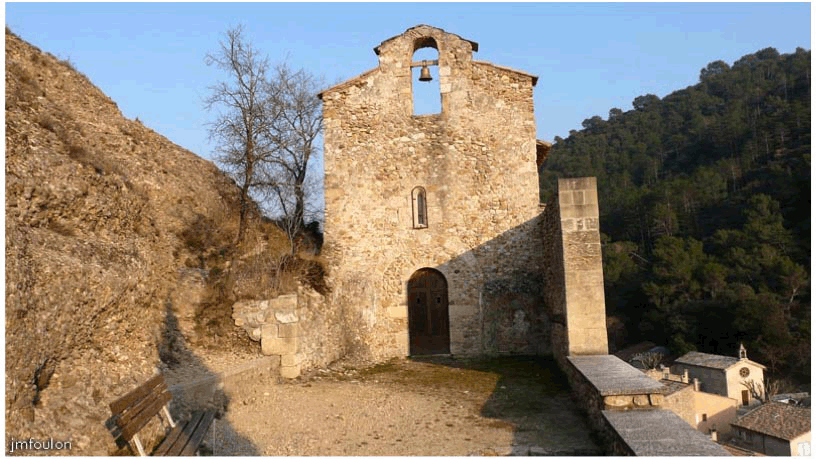
The chapel of Saint Roch
And to finish, the presumed layout of the access tunnel:
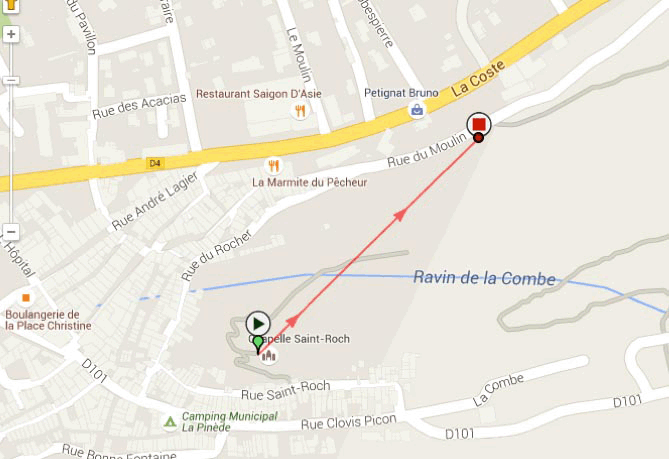
Indiana Jones near you ....