A Plan to Save the Earth, a book by Christel Seval
I am writing the preface for Christel Seval's book:
"Contact and Impact"
January 17, 2006
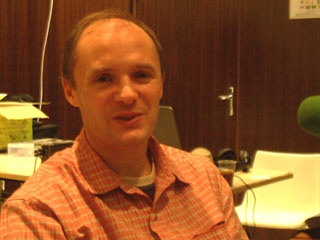
Preface for Christel Seval's book "Contact and Impact"
This is the first time I have agreed to write a preface for a book dealing with the UFO theme. If I am doing so, it is because what Christel Seval writes is out of the ordinary. When reading other works on this subject, I have always found them descriptive, as if they remained on the surface of things, as if the authors themselves, following the media, were equally afflicted by superficiality. In fact, the UFO subject constantly reflects us back to ourselves, to our future. Anyone who fails to make this connection is completely unconscious. Our humanity is living through the most serious hours of its history. Since 1945, man has created weapons capable of destroying him. Half a century has passed. The emergence of biotechnological weapons and mind control has completed this already impressive arsenal. President Eisenhower's warning in his farewell address went unheeded. The military-economic lobby is like a released wild beast, out of control. History, on all continents, is going mad, with various forms of madness unfolding. Nature itself seems to participate in the general planetary disorder. We can no longer discern what regulatory mechanisms might lead humans toward a new balance. Against this backdrop, the UFO round continues. The most fantastic aspect is that in 30 years, nothing has changed, strictly nothing, at least in France. In the United States, it is a different story. In France, after three decades of existence, the record of the service created by CNES is strictly zero. "Behind it, there is nothing." There is no secret military MHD. The SEPRAD archives contain nothing but gendarmes' reports. Michel Bounias died for nothing. His 1981 work on the biological traces left on alfalfa following a UFO landing in Trans-en-Provence was never followed up. No gendarme ever captured a UFO spectrum using the filters imagined by Claude Poher, with which their cameras had been equipped since 1979 and whose operation must have long been forgotten. But as Hubert Curien said shortly before his death, "the great wave of interest in UFOs has passed."
In all French institutions, there are two percent of people "who think that, nonetheless, we should do something about this UFO file." It is from this two percent that the Cometa report emerged in 1999, cited by Seval in his work. Eighty percent couldn't care less, and the remaining eighteen percent are fiercely determined that nothing should change. The question that emerges is then: "Why this inertia?" Reading Seval's book provides an element of an answer. Our humanity denies the existence of this phenomenon, against all odds, and this is normal because, in doing so, it defends itself by implementing a psycho-socio-immunological defense mechanism against what it perceives, rightly, as a terrible threat.
Yet these extraterrestrials who visit us have no desire or need to conquer us. The threat is of a different order. It takes on a dimension that I had not perceived before reading Seval's work, unlike previous ones. It can be summed up in one word: ethnocide, a term initially introduced by the late ethnologist R. Jaulin. Genocide is the annihilation of a species, of a tribe. Ethnocide is the annihilation of a culture. The author reviews historical examples and shows how civilizations like that of the Aztecs collapsed in a relatively short time after the cultural shock constituted for them by the arrival of the Spanish conquistadors. I wrote long ago that any form of thought is an organized system of beliefs. Therefore, if the founding beliefs of our thought are brutally questioned, it collapses, just as mathematics without axioms and logic without predicates would collapse.
What we can conjecture is that the gap separating us from our extraterrestrial visitors could exceed our imagination, our wildest speculations. Our current scientific knowledge would become trivial. One can even imagine that during a contact, we might face beings who are as different from us as we are from monkeys. The impact of a cultural shock has been mentioned by many authors, but, notes Seval, no one had considered that such contact could be so damaging, leading to an ethnocide. Thus, we would have the explanation for non-contact. It would not only be a matter of preventing any misuse we might make of more advanced technologies that would multiply our destructive capabilities. What would collapse our Earth civilization is doubt. There is no need to look far. In Russia, it is goodbye Lenin. Marxism is dead. Russians are emerging from almost a century of militant atheism. There are no longer any goals, any grand designs. No one believes anymore in the singing tomorrows. Alcohol is wreaking havoc. Men's life expectancy is 58 years. The birth rate is plummeting. One finds in a people who placed the first human being in orbit around the Earth symptoms comparable to those affecting members of Indian tribes. So, imagine what would happen if Earthlings were suddenly confronted with the absurdity of their way of life, with the emptiness of their beliefs, if sudden answers were provided to them regarding birth, life, death, and evolution. Seval suggests that our humanity could collapse to the point of being unable to recover, unable to negotiate the world with new beliefs within its reach or with fantasies, salvific rituals allowing it to dialogue with the world.
Only a civilization already enjoying a certain balance could face such a cultural shock. Yet we are far from that. Reading his book, we discover how fragile, vulnerable, and still infantile our terrestrial society is. Therefore, contact is simply impossible. Our planetary civilization is like a house of cards. The mere fact of being presented with definitively irrefutable proof of the existence, of the presence of extraterrestrials, would be enough to petrify our social system with anxiety, to provoke in a few months, a few years, a chaos followed by an irreparable collapse.
Yet we are striding towards the Apocalypse. All the warning signs of deep imbalance are before our eyes. The economic scramble, the scarcity of natural resources, the effects of pollution, the violent antagonisms looming lead us to chaos. In his previous work, The Plan to Save the Earth, Seval explained that if extraterrestrials decided to intervene, it could only be at the very last moment, when we endangered our entire biosphere, when "the suicidal process had already begun." No one would lift a finger if we inflicted upon ourselves suffering equivalent to ten times the tragedies of the previous world war, any contact with an immature humanity automatically resulting in an ethnocide. Ours could at best be "reformatted." The "hard drive-genetic support" would be kept, but other software would be reinstalled, that is to say, another logic of life, a totally different culture. In Contact and Impact, the author returns to these themes, sprinkling his discourse with excerpts from Ummite texts. If you venture into Seval's works, expect generally to be shaken. This is how they differ from other books published on the UFO theme, which are essentially anecdotal. He truly goes to the heart of things, considering an impact whose magnitude we had not previously imagined.
No extraterrestrial possesses the magic recipe that can transform our society into Eden, since any contact, at any moment, would result in an ethnocide. The only being who can save man is man himself.
Jean-Pierre Petit
You can order the book "Contact and Impact" before its publication (scheduled for February 15, 2006) by sending a check or postal transfer of 25 euros (21 euros for the book plus 4 euros for shipping) to JMG Editions, 8 rue de la Mare, 80290 AGNIERES (exact spelling).
For booksellers: (ISBN 2-915164-24-X). Publisher's phone: 03 22 90 11 03 Fax: 03 22 90 17 28.

Previously published online on January 1, 2005
Presentation by Christel Seval: A Plan to Save the Earth?
Christel Seval
Christel Seval is a computer scientist working at the DGA, the Directorate General for Armament. He attended, like many others, this vast, somewhat empty fair that was the event titled "First European Meeting on Ufology." I listened to the various presentations. Then I carefully read Seval's second book, titled The Plan to Save the Earth, published by JMG Editions. I advise my readers to get this book and read it. One hears a discourse that no ufologist has ever held. I would say it is the discourse of a man who is aware of contemporary problems and who has thought quite a bit. What is strange is to find such words in the mouth of a man who works within a military framework. For me, this remains a mystery. Nevertheless, what he writes must be read, and what he says must be heard. I have posted a copy of his presentation on my site.
Presentation by Christel Seval, 2005 (22 MB, 56 minutes)
I do not know who invented the word ethnocide. It doesn't matter; it is very expressive. Concepts pass better when someone has managed to attach a linguistic label to them. A genocide consists of massacring a population. You will not find the word ethnocide in a dictionary. The suffix "cide" is associated with killing. Genos must be taken in the sense of descent. In a genocide, the species disappears. Ethnos means nation, tribe. In genocide, the species disappears. Ethnocide evokes the collapse, lysis, decomposition of a culture. In his book and presentation, Seval very credibly presents the inevitable ethnocide that would follow a frontal contact between one or more extraterrestrial civilizations and our fragile Earth civilization. All this had already been mentioned many years earlier, and very probably for the first time in the oldest Ummo texts, dating from the mid-1960s. I had taken up this idea in several of my books, associating it with a psycho-socio-immunological defense mechanism of Earth society, through rejection or encapsulation (through the phenomenon of folklorization) of an awareness of the reality of an extraterrestrial presence, sporadic or resident.
Where Seval brings something new is when he explains that this phenomenon would not be immediate, but might take a year or several years to develop, ultimately leading to the complete collapse of "Earth civilization," as a whole. I think his vision is quite accurate.
Seval then questions the different facets of the UFO phenomenon, for example, its ostentatious aspect. He returns, for instance, to the crop circle phenomenon, mentioning, something I had not thought of, that it might be a mixture between tests carried out by the military (the British are closely linked to the Americans in this area) and demonstrations carried out by UFOs. He gives his interpretation of such a follow-up:
We exist
We know We disapprove
The same analytical grid for cattle mutilations, which I had attributed on my site to carcinogenic weapon experiments.
I will not detail the entire work, which is very rich, well-documented, and which I strongly encourage you to read. I would say that this overview is unprecedented. He himself is surprised that ufologists have never approached these questions from this angle. I am not.
He questions all aspects of the UFO phenomenon that he knows, which challenge his intuition and rationality. What could these numerous abductions, implant placements, which are mainly located in the United States but do not spare individuals in other countries, correspond to? Are they simply tracking, listening, or even control systems? Are there really experiments corresponding to hybridization attempts?
Seval's vision regarding the future of the Earth is as pessimistic as mine. He is perfectly aware that the powerful terrestrial oligarchies, led by the United States, are leading our humanity to catastrophe in the very near future. He questions the possibility of the existence of a rescue plan and publishes the entirety of the Ummite letter received by contactees, dated January 1988, D1378 in Ignacio Darnaude's classification. According to Hiltrud Franz, alias "Lou," this letter was the most secret within the contactee network, who had signed an agreement to reveal nothing about it.
I had published a sort of "digest" of it in one of my books, trying to condense it a bit, hoping to make it more "digestible." This text is worth meditating on. As time passes, we are increasingly tempted to ask ourselves: "Do we have any other choice?"
Seval adds an additional idea, which I find very pertinent and which had not occurred to me. If there is extraterrestrial intervention, it can only occur when humanity has initiated a suicide procedure. Let us quote his book, page 366:
| The urgency is great and the contingencies are multiple.
| First, it is impossible for them to intervene openly, since there would then be a collective awareness of humanity, which would be equivalent to an ethnocidal catastrophe. Humanity is not ready for contact, and the forecasts are pessimistic: the development of obscurantist religious movements on the one hand, and the warlike intentions of American strategists on the other, leave little room for the emergence of social stability, a necessary condition for the emergence of a sufficient level of consciousness and rationality. The Marionnettists also impose upon themselves a strong constraint, that of respecting human freedom, individual and collective, through the free self-determination of peoples. This for two main reasons. For a moral and ethical question, because respect for freedom in all its forms is a fundamental component of the universe's progression. | And for a strategic question: letting humanity commit its suicide and intervening one second later by saving it will place the entire responsibility on men and bring the entire legitimacy of the Marionnettist rescue. This will minimize the subsequent negative implications of forced contact. Whereas a premature Marionnettist intervention, taking place as a precaution before humanity destroys itself, will forever raise in man's heart doubt and bitterness. The question of the legitimacy of the intervention will remain indefinitely, and many men will revolt against the invader supposedly animated by good intentions. | For the Marionnettist strategy, the overall balance is this: if they do not intervene, humanity self-destructs. If they intervene, humanity suffers a terrible ethnocidal shock equivalent to self-destruction. The margin for maneuver is extremely narrow, especially since the situation on Earth leaves little hope for improvement in the coming years, that of bringing the social stability necessary for the harmlessness of a contact. Consequently, subtle maneuvers are necessary. | End of quote. |
|---|
These reflections do not exhaust the subject. They move somewhat beyond the chatter of ufologist-bandar logs and provide additional light on this kaleidoscope that represents both human history in its occult aspects and the UFO phenomenon in all its disorienting opacity.
In the last GESTO report, I took up an idea I had already outlined in The Year of Contact (Albin Michel, 2003), a work preceded by a most explicit warning: "any resemblance to imaginary characters would be purely coincidental." Simple considerations of an astrophysical nature make it unlikely that two humanoid ethnic groups, so close to each other both biologically and culturally and scientifically, could coexist at a distance of 15 light-years. It is not impossible that the entire Ummo file was merely a vast fabrication, a patchwork created with the help of an artificial intelligence (hence its coherence), a set of documents created by beings who do not have the alleged appearance. One could thus doubt the very existence of such an ethnic group and even planet. But Seval's reflections suggest another variant: that this synchronism stems from external control of these two "nurseries."
Decidedly, as soon as we stop considering ourselves the navel of the universe, hypotheses emerge that make us more modest and reflect us back to our ignorance and the illusions we feed ourselves regarding our past and our origins.
One additional question remains:
What can we do, we who are aware of the suicidal magnitude of the danger and do not intend to limit ourselves to a simple role of spectators? ---
From January 1 to 17, 2006: 7,714 views
Number of views of this page since January 18, 2006: