Untitled Document
An UFO at Vinon
March 19–20, 2009
Some people claim it's impossible to photograph an UFO up close. That's false. On August 18, 2008, an UFO landed in broad daylight on the hard runway at Vinon airfield, reserved for airplanes. It then approached the witnesses present—members of the glider club. It stopped. A kind of transparent canopy on top slid open. After a moment of understandable shock, the witnesses saw a being resembling a human emerge from the strange craft, speaking French with a strong Belgian accent. It entered the clubhouse and asked for a beer, completing a hoax we were not fooled by. It then climbed back into its vehicle and departed without uttering a word. Some witnesses claim they saw it refuel, but I believe the proximity of the craft to the fuel pump was mere coincidence—or perhaps intended to further confuse the witnesses. Personally, I doubt such a machine could sustain flight in our atmosphere using the laws of our physics. We are facing a highly elaborate cover-up. You may have seen Steven Spielberg's series "Taken," where extraterrestrials—“little greys”—use human mental resources to alter their appearance, drawing on our own fantasies. Who knows what machine might have been hidden behind what appeared before the members of the Vinon glider club on August 18, 2008—a memory that will remain etched forever.
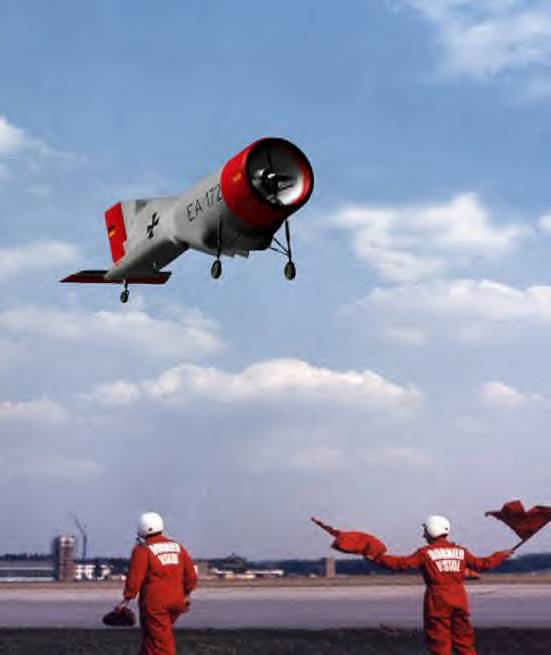
Regardless, while the extraterrestrial was at the bar, I managed to make quick sketches of its craft. Here they are:
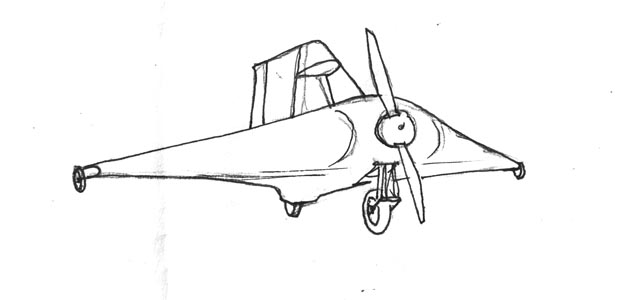
The UFO, viewed from the front
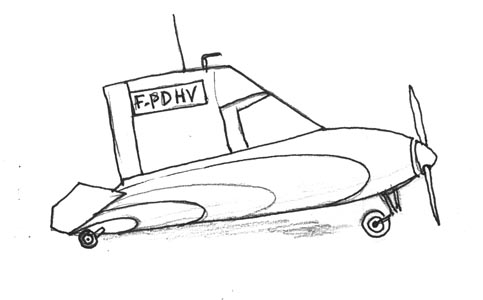
Note how the UFO takes mimicry to the point of displaying what appears to be a license plate
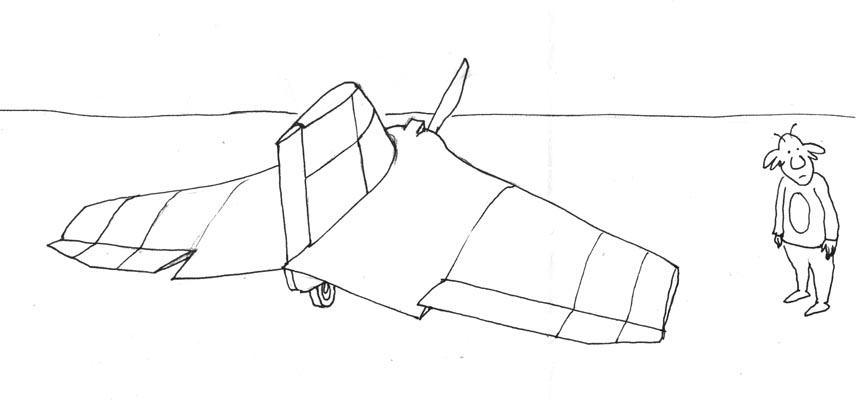
Finally, the craft viewed from behind.
Now here is a series of photos taken with a mobile phone camera.
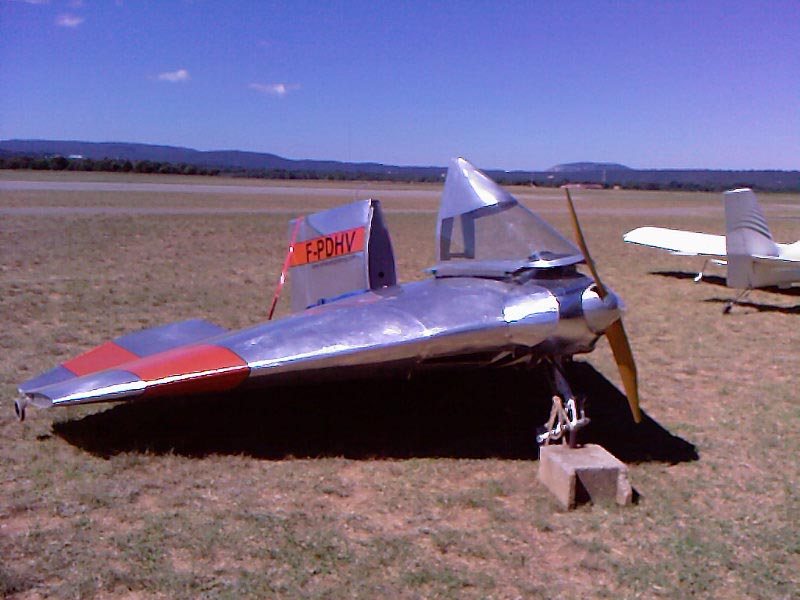
On top, this kind of cockpit from which the UFO pilot emerged
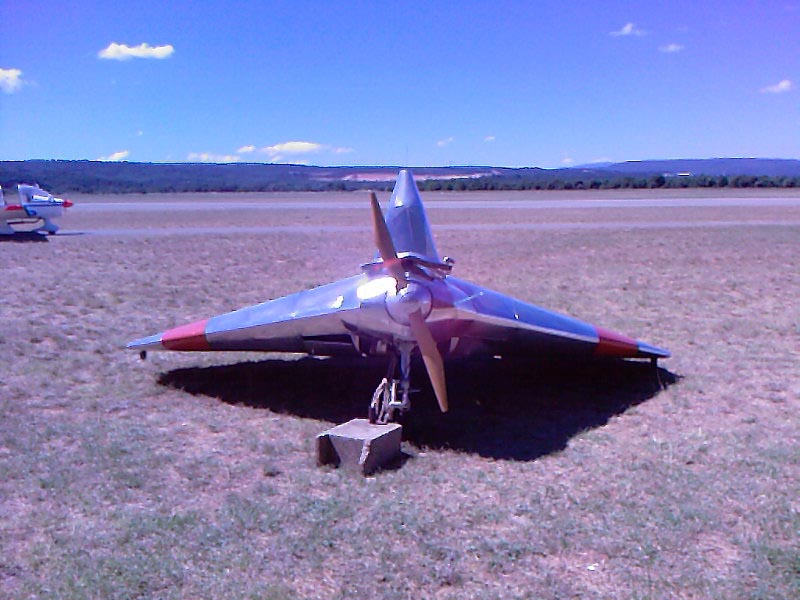
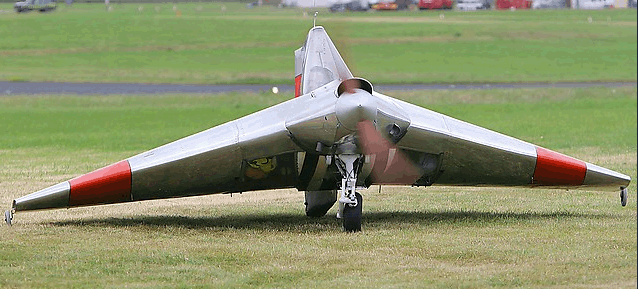
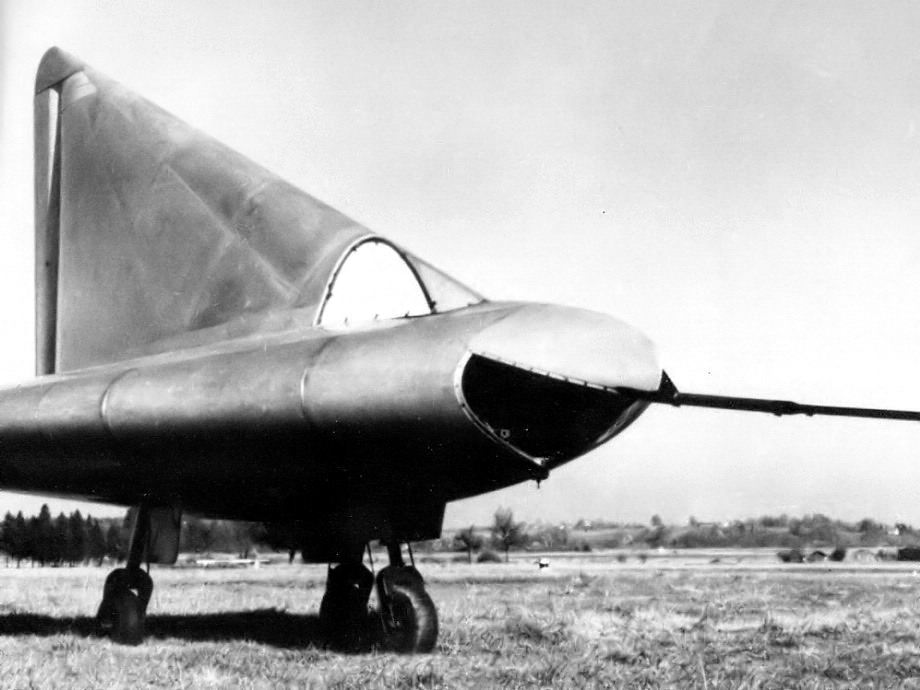
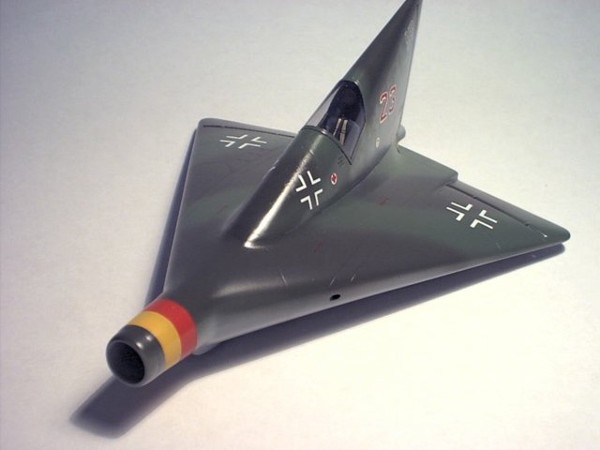
The craft viewed from the front. The overall shape is triangular, perhaps referencing the Belgian wave of the 1990s.
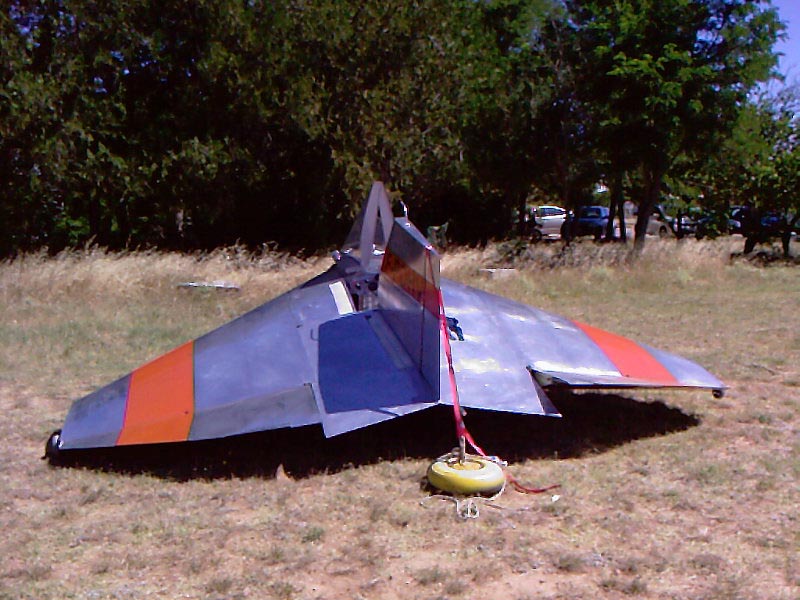
The machine, viewed from what appears to be the rear, connected via a nylon belt to a weight (cement in a tire).
An untrained observer might mistake this assembly for a flying machine of Belgian origin. But a closer examination of the images reveals rich insights. Here are additional views:
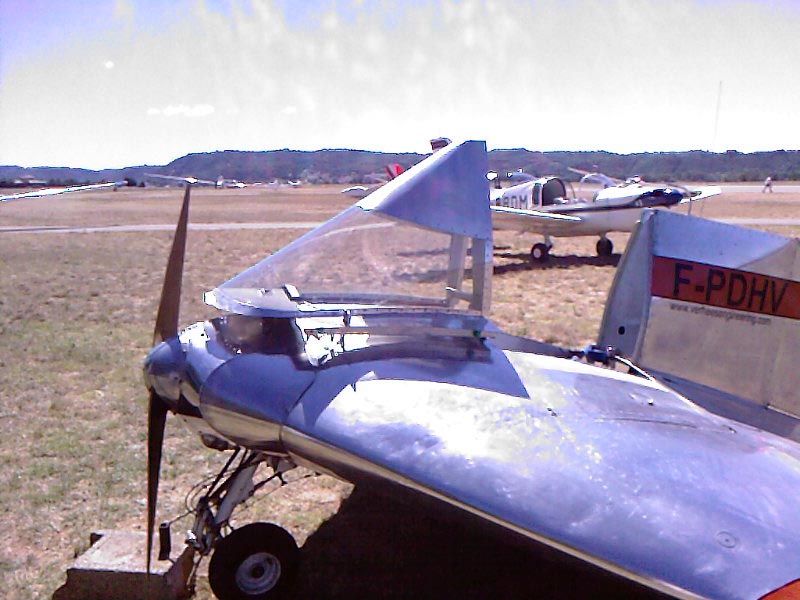
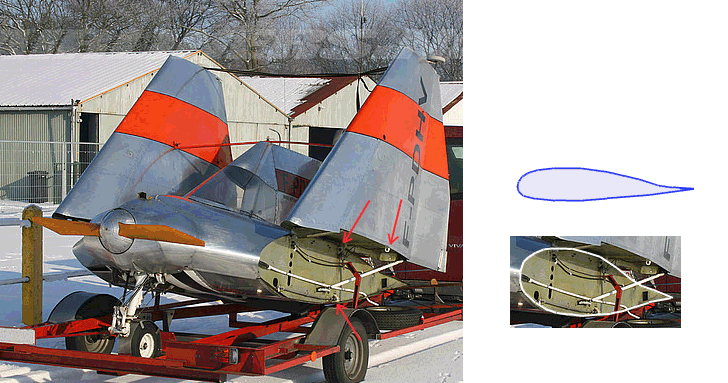
Close-up profile view. Notice the enormous front landing gear
Where is the main landing gear? There isn't any. Besides two small wheels at the wingtips—about the size of restaurant table wheels—there's only a small-diameter wheel located far in the rear. The photographer, young Paul Bouvier, courageously crawled under the craft to capture this shot.
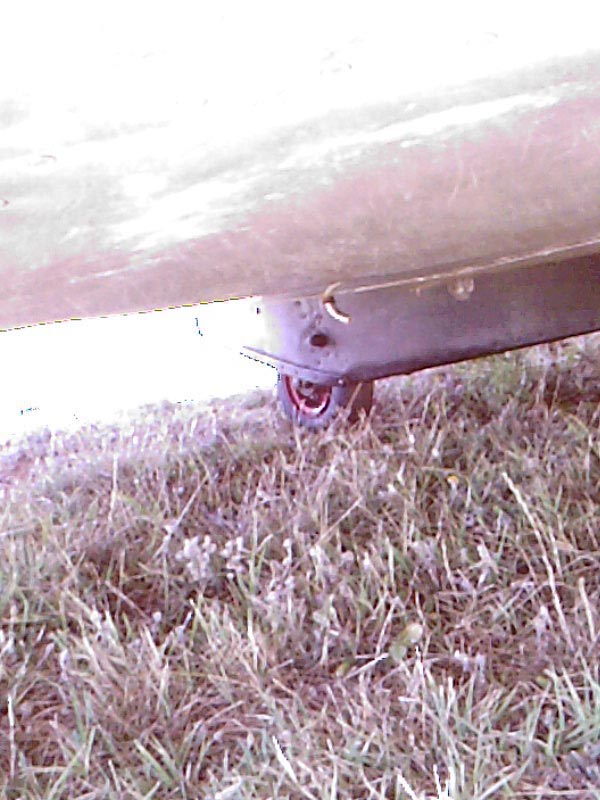
The tiny rear wheel
Next, consider what was meant to resemble a cockpit.
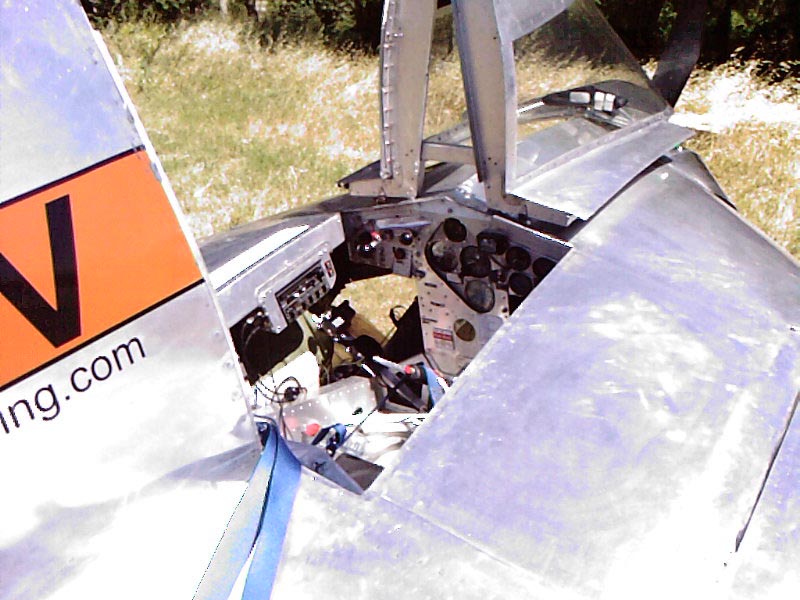
The cockpit. The "transparent canopy" has been pushed forward
Along the axis of the photograph, one can seemingly see the ground through the craft’s floor.
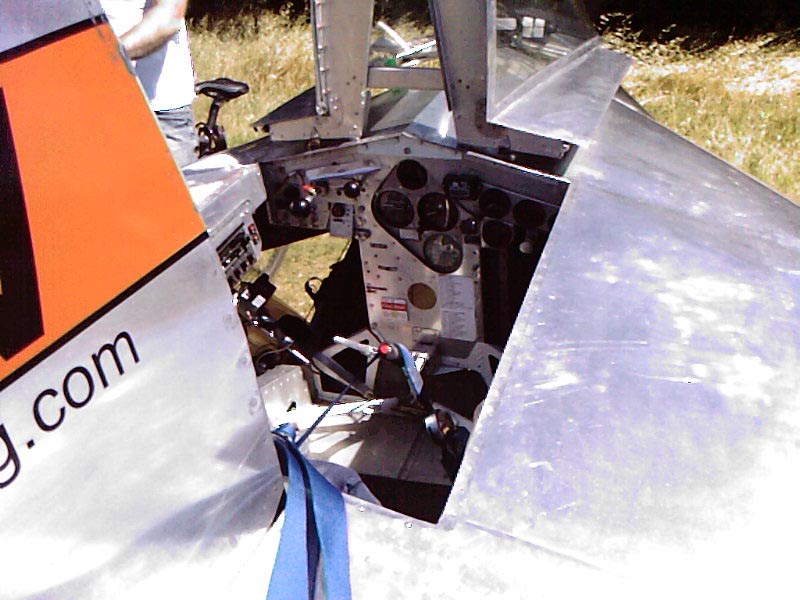
How does the extraterrestrial manage to squeeze into this cockpit? The answer lies in the next photo
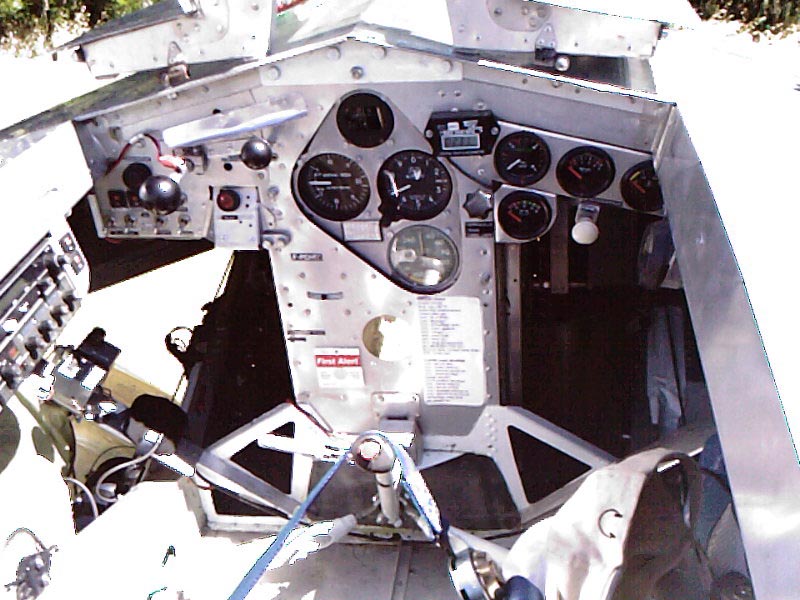
The explanation
Along the axis of the craft, a large compartment designed to retract the massive front wheel. On either side, compartments where the creature inserts its lower limbs. On the left, a transparent porthole allows it to gauge the length of grass blades during the final phase of flight. In the following photos, we uncover flaws in the mimicry we are witnessing. In close-up, the trailing edge of what attempts to resemble a vertical stabilizer—images likely inspired by objects photographed in a large retail store.
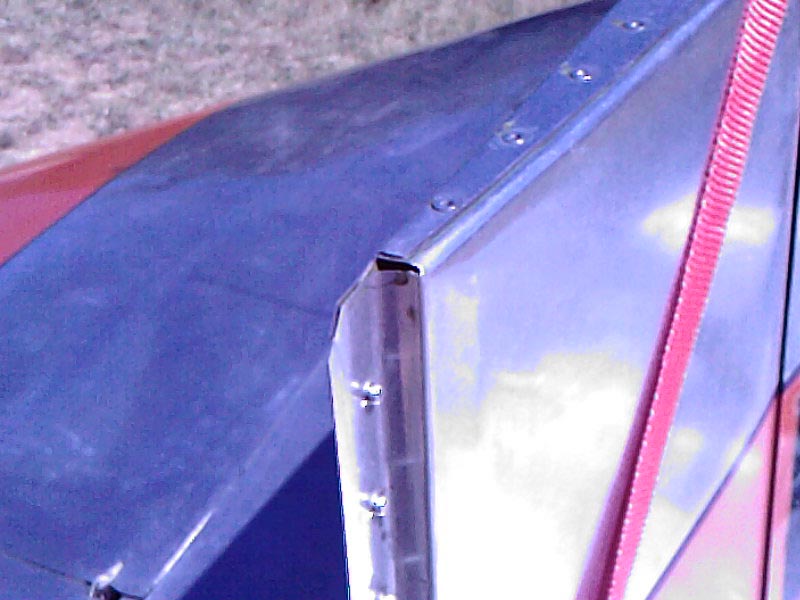
The final photographs constitute what might be considered "the cherry on top." To secure this fake vertical stabilizer, the extraterrestrials, not content with pretending to be Belgian, commit technological blunders that allow us, aeronautical engineers, to exclaim: "No, this flying machine is not from here! We’re not fooled!"
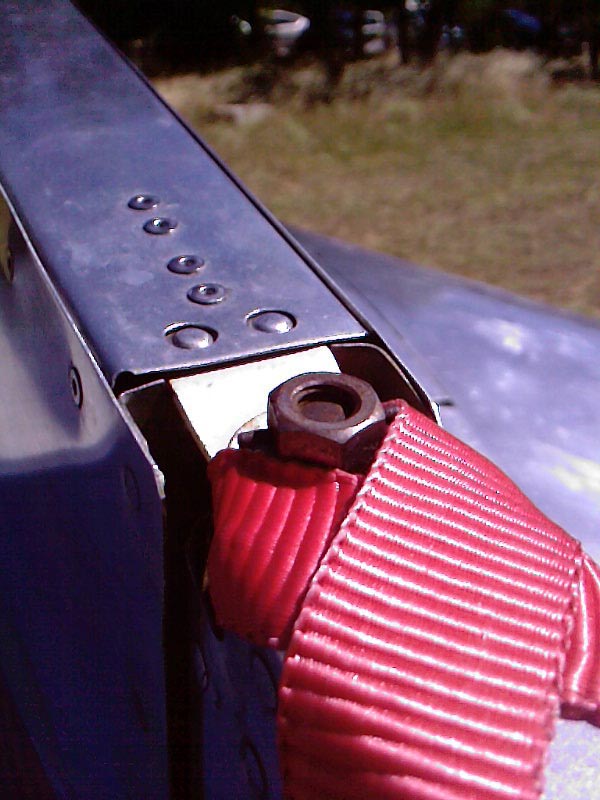
The bolt meant to secure the vertical stabilizer’s axis. In close-up, the strap—clearly of terrestrial origin
Zoom in on this image. What do we see?
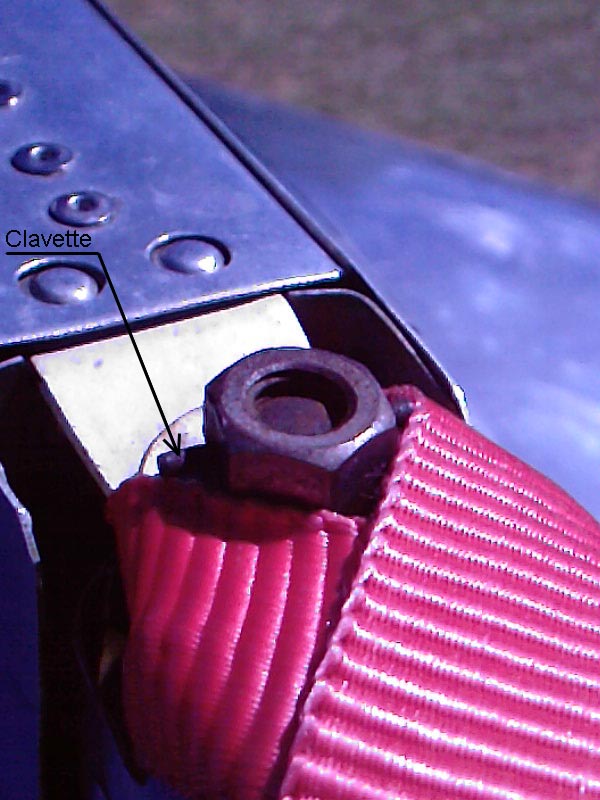
The fake bolt, keyed
If this object were a genuine bolt—truly a block of rust—it would engage the thread only halfway up its length. To complete the illusion, the image shows an object resembling a locking key.
As an UFO expert, I deliver a formal conclusion: No, this machine is not terrestrial! These details, which pose a real challenge to mechanics, undoubtedly conceal some sophisticated system enabling it to defy gravity.
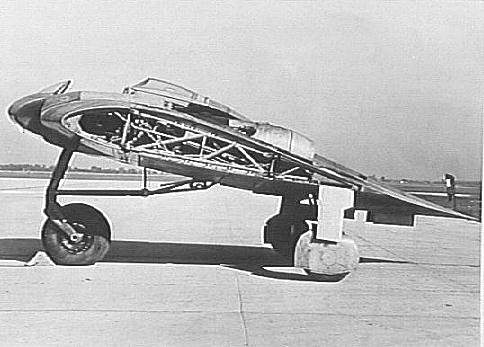
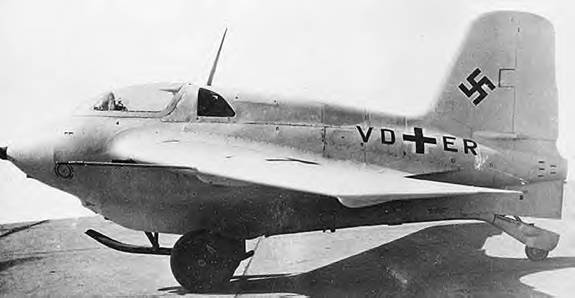
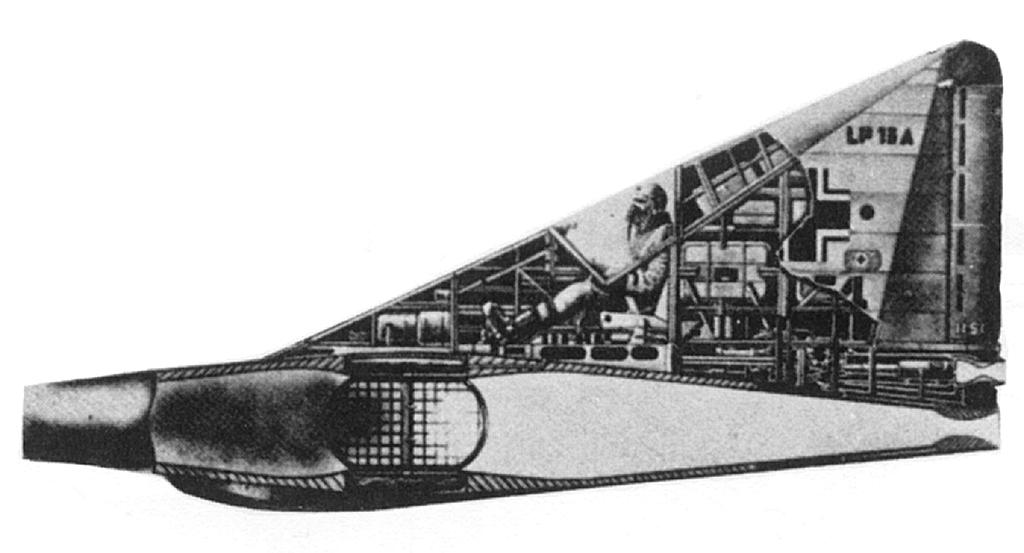
The twin-engine single-seat Horten bomber
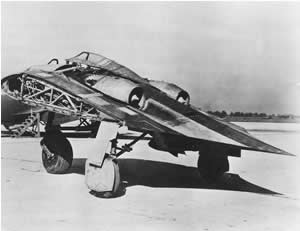
The same section, viewed from three-quarter rear
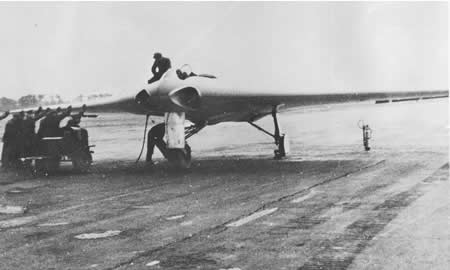
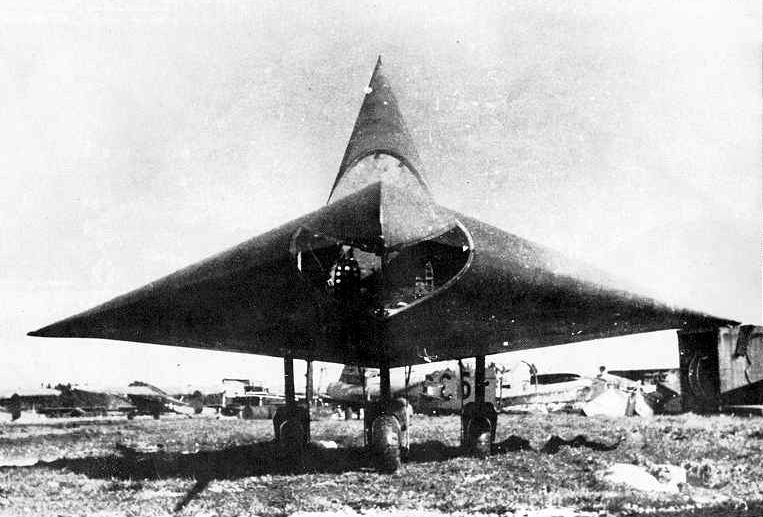
The Horten IX viewed from the front. Compare the wheel sizes of the two parts of the landing gear
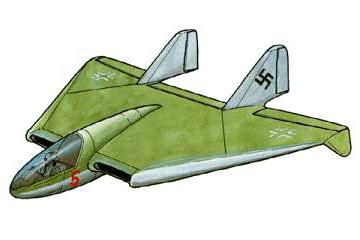
Above is one of the rare photos of the twin-engine aircraft built by the Horten brothers during the final months of World War II, just before Nazi Germany's collapse. Note the same size difference between what could be considered the main landing gear and the enormous front wheel located behind the pilot. The explanation is as follows. Like Jack Northrop’s wings, the Horten brothers’ wings exhibited undesirable behavior at stall. Stall originated in the outer sections of the wings and then abruptly migrated forward. In flight, the aircraft would immediately enter a dive. But landing is a controlled stall occurring very close to the ground. The flying wing was thus designed to first touch down with the rear landing gear components. Then, as speed decreased and stall occurred, the craft would pivot onto its front landing gear, which had to be sized accordingly to absorb the impact.
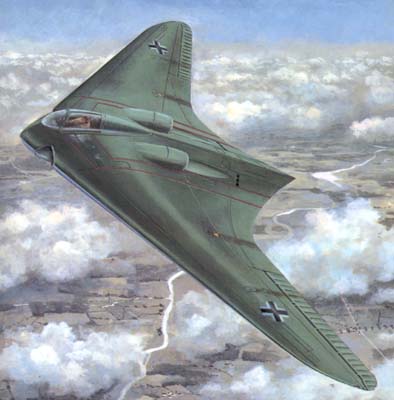
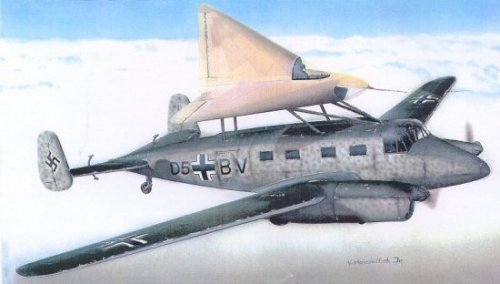
Artist's rendering
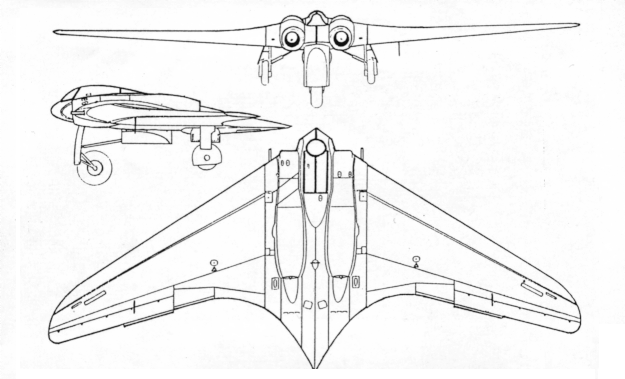
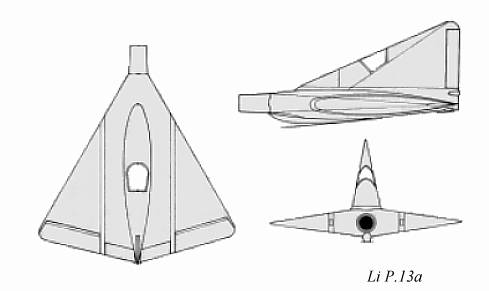
Three-view drawing
http://www.verheesengineering.com/f/index.html
http://www.verheesengineering.com/f/index.html
http://www.airliners.net/search/photo.search?regsearch=F-PDHV&distinct_entry=true
This unusual glider, which flies very well, is essentially a "biplane" wing where the wingtips have been joined together,
eliminating wingtip vortices—the source of drag.
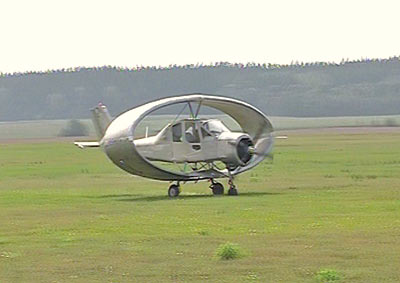
Realization of the concept on a Russian elliptical wing ---
Nouveautés Guide (Index) Home Page