ハーグ:自殺の手引き
ハーグ:自殺の手引き
2011年5月5日
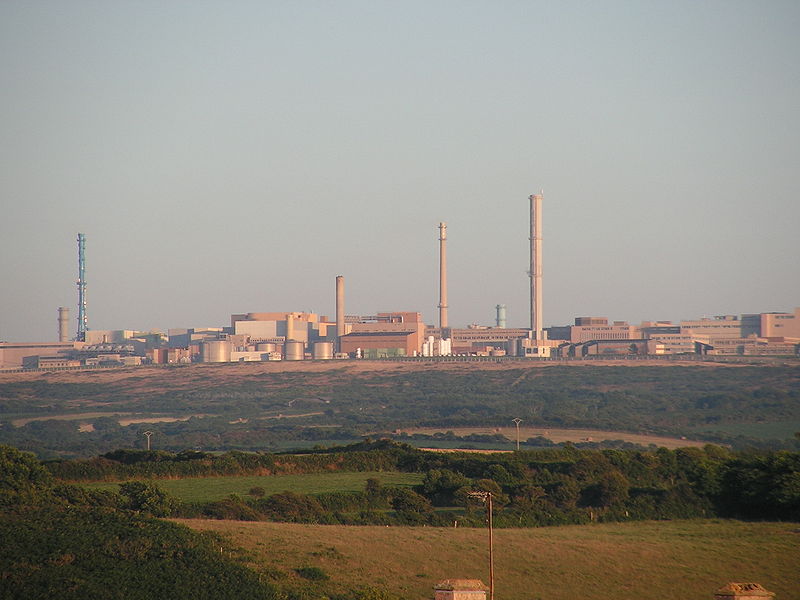
ハーグの工場, フランス北岸
ウィキペディアには、フランス北岸のコティンタンにある「再処理施設」であるハーグのサイトに関する情報がいくつか記載されています。
http://en.wikipedia.org/wiki/COGEMA_La_Hague_sitehttp://fr.wikipedia.org/wiki/Usine_de_retraitement_de_la_Hague
この工場は、世界で最も核廃棄物を多く排出する施設であり、1961年に稼働を開始し、すでに半世紀が経過しています(...)
ハーグの工場は、何十年にもわたり、フランス国内外のさまざまな工場から「廃棄物」を回収し、「処理」しています。
実際には、この処理は、非分裂性のウラン238の高速中性子捕獲によって、核反応炉で生成されたウランから1%のプルトニウムを化学的方法で抽出することに完全に集中しています。この純粋なプルトニウムは、小さなパッケージに詰められ、フランス南東部のガルドにあるマルクウルのMELOXへ輸送されます。そこで、プルトニウムはウラン238に7%まで希釈され、この混合物は新たな「核燃料」として知られるMOX(混合酸化物)となります。
このMOX燃料は、軍事的目的でプルトニウムを抽出するために、消費国で再利用されます。イラン人が高価な遠心分離でウランを濃縮するのではなく、単純な化学技術でMOXを購入し、プルトニウム239を抽出して爆弾を作成するのと比べて、なぜわざわざコストをかける必要があるのでしょうか?
この方法はアメリカ人によって「拡散」と見なされています。
これは、将来的には世界中のすべての国が独自の原爆を持つことを可能にする技術です。
この燃料は現在、フランスで運用されている58基の原子炉のうち20基で使用されています。EPRの建設により、その使用は広がっています(設計段階でそれを見込んでいます)。
長期間にわたり、MOXの導入がウラン235の分裂プロセスから、プルトニウム238の分裂プロセスへの隠れた変化を反映していることに気づいていませんでした。
誰もがこの物質の極めて危険性を認識し始めています。これは、吸入や摂取によって人間の組織に強く結合する傾向があり、体はそれを排除することができません。組織から放出される特性時間は50年です。これらの粒子は非常に(100%)がんを引き起こします。これは放射線照射ではなく、検出不能な生物学的汚染です。
この汚染は、燃料集合体からの破片が放出される核事故が発生した場合に起こり得ます。
これは、福島第3号機の爆発以来、すでに起こり、続いています。この原子炉はMOXを充填していました。
米国でプルトニウムの塵が見つかりました。
その影響は世界中に広がり、一部の専門家は100万人の癌を引き起こす可能性があると述べています。
第3号機からの放出を止めるには、燃料棒を抽出し、少なくとも専用のプールに沈めることができなければなりません。
しかし、これらの要素へのアクセスは不可能であり、近いまたは遠い将来にアクセス可能になるかどうかは明確ではありません。
「停止した」原子炉の燃料要素を冷却し続ける必要があります。そのコアは大きく溶け、数十メガワットの熱エネルギーを放出しています。閉じた循環の水と熱交換器の組み合わせにより、この熱を放出することができます。しかし、原子炉の劣化した状態により、これは不可能です。
したがって、日本人は開いた循環で冷却を実施せざるを得ず、新鮮な水を注入またはスプレーで行います。
この水は損傷したコアを循環し、ジルコニウムの管に収められていた燃料要素が溶けて逃げたことにより、破片を放出しています。この水はプルトニウムの粒子と非常に有毒な放射性同位体の広範な範囲を含んでいます。一部は蒸気になり、大気中に放出されます。残りは、原子炉の地下にあるトンネルで地震によって生じた見つけることのできない、そして閉じることのできない亀裂にたまります。TEPCOはこの水をポンプで汲み上げており、これまでタンクに保管されていました。
これらのタンクが満杯になると、TEPCOは高放射性の水を近くの海に流し、住民や漁師に謝罪しました。
このプロセスは、閉じた循環冷却システムが設置されるまで続きます。
私には、周囲の高い放射能により、原子炉がアクセス不能のまま残る理由がわかりません。
この殺人的な拡散の直接の責任者は次の2社です:
- 日本の電力会社TEPCO
- フランスの会社AREVA、これはMELOXで新しいプルトニウム燃料を製造・販売しています。

TEPCOの謝罪の返答。AREVAの経営陣はいつ謝罪するのか?
それ以上に深刻な問題があります。
50年以上にわたる運用を通じて、ハーグのセンターは「リサイクルセンター」ではなく、マルクウルでプルトニウム燃料を抽出・販売した後の処理を行うセンターであり、想像を絶する在庫を蓄積してきました。その重要性はウィキペディアのページには明記されていません。
60トンのプルトニウム
このプルトニウムを含むアセンブリは現在、ハーグにある4つのプールに保管されており、その建物の屋根は装甲されておらず、単なる薄いカバーで構成されています(...)
悪魔の台所
プルトニウムは鉛より密度が高く(1リットルあたり19キログラム)、これらの計算により、60トンのプルトニウムは3.15立方メートルに相当し、1メートル46センチのサイドを持つ立方体に収まります。
ハーグの工場は、世界で最も危険で有毒な物質を回収する再処理施設です。福島で起きていることを見れば、MOX燃料の生産を停止し、マルクウルのMELOXを閉鎖し、ハーグの工場で「悪魔の灰」の再処理を中止することが論理的です。ハーグは処理施設ではなく、ゴミ置き場、つまり「核ゴミのダンプ」です。
これは安全な場所です
私はあなたに簡単な問題を提示します。資格証明レベルの問題です。
ある製造業者が60トンのプルトニウムの在庫を持っています。石油のバケツの容量は160リットルです。石油のバケツの容量は160リットルです。
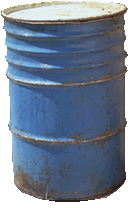
石油のバケツ
1グラムのプルトニウムは1トンの石油と同等のエネルギーを放出します。石油の平均密度は0.88キログラム/リットルです。市場での平均価格は約100ドル、73ユーロです。1メートル46センチのサイドを持つプルトニウムのキューブに相当する石油バケツの数を計算してください。現在ハーグに保管されているプルトニウムの在庫の価値をユーロで計算してください。
60トン = 60,000,000グラム = 600億、600億キログラムの石油に相当します。
140ポンド(バケツの重さに相当)で割ります。
得られる数値は
4億2800万バケツ
1バケツあたり73ユーロで計算すると、
312億ユーロ
ハーグの工場は年間1700トンの「使用済み燃料」を処理できる能力を持っています。現在は年間約1000トンを処理しています。この数値を覚えておいてください。この質量から1%のプルトニウムを回収でき、年間10トンになります。
これは1,428の原爆の負荷に相当します。
再処理(化学的)のコストを考慮しない場合、この貢献は年間収益として:
**
52億ユーロ/年** ---
オリジナル版(英語)
La Hague : Suicide, mode d'emploi
The Hague: Suicide manual
May 5, 2011
The la Hague plant, in northern coast of France
There is a page in Wikipedia, which gives some information on the website of La Hague "reprocessing center" located in Cotentin, in the nothern coast of France.
http://en.wikipedia.org/wiki/COGEMA_La_Hague_sitehttp://fr.wikipedia.org/wiki/Usine_de_retraitement_de_la_Hague
You will learn that this plant, the dirtiest in the world towards nuclear discharges, was commissioned in 1961, a half-century ago (...).
The La Hague plant recovers for decades the "waste" from different French and Foreign plants, and "retires" this material.
In fact this restatement is entirely focused on the extraction, by chemical means, of 1% of plutonium produced by fission in nuclear reactors to uranium by fast neutron capture by the nuclei of non-fissile uranium 238. This plutonium, pure, is then packed in small packages and ships in MELOX at Marcoule in Le Gard, in the south of France. Here, this plutonium is diluted, up from 7% in the uranium-238 and this mixture is a new "nuclear fuel", called MOX (mixed oxide).
The chemical MELOX may in turn be implemented in consumer countries, to extract plutonium for military purposes. Why bored, as do the Iranians to enrich uranium ore by costly centrifugation, then he just buy MOX and extract plutonium 239, through purely chemical technique, to make explosive-type for fission bombs?
This method is considered MELOX by Americans as "proliferation".
This means that this technique will eventually allow all countries of the world of their own atomic bombs.
This fuel is currently used in 20 of 58 reactors in operation in France. The construction of the EPR generalize his job (they were designed for).
we have ignored for a long time that the introduction of MOX reflected a stealth shift from a fission of uranium by 235 to a process based on fission of Plutonium 238.
Everyone is beginning to experience the extreme dangerousness of this substance, which has a high propensity to bind to human tissues after inhalation or ingestion of dust.The human body is then unable to eliminate them, the characteristic time of its release by human tissues is 50 years. These particles are highly (100%) carcinogenic, It is not an irradiation, but it is a biological contamination, undetectable by a measuring instrument.
This contamination could occur in case of nuclear accident with release of debris from the fuel assemblies.
This happened, and continues, since the explosion of reactor number 3 of Fukushima, who was charged with MOX.
Dust of plutonium were found in the United States.
The strike spread across the planet and some experts say it coud produce of a million cancers.
To stop this release from reactor number 3 should be able to extract its fuel rods and, at the very least, dip in a pool specially designed for this purpose.
Yet access to these elements is impossible, and it is not clear when such access could be possible in the near or distant future.
It is necessary to continue to cool the reactor fuel elements "arrested" with the heart, largely melted, releases several tens megawatts of thermal energy. Water circulation in closed circuit, coupled to a heat exchanger, could help evacuate those calories.cBut the deteriorating condition of the reactor makes it impossible.
The Japanese are forced to implement a cooling "open circuit", by injection or spraying of fresh water.
The latter, circulating in the damaged heart, is responsible for debris from the fuel elements that have escaped from zirconium tubes that contain and have melted. That water is filled with particles of plutonium and a wide range of highly toxic radionuclides. It is partly transformed into steam, which escapes into the atmosphere. The rest queue by an array of cracks, impossible to locate and seal, due to the earthquake in galleries located in the basement of reactor. The company TEPCO then proceeds to pump this water, which has so far been sent in tanks.
When these have been filled to the brim, TEPCO has just spilled the highly radioactive water in the ocean close by apologizing to the residents and fishermen.
All this will continue until a closed circuit cooling could not be established. ....
We do not see how the reactor remains unapproachable because of the prevailing high radioactivity in the vicinity.
*Two companies are directly responsible for this murderous dispersion: *
- The Japanese company TEPCO
- The French company AREVA, which manufactures and markets the new plutonium fuel in its MELOX.
Apologies responses TEPCO. When will come the AREVA's leaders apologizes ?
But there is much more serious.
Over five decades of operation, the center of the Hague, which is not a "recycling center" but the conditioning performed modulo Marcoule center extraction and sale of plutonium fuel has accumulated a stock that defies imagination, and whose importance is not specified in the Wikipedia page.
Sixty tons of plutonium
The assemblies taht contain this plutonium is currently stored in four pools, located in The Hague, housed in buildings whose roofs are not armored, but formed by a thin cover sheet (...)
The Devil's Kitchen
The plutonium is a more dense than lead (19 kilograms per liter). These calculations make the sixty tons of plutonium correspond to 3.15 cubic meters, which may be contained in a cube of side 1m46.
The La Hague plant is as a reprocessing center, recovering the most dangerous substance and the most poisonous in the world. Considering what is happening in Fukushima, a logical reaction would be to stop the production of MOX fuel, close MELOX Marcoule and stop retrieve the ashes of the devil at the La Hague plant . The Hague is not a treatment center, similar to a dump, a "nuclear dustbin".
It is a safe
I offers the following small problem, level certificate.
A manufacturer has a stock of 60 tons of plutonium. Le baril de pétrole a une contenance de 160 litres. A barrel of oil has a capacity of 160 liters.
Barrel of oil
One gram of plutonium released as much energy as one ton of oil. The oil also has an average density of 0.88 kg per liter. Its average price, the market is around 100 dollars, 73 euros must. Calculate the number of barrels of oil equivalent, corresponding to a cube of plutonium a forty six meters out. Calculate the euro value of the stock of plutonium currently stored at La Hague.
60 tons = 60,000,000 grams = 60 billion, sixty billion kilograms of oil equivalent.
Divide by 140 pounds, which corresponds to the weight of a barrel.
We get
428 million barrels.
At 73 euros per barrel, it makes
31.2 billion euros
The La Hague plant has the capacity to process 1,700 tonnes of "spent fuel" per year. It is currently around one thousand tonnes per year. Keep this figure. In this mass we can recover 1% plutonium, 10 tons per year.
What form the burden of 1,428 atomic bombs.
If we do not deduct the cost of reprocessing (chemical) this contribution is an annual turnover of:
**
5.2 billion euros per year** ---