Den Haag: Handleiding voor zelfmoord
Den Haag: Handleiding voor zelfmoord
5 mei 2011
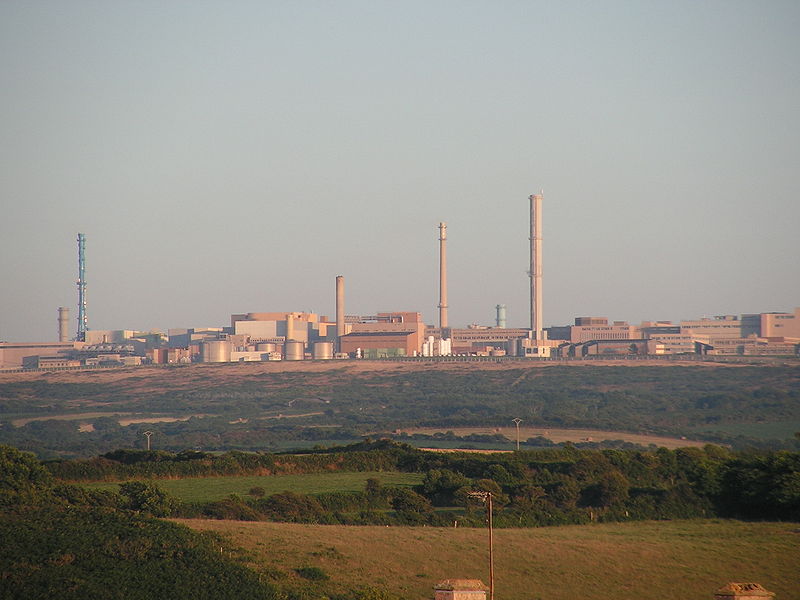
De fabriek van Den Haag, noordkust van Frankrijk
Er is een pagina op Wikipedia die bepaalde informatie geeft over het "herwinning" -complex van La Hague, gelegen in Cotentin, op de noordkust van Frankrijk.
http://en.wikipedia.org/wiki/COGEMA_La_Hague_sitehttp://fr.wikipedia.org/wiki/Usine_de_retraitement_de_la_Hague
U zult leren dat deze fabriek, de vuilste ter wereld inzake nucleaire afvaluitstoot, in 1961 in gebruik werd genomen, vijftig jaar geleden (...).
De fabriek van La Hague heeft al jaren de "afval" opgehaald uit verschillende Franse en buitenlandse kerncentrales en "herwint" dit materiaal.
In werkelijkheid is deze herwinning volledig gericht op de chemische extrahering van 1% van het plutonium dat wordt geproduceerd door splijting in kernreactoren, uit uranium door snelle neutronenopname door de kernen van niet-splijtbare uranium-238. Dit zuivere plutonium wordt vervolgens in kleine pakketten verpakt en naar MELOX in Marcoule, in het zuiden van Frankrijk, gestuurd. Daar wordt dit plutonium verdund, tot 7% in uranium-238, en deze mengsel vormt een nieuw "nucleair brandstof", genaamd MOX (gemengd oxide).
Deze MOX brandstof kan op zijn beurt worden gebruikt in landen die dit nodig hebben om plutonium te halen voor militaire doeleinden. Waarom zich inspannen, zoals de Irsen doen door uranium te verrijken via kostbare centrifuges, terwijl het voldoende is om MOX te kopen en plutonium-239 te extraheren via een zuiver chemische techniek, om een splijtbom te maken?
Deze methode wordt door de Amerikanen beschouwd als "proliferatie".
Dit betekent dat deze techniek op termijn alle landen van de wereld in staat zal stellen hun eigen atoombommen te hebben.
Deze brandstof wordt momenteel gebruikt in 20 van de 58 werkende kernreactoren in Frankrijk. De bouw van de EPR maakt deze gebruik algemeen (ze zijn hier voor ontworpen).
Wij hebben lang geleden genegeerd dat de introductie van MOX een discreet verloop van de splijting van uranium-235 naar een proces gebaseerd op de splijting van plutonium-238 weerspiegelde.
Iedereen begint zich bewust te worden van de extreem gevaarlijke aard van deze stof, die een sterke neiging heeft om zich vast te zetten aan menselijke weefsels na inademing of inname van stof. Het lichaam is daarna niet in staat om deze te verwijderen: de kenmerkende tijd voor uitwerping door menselijke weefsels is 50 jaar. Deze deeltjes zijn zeer (100%) kankerverwekkend; het gaat niet om straling, maar om biologische verontreiniging, onopspoorbaar met een meetinstrument.
Deze verontreiniging kan optreden bij een nucleair ongeval dat leidt tot de vrijkomst van brokstukken uit brandstofverzamelingen.
Dit is gebeurd en blijft gebeuren sinds de explosie van reactor nr. 3 van Fukushima, die met MOX was gevuld.
Plutoniumstof is in de Verenigde Staten aangetroffen.
De impact verspreidde zich over de hele wereld, en sommige experts beweren dat het een miljoen kankers kan veroorzaken.
Om deze uitstoot van reactor nr. 3 te stoppen, zou het mogelijk moeten zijn om de brandstofstaven te verwijderen en ten minste in een speciaal daarvoor ontworpen bad te dompelen.
Toch is toegang tot deze elementen onmogelijk, en is het niet duidelijk wanneer zo'n toegang mogelijk zou worden, op korte of lange termijn.
Het is noodzakelijk om de "gestopte" brandstofelementen van de reactor verder te koelen, waarvan de kern grotendeels gesmolten is en meerdere tientallen megawatt thermische energie vrijgeeft. Een gesloten watercirculatie, gekoppeld aan een warmtewisselaar, zou kunnen helpen om deze warmte te verwijderen. Maar de verslechterde toestand van de reactor maakt dit onmogelijk.
De Japanners zijn gedwongen om een open circulatie te gebruiken, door fris water te injecteren of te spuiten.
Dit water, dat door de beschadigde kern circuleert, is verantwoordelijk voor de vrijkomst van brokstukken uit de brandstofelementen die ontsnapt zijn uit de zirkoniumhulzen waarin ze zaten en gesmolten zijn. Dit water bevat deeltjes van plutonium en een breed scala aan zeer giftige radioactieve stoffen. Het wordt gedeeltelijk omgezet in stoom, die in de atmosfeer ontsnapt. Het overige deel ophoopt zich in een reeks barsten, onmogelijk te lokaliseren en te dichten, veroorzaakt door de aardbeving in de gangen onder de reactor. De maatschappij TEPCO pompt vervolgens dit water, dat tot nu toe in tankcontainers is opgeslagen.
Wanneer deze vol zijn, heeft TEPCO gewoon het sterk radioactieve water in de nabijgelegen oceaan gegoten, zich verontschuldigend tegenover de inwoners en vissers.
Deze procedure zal doorgaan zolang een gesloten koeling niet kan worden ingesteld. ....
We zien niet hoe de reactor onbereikbaar kan blijven vanwege de hoge radioactiviteit in de omgeving.
Twéé bedrijven zijn direct verantwoordelijk voor deze dodelijke verspreiding:
- De Japanse maatschappij TEPCO
- De Franse maatschappij AREVA, die het nieuwe plutoniumbrandstof via haar fabriek MELOX produceert en verkoopt.

Verontschuldigingen van TEPCO. Wanneer zullen de leiders van AREVA zich verontschuldigen?
Er is veel erger.
Tijdens meer dan vijf decennia van exploitatie heeft het centrum van La Hague, dat geen "hergebruikcentrum" is, maar een centrum voor voorbereiding na extractie en verkoop van plutoniumbrandstof in Marcoule, een voorstel opgebouwd dat de verbeelding te boven gaat, waarvan de omvang niet is aangegeven op de Wikipedia-pagina.
Zestig ton plutonium
De samenstellingen die dit plutonium bevatten, zijn momenteel opgeslagen in vier bassins in La Hague, in gebouwen waarvan de daken niet versterkt zijn, maar bestaan uit een dunne beschermende laag (...)
De keuken van de duivel
Plutonium is dichter dan lood (19 kg per liter). Deze berekeningen betekenen dat de zestig ton plutonium overeenkomen met 3,15 kubieke meter, die in een kubus van 1 m 46 kunnen worden opgeslagen.
De fabriek van La Hague is een herwinningcentrum, dat de meest gevaarlijke en giftigste stof ter wereld herwint. Aangezien er zoveel gebeurt in Fukushima, zou een logische reactie geweest zijn om de productie van MOX-brandstof te stoppen, MELOX in Marcoule te sluiten en het herwinnen van de duivelstroepen in de fabriek van La Hague te stoppen. La Hague is geen behandelingcentrum, maar eerder een afvalcontainer, een "nucleaire vuilnisbak".
Het is veilig
Ik stel u een klein probleem voor, op certificaatniveau.
Een producent heeft een voorraad van 60 ton plutonium. De olievat heeft een inhoud van 160 liter. Een olievat heeft een capaciteit van 160 liter.
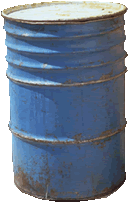
Olievat
Een gram plutonium geeft evenveel energie vrij als een ton olie. Olie heeft ook een gemiddelde dichtheid van 0,88 kg per liter. De gemiddelde prijs op de markt is ongeveer 100 dollar, dat is 73 euro. Bereken het aantal olie-equivalenten dat overeenkomt met een kubus van plutonium van 1 m 46. Bereken de waarde in euro's van de huidige voorraad plutonium op La Hague.
60 ton = 60.000.000 gram = 60 miljard, zestig miljard kilogram olie-equivalent.
Deel door 140 pond, wat overeenkomt met het gewicht van een olievat.
We krijgen
428 miljoen vaten.
Bij 73 euro per vat, maakt dat
31,2 miljard euro
De fabriek van La Hague heeft de capaciteit om 1.700 ton "gebruikt brandstof" per jaar te verwerken. Momenteel verwerkt het ongeveer 1.000 ton per jaar. Houd dit getal vast. In deze massa kan 1% plutonium worden teruggevonden, dat is 10 ton per jaar.
Wat is de belasting van 1.428 atoombommen.
Als we de kosten van herwinning (chemisch) negeren, vertegenwoordigt deze bijdrage een jaarlijkse omzet van:
**
5,2 miljard euro per jaar** ---
Oorspronkelijke versie (Engels)
La Hague: Suicide, manual
The Hague: Suicide manual
May 5, 2011
The La Hague plant, in northern coast of France
There is a page in Wikipedia, which gives some information on the website of La Hague "reprocessing center" located in Cotentin, in the northern coast of France.
http://en.wikipedia.org/wiki/COGEMA_La_Hague_sitehttp://fr.wikipedia.org/wiki/Usine_de_retraitement_de_la_Hague
You will learn that this plant, the dirtiest in the world towards nuclear discharges, was commissioned in 1961, a half-century ago (...).
The La Hague plant recovers for decades the "waste" from different French and Foreign plants, and "retires" this material.
In fact this restatement is entirely focused on the extraction, by chemical means, of 1% of plutonium produced by fission in nuclear reactors to uranium by fast neutron capture by the nuclei of non-fissile uranium 238. This plutonium, pure, is then packed in small packages and ships in MELOX at Marcoule in Le Gard, in the south of France. Here, this plutonium is diluted, up from 7% in the uranium-238 and this mixture is a new "nuclear fuel", called MOX (mixed oxide).
The chemical MELOX may in turn be implemented in consumer countries, to extract plutonium for military purposes. Why bored, as do the Iranians to enrich uranium ore by costly centrifugation, then he just buy MOX and extract plutonium 239, through purely chemical technique, to make explosive-type for fission bombs?
This method is considered MELOX by Americans as "proliferation".
This means that this technique will eventually allow all countries of the world of their own atomic bombs.
This fuel is currently used in 20 of 58 reactors in operation in France. The construction of the EPR generalize his job (they were designed for).
we have ignored for a long time that the introduction of MOX reflected a stealth shift from a fission of uranium by 235 to a process based on fission of Plutonium 238.
Everyone is beginning to experience the extreme dangerousness of this substance, which has a high propensity to bind to human tissues after inhalation or ingestion of dust.The human body is then unable to eliminate them, the characteristic time of its release by human tissues is 50 years. These particles are highly (100%) carcinogenic, It is not an irradiation, but it is a biological contamination, undetectable by a measuring instrument.
This contamination could occur in case of nuclear accident with release of debris from the fuel assemblies.
This happened, and continues, since the explosion of reactor number 3 of Fukushima, who was charged with MOX.
Dust of plutonium were found in the United States.
The strike spread across the planet and some experts say it coud produce of a million cancers.
To stop this release from reactor number 3 should be able to extract its fuel rods and, at the very least, dip in a pool specially designed for this purpose.
Yet access to these elements is impossible, and it is not clear when such access could be possible in the near or distant future.
It is necessary to continue to cool the reactor fuel elements "arrested" with the heart, largely melted, releases several tens megawatts of thermal energy. Water circulation in closed circuit, coupled to a heat exchanger, could help evacuate those calories.cBut the deteriorating condition of the reactor makes it impossible.
The Japanese are forced to implement a cooling "open circuit", by injection or spraying of fresh water.
The latter, circulating in the damaged heart, is responsible for debris from the fuel elements that have escaped from zirconium tubes that contain and have melted. That water is filled with particles of plutonium and a wide range of highly toxic radionuclides. It is partly transformed into steam, which escapes into the atmosphere. The rest queue by an array of cracks, impossible to locate and seal, due to the earthquake in galleries located in the basement of reactor. The company TEPCO then proceeds to pump this water, which has so far been sent in tanks.
When these have been filled to the brim, TEPCO has just spilled the highly radioactive water in the ocean close by apologizing to the residents and fishermen.
All this will continue until a closed circuit cooling could not be established. ....
We do not see how the reactor remains unapproachable because of the prevailing high radioactivity in the vicinity.
*Two companies are directly responsible for this murderous dispersion: *
- The Japanese company TEPCO
- The French company AREVA, which manufactures and markets the new plutonium fuel in its MELOX.
Apologies responses TEPCO. When will come the AREVA's leaders apologizes ?
But there is much more serious.
Over five decades of operation, the center of the Hague, which is not a "recycling center" but the conditioning performed modulo Marcoule center extraction and sale of plutonium fuel has accumulated a stock that defies imagination, and whose importance is not specified in the Wikipedia page.
Sixty tons of plutonium
The assemblies taht contain this plutonium is currently stored in four pools, located in The Hague, housed in buildings whose roofs are not armored, but formed by a thin cover sheet (...)
The Devil's Kitchen
The plutonium is a more dense than lead (19 kilograms per liter). These calculations make the sixty tons of plutonium correspond to 3.15 cubic meters, which may be contained in a cube of side 1m46.
The La Hague plant is as a reprocessing center, recovering the most dangerous substance and the most poisonous in the world. Considering what is happening in Fukushima, a logical reaction would be to stop the production of MOX fuel, close MELOX Marcoule and stop retrieve the ashes of the devil at the La Hague plant . The Hague is not a treatment center, similar to a dump, a "nuclear dustbin".
It is a safe
I offers the following small problem, level certificate.
A manufacturer has a stock of 60 tons of plutonium. Le baril de pétrole a une contenance de 160 litres. A barrel of oil has a capacity of 160 liters.
Barrel of oil
One gram of plutonium released as much energy as one ton of oil. The oil also has an average density of 0.88 kg per liter. Its average price, the market is around 100 dollars, 73 euros must. Calculate the number of barrels of oil equivalent, corresponding to a cube of plutonium a forty six meters out. Calculate the euro value of the stock of plutonium currently stored at La Hague.
60 tons = 60,000,000 grams = 60 billion, sixty billion kilograms of oil equivalent.
Divide by 140 pounds, which corresponds to the weight of a barrel.
We get
428 million barrels.
At 73 euros per barrel, it makes
31.2 billion euros
The La Hague plant has the capacity to process 1,700 tonnes of "spent fuel" per year. It is currently around one thousand tonnes per year. Keep this figure. In this mass we can recover 1% plutonium, 10 tons per year.
What form the burden of 1,428 atomic bombs.
If we do not deduct the cost of reprocessing (chemical) this contribution is an annual turnover of:
**
5.2 billion euros per year** ---