The failed crash in São Paulo
July 24, 2007 – Updated July 4, 2007
On July 24, 2007, viewers were able to watch a video and numerous photographs showing the consequences of a loss of control by a civilian aircraft carrying 186 passengers. The plane left the runway and crashed into a building located to the left of the emergency runway area.
This is obviously very tragic, and our thoughts go out to the families of the victims. We’ve read many things: for instance, that this runway, situated right in the middle of the city, was quite short (1,900 meters), and lacked any drainage system to channel away rainwater. We also learned that in the days prior, other planes had experienced braking problems. Additionally, the right thrust reverser on this Airbus had been out of service for several days; this device allows for highly effective braking in rainy weather. See http://siteaero.free.fr/reverser.htm. Under such conditions, when an aircraft can only hydroplane, this thrust reverser is practically the only means of braking available. Of course, if the right reverser is broken and the pilot foolishly activates the left one, the plane will immediately start turning—which is precisely what happened here. In this regard, aviation regulations lack precision. It should be specified to pilots that when one thrust reverser is broken, they must not use the other one (in the case of twin-engine planes). The pilot should have considered this.
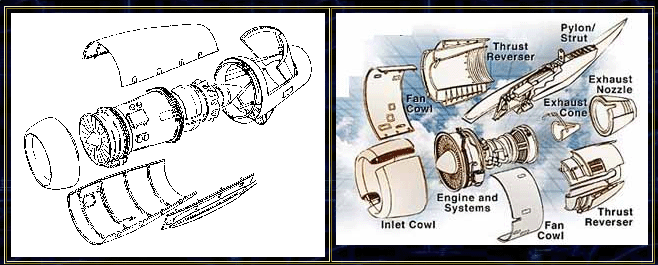
Thrust reverser
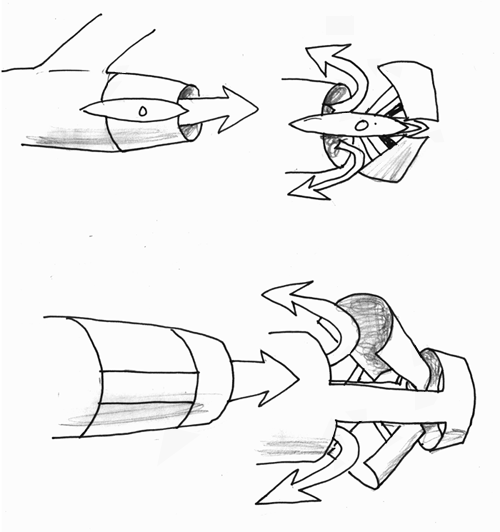
This device redirects airflow forward by angling flaps.
Below is the general principle behind “grid-type thrust reversers.” According to information I’ve received, these Airbus 320s are equipped with secondary grid-type flow reversers, of the IAE V/2500 type.
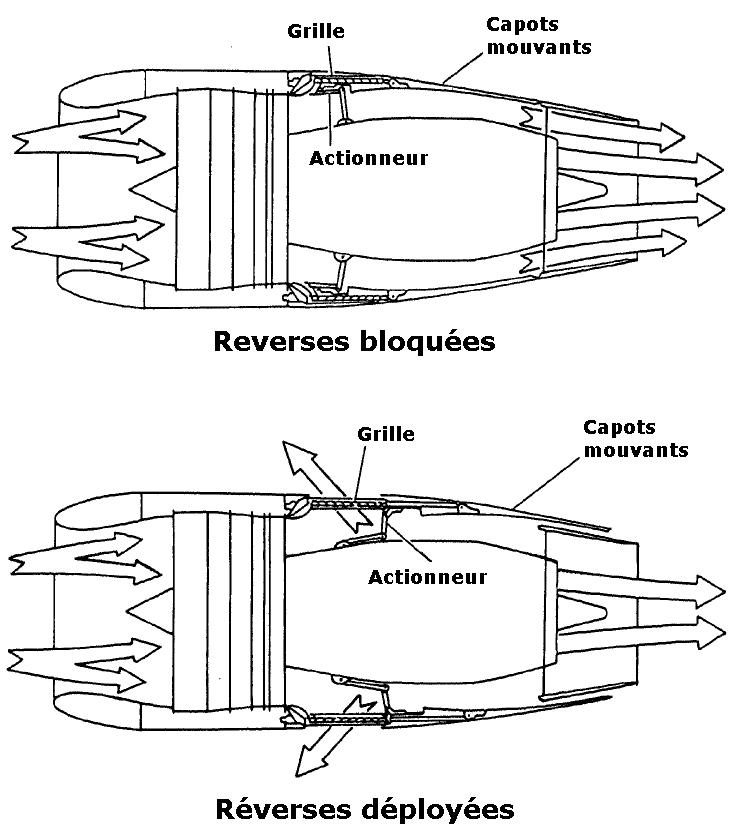
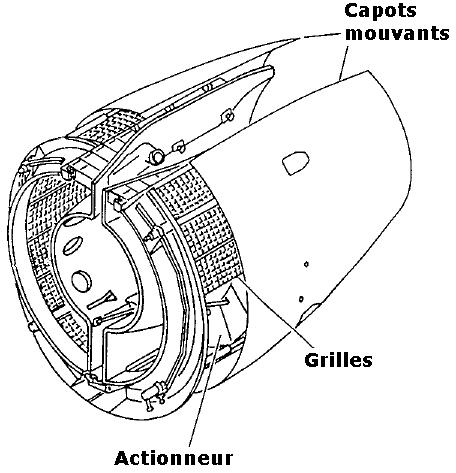
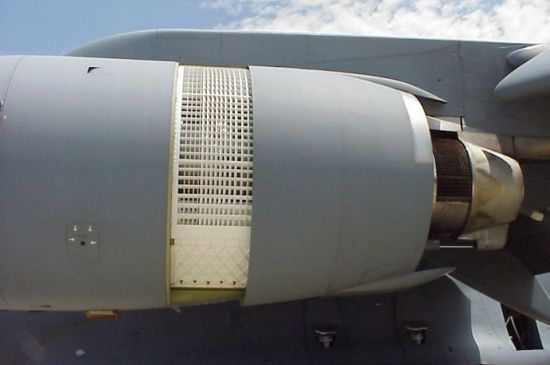
The cover moves backward, revealing grids that deflect airflow forward.
Critics might argue that aircraft with faulty thrust reversers should be grounded immediately and undergo maintenance. Indeed, flying a plane with just one functioning thrust reverser is akin to driving a car whose brakes work on only one side. But such critics fail to grasp the financial losses such measures would entail. For example, according to the Brazilian airline operating this route, Airbus stipulates in its maintenance manual that planes may continue flying with just one thrust reverser operational for up to 10 days. This gives airlines time to put crew members on leave, arrange for replacement aircraft, reserve maintenance facilities, etc. Of course, there remains the risk that such a plane might crash in rainy weather on a short runway. Yet we must remember: zero risk doesn’t exist. Flying is always riskier than staying safely at home. These 186 deaths, plus those nearby who perished, are the price paid for keeping aviation running. This is what we call the price of progress. Meanwhile, compensation for victims does exist as a mitigating measure.
As an aviation specialist, I can only make a few observations regarding crash photos, comparing them to the impact of the Boeing on the Pentagon in 2001, after it was hijacked by Al-Qaeda terrorists. Immediately, many differences become apparent. Regarding the Brazilian plane’s crash, witnesses reported smelling strong jet fuel fumes, which ignited upon impact. Note that the plane that crashed in Brazil had nearly empty fuel tanks, since it was nearing the end of its flight rather than taking off. Conversely, the hijacked Boeing had fully filled tanks, having been prepared for a transcontinental flight. Despite this, the crash on the Pentagon showed noteworthy ecological benefits. For instance, the lawn adjacent to the building remained untouched.
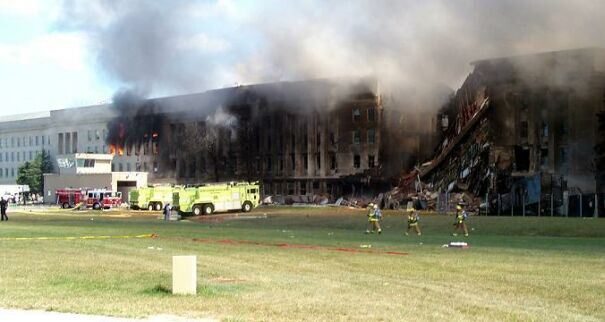
Grass remained intact after the hijacked plane crashed into the Pentagon.
Conversely, the São Paulo crash can serve as a textbook example of a failed crash; we can ask ourselves what caused it to turn out this way.
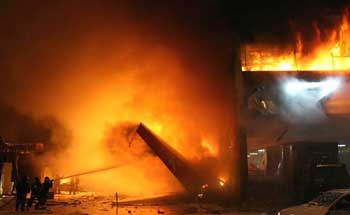
During the crash, jet fuel ignited within seconds. Had there been a lawn in front, it would have been completely destroyed. In the foreground: the plane’s vertical stabilizer.
First observation: had there been a lawn in front of the building struck by the São Paulo plane, it would have been utterly ruined. Fortunately, there was none.
Nowadays, people are increasingly concerned about pollution. Consider the aftermath of the São Paulo crash: the low temperature of jet fuel resulted in highly polluting combustion, producing thick black smoke.
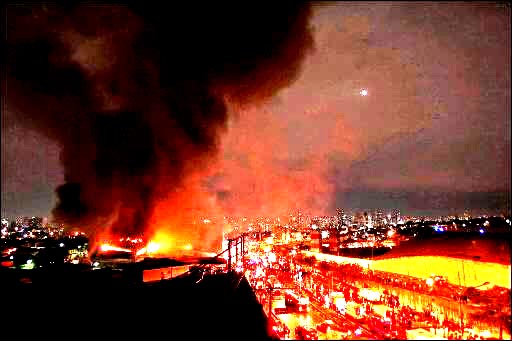
São Paulo: heavy pollution stemming from incomplete combustion of jet fuel, which takes time to burn.
In contrast, the crash on the Pentagon serves as a model of minimal environmental damage. Notice the absence of black smoke; jet fuel burned completely and rapidly, almost explosively, according to witnesses.
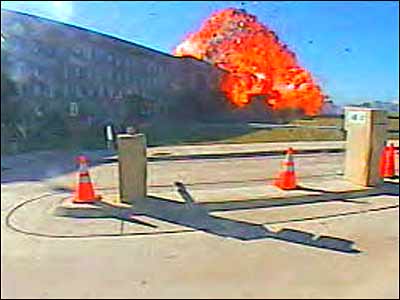
Pentagon, September 11, 2001. A perfectly clean crash, respectful of the environment.
Put yourself in the shoes of the Brazilian pilot. He left the runway and headed toward buildings. He knew his life and those of his passengers were doomed. Under such circumstances, he should have focused solely on protecting nearby residents. Thus, manuals should specify that in such cases, pilots must strive to keep the plane straight so it enters the building minimally damaging nearby structures and avoiding further casualties. The Pentagon crash demonstrated that when a plane approached straight-on, its fuselage penetrated fully into the building while wings, engines, and landing gear folded back automatically. The flawlessness of that crash is evident in the fact that upper-floor windows remained intact. On July 24, because of poor crash management, this accident resulted in dozens of “collateral victims”—dead or gravely injured—which could have been avoided with better control at the final stage.
When tragedy is inevitable and all that remains is mourning, we should try to highlight positive aspects as a lesson. This boils down to one sentence, which should appear in all pilot manuals in red letters under “Crash Control”:
If impact with a building is unavoidable, stay on a straight path; you’ll at least save nearby lives, if not your own, and minimize material damage.
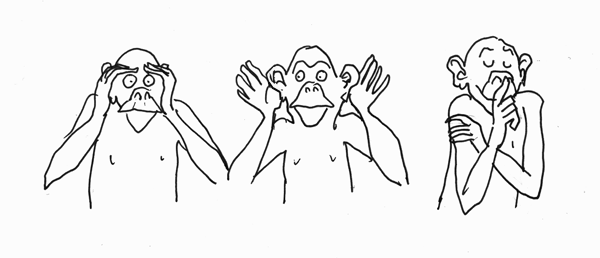
French press
Jean-Claude Boetsch, retired journalist and survivor of the 1988 Airbus 320 crash in Habsheim, which claimed 3 lives and left 100 injured among 135 passengers, has created a website where he closely follows the São Paulo crash.
http://www.crashdehabsheim.net/autre%20crash%20TAM.htm
This page deals specifically with the Airbus 320 crash. We encourage readers to explore his detailed accounts of numerous crashes, along with their analyses and mysteries. It’s... impressive.
http://www.crashdehabsheim.net/autres%20crash%20liste.htm
Saturday, July 28, 2008. Email from Jean-Claude Boetsch, reproduced with permission.
Dear Sir,
The crash I survived was the one at Habsheim in 1988. An A320 whose innovative technology, introduced too hastily, betrayed its pilot and 135 passengers. There were 3 dead and about 100 injured. Years later, once I mastered computers, I created one website, then others, to ensure that Air France, Airbus, and authorities wouldn’t succeed in making people forget this crash.
You may have noticed that crash statistics often begin counting fatalities from 1990 onward or from ten victims upwards, effectively erasing the existence of this first Airbus A320 accident. You also mention the press’s “abysmal” attitude. Having been a journalist for over 30 years and now retired, I wholeheartedly agree with you. But it’s primarily the media’s structure and organization—rather than individual journalists—that allow certain events to be ignored or suppressed.
Among humans, there’s also the fear of making mistakes or looking foolish by being the first to reveal certain facts, resulting in voluntary self-censorship. The vast majority of journalists constantly monitor what their colleagues say and write. I’ve known many who altered their articles to align with their peers’ views—and with AFP dispatches. This topic deserves discussion in an era when journalists are increasingly distrusted by the public and when press power remains theoretically one of democracy’s pillars.
Sincerely,
Jean-Claude Boetsch
When you fly, you’ve probably noticed that upon landing, planes deploy hypersostentor flaps, increasing lift, wing surface area, and airfoil curvature. Without these flaps, commercial planes simply couldn’t land on sufficiently short runways. Once the plane touches down, you see flaps rising on the wings; they’re called “spoilers” (the English verb “to spoil” means “to harm”).
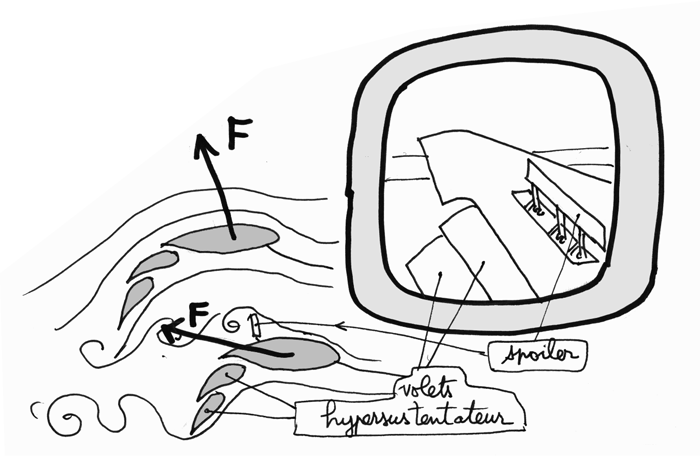
Hypersostentor flaps and spoilers.
Spoilers act as braking flaps, but their main role is to abruptly interrupt airflow near the hypersostentor flaps, instantly nullifying their lift contribution. Spoilers merely add drag. This loss of lift effectively “flattens” the plane against the ground, allowing wheel brakes to function efficiently. Otherwise... they’d be useless! No journalist bothered to research these details, including aviation journalists—though for different reasons. Messing with interests of major corporations is akin to triggering a highly sensitive ejection seat.
Crash reports mention every conceivable scenario, including the absence of spoiler deployment. Did they function during the São Paulo crash? If not, on such a short runway the plane essentially had no brakes except thrust reversers; with the right one broken, skidding was guaranteed. Yet, as a pilot pointed out, even if both thrust reversers worked, without spoilers hydroplaning would occur, and thrust reversers alone wouldn’t suffice to halt the plane. At the end of the runway, as seen on linked sites, the ground slopes downward toward the city!
Press reports quoted supposed last words of the crew, something like:
- Brake!
- I can’t!
Could the crew check whether spoilers had risen? I doubt it. Cockpit windows face forward while wings are mid-fuselage. Commercial planes lack rearview mirrors, and I can’t imagine a captain asking a stewardess:
- Please glance through a cabin window to see if spoilers rose. Return to the cockpit and report.
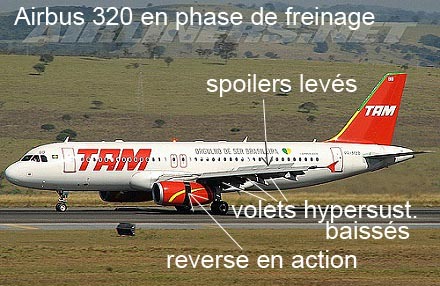
In this photo of a similar plane, spoilers are raised.
Crew members have only instruments, a color screen, and mere seconds to react. Pilot error? On a 1,900-meter runway ending in a slope toward the city, it’s virtually impossible to avoid disaster.
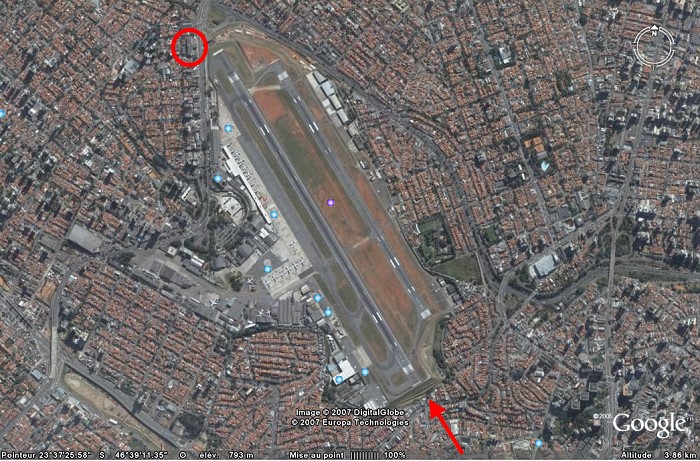
São Paulo’s runway, squeezed amid urban sprawl. After the crash, planes landed on the shorter right-hand runway (1,400 meters vs. 1,900 on the left).
A pilot told me:
- With a large airliner, hitting anything at 50 knots (90 km/h) spells doom.
In a recent interview, another pilot said:
- If brakes fail, it’s a runway excursion.
With varying degrees of damage. In São Paulo, such an excursion is unthinkable.
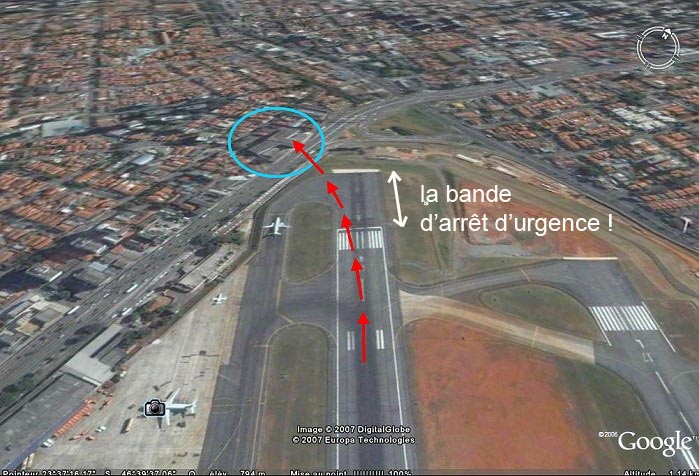
And at the end:
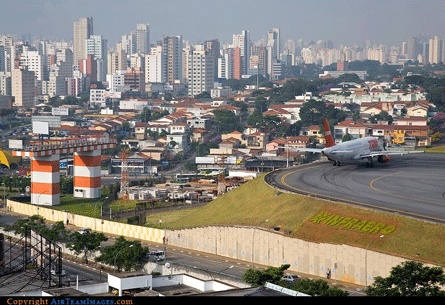
End of runway. Below: two sturdy concrete pillars... meant to stop planes!
How can flight safety be improved against such accidents? As noted earlier, runway excursions and brake failures are common. Installing parachute brakes on aircraft? That’s done for military planes.
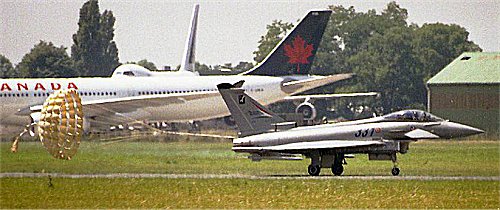
This isn’t a Rafale but an “Eurofighter” (its competitor, built by Germany, Italy, and Spain) using a parachute brake.
July 4, 2007
Hello, Mr. Petit,
Once again I send two photos of Concorde tests involving parachute brakes and arrestor barriers, proving that commercial planes can safely utilize such devices. Currently, all French air bases—and those in Navarre—are equipped with arrestor wires to halt disabled aircraft, be they fighters or transports. It’s entirely reasonable to equip short civilian runways with similar systems, but at what cost? Plane-mounted parachute brakes weigh mere kilograms; Air Force mechanics carry containers with them to replace used parachutes (though this isn’t mandatory). Lastly, you mentioned a “Mirage 2000” with a parachute brake; actually it’s an “Eurofighter,” a multinational fighter built by Germany, UK, Italy, and Spain, competing with France’s Rafale.
Respectfully, JCBoetsch
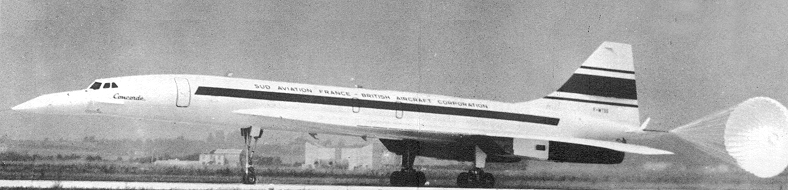
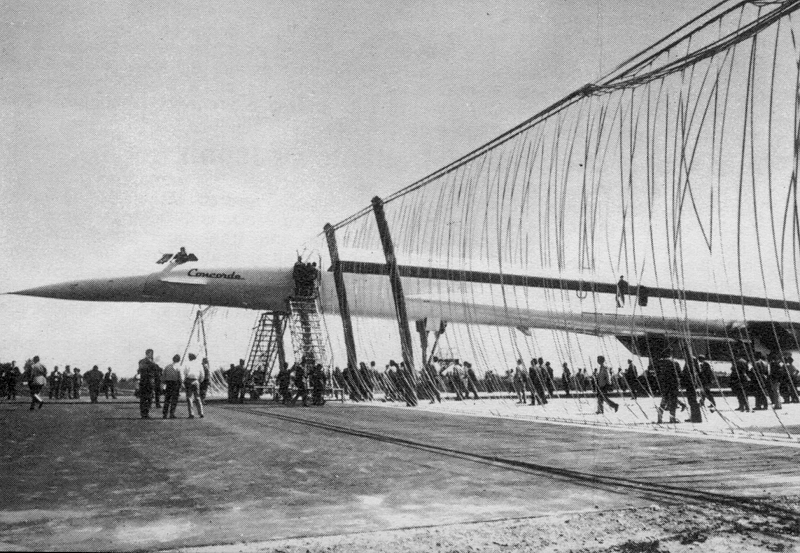
August 5, 2007: From reader Gilles Pinon:
During my military service at Istres in 1981, I weeded the runway. It’s Europe’s longest (5 km, if I recall correctly) and the sole one capable of receiving the Space Shuttle in emergencies. Still, it’s fitted with an arrestor barrier that lies flat normally and rises automatically if needed.
If I recall correctly, it’s triggered by photoelectric cells whenever an aircraft approaches above 60 km/h.
Gilles Pinon
A better solution would be equipping emergency runways with nets similar to those on aircraft carriers, which can be raised. Landing on a carrier’s short runway is extremely delicate; planes must hook arrestor cables with tailhooks. If they fail, immediate power reversal is required. Yet sometimes a plane slows enough not to take off again but remains too fast to stop on the runway. Raising a safety barrier from the tower is one remedy. Otherwise, pilot ejection and aircraft loss ensue.
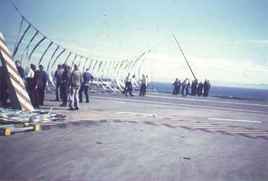
Emergency arrestor barrier on aircraft carrier Foch
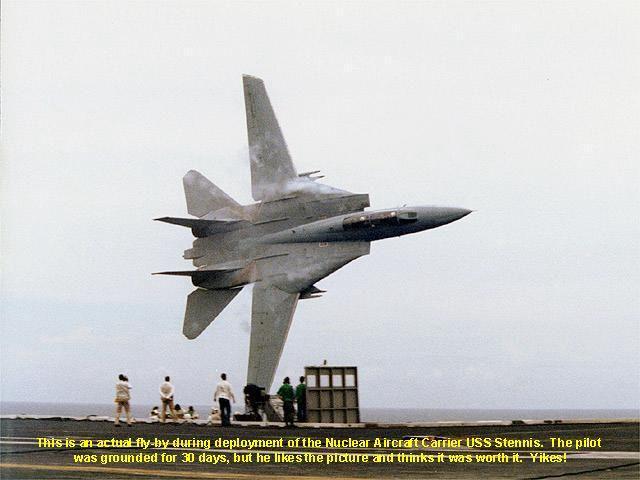
This F-14 Tomcat flew just 50 cm above an American carrier deck. Thirty days of grounding ensued.
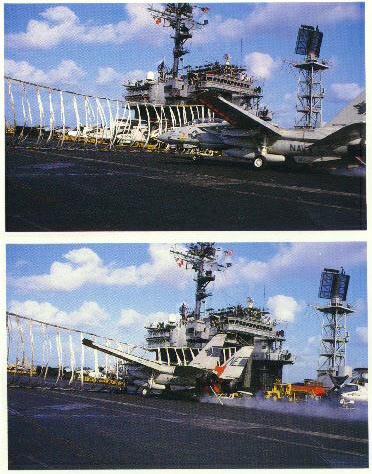
Here a Tomcat uses the emergency runway; its right landing gear didn’t extend.
A 150-ton airliner traveling at 170 knots (like a Concorde) can be stopped within 275 meters without much damage beyond scaring passengers. On carriers, braking is far more abrupt since arrestor wires are much shorter. 170 knots equals 300 km/h. A plane with braking issues, already landed, and with non-extended spoilers would slow considerably and stop easily.
In lowered position, spoilers don’t hinder subsequent takeoffs.
I recommend urgently installing this inexpensive system at São Paulo Airport (and many others).
Links to arrestor barrier descriptions: http://aviation-fr.info/avion/IA4.php http://aeronavale.free.fr/appontage1.htm (archived Feb 14, 2009)
My correspondent confirmed my own experience: he flew long distances after obvious malfunctions. Upon arrival, despite requests for explanations from his airline (in my case, a San Francisco–Paris flight on an Air France 747), he encountered the same bureaucratic evasion as I did:
- Our airline guarantees passenger safety under optimal conditions.
Financial interests often underlie aviation disasters more than pilot errors, though human blunders do occur. One case involves a captain letting his 16-year-old son fly, who abruptly turned off autopilot and subjected the plane to 4.5 G turns, rendering recovery impossible. The worst ever disaster (collision of two 747s on a runway: 580 dead) resulted from a pilot misunderstanding an instruction about which runway to use! Nowadays, computerization of flight control adds another layer of complexity: programs supposedly prevent pilots from exceeding flight limits, such as inducing stalls. This implies pilots can’t easily override computer commands, else they would. But if computers mitigate human error, who guards against computer errors?
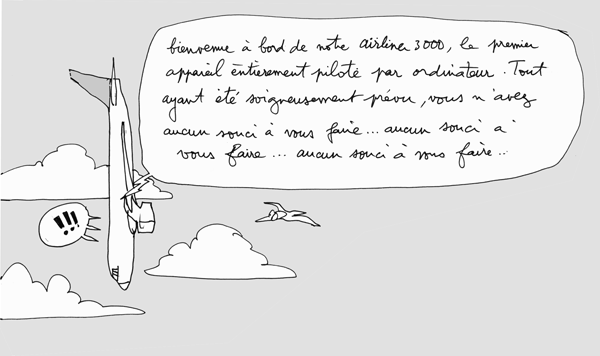
We’ve all experienced computer glitches and sudden slowdowns. Merging computers with aviation isn’t seamless and exacts a human toll. This is... the price of progress.