The Mysteries of the B2
August 20, 2002
Page 5
The oddities of the B2.
The photographs shown in the brochure give specialists different impressions, depending on which parts of the aircraft are depicted. Everything related to the landing gear:
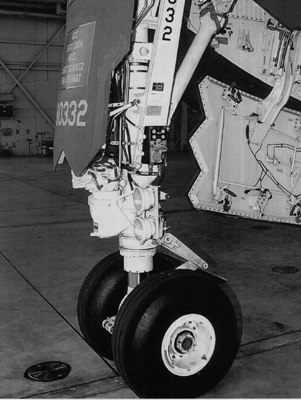
Front landing gear
Or the bomb-dropping system:
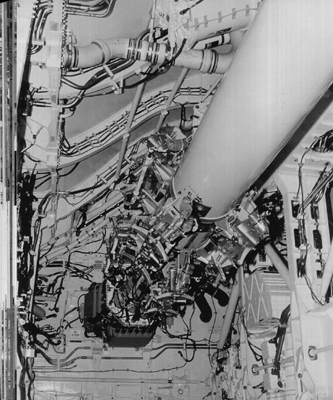
Rotary system for dropping military payloads (bombs, cruise missiles)
This looks very “clean,” very “professional,” very “well-integrated” into the aircraft’s structure—or seemingly “original.” It’s worth noting that this rotary system for dropping bombs or cruise missiles isn’t an innovation at all; it can be found in older Soviet strategic bombers. Now let’s take a look at the flight suits worn by pilots of this third-millennium bomber:
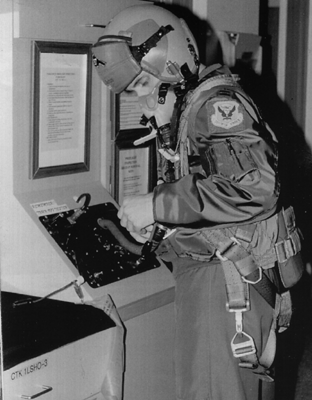
These flight suits might, at best, be suitable for cruising at an altitude of 15,000 meters. They aren’t pressurized, though. It’s accepted that pilots can withstand accidental decompression or decompression caused by a surface-to-air missile strike at altitudes up to 15,000 meters.
In the next image, we see the co-pilot sitting in his ejectable seat.
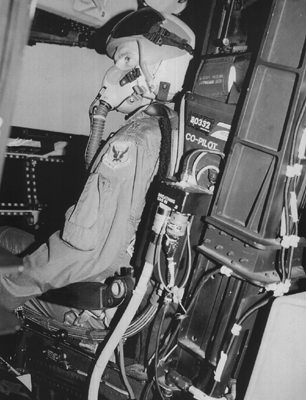
Is it conceivable that on such an expensive third-millennium bomber, there would be so many pipes and wires lying around in the access corridors, without any protective covers? According to André Jacques Holbecq, former Concorde pilot, it’s inconceivable to expect a pilot to remain alert and capable of conducting a bombing mission after sitting in one position for over ten hours. During the Whiteman-Kabul mission, according to James Goodall’s report, the pilots had flown at least thirty hours while seated. A B-52 has six crew members. In such complex aircraft, where constant monitoring is required—both of the aircraft itself and its communications systems—it’s hard to imagine just one pilot handling everything, while the other “takes a little nap to recover.” There are simply too many important tasks to manage simultaneously.
The brochure provides some images of the cockpit interior. It seems like a patchwork of components taken from various existing aircraft. In an aircraft designed entirely from scratch, there’s an obvious ergonomic layout. In those cockpits, not a single square centimeter goes unused. Just think of those in Airbus or Boeing commercial planes. Upon closer inspection, it seems that many components were simply bolted onto available spaces, leaving lots of empty areas behind.
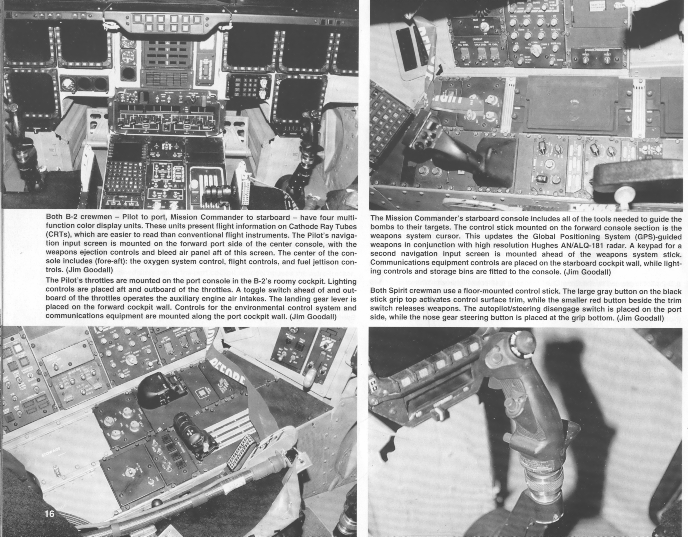
In theory, we’re dealing with a pinnacle of modern technology; supposedly, most of its components are non-metallic, composite materials (80%, as stated on page 7). So, can someone explain why there are so many riveted metal sheets in the cockpit? (These are more visible in the original documents.)
Why was production of these B2s limited to just twenty-one units, with production ceasing in 1997 (page 13)? What secrets do these aircraft hold, that they can’t be produced in larger numbers and deployed at all U.S. bases worldwide?
Previous page Table of contents Next page
Counter initialized on October 7, 2002. Number of times this page has been viewed: