Influenza pandemic?
Influenza: some elements to try to think for yourself
before others do it for you ****
| October 8, 2009 |
 |
|---|
Get vaccinated quickly......
While there is no urgency, since this "first pandemic of the third millennium," as this idiot ex-pharmaceutical industry representative said, who announced it with a smile, in our media. It
It should be noted that the Minister is trying to force 94 million doses of vaccines, while it has not received its ... market authorization, essential for any new medicine. There is no urgency at all, since this A(H1N1) influenza has proven to be mild in the southern hemisphere, six months ahead of the northern hemisphere in terms of seasons. In the affected countries (Argentina, Australia, New Zealand, New Caledonia), there is no sign of a "second wave," or a "virus mutation" announced insistently and dramatically in our media, while these same temperate countries of the southern hemisphere, having left their winter (April to August), are now in their spring season (September, October, November).
Why such a rush?
Because if the marketing authorization, the market authorization for these vaccines, hastily made, containing neurotoxic adjuvants (squalene, mercury compound) is not issued, pharmaceutical companies would be forced to refund the government the sums paid for the purchase of these 94 million doses of an illegal vaccine. It also seems unlikely, given the huge amount at stake, that no bribes have been paid, possibly at the highest level of the state. If no bribe had been paid for such a sum, it would be a first.....
*In conclusion, no health emergency, but a political urgency (to justify this expensive and thoughtless purchase, presumably accompanied by generous bribes), and a financial urgency for pharmaceutical companies not to have to refund a product that has been ... consumed. * ****
| October 10, 2009: It's started! |
 |
|---|
October 10: Karl Zéro :
The Chief of Staff of the Gard Prefecture
It should be recalled that in an Austrian laboratory of the American company Baxter, "accidentally" mixed a H5N1 strain (avian flu, deadly in 60% of cases, introduced in active form!) and a H3N1 strain (seasonal flu). The affair was revealed in February 2009 by a Czech subcontractor of the company who, after testing this vaccine on ferrets, found that they had died. It should also be recalled that Czechoslovakia refused the vaccination campaign, following the infection of 36 people, due to another "error" by these same labs.
September 17, 2009 - September 21, 2009 September 25, 2009: The announcement of VeriChip
September 27, 2009: A France 24 dossier discussing the controversy surrounding vaccination October 6, 09: Can the French be forced to get vaccinated?
******September 28, 2009: The article by Dr. Girard, to be read absolutely
**Just released: **
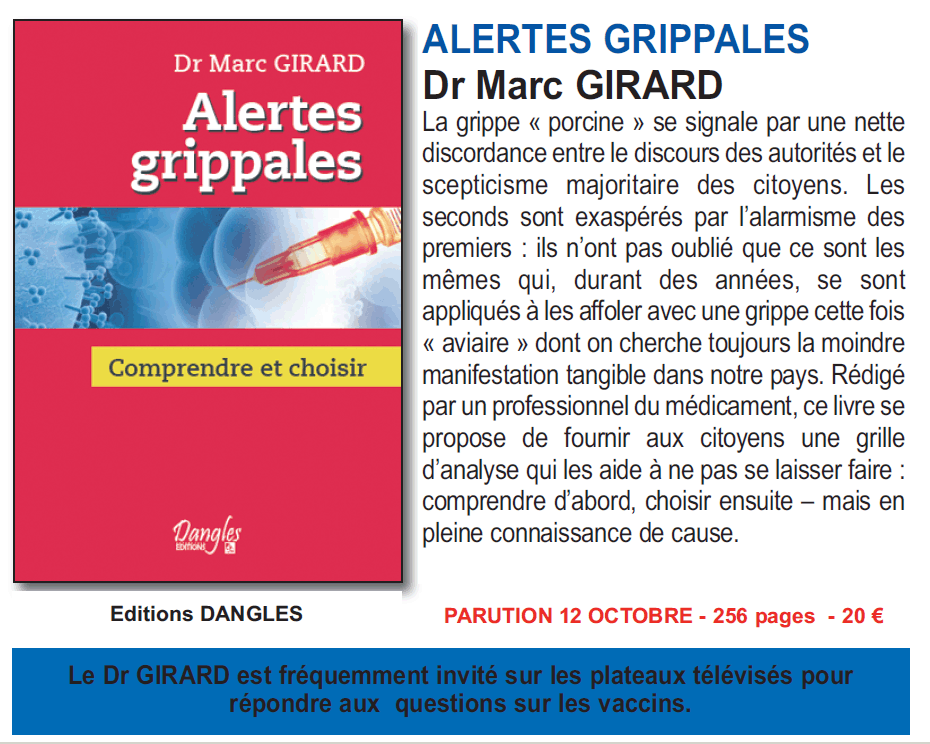
http://livre.fnac.com/a2752109/Marc-Girard-Alertes-grippales?Mn=-1&Ra=-1&To=0&Nu=1&Fr=0
****Order from FNAC
**The government plan: **
http://www.pandemie-grippale.gouv.fr/IMG/pdf/PLAN_PG_2009.pdf
October 4, 2009: A long report (81 pages), on the general absence of pharmacovigilance in the world
It has been weeks that my readers have been asking for an analysis, an opinion on everything surrounding this pandemic threat, to me who is neither a doctor nor a biologist. I will try my best.
It is good to base oneself on factual elements. You can download the circular distributed on August 21, 2009, by Madame Bachelot and Mr. Hortefeux, giving the general lines of the mass vaccination plan.
Source : http://www.sante-sports.gouv.fr/IMG//pdf/Circulaire_vaccination_090824.pdf
*Note on page 3: * ****
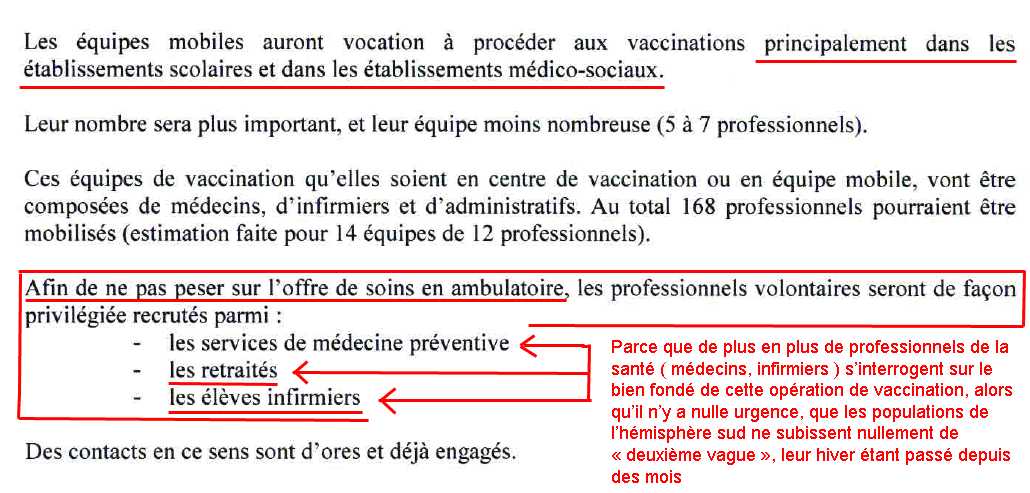
The vaccination of students and the entire educational community will be carried out by mobile teams in schools.
The same will apply in collective living places or enclosed places corresponding to specific populations (prisoners, foreigners in administrative detention, people housed in medical-social establishments).
We will come back to this. But while going through it, I come across the signatures of these two political figures:
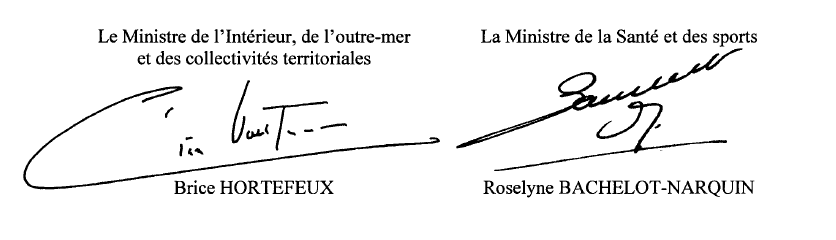
Brice Hortefeux Roselyne Bachelot, the smile
Political figures often use communication advisors, who advise them on their clothing, gestures, smiling, eye contact, etc.
All of this is very important. I remember what a journalist from the late magazine Actuel told me more than twenty years ago:
- On TV, it's not what you say that's important, it's what you emit
Everyone therefore learns to emit the right effluvia, to adopt the right gestures. But these advisors lack a good graphologist. When I look at the signatures of these two, that's where the problem is. Writing is a gesture. Remember the book "these gestures that betray you." The Swiss graphologist Max Pulver, deviating from the French school of Crépieux Jamin, published a book, which can still be found, titled The symbolism of writing. It's easy to read.
You can say that a politician must be ambitious, reserved, even secretive, manipulative. On this point, these signatures amuse me. A few words on this symbolism. I was once a fairly good graphologist. It reminds me of my hiring at SEPR, the Society for the Study of Reaction Propulsion. During a decisive interview, a company executive left me alone in a room with a simple white sheet, telling me to recall the main points of my curriculum vitae, as well as my motivations. I was laughing when I saw the face of this guy.
In about twenty minutes, I composed a page of a model employee, materialistic, conformist, submissive, of a stable strain and reptilian sensitivity. To do this, it is not bad to have a sheet with a grid, to guide your writing, by transparency. The six months I spent in this shop, which in Istres looked more like a stalag than a company (they were developing rocket engines for missiles to equip submarines) were not in line with what the company's graphologist had revealed from my writing and that I had faked. But this is another story, with a comedic side. But that's not the subject.
I would just say that when I see these two signatures, it's as if I could see through. It's not difficult, actually. Writing is a graphic gesture full of symbols. On the left, self, on the right, others. On the left, the past, on the right, the future. The writing movement has its twists, its fullness, its thinness, its hesitations, its launches of grapples, like the one that ends Hortefeux's signature.
What's amusing in graphology is that the more people want to hide something, the more their writing betrays them. The scriptural gesture obeys very strong internal constraints. For example, look at Roselyne Bachelot's signature. It is full of overlaps, a sign of a deceptive behavior. People who live in honesty cannot cover their own traits. Those who live in deception cannot help but do so.
Of course, these signatures breathe ambition, ego, otherwise these two would not be political figures. This good Hortefeux, as it should be, "his underhanded moves."
I won't go further, just saying that writing reveals the depths of being, its inner self, sometimes even to the point of indecency. If people knew what a good graphologist can read in their writings, they would not dare to handle a pen.
But the subject of the day was not that. However, there are, not only in our country, but in many countries, people who have less and less trust in their leaders, those who are supposed to lead them and who are often only the lackeys and henchmen of others, who prefer the shadows to the spotlight. They also have less and less trust in those who claim to have as their profession to inform them, and who at times camouflage and misinform. It is the internet that has created this surprising emergence. Internet, the souk, the village square, the market of ideas, information. Internet that exposes, competes with an established press that continues to discredit itself.
So we are now with this question of pandemic and vaccination on our hands.
Pan, in Greek, means "all." A pandemic is therefore an illness affecting vast geographical areas and large human populations. All flu are automatically pandemics.
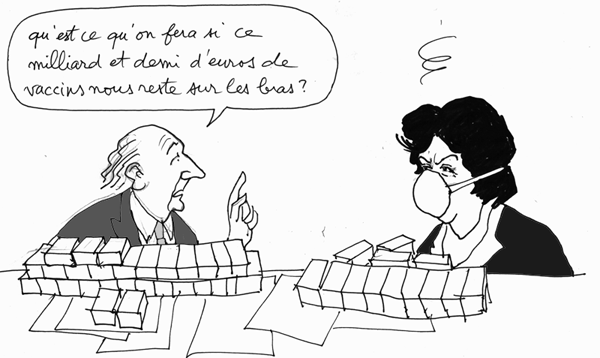
Facts: the government has bought vaccines for one billion euros. We are not going to throw all that away. Suppose the fears prove unfounded, that all of this was bought for nothing. What a catastrophe!
Personally, I would prefer a government that tells us:
- When there was the heat wave, deadly, you reproached us for not anticipating, for being caught off guard. Here, we wanted to be ready to face the worst, if the worst were to happen. It has a price. But it's less serious than expected. Let's write off these vaccines as losses....
That's all.
As we will see, the worst is not certain, and the quality of the vaccine leaves much to be desired, on the simple technical level. Lack of trust? There are precedents. You remember the contaminated blood affair, with the HIV virus. There were many lots to sell. The responsible ones were perfectly aware of the risks for the people who received these stocks. Many people fell ill as a result of what was neither negligence nor an error, but a simple obedience to the laws of silence.
I believe we can start by reproducing a dispatch from Reuters, dated today:
The mortality rate of the A flu seems to be lower than expected and is within the average of a seasonal flu, according to an infectious disease specialist.
"It is particularly mild in children, which is one of the good news about this pandemic," said Dr. Marc Lipsitch from Harvard University, during a flu expert seminar organized on Wednesday at the American Institute of Medicine.
"Unless the virus mutates, I think we can say that we are in category 1 of the pandemic. This has only become clear recently," he added.
The severity index established by American health authorities includes five categories, from the mildest to the most severe.
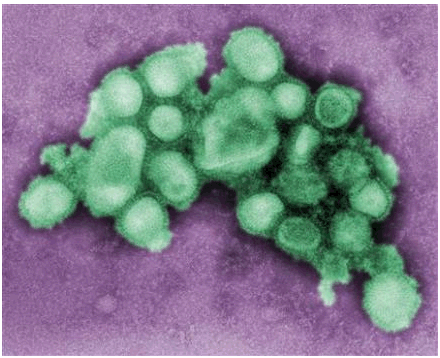
Category 1 applies to seasonal flu, with a mortality rate of 0.1%, while category 5 concerned the 1918 Spanish flu, which had a rate of two percent or more, and which caused tens of millions of deaths worldwide.
Seasonal flu kills an average of between 250,000 and 500,000 people each year.
Maggie Fox, French version Pascal Liétout
The mortality rate of the A flu seems to be lower than expected and is within the average of a seasonal flu, according to an infectious disease specialist.
"It is particularly mild in children, which is one of the good news about this pandemic," said Dr. Marc Lipsitch from Harvard University, during a flu expert seminar organized on Wednesday at the American Institute of Medicine.
"Unless the virus mutates, I think we can say that we are in category 1 of the pandemic. This has only become clear recently," he added.
The severity index established by American health authorities includes five categories, from the mildest to the most severe.
Professor Debré, interviewed by Le Figaro Santé :
The pressure is increasing for the government to sell its stock of A(H1N1) flu vaccine. The words of pandemic are waved. It is appropriate to make a little point on this issue. I am posting a document that can be consulted, trying in what follows to present it in a popular way. Here is this document titled:
Source: First part:
Second part :
My site addresses a wide public, distributed across different social layers. I will use my talents as a popularizer to try to clarify things a bit. I think that after reading what follows, you will know infinitely more than Roselyne Machelot and Brice Hortefeux, combined. It is not difficult, actually. Ministers are not there to convey any knowledge. They are only there to appear and serve the interests of those who put them in place. I imagine the face that Madame the Minister of Research, Valérie Pécresse, would make if asked on the spot to write on a board the equations of Maxwell.
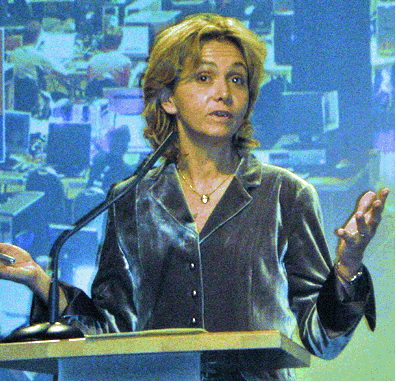
- **Maxwell .... um ... is the inventor of coffee, right? **
What is a virus?
It is not obvious that all readers of this page know. It is an odd, rather incomprehensible being, about which we do not know whether it predated cells or represents a degenerate form of them. These viruses can take various and diverse forms. Their behavior consists of attaching to a target cell, using molecules called neuraminidases, then another biostructure which still has a complicated name, hemagglutinin, allows the genetic baggage, the RNA molecule which the virus carries, to enter its "viral capsule" and cross the barrier formed by the cell membrane.
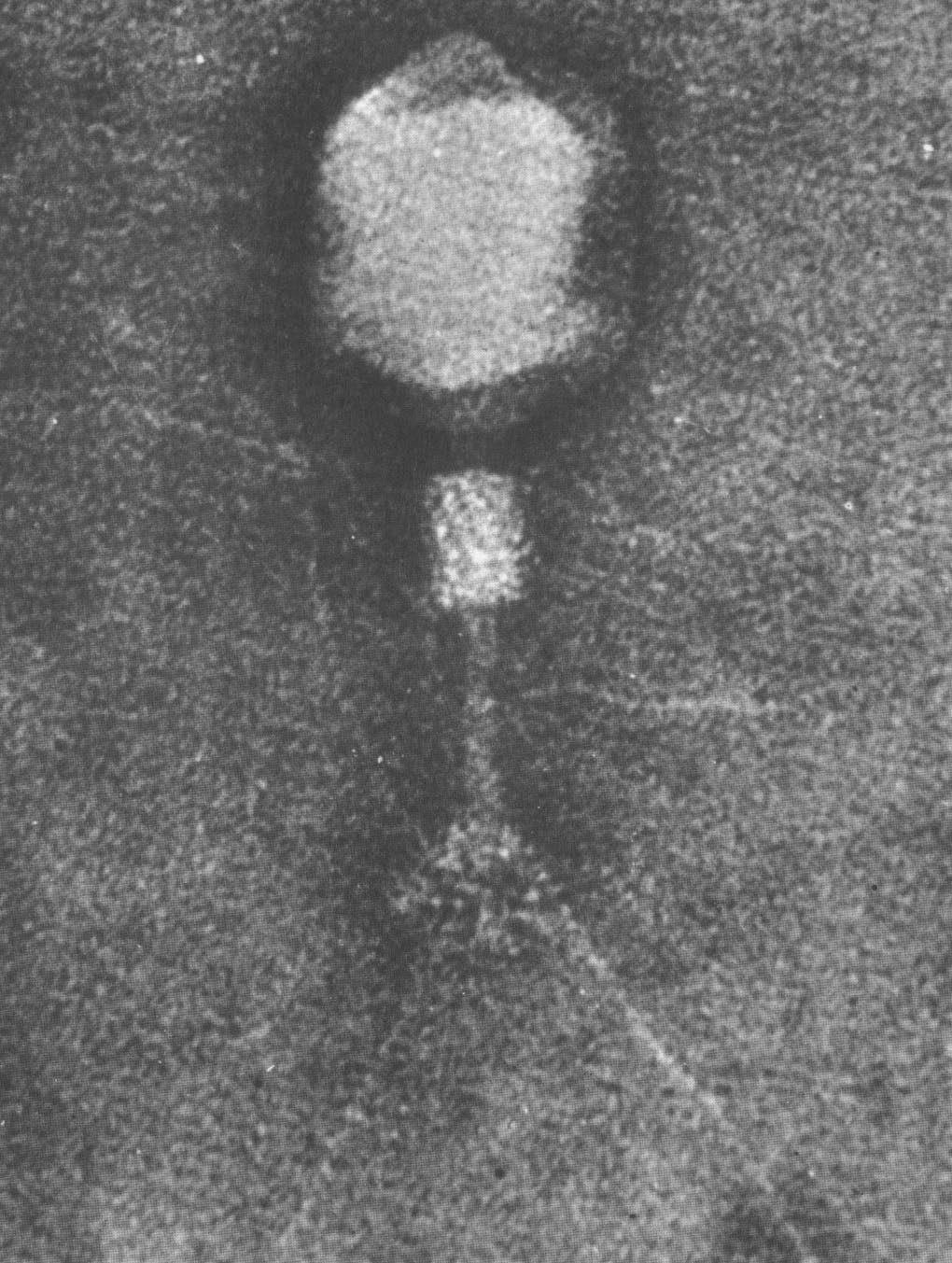
There is a virus, named T4, to which all these molecular functions give an extremely expressive structure. All this has been photographed for a long time, and if a reader finds these photos, I can include them in this page. I reproduce these images from memory (it is obviously not flu viruses). This virus contains an RNA molecule in a polyhedral box. Its hemagglutinin molecules resemble the legs of a LEM. They allow it to firmly attach to the membrane of a target cell. Then its neuraminidase molecule behaves like a syringe. The goal is to inject the RNA molecule inside the cell that the virus will infect. In this specific case, things happen as shown in figures A, B, and C.
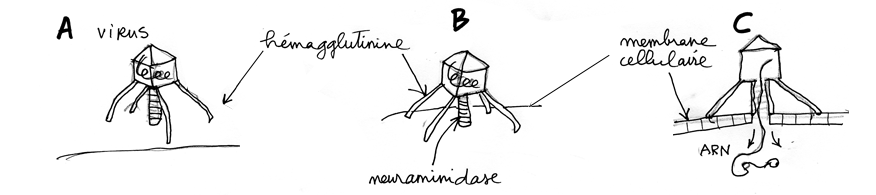
The virus recognizes its target cell, attaches to it, and injects the RNA contained in its capsule
September 20, 2009: This is what my readers could find on the net. It is a bacteriophage T4 ( "eater" of bacteria). It has been well photographed because for a virus it is relatively large.
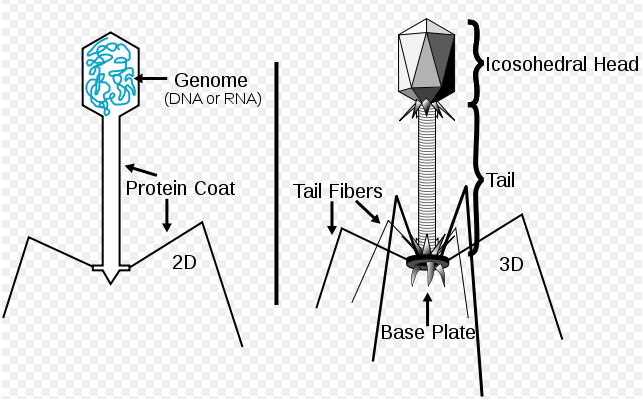
Virus T4
The same in photo
Once the RNA molecule has been injected, the rest of the virus, envelope, legs, syringe, having fulfilled its role, does not take long to disintegrate.
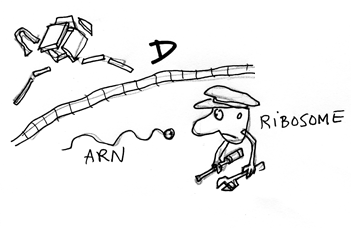
The viral envelope disintegrates once the infection is carried out. The viral RNA is attached to the ribosome - assembly workshop
The second phase begins. In the cells are large molecules, called ribosomes, which can count up to 300,000 atoms, and which are assembly workshops of proteins (molecular assemblies), ready to function at any time. These workshops usually obey the orders given by the cell itself, corresponding to its function. But after viral infection these ribosomes will be placed under the control of the injected viral RNA. It is he who will then give the assembly orders. Completely diverted from its usual functions, the ribosome will turn into ... a virus assembly workshop.
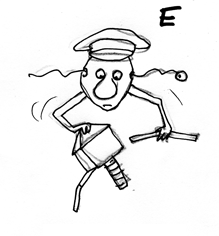
The viral RNA has taken absolute control of the ribosome, which starts to manufacture clones of the virus
This scenario is obviously very schematic, but in the case of this virus "LEM," also known as "bacteriophage T4," image G corresponded to the final scheme. In this case, the cell, transformed into an incubator, burst, releasing the clones of the virus that had infected it.
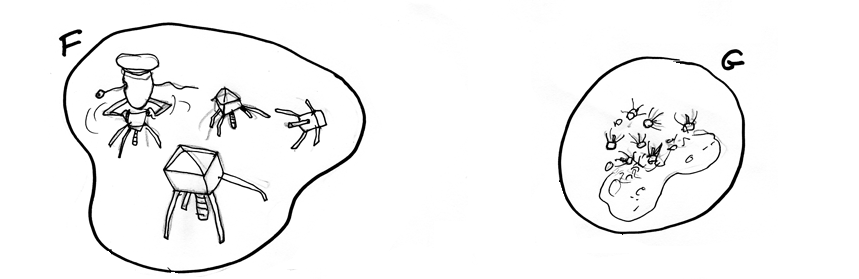
The ribosome, under the control of the viral RNA, produces clones of the virus until the cell bursts
The presence of viruses in the cells is the cause of various disorders and dysfunctions. That is why we get sick. The body (human) reacts as it can against this attack. One of the defense mechanisms is fever, which allows to kill the viruses, often thermally fragile.
A small remark in passing, on an image I will use in a comic strip on biology, in the form of a draft in my notebooks for years. The ribosomes produce proteins, which are roughly linear structures (chains whose links are simple molecules, amino acids). There are 22 in the animal world, which constitute the "bricks."
How can a ribosome manage to turn these linear, filamentous structures into 3D structures, sometimes very complex?
I propose a small experiment, at the end of which you will have made a protein. As a child, I made model airplanes using balsa wood, piano wire, and Japanese paper. We carved the propellers from blocks of balsa, which we polished with sandpaper. The wings had a longeron and ribs. They were covered with Japanese paper. Nowadays, modelers would call these devices indoor (evolving "inside the doors"), model airplanes too fragile to fly outside the buildings. The propulsion was provided by a two-strand elastic band, attached to the back by a hook, figure H.
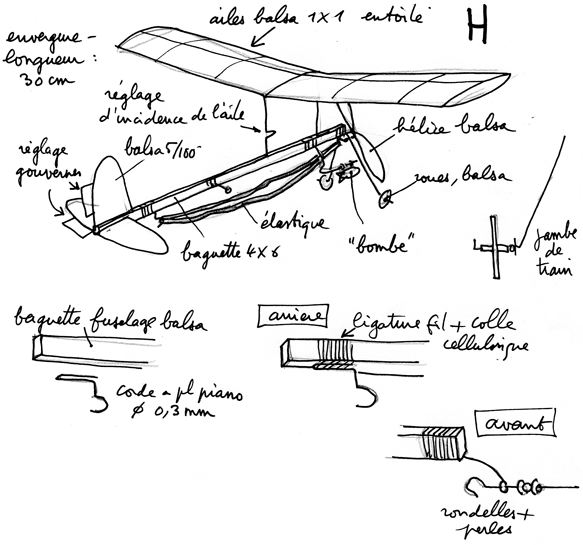
Indoor JPP 1950
I can't help but remember my childhood, at 5, Rue Jean-Baptiste Dumas, on the ground floor, in the 17th arrondissement of Paris. My room looked out on a sad courtyard, surrounded by high walls. A grille divided it into two half-courts, one referring to number 5 and the other to number 7. I suppose it must still be like that. When I was about twelve, I used to bomb the concierge of number 7 with an aircraft I made, launching it from my bedroom window and which was configured to return to my hands once its mission was accomplished.
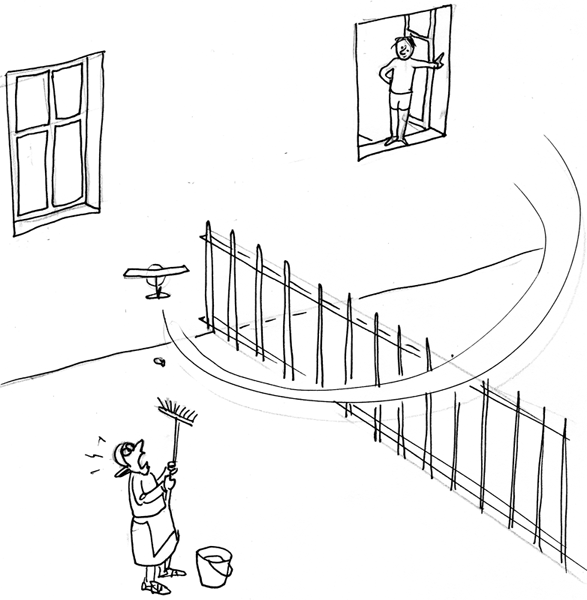
The bombardment of the concierge of 7, Rue Jean-Baptiste Dumas, Paris 17th
The timing was ensured by sliding a thin balsa stick into the bundle before twisting the elastic. During the flight, while the propeller made a hundred turns, the stick only made a quarter, and in doing so, pulling on a string, triggering the release of the bomb on the concierge. A mini-bomb, a few grams, symbolic. This did not prevent the said concierge from trying furiously to bring down my aircraft with her broom.
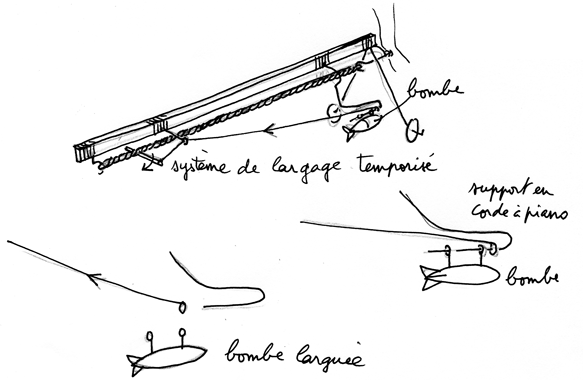
Timed bomb release system (2 grams)
Now, I suppose that the concierges are bombed with remote-controlled helicopters. But in truth, there are no more concierges in buildings and the kids turn to video games. We are in the virtual.
In our time, it didn't exist.
When you pulled the elastic a bit too much, it broke, and then collapsed, in a fraction of a second, on its attachment hook.

The elastic, when it breaks, folds up at the level of the attachment hook
There it is, our protein, our 3D structure, from a linear, 1D structure. The elastic folds because of the forces it undergoes. Similarly, the protein formed is not a neutral, passive object. Its elements undergo attractive or repulsive electromagnetic forces, which make it fold onto itself. New bonds form and one could say that in the end, there is little memory of the linear structure that gave rise to this three-dimensional tangle, with multiple functions, with multiple "active sites."
Influenza viruses
They don't have the shape of this virus, but they keep these molecules, present on the outside, the hemagglutinins and the neuraminidases, the first ensuring the virus's attachment to its target cell and the second allowing a rupture of the cell membrane, and the injection through this breach of the infectious agent, the RNA, carrying the replication code.
A virus is composed, schematically, by four elements.
-
A capsule, which contains the RNA molecule to inject, to infect a target cell
-
The RNA molecule contained in the said capsule
-
On the outer wall of this capsule, two types of molecules with complicated names, the hemagglutinin molecules, simply denoted by the letter H, which the virus uses to stick to the target cell, and the neuraminidase molecules, denoted by the letter N
The RNA of influenza viruses is divided into eight distinct segments, each containing the assembly orders for one or two proteins (ten in total).
Influenza viruses are divided into three types: A, B, C.
At this stage, a genetic recombination mechanism intervenes between different types of viruses. Two viruses can interact by exchanging RNA segments. From this exchange, a different, new virus emerges.
Influenza viruses have been classified into three types, A, B, and C, because viruses of different types ignore each other, do not interact, do not exchange RNA segments. We will not be interested in type B and C, because only type A viruses
- Are responsible for the majority of annual human flu cases worldwide
- Are more virulent than other types B and C
*- Are found in animals. *
It may seem strange that a piece of RNA can code for the reconstruction of the entire virus, by piloting the ribosome assembly workshop. But the living world is full of self-assembly mechanisms. The biomolecules produced are not passive objects, waiting for a "Great Architect" to take them and assemble them like mechanical parts. They are full of specific attachment hooks, which make certain proteins assemble themselves.
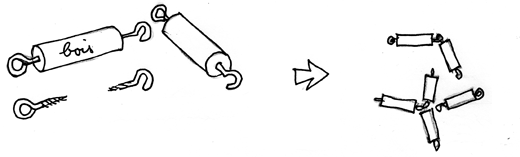
You want a telling example of this self-assembly mechanism, which I have mentioned many times. Go buy sticks of one centimeter in diameter from a wood merchant. Cut cylinders of 5 cm in length. Then get these elements that can be screwed, which end either with a hook or a ring; they are used to fix curtains on windows. Put about twenty of them in a bag and shake. The probability that when you empty this bag they are all separate is ... zero. You will notice. There will be assemblies of two or three elements.
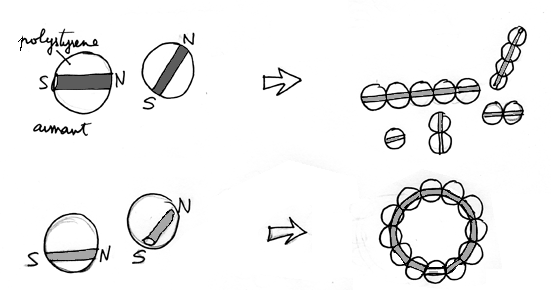
With a more sophisticated system, for example, made up of polystyrene balls, inside which an magnet is placed, we would converge towards much more organized and constrained structures: straight rods or rings:
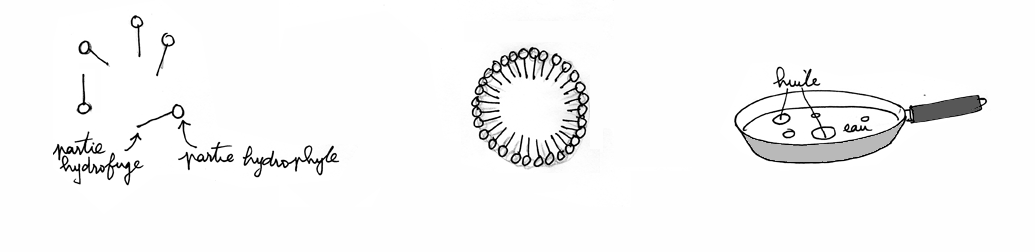
In the world of biomolecules, or even in inorganic chemistry (non-organic), such self-assemblies are common. The molecules of oils, fats, have a hydrophilic and a hydrophobic part. Therefore, they will form droplets. And since oil is lighter than water, you will see these droplets float, in "2D" on the surface of a pan:
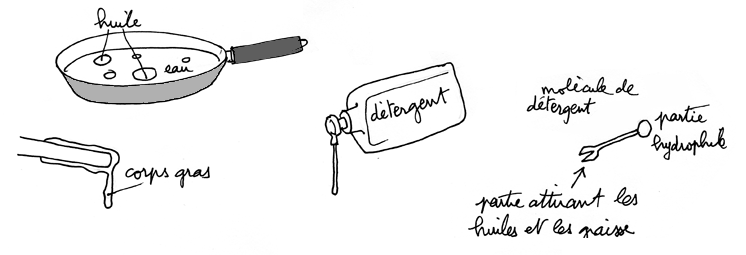
Since we are providing some explanations in chemistry, how does your "dish soap" work? It's very simple, we use a detergent molecule. It also has two "ends"; one side has an affinity for oil or fat molecules and the other for water. And that's it.
Back to our influenza virus. The membrane capsule is formed by self-assembly of two layers of proteins, by reciprocal chemical affinities. We can schematize the virus once it is formed as above, with its "membrane capsule," its RNA inside, and its two sets of H (hemagglutinin) and N (neuraminidase) molecules, the first allowing it to stick to the target cell and the second to inject the RNA.
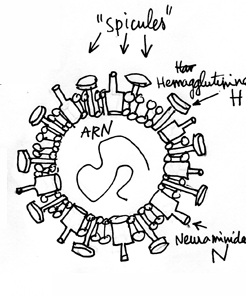
On the right, what you see under a powerful microscope (you know that viruses are very small objects)
Why are antibiotics ineffective against viruses?
Question: how does an antibiotic work? Let's start by seeing what a bacterium looks like. They come in very varied forms, including rod-shaped (hence their name). They can have flagella that give them great mobility.
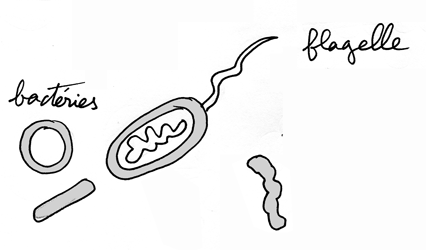
Bacteria
We saw that viruses reproduce in a very original way: by asking an infected host to do all the work. Bacteria reproduce by mitosis: they duplicate:
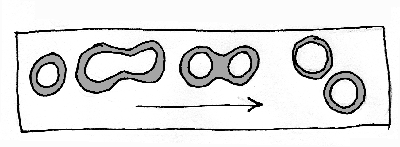
Reproduction - duplication of a bacterium by mitosis
For the bacterium to be able to duplicate, it needs to have biological material that allows its cytoplasm, its envelope, to thicken and expand. Antibiotics, discovered by chance, attach to the outside of the bacterium and prevent its membrane from expanding. Therefore, when trying to duplicate, the bacterium bursts. Therefore, no effectiveness of an antibiotic on a virus, which reproduces differently.
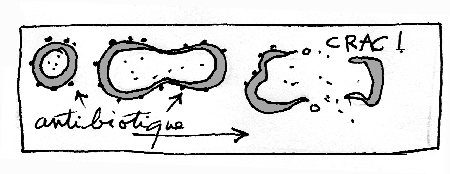
Action of antibiotic molecules on a bacterium. How it destroys it
Since viruses do not multiply by mitosis, antibiotics are ineffective on them. By the way, a piece of information I was unaware of. We live with commensals, bacteria that live in symbiosis in our body. We all know these bacteria that make up the intestinal flora, without which we could not digest. Bacteria that are ... killed by antibiotics that we take orally. Well, imagine that when we add up all the bacteria that live inside our body and on its surface, we exceed numerically the number of human body cells!
At this point, you say "but how can this man know so much about so many different fields?" The answer is simple: I go to Google and especially to Wikipedia and I type "bacterium," "antibiotic," "virus," etc. and I read. It is a fantastic tool and it is a pity that I have been "banned for life" for five or six years, following a vote by a half-dozen "administrators."
Back to our story of the flu.
The seasonal flu
Influenza is an acute condition. In contrast to chronic.
Acute does not mean dangerous, but refers to a short-term condition, which passes "through an acute episode," lasting only a few days. Whereas a chronic condition is permanent.
Why seasonal? Because influenza is most prevalent during the cold season, without it being entirely clear why. More precisely, the influenza virus may be more active in a dry atmosphere. We know that the lower the air temperature, the less water the air is capable of absorbing (its humidity level). According to this idea, one would not catch influenza from "a cold," but from "a dry spell." One explanation is that the autumn and winter seasons reduce the immune response of the entire respiratory system (nose, throat, trachea, lungs).
Influenza is therefore not a major condition in hot and humid countries (which then have a whole range of diseases to replace it), which does not mean that it is absent.
From autumn, in our temperate countries, seasonal influenza is prevalent. It kills between 250,000 and 500,000 people each year (but, as a simple remark, nobody really cares, tuberculosis, a bacterial condition, kills two and a half million people each year, mainly in poor countries).
Thus, seasonal influenza kills half a million human beings every year in the world.
An example: in the United States, a country with 300 million inhabitants, seasonal influenza kills between 17,000 and 52,000 people each year, with an average of 32,000 annual deaths. On average, there are 200,000 hospitalizations due to influenza. One in six hospitalized people dies, one in a thousand people affected by influenza dies.
All manifestations of influenza are pandemic.
Pandemic means "affecting a large portion of the population and a wide geographical area." This results from the simple transport of infectious agents by air travel. The speed of the spread of the condition does not provide any information about its severity.
In France, the attack rate of the seasonal influenza is 2.5 million individuals out of 63 million inhabitants,
which corresponds to a rate of 4% of the population.
Of these four percent, the mortality rate is on average one in a thousand. This means that:
Seasonal influenza "normal" kills 2,000 to 3,000 French people each year
This mortality is only an average, these numbers varying from year to year by a factor of 1 to 4.
Young children are more often hospitalized than young adults (between 5 and 49 years old), but the mortality rate, the percentage of deaths, is 25 times higher among the elderly than among young children. It is therefore they who pay the heaviest price for seasonal influenza.
This being (the pdf, page 2)
- Influenza can be asymptomatic, meaning it is so mild that it goes unnoticed
- Many cases are not reported to authorities and do not result in consultations with doctors or in hospital settings
- For alleged cases, it is not possible to perform tests to ensure that it is indeed influenza, as this would be both complex and costly.
- Several viruses can cause a flu-like syndrome, that is, trigger symptoms similar to those of the flu.
- The most severe forms manifest through their complications, causing breathing difficulties, pneumonias (respiratory tract diseases). It is then difficult to distinguish between primary pneumonias and those potentially linked to influenza, as after a few days the influenza virus can no longer be detected.
- Breathing difficulties can be so intense that they may justify placing the patient on an oxygen tent, or even intubation.
**How can we defend ourselves against viruses, especially the influenza viruses? **
Our body has an immune system, I refer you to these links which describe an entire system that represents the police of a living body, made up of cells that, tolerating commensal, symbiotic organisms, identify any aggressor and deal with it. My macrophages devour them. Lymphocytes secrete cytotoxic substances, killing unwanted or infected cells. But this set of cells also reacts when it is confronted with antigens, which are proteins, cellular complexes, that trigger immunological reactions in the form of the production and emission of antibodies, which are also molecular complexes, proteins.
Limiting ourselves to influenza, the subject of this dossier, the antigens are these "spikes" present on the surface of the viruses, the molecules "H" and "N". We will represent the antibodies produced schematically as socks, hats, which render these antigens inactive.
When an influenza virus is present in our body, it multiplies at a speed beyond imagination. But constantly, white blood cells, the lymphocytes (etymologically "cells living in the lymph, in the lymphatic system") produce antibodies, specific ones, capable of rendering inactive the superficial molecular structures of the viruses, the "spikes", H and N. Below is a lymphocyte secreting antibodies, schematically represented by little hats, covering H-type spikes, allowing the virus to attach to its target cells. If there are enough antibodies, the action of this influenza virus will be completely neutralized. Indeed, even if the penetration-injection spikes, the "N" spikes, are not neutralized, they will not be able to act because the virus will not be able to attach to the cell.
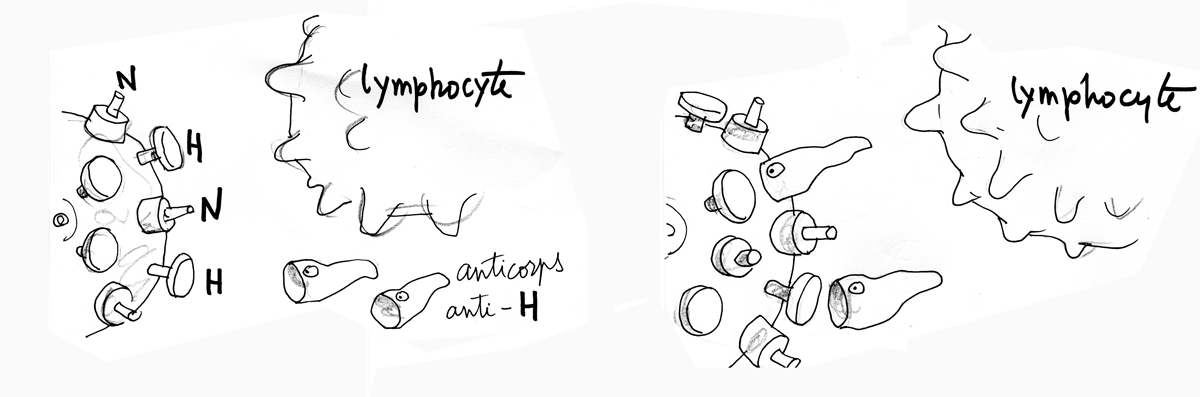
Anti-H antibodies, neutralizing the "H" spikes allowing the virus to attach to its target cell
Anti-N antibodies do not eliminate all infection possibilities, but they delay it.
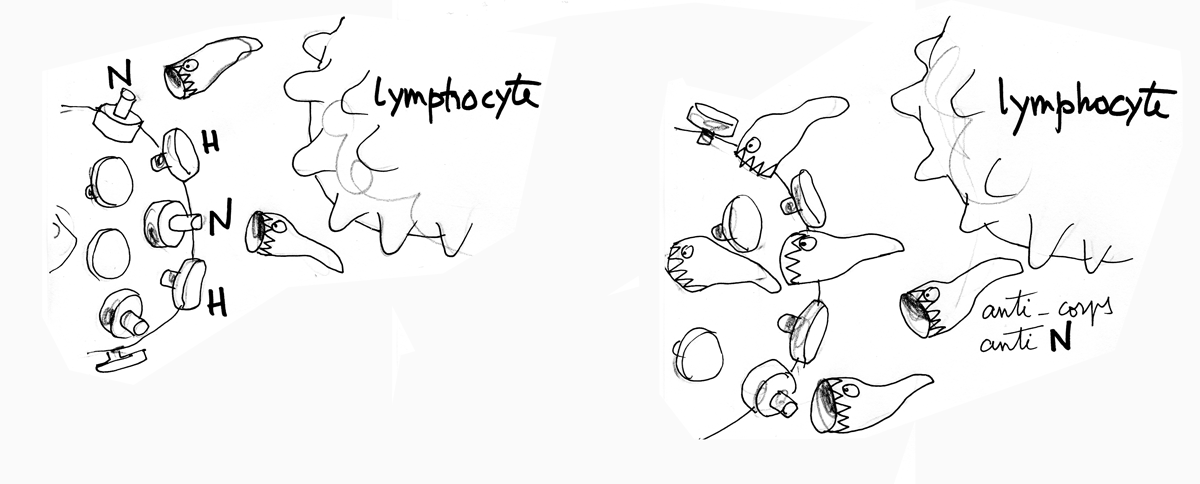
Anti-N antibodies, neutralizing the viral spikes allowing the perforation of the target cell's cytoplasm and the injection of the RNA
A word about Tamiflu, which acts at this level. These are not antibodies, but molecules that settle in such a way that they counteract the penetration and RNA injection work of the viral. It is also necessary that this antiviral be administered very early before the viruses have had time to attach to their target cells.
Vaccines
Different influenza strains (group A, the most important) are characterized by the molecular structure of their H and N spikes, which are antigens, that is, molecules that trigger an immune reaction, from the lymphocytes. The anti-influenza vaccine contains "disassembled" viruses, but in this soup are present the H and N antigens that will trigger the production of corresponding specific antibodies.
Why is the effectiveness of vaccines often questionable? Because the viruses mutate. The immune system reacts well but secretes antibodies corresponding to the antigen spikes (Ha, Nb), which may not be those that will cover the capsule of the new virus, for example (Hc, Nd). Then the effectiveness of the vaccine will be... zero, because the "hats" will not be able to adapt to the spikes of the new virus.
A word about the different crossovers
We have learned that different animals, birds, pigs, horses, etc., can be infected by influenza viruses, or simply be carriers. They are also sensitive to type A viruses, with H and N spikes.
It also turns out that we can completely sequence viral RNA, "read" it. There is a database, kept up to date by the CDC in Atlanta, the Center for Disease Control (the disease control center). Any appearance of new strains, of new variants of the influenza virus is immediately followed. A clarification: genetic sequence exchanges between human and animal viruses are certainly not a novelty. Indeed, there are no fundamental structural differences between these different viruses, nor any barriers between pathogenic elements of different species. A sort of history of the different influenza viruses has been drawn up. The most famous is obviously the Spanish flu virus, originally an avian flu, transmitted to humans, which killed tens of millions of people in 1918. It is a theme present in all memories.
As we said above, it is not proven that deaths, whose initial cause is a viral infection, are due to the virus itself. Specialists often invoke complications due to bacterial superinfection. In 1918:
- Antibiotics (antibacterial) did not exist
- There was a lot of poverty, precariousness and malnutrition
- The notions of hygiene as we know them today were practically non-existent
Europe had just experienced four years of war, which had left its populations hungry and weakened.
The appearance of antibiotics significantly reduced the number of deaths from viral infections. The world experienced a pandemic, the "Asian flu," between 1957 and 1958, causing the death of one to one and a half million people. If antibiotics had not existed, it is possible that this pandemic could have proven as deadly as that of 1918.
In 1968-1969, "Hong Kong flu," 750,000 to one million deaths.
Not everything is completely known and mastered in terms of viral infections. In 2004, the world experienced the beginning of an avian influenza, transmissible to humans, but not from human to human. A virulent infection with a high mortality rate (60% of infected humans died). The World Health Organization (WHO) began to fear that avian influenza, if it "humanized," if it became capable of being transmitted from human to human, could evolve from a zoonosis (zoo = animals) into a pandemic capable of killing up to 100 million people among several billion patients. Other estimates considered between 7.4 and 320 million deaths in one to two, or even three years, depending on whether the virus's morbidity was similar to that of the 1957 or 1968 pandemics (very low mortality), or comparable to that of 1918 (These numbers are obtained by multiplying the mortality estimates of the Spanish flu by the factor corresponding to the population increase over the past 88 years).
This risk assessment proved unfounded, by December 31, 2008, there were only 248 deaths and around 400 in 2009.
**The fear of a catastrophic pandemic. **
On May 2, 2009, Nancy Cox, director of the CDC, after sequencing and comparative study of the A (H1N1) virus, the subject of this paper, gave her conclusions:
- It is very close to certain viruses found in pigs.
- It is derived from a disparate assembly of avian, human and porcine elements.
- It was known for some time that this hybrid was found in pigs, without notable damage, and that there were sometimes transmissions to humans, this phenomenon, relatively rare, not being considered as requiring special monitoring.
- But it turned out that this virus circulating within the pig population, and accidentally transmitted to humans, was capable of contagion, from human to human. With low mortality (a benign condition), it was, however, very contagious.
This is where we must mention the concept of cross-protection. Viral modifications can be of small scale. Thus, the human immune system, equipped to deal with a whole range of influenza varieties, can, to some extent, benefit from some protection against strains sufficiently close, resulting from simple genetic rearrangements.
In the case of this A (H1N1) virus from a pig population, the differences compared to human influenza strains turn out to be relatively important. In the case of a pandemic, humans would thus be deprived of natural, immunological protection.
Another comment, made by Dr. Cox: the 70 viral strains obtained from samples taken in Mexico and the United States are very close to each other. A vaccine combating this set of strains would therefore be feasible, provided it is effective.
Dr. Cox, and behind her, the entire CDC, estimated that there was no reason to think that this new set of viral strains could present a particular severity, higher than that of seasonal influenza, which has not been the case so far (see, further on, the figures referring to the southern hemisphere, which has experienced a winter).
The rather strange behavior of the World Health Organization
As we saw above, the WHO did not hesitate to express literally apocalyptic fears regarding avian influenza, which proved unfounded. Of course, there were deaths, but the ordinary flu kills half a million individuals in the world every year. The imminence of a catastrophic pandemic has become the leitmotif of the WHO, with an absolute necessity to prepare for it, at all costs. The organization mentions mortality rates a hundred times higher than those of seasonal influenza, without any justification, which would make the number of annual deaths in France go from 2000 to 200,000.
But all this is just pure hypothesis.
Some governments followed suit, followed this incitement to panic, which could only encourage the pharmaceutical industries. The WHO is guilty of a clear lack of numerical, comparative data. Yet it is precisely these data that would allow evaluating the real severity of the crisis, if there is one.
Seasonal influenza in the southern hemisphere, whose countries are emerging from winter:
Since influenza is supposed to be more effective in temperate countries during the winter or autumn season, let's immediately look at the countries in the southern hemisphere that ... are emerging from winter, and where this A (H1N1) virus pandemic has already occurred.
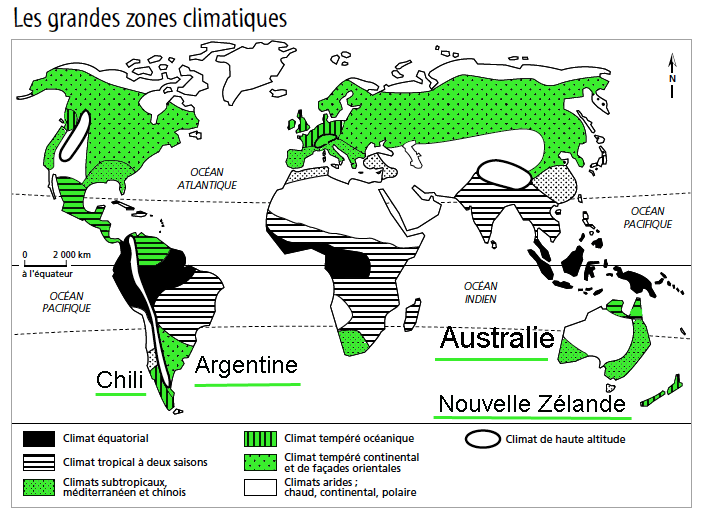
Argentina, in theory, had all the conditions mentioned by the WHO (World Health Organization) to suffer a catastrophic pandemic attack, namely a virus arriving in the middle of winter, in a temperate country, with large agglomerations. This country has an entire surveillance network, comparable to that of France. Argentina therefore had to carry out monitoring:
- The spread of the affected regions
- The growth rate of the epidemic
- The intensity of the manifestation of this condition.
- The impact on the functioning of health services (high, medium, low).
The results follow. But strangely, the WHO makes no mention of these reassuring data.
- The first case of pandemic influenza was identified in Argentina on May 17, 2009. There was then a progressive increase in the number of cases, a sudden peak between June 22 and 25, 2009, then the epidemic began a phase of decline.
What is obviously important is to make a comparison with the figures from the previous year, which are perfectly known.
- The number of flu-like syndromes recorded during this Argentine winter, which has just ended, was 812,000 cases, compared to more than one million the previous year.
- The number of influenza-like cases reported this winter was 202 per 100,000 inhabitants (2%) compared to 295 per 100,000 inhabitants (3%) the previous year.
*- In this winter that has just passed in Argentina, there were 439 deaths, while the usual seasonal influenza epidemic causes between 2000 and 4000 deaths each year. **In other words, this "new flu" caused four to eight times fewer deaths than the usual seasonal flu ***( pdf, page 6 )
A difference in mortality is observed according to age groups. The actual number of cases is probably higher than those recorded** but the low impact on the use of health services is a sign of the virus's benignity**.
September 21, 2009: The impact of the A (H1N1) flu in Australia:
By Sophie Roselli, Sydney While the Northern Hemisphere prepares for the worst for this autumn, the Southern Hemisphere has been facing the A (H1N1) flu for nearly four months. What lessons can be drawn from this experience?
"We have not stopped meetings, nor changed our habits at the office. No one wears a mask. The only difference is that everyone is coughing…", says Serge, a Swiss expatriate working for an insurance company in Sydney.
In Australia, the A (H1N1) flu has infected 26,400 people in four months (non-exhaustive figures), out of 20 million inhabitants, without severely affecting daily life.
Very early considered one of the most affected in the world and currently in the Australian winter, this multicultural country with modern infrastructure "can provide useful lessons for Northern Hemisphere countries for next winter," according to the Australian Department of Health. Even though it is difficult to compare Switzerland and Australia, it remains interesting to analyze how the catastrophe scenario deflated in the opposite hemisphere.
Health: fears eclipsed The A (H1N1) flu has so far caused 88 deaths; 6000 were feared.
All belong to high-risk groups (people suffering from serious and chronic diseases, pregnant women, aboriginals, etc.).
"The fears have been eclipsed by reality. The A (H1N1) flu is benign in most cases," says the spokesperson for the Department of Health of the State of Victoria. And in this state, as in New South Wales (NSW), the authorities observe a trend of decreasing hospital consultations.
Surprising, since the predictions announced a peak of the pandemic in the middle of the Australian winter. Possible explanations: either the number of sick people decreases due to a mild weather or good hygiene practices, or the patients, less worried, prefer to go to their doctor.
Regardless, "the worst is behind us," assures John Mackenzie. This eminent Australian virologist fears rather a mutation of the virus that would return during a second wave, "maybe next winter": "With pandemics, we must expect the unexpected." Will Switzerland inherit the classic strain of the virus or a powerful mutant? It is impossible to predict at this stage.
Schools: rare closures The State of Victoria (5 million inhabitants), which faced the first wave of cases in the country, closed 18 schools in May and June and quarantined students from 67 other schools. Since then, these measures have been abandoned.
"Closing schools can help slow the spread of the disease, as we know that the virus spreads faster among children," continues Professor Mackenzie. "But it cannot stop it." Anthony Harris, deputy director of the Centre for Economic Studies on Health in Victoria, is even more skeptical: "It is not really effective, it is a waste of time. Because if this preventive action is not followed by home isolation, it is useless." When the flu spread in NSW, class mergers were preferred. In Switzerland, both solutions are on the agenda.
Quarantine: an ineffective solution "Quarantine does not work," says Professor Mackenzie, who even advises against it at the beginning of the spread of the disease. The authorities abandoned the option when the alert phase changed in June and just after a very criticized episode: the quarantine of 2000 tourists on a luxury cruise ship, forced to drift along the east coast waiting for permission to disembark.
"It was ridiculous and caused panic," reacts Basel's Daniel Gschwind, director of the association of tourism industries in the State of Queensland.
Absenteeism: fears questioned The absenteeism rate could reach 40%, double that of previous years, according to the NSW Economic Chamber, but this analysis is contested.
"The impact on absenteeism will be very low, almost insignificant, because few people have been affected," assures Professor Anthony Harris, who is also tasked by the government to study the economic impact of the pandemic.
As for whether imaginary patients have used the pretext of the A (H1N1) flu to stay home, the idea makes the researcher smile, as he has not observed anything of the sort. This fear exists in Switzerland, where a medical certificate can be obtained with a simple phone call. The absenteeism rate expected by the State Secretariat for Economic Affairs is 25 to 40%.
Businesses: impossible to follow advice Keep a social distance, avoid travel, prefer outdoor meetings. In Australia as in Switzerland, companies have received similar advice. But in reality, nothing has changed. "This list is ineffective. The country would have been paralyzed if it had been respected!" Ironizes Daniel Gschwind, who represents 3000 tourism actors. It's just a way for governments to eliminate all risks from a legal point of view." The same point of view from the scientific side, with John Mackenzie: "It is not possible to respect. The only useful advice is to stay home if you have flu symptoms."
Sales and transport: no paralysis In Switzerland, while the worst scenarios are being considered in sales and transport, nothing of the sort has happened in the opposite hemisphere. Not only are there no closures of stores due to lack of staff or goods, but the customers have not given up shopping, even in large urban centers, says Scott Driscoll, director of the Australian retail association. As for public transport, it has not experienced a decrease in service, even in the State of Victoria, which was one of the most affected.
The "Aussies" have had more fear than harm so far. The swine flu has even been the subject of bad jokes through false posters announcing its presence in some public places in NSW. In fact, the evaluation of the pandemic's impact on society is just beginning. A dozen research projects have just been launched to best respond to future threats. The results will be presented in December and will serve as a reference for the global community.
Le Temps © 2009 Le Temps SA
Read in the pdf, pages 6 and 7, a more detailed analysis of the manifestation of the flu during the winter that just occurred in Argentina in ... spring 2009. The conclusion is that the H1N1 virus tends to replace the seasonal influenza virus and to be transmitted very easily among humans, while being particularly benign.
As a conclusion, the report (pdf) concludes that the populations of the northern hemisphere should fare better than previous years, having been attacked by the virus early.
Is the WHO an independent organization? Are the personalities pushing for rapid and intensive vaccination independent from the pharmaceutical lobbies.
In a word: who is for whom?
This incitement to panic seems to be in the air. After the events of September 11, the American neoconservatives tried to imprint in people's minds the idea that they would have to prepare for new, more deadly attacks. They spoke of dirty bombs, biological weapons, and even real nuclear weapons, possessed by ... Al Qaeda.
None of this has happened, for eight years.
I think of Naomi Klein's book: The Shock Doctrine, which develops the thesis that major political changes, going in the direction of a drastic reduction of citizens' rights, were favored by violent events, leaving the populations in a state of shock. However, despite the legitimate claim of the relatives of the victims to have the investigation reopened, "the 9/11 effect" is fading. It was Rumsfeld who one day lamented the fact that the vigilance of Americans was fading over the years. Now, with the perspective of a flu pandemic, we see instructions very close to a martial law. I receive information from the DOM-TOM where French soldiers say they are receiving directives that can already be qualified as tough.
Everything will depend on the coming months, or even weeks. You have seen the directives issued by the Bachelot-Hortefeux duo. When the vaccination campaign starts, mobile teams, disregarding all medical advice from family doctors, will operate directly in schools. This means that if parents have doubts about the appropriateness of this campaign and want to keep their children at home, they will have to do so!
**A vaccine hastily developed. **
Page 5: In 1976, tens of millions of people were vaccinated under the pretext of a catastrophic pandemic, with a vaccine hastily made. This caused a wave of Guillain-Barré Syndrome. It is a degenerative disease affecting the nervous system, especially activating the respiratory system.
We do not know what the side effects may be, especially on pregnant women and children.
This adjuvant has not been subjected to valid tests on human populations. Some attribute neurotoxic properties to it. In addition, tested in 2007-2008 on 300 children aged 3 to 9 (an insufficiently representative sample), called Pandemrix and manufactured in Spain, it triggered an autoimmune liver disease in one of them after the two doses received! Squalene is a molecule that already exists in the human body, in the liver. The immune system regulates the level of squalene in the body. The fact of introducing it in large quantities, as reported by Professor Zinkernagel, Nobel Prize in Medicine, in issue 237 of the magazine Pour la Science (1997), can trigger an autoimmune reaction.
Elsewhere, Swedish researchers have shown that intradermal injections of squalene caused rheumatoid arthritis in rats.
And on page 10, I quote:
The questions of responsibility are never raised. But the State, while implicitly recommending this vaccine, has carefully avoided making it mandatory, as its responsibility would then be fully engaged, especially towards potential victims. Once the laboratories have been exempted from the obligation to conduct clinical trials, they cannot be held responsible for serious side effects. The victims would then turn to the State, which would direct them to ... the WHO. Everything is in place for a complete dilution of responsibilities.
For the laboratories: unprecedented benefits, without having to assume any responsibility.
You will read these pages.
In the United States, decrees protect pharmaceutical companies from any legal action from patients who have suffered "collateral damage." The largest vaccine production company in the world, Sanofi-Pasteur, has launched the mass production of the vaccine, hastily designed (in three months!), to "anticipate," and this without waiting for the marketing authorization. A unprecedented move.
With this pretext of urgency, multi-dose vials will be used, cheaper to manufacture, which individuals will not be able to purchase and analyze, and will not be able to assess the content. This multi-dose presentation "forces" pharmaceutical companies to use a preservative ... based on mercury, thimerosal, which has been abandoned due to known serious side effects, neurotoxic in nature (affecting the nervous system and potentially causing mental disorders in children).
As a conclusion, two scenarios are possible (I quote):
- Either we admit that this pandemic virus is stable, and therefore benign (as seen in the countries of the southern hemisphere), and that vaccinating the population, especially children, with an untested vaccine puts them at much greater risk than it could bring benefits. Not to mention another possible consequence: if by chance this vaccine were effective, which is not proven, a mass vaccination would create a selection pressure that could cause the virus to mutate. And this without the population being durably protected.
- Or the virus mutates and the vaccine is useless. ---
I believe that there are now enough elements on this page to allow readers to make their own choices ---
September 21, 2009: Statement from the National Union of Nursing Staff:

****http://www.syndicat-infirmier.com/Vaccination-H1N1-mefiance-des.html
Voices are rising, and once again the Internet drumbeat resounds everywhere in the world, a symptom of the loss of trust of citizens in their governing bodies and media. Politicians are increasingly perceived as corrupt beings, under orders. Journalists reveal their incompetence, their lack of critical sense, their bias, or their submission to hidden or known powers.
Between paranoia and anesthesia, deafness, where is the border? I cannot say.
But what we are witnessing is the collapse of trust. And it is not the yelps of a brainless or obedient press that is likely to reassure readers or viewers.
It is perfectly true that today's technology allows to implant "chips" in syringes, in vials, objects capable of releasing toxins, of attaching themselves to specific parts of the body, for example near the auditory nerve, being able to receive very weak radio frequency emissions from space. I must admit that I was a bit surprised when the first information about these projects reached me seven years ago. I was one of the first to mention what RFID (Radio Frequency Identification devices), or "chips," would quickly become. As a good physicist, I also predicted that the size of such objects would quickly decrease, to the point of becoming grains of sand or dust, and not these huge "rice grains" pushed into human bodies with horse trocars. A Saudi company was denied a patent for the possibility of releasing a toxin, cyanide, from a remotely controlled implant. It has also been shown that nanotechnology can create very small agents (20 nanometers), artificial toxins, capable of crossing the defensive barriers of cell cytoplasm to create dysfunctions and disorders.
--- **** ****
http://www.verichipcorp.com/092109.html
25 September 2009.
A very strange affair.
VeriChip is one of the first companies to have launched into the adventure of implantable chips in the human body at the beginning of the 2000s.
If you take a look at the history of this company, you will see that the first argument advanced to justify this kind of implantation was of a security nature. RFID (Radio Frequency Identification devices) would have allowed, they say, to find many people buried during a catastrophe, for example. But what follows is far more worrying. The link above will send you to the page in English, while what follows is its translation into French:

Press release dated September 21, 2009.
The company VeriChip has acquired the rights to an exclusive patent concerning a system for detecting and identifying the H1N1 virus, which is being developed in partnership with the company RECEPTORS, whose goal is to create systems to treat patient groups.
......
These systems should allow to identify and detect the H1N1 virus. The patent also covers the detection of other viruses and agents presenting biological threats, such as staphylococcus aureus.
......
Last week, the company announced that it was moving towards "Integrated sensor systems for the detection of biological threats from pandemics or bio-terrorism actions."
Once again, where is the border between paranoia and naive blindness?
Is it a technological-scientific advancement, or an announcement effect, which in one night quadrupled the price of the company's shares? The only thing we can say is that the evolution of microchips, a result of nanotechnology, is inevitable. It's the same thing that happened with electronics fifty years ago. I remember the last transistor computer produced by the Italian company Olivetti, whose components were still ... assembled by hand. A mess the size of a giant typewriter, weighing ten good kilograms, capable of running programs of a dozen elementary instructions, stored on magnetic cards the size of a train ticket. When the machine calculated (I think it was in 1975), a green light blinked. It could, when data was entered, calculate an average and a standard deviation. Needless to say, the emergence of the Apple, a year later, put this fossil out of the way, instantly.
I remember that a guy, at the observatory in Marseille, had obtained a grant to buy this thing, with the furniture it fit on. The psychology department of the Aix faculty of letters did the same, locking this new god in a sacred room. Professor Noizet, directly from the department, entrusted the key to a few privileged people, who entered this room holding the precious magnetic card like a magical key.
Very shortly after, colleagues, whether in the faculty of letters or at the observatory, told me:
What can you do with these machines?
They could be used as corpses for ships, at best ...
You don't think you're exaggerating a bit?
No. The future will soon give me the right.
We are used to the idea that in computing it's "always more, in ever smaller things." These "things" that are stored in these chips are not assembled by hand. It would have been perfectly impossible a long time ago. Everything is etched with masks, layer by layer. In computing, we create transistors less than a micrometer wide, microscopic connectors. But in principle, nothing is moving, no tubes, no pumps, no counters, no mechanics or fluidics.
But this movement has been going on for decades.
Everything, absolutely everything, is miniaturizable, at the scale of the crystal, the molecule. All the gestures performed to carry out biological analyses or genome sequencing are automatable, can be entrusted to a robot, and are, in fact. What you must engrave in your minds is that any mechanical system, dosing systems, analysis systems, are in the process of completely collapsing, leading to devices as small as a tenth of a millimeter, the size of a grain of dust, which is a large enough container to hold systems of a complexity you can't imagine.
It's not science fiction. If the company VeriChip announces that it is launching the design of miniaturized analysis systems, to the point of being implantable, possibly without the subject's knowledge, through ... a vaccination, this corresponds to perfectly realistic projects. One could even say that it's inevitable, if it's not already done.
If a chip can perform in situ analyses and transmit information, or even "respond to a question formulated by electromagnetic waves," it can also deliver a toxin, release a virus, in a delayed manner or under the effect of a remote order. I'm only saying what is feasible. It's up to you to judge, according to your intuition, whether these things already exist or are under development.
You have seen enough horrors emerge in the few years preceding: the Taser, non-lethal weapons, crowd control weapons, weapons for controlling crowds, depleted uranium shells, cancer and malformation generators. A part of humanity is working to create coercive tools, possibly controllable from space. You have seen where robotics is heading, towards these future soldiers, on tracks or, "without fear and without reproach," without any hesitation. We are living in a time of madness. One must be completely blind and deaf not to realize it. Human techno-science, instead of focusing on solutions, is investing heavily in new weapons (pure fusion bombs, weather, seismic, bacteriological, psychotechnical weapons, etc).
Implantable chips are just one part of the absurd arsenal that our engineers of violent death or automated subjugation are concocting for us. In the face of this, our intellectuals, our journalists play the role of modern-day Panglosses, reaffirming that everything is for the best in the best possible techno-world. Why do they act this way? Because fear grips them. The fear that techno-science is not, as they sing, oriented towards the happiness of men, but is used to serve an elite determined to rule a herd of slaves.
A video from Argentina, very enlightening, subtitled:
**L'Express on September 20, 2009: **
**Le Nouvel Observateur on September 21, 2009: **
http://fr.wikipedia.org/wiki/Grippe_A_(H1N1)_de_2009#Morbidit.C3.A9
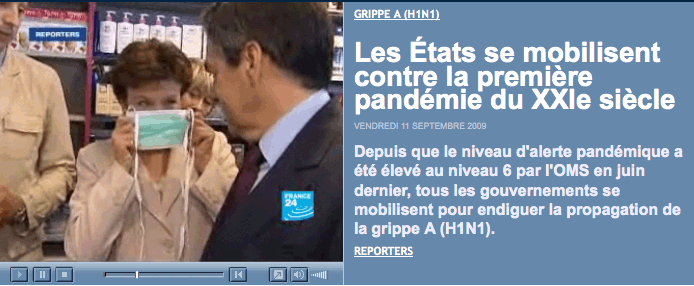
The Ploutogrippe
dossier distributed by France 24
**
Excerpt from an article, discussing the controversy, regarding a vaccine developed in a rush, in three months, which is unprecedented in the world of vaccination, on a global scale.
As commentators indicate, the immune reactions triggered in the body by a vaccination last a lifetime, but it can be the same for the secondary reactions, whose effects are not precisely known (additives stimulating the production of antibodies and mercury preservatives, with neurotoxic, degenerative effects).
Representatives of the pharmaceutical industry say: "we have no choice, we are in an emergency." Sanofi-Pasteur: "pressed by time, we must anticipate and have been forced to mass-produce the vaccine before the marketing authorization has been issued."
In the United States, a decree grants immunity to vaccine manufacturers, regarding any person claiming adverse, fatal or disabling effects.
At no time has the number of deaths mentioned, since the beginning of this pandemic (several thousand) been compared to that of deaths from a normal seasonal flu. Knowing that one in a thousand people infected with a normal flu dies, and that there are about 500,000 deaths per year in the world, this estimates the number of people infected in normal conditions at half a million, at minimum (many cases are not reported). The number predicted by the WHO (two million people infected) therefore does not significantly differ from the numbers related to seasonal flu.
From the WHO's side, there is a complete absence of comparative data. It remains that this ploutogrippe (from the Greek Ploutas: rich) represents a colossal and unprecedented profit for the pharmaceutical companies involved.
****The website of Dr. Marc Girard
27 September 2009
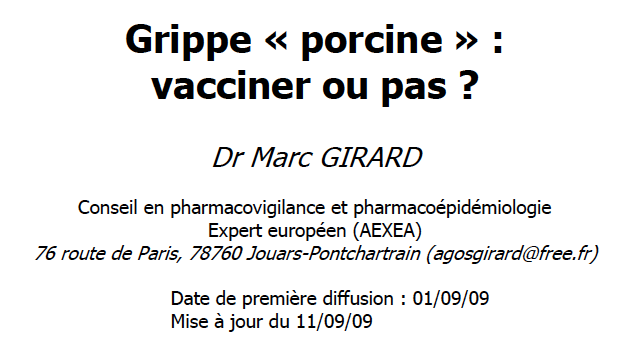
:
The key sentence:
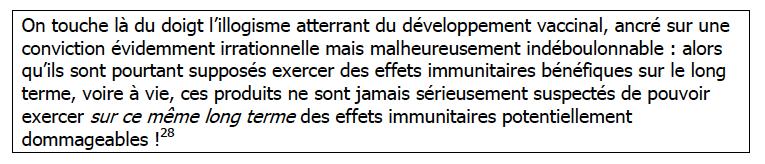
Source
:
October 4, 2009: I mention here a report (81 pages) published by the EFVV, whose conclusion is the absence of pharmacovigilance, regarding the side effects of vaccines, in general, and on a global scale. I think it is worth reading, because like many I have always blindly believed in the complete absence of harm from vaccines, regardless of their type, and that the regression of different diseases had only been the consequence of vaccination campaigns, and not the effects of hygiene and improved living conditions. The corollary being that any distrust towards vaccination could only be the result of a sectarian attitude. I was unaware of the existence of side effects, sometimes dramatic. Reading such a dossier will give the Internet user a broader view on the subject.
October 5, 2009: From the European Union
Can the French be forced to be vaccinated. Legal bases
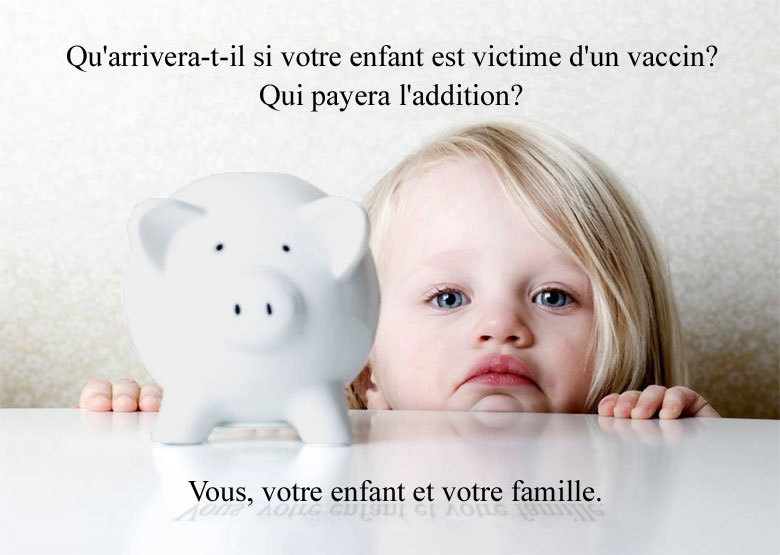
**The opinion of a physician specializing in neurodegenerative diseases **
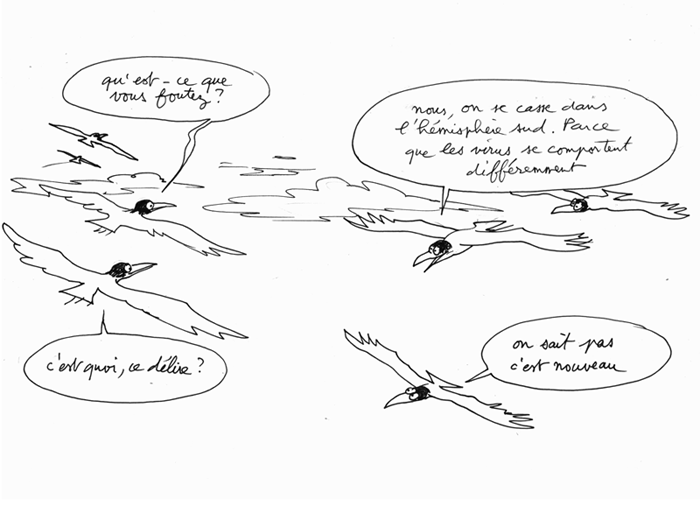
--- --- ****---
Novelties Guide (Index) Home Page